

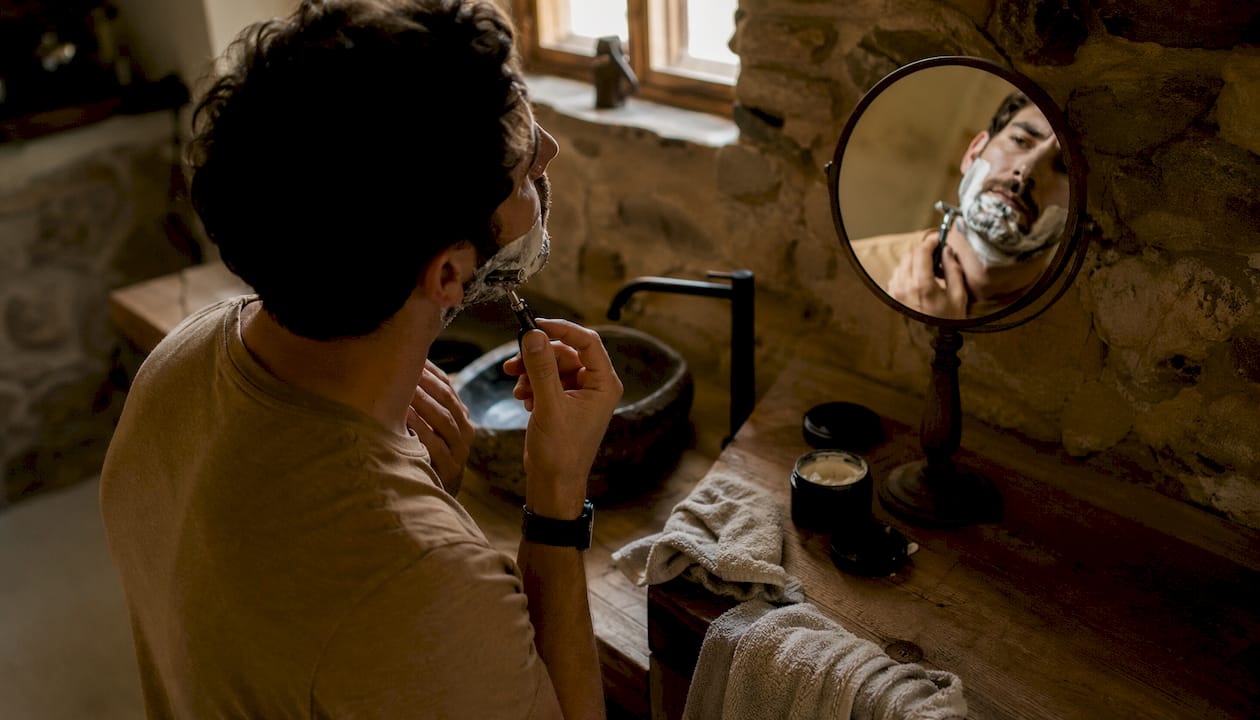
If you have an ingrown beard hair right now, stop shaving that area immediately, press a warm damp cloth against the bump for a few minutes, and apply a gentle hydrating balm to calm the skin. That’s the short version. The American Academy of Dermatology recommends softening hair with warmth before any intervention, and DermNet is clear that these bumps are an inflammatory foreign-body reaction, not a simple infection. That distinction changes everything about how you treat them.
What to do in the next 30 minutes:
- Stop shaving the affected area
- Apply a warm, damp washcloth for 5–10 minutes to soften skin and hair
- Gently pat dry and apply a hydrating repair balm (Iron Bull Tallow works well here — tallow and hyaluronic acid support barrier repair without clogging pores)
- Do NOT pick, squeeze, or use alcohol-based aftershave on the bump
Pro Tip: Alcohol-based aftershaves feel like they’re “cleaning” the bump, but they strip the skin barrier and make the inflammation worse. Reach for a balm, not a toner.
Table of Contents
- What causes ingrown hairs in the beard?
- How to treat a single ingrown beard hair safely at home
- Your shaving routine is the real prevention
- What to look for in aftercare products
- How long does healing take, and when should you see a doctor?
- A simple AM/PM routine for ingrown-prone beard skin
- What NOT to do when you have razor bumps
- Exfoliation for sensitive, ingrown-prone skin
- Key Takeaways
- Why simple ingredients beat a crowded formula
- Iron Bull Tallow: built for post-shave beard skin
- Sources and further reading
What causes ingrown hairs in the beard?
Razor bumps, clinically called pseudofolliculitis barbae, happen when a freshly cut hair curls back and re-enters the skin before it can exit the follicle. The body treats it like a foreign object and mounts an inflammatory response — hence the red, raised bump. It’s not an infection, even when it looks like one.
Three things drive the cycle: curved or coarse hair, a shave that cuts below the skin surface, and dead-skin buildup that blocks the hair’s exit path. Men with coily or tightly curled hair face higher risk because the natural curve of the follicle already points the hair sideways. Straight-haired men aren’t immune, though — shaving too close or against the grain creates the same sharp-tipped hair that pierces back into skin.
This is why acne-style drying treatments backfire. Benzoyl peroxide and alcohol-based products attack bacteria, but the problem here is mechanical and inflammatory, not bacterial. Stripping the skin barrier makes the inflammation worse, not better.
How to treat a single ingrown beard hair safely at home
If the hair is visible just beneath the surface, you can often release it without digging. If it’s deeply embedded, red, and painful, leave it alone and let the warm-compress routine do the work over a few days.
- Clean the area with a gentle, fragrance-free cleanser. No scrubbing.
- Apply a warm compress for 5–10 minutes to soften the skin and encourage the hair toward the surface.
- Release the hair tip (only if it’s clearly visible) using a sterile needle or clean tweezers. Lift the tip out — don’t pull the whole hair.
- Cleanse again lightly and pat dry.
- Apply a hydrating barrier balm to reduce inflammation and protect the skin.
- Leave the area alone. No shaving over it for at least 48–72 hours.
Expect redness to ease within 48–72 hours with consistent care. If the bump grows more painful, spreads, or develops pus after a few days, that’s a sign of secondary infection — see a doctor.
Your shaving routine is the real prevention
The AAD advises a consistent, moisturizing shave routine as the primary defense against razor bumps. Here’s what that looks like in practice.
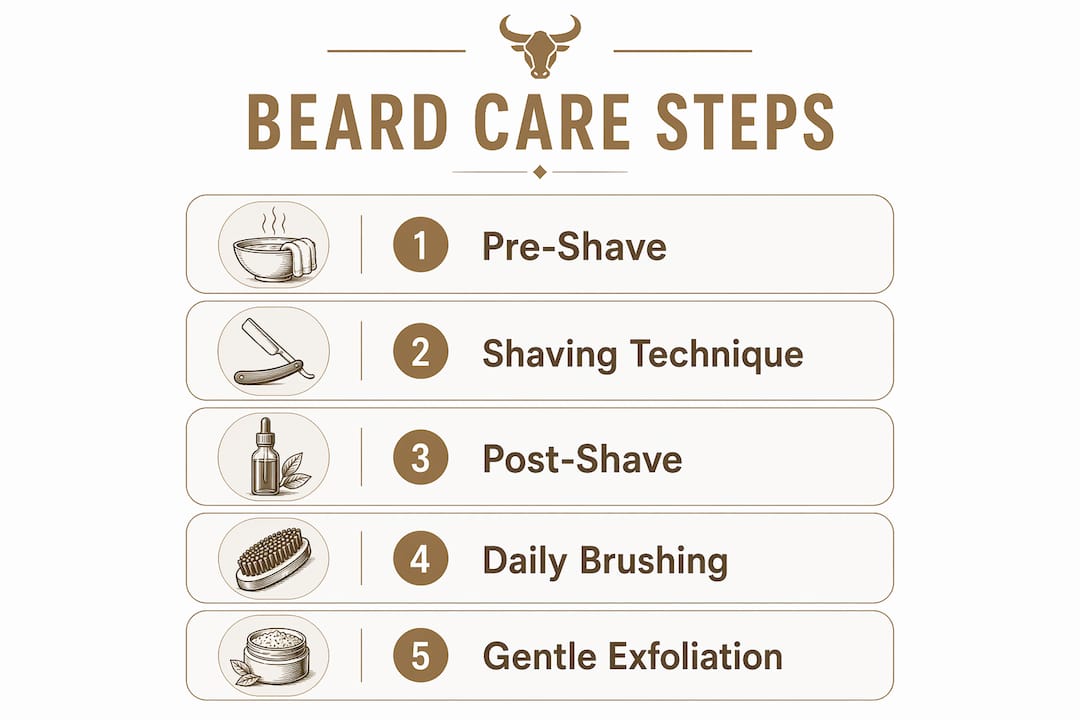
Pre-shave: Shave at the end of a shower or press a warm washcloth against your beard for a few minutes first. Soft, hydrated hair cuts cleanly instead of curling back. If your skin tolerates it, a gentle exfoliation two or three times a week clears dead skin that traps hairs.
Shaving technique: Shave in the direction of hair growth, full stop. Short strokes, no pulling the skin taut, no going over the same patch three times chasing a closer shave. Leaving slight stubble is one of the most effective things you can do if you’re ingrown-prone. Replace your blade regularly — a dull blade tugs and drags instead of cutting, which is a common and underappreciated cause of new bumps.
Post-shave: Cool water rinse, then a hydrating balm. Skip the alcohol-based aftershave entirely. If you’re consistently getting bumps, consider a single-blade razor or a trimmer set to leave light stubble rather than shaving to the skin.
One underrated habit: train your beard hair to grow in a consistent direction by brushing daily with a clean, soft-bristle toothbrush. It sounds simple because it is, and it genuinely reduces new bumps over time.
What to look for in aftercare products
Lead with hydration and barrier repair. Razor bumps are an inflammatory reaction, and the skin needs calming and rebuilding, not stripping.
Ingredients that help:
- Grass-fed tallow: Structurally similar to human sebum, supports the skin barrier, and absorbs without a greasy residue
- Hyaluronic acid: Draws moisture into the skin and keeps it there
- Jojoba oil: Mimics the skin’s natural oils, non-comedogenic, and calms irritation
Ingredients to avoid on inflamed skin:
- Alcohol (ethanol, isopropyl alcohol)
- Benzoyl peroxide
- Strong synthetic fragrances
- Harsh physical scrubs when skin is actively inflamed
Short ingredient lists matter here. The fewer the ingredients, the lower the chance of a reaction on already-irritated skin. Iron Bull Tallow uses three core ingredients — grass-fed tallow, hyaluronic acid, and jojoba oil — which is exactly the kind of formulation that works well on sensitive, post-shave beard skin.
How long does healing take, and when should you see a doctor?
Minor bumps with proper care often calm down within a few days. Mayo Clinic recommends stopping shaving, tweezing, or waxing entirely and allowing hair to regrow — and notes that full resolution can take weeks to several months depending on severity.
If you stop shaving, expect the inflammatory cycle to take roughly 4–6 weeks to fully subside. Restarting shaving too soon restarts the cycle from scratch.
See a doctor if you notice:
- Spreading redness or warmth beyond the bump
- Increasing pain after 48–72 hours
- Pus or discharge
- Fever
- Recurring severe bumps or early scarring
A clinician can offer prescription topicals, intralesional steroid injections, or, for persistent cases, laser hair removal — though lasers carry risks including scarring and pigment changes, so they’re a last resort, not a first step.
A simple AM/PM routine for ingrown-prone beard skin
Morning:
- Rinse face with cool or lukewarm water (skip harsh cleansers unless needed)
- Apply a small pea-sized amount of Iron Bull Tallow to the beard area and any active bumps
- If exposed skin is present, follow with a mineral sunscreen — UV exposure worsens post-inflammatory pigmentation
Evening:
- Gentle cleanse after workout or end of day
- Warm compress on any tender bumps for 5 minutes
- Apply a thin layer of repair balm to the full beard area
Skip active exfoliation on nights when skin feels raw or bumps are inflamed. On calmer nights, a soft washcloth used in gentle circular motions is enough. Less is more with sensitive skin.
What NOT to do when you have razor bumps
Picking is the fastest way to turn a minor bump into a scar. The inflammatory reaction is already happening beneath the skin — breaking the surface with your fingernails introduces bacteria and almost guarantees post-inflammatory hyperpigmentation.
Overly close shaves are the other big one. The closer the shave, the sharper the hair tip, and the more likely it is to curl back into skin. Chasing baby-smooth skin when you’re ingrown-prone is a losing trade. Drying products — alcohol aftershaves, astringent toners, anything marketed for acne — belong nowhere near an active razor bump. They damage the barrier your skin is trying to rebuild.
Exfoliation for sensitive, ingrown-prone skin
Exfoliation prevents ingrown hairs by clearing the dead skin that traps emerging hairs. The key word is gentle. For sensitive beard skin, chemical exfoliants tend to outperform physical scrubs because they work without friction.
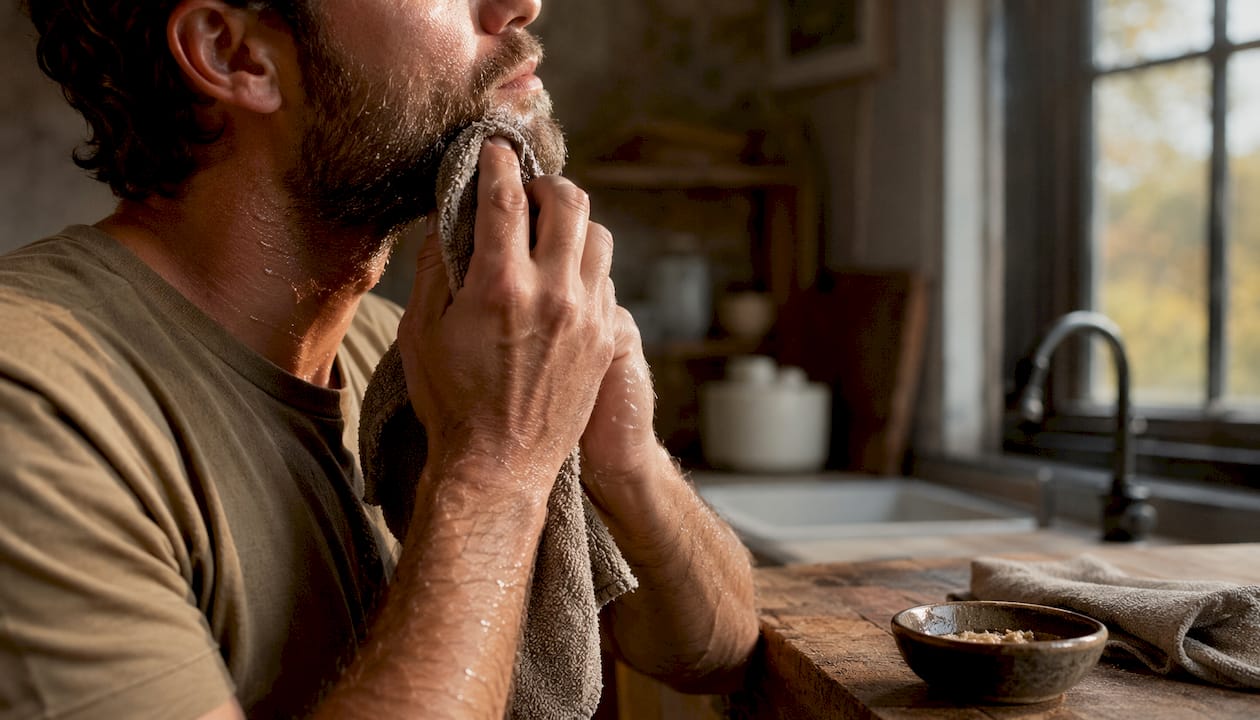
A low-concentration salicylic acid wash (around 0.5–2%) used two or three times a week is a reasonable starting point. Salicylic acid is oil-soluble, so it clears pores without over-drying. A soft washcloth used in small circular motions during cleansing is the gentlest physical option and works well on most skin types.
Never exfoliate over active, inflamed bumps. Wait until redness has calmed, then resume. Over-exfoliating is a real problem — it strips the barrier and triggers more inflammation, which defeats the purpose entirely.
Key Takeaways
Treating and preventing ingrown beard hairs comes down to three things: stop shaving the affected area, repair the skin barrier with hydrating ingredients, and change the habits that caused the problem in the first place.
| Point | Details |
|---|---|
| Stop shaving immediately | Give the affected area at least two to three days before shaving again; full resolution may take anywhere from several weeks to a few months, depending on severity and whether shaving is discontinued. |
| Warm compress first | Soften skin and hair before any treatment or shave to reduce the chance of hairs curling back. |
| Repair the barrier | Use hydrating, short-ingredient balms with tallow, hyaluronic acid, or jojoba — avoid alcohol and drying agents. |
| Change shaving habits | Shave with hair growth, replace blades regularly, and accept a little stubble if you’re ingrown-prone. |
| Iron Bull Tallow | A three-ingredient balm (tallow, hyaluronic acid, jojoba) recommended for post-shave barrier repair on sensitive beard skin. |
Why simple ingredients beat a crowded formula
Most men dealing with razor bumps reach for the harshest thing in the cabinet — an astringent, an acne wash, something that feels like it’s “doing something.” The research points the other way. These bumps are inflammatory, not bacterial, and the skin needs rebuilding, not stripping.
The brands that pile twelve actives into a formula are solving a marketing problem, not a skin problem. A man with sensitive, ingrown-prone beard skin doesn’t need a complex stack. He needs something that hydrates, supports the barrier, and doesn’t introduce new irritants. Three ingredients that do exactly that will outperform a ten-ingredient formula with two good actives and eight fillers every time.
Iron Bull Tallow: built for post-shave beard skin

Iron Bull Tallow is a three-ingredient face balm — grass-fed Alberta tallow, hyaluronic acid, and jojoba oil — formulated specifically for men who want real hydration without a greasy finish. For ingrown-prone beard skin, it fits naturally into both morning and evening routines: a pea-sized amount after your morning rinse, and a thin layer over the beard area before bed.
On active bumps, apply directly to the raised area after a warm compress. The tallow supports barrier repair, the hyaluronic acid pulls moisture in, and the jojoba calms without clogging. No alcohol, no synthetic fragrance, no ingredients you need a chemistry degree to read.
Iron Bull Naturals sells direct, with one-time purchase and subscription options available. Browse the full men’s face moisturizer range or go straight to the Iron Bull Tallow product page to pick up a jar.
Sources and further reading
- American Academy of Dermatology — Razor bump remedies: Prevention routine, hair-direction training, warm compress technique
- American Academy of Dermatology — How to prevent razor bumps: Blade replacement guidance and board-certified dermatologist recommendations
- DermNet — Pseudofolliculitis barbae: Foreign-body reaction mechanism, inflammatory phase timeline
- Mayo Clinic — Ingrown hair diagnosis and treatment: Healing timeline, medical escalation options
- Cleveland Clinic — Ingrown hair: Appearance, causes, and resolution guidance
- NHS — Ingrown hairs: Stubble guidance and close-shave risk


