

If a new moisturizer is followed by pimples, the product may be the cause, but often it is not. Breakouts after a new product can come from a clogging or irritating formula, from layering too much, from skipping moisture altogether, or from something unrelated, like sweat, friction or hormones. This guide shows you how to sort out which one it is, what to change first, and when to see a dermatologist.
TL;DR
- A pimple after a new moisturizer does not prove the moisturizer caused it. Dermatologists note that oil glands, bacteria, hormones, sweat, friction and medications all play a part.
- Too little moisture can backfire. The American Academy of Dermatology (AAD) says dry skin makes more oil, which can clog pores.
- Itchy, burning, swollen or scaly skin where you applied the product points to irritation or an allergy, not ordinary acne. Stop using it.
- Look for oil-free, non-comedogenic labels, keep the ingredient list short, and add one product at a time.
- Give any routine change time, and see a dermatologist if the problem persists, recurs or worsens.
Table of Contents
- Why a moisturizer can seem to cause breakouts
- Is it the moisturizer, a purge, or just acne?
- Why skipping moisturizer is not the answer
- Does male skin change the picture?
- How to choose a moisturizer that will not break you out
- A simple way to find the culprit
- What to do if you think your moisturizer is the problem
- A simple option for men who want fewer ingredients
- FAQ
- Sources
Why a moisturizer can seem to cause breakouts
There are four common reasons, and they call for different fixes.
1. The formula is too heavy for your skin. WebMD’s acne guidance names heavy oils, waxes and petrolatum as potentially too heavy for some acne-prone users. A 2026 review in the Journal of Clinical and Aesthetic Dermatology adds that occlusives can trap sweat, heat, sebum and microorganisms against the skin.
2. You are using too much, or too many layers. The AAD’s page on skin flooding says heavy layering, especially with occlusive or comedogenic products, may worsen acne. Pennsylvania Dermatology Specialists also points out that a thick layer of heavy cream can leave residue and clog pores.
3. An ingredient is irritating you. Fragrance is the usual suspect. The AAD advises men with sensitive skin to choose mild, fragrance-free products because fragrance can irritate and dry the skin. The same JCAD review flags propylene glycol as a potential irritant, lanolin as an allergen, and surfactants and emulsifiers as irritants for compromised skin.
4. It is not the moisturizer at all. Shaving friction, a sweaty helmet strap, a new medication or a stressful month can all produce pimples at the same time you switched products.
Is it the moisturizer, a purge, or just acne?
Three different things look similar in the mirror. Here is how they usually differ.
| Irritation or allergy (contact dermatitis) | Purging | Ordinary acne | |
|---|---|---|---|
| What it looks like | Itchy, red, swollen, burning or scaly rash, sometimes blisters | Smaller blemishes | Varies: blackheads, whiteheads, red bumps |
| Where | Wherever you applied the product | Spots where you usually get pimples | Often your usual spots, sometimes new ones |
| What it means | Your skin dislikes something in the product | Common with active ingredients that speed up cell turnover | Multiple causes, not necessarily the new product |
The signs in the table come from dermatology practice and hospital blogs. Ocean State Dermatology notes that contact dermatitis causes itching, redness, swelling, burning or blisters in the area of application. Banner Health explains that purging usually shows up where you often get pimples and produces smaller blemishes, while a true breakout can appear in new or random spots.
If you want a deeper look at timelines, we wrote a separate guide on skin purging versus breakouts, covering why a 2 to 4 week window is only one clue.
When redness is the main sign
Persistent flushing, visible small vessels or stinging after you apply a product can have causes beyond a clogged pore. If that sounds like you, reading about a gentle routine for rosacea-prone skin can help you recognize irritation or reactions to skincare ingredients. A dermatologist can confirm what is going on.
Why skipping moisturizer is not the answer
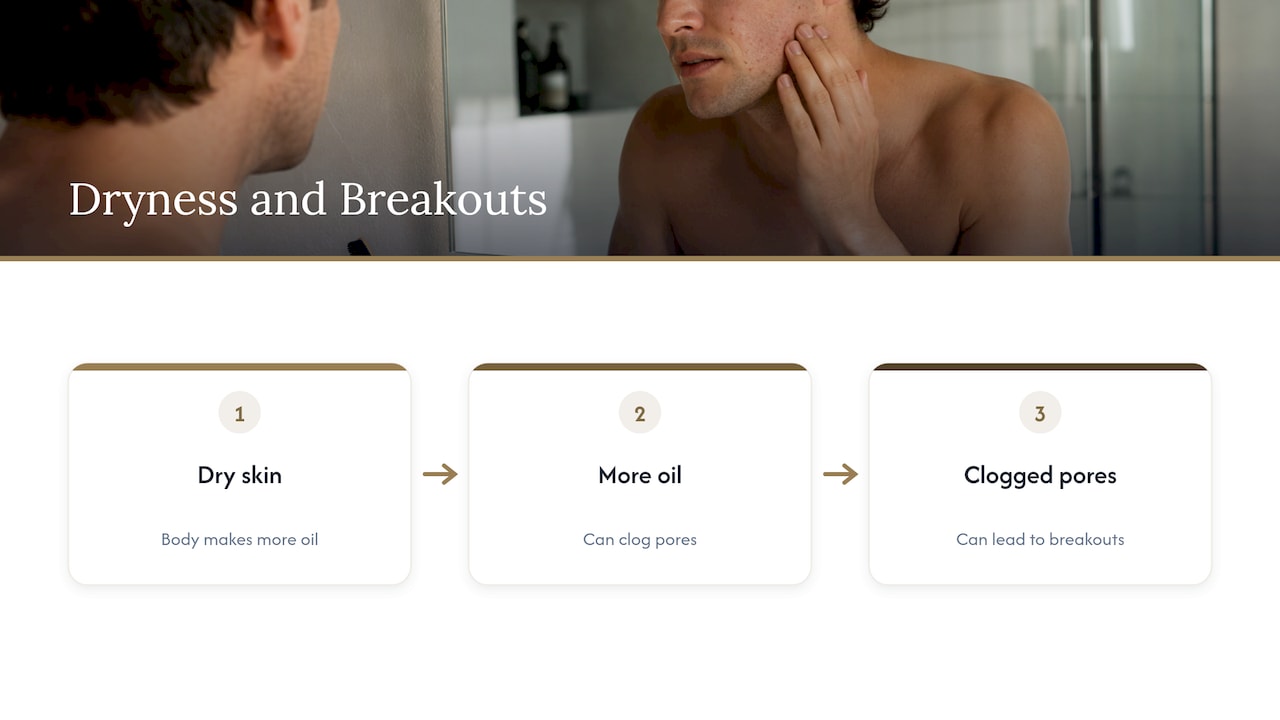
Many guys with breakouts decide to stop moisturizing. That often makes things worse. The AAD explains that acne can make skin feel oily, but when skin becomes dry, the body makes more oil, which can clog pores and lead to breakouts. It specifically says moisturizer may help if you use drying treatments such as benzoyl peroxide, salicylic acid, retinoids or isotretinoin.
A 2024 consensus of eight dermatologists in the Journal of Drugs in Dermatology makes a similar point. Barrier damage, redness, itching, peeling and dryness from acne treatments can worsen the condition when unmanaged, and suitable cleansers and moisturizers can support treatment results.
The lesson is not “more moisturizer” or “none.” It is the right amount of a formula your skin tolerates.
Does male skin change the picture?
A peer-reviewed review on male versus female skin reports that men generally have higher sebum levels and thicker skin, with one cited study finding men’s skin 10% to 20% thicker overall. That is part of why many men feel they do not need a moisturizer, or reach for the lightest gel they can find.
Still, the AAD recommends that men moisturize daily, on the face and body after bathing, showering or shaving, while skin is still damp. So yes, guys do moisturize their faces, and dermatologists encourage it. Shaving is a good reason on its own: it strips surface oils and can leave skin tight and reactive.
How to choose a moisturizer that will not break you out
Read the label for the right words
The AAD says men with acne-prone skin should choose products labeled “oil-free,” “non-comedogenic” or “won’t clog pores.” Those words are a starting point, not a guarantee. Per one dermatology practice, “non-comedogenic” is not regulated by the FDA, and there is no standard definition requiring brands to prove a product will not clog pores. So read the ingredient list too.
Match texture to your skin and climate
The AAD suggests a gel for oily skin or hot, humid weather, a lotion for normal or combination skin, and a cream for dry to very dry skin. Dermatologist Carrie Kovarik recommends moisturizers with ceramides, hyaluronic acid or dimethicone in that same guidance.
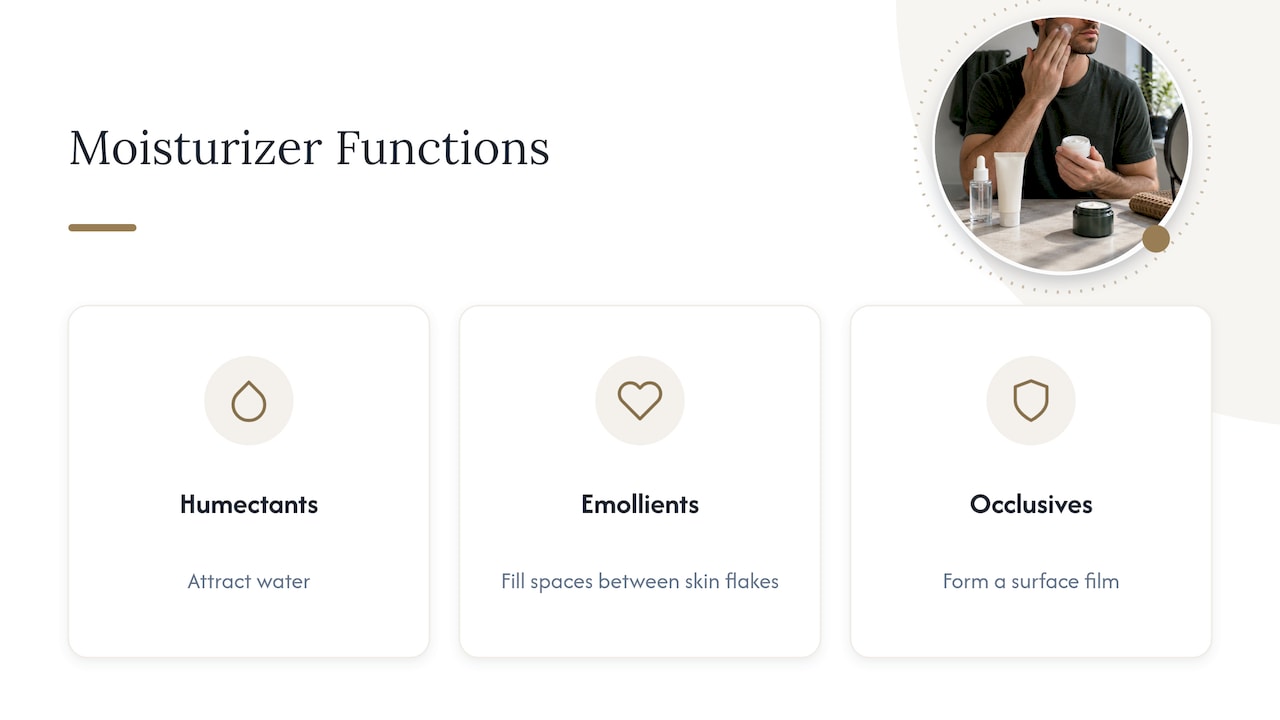
It also helps to know the three jobs a moisturizer does. A peer-reviewed review explains that humectants attract water, emollients fill spaces between skin flakes, and occlusives form a surface film. It says dimethicone is suitable for acne-prone and sensitive skin. Our guide on layering humectants and occlusives walks through how to combine them without overdoing it.
Keep the ingredient list short
The fewer ingredients, the fewer possible triggers. Mayo Clinic lists fragrances, preservatives and specific cosmetic ingredients among common contact dermatitis triggers in personal care products. A short formula is easier to troubleshoot: if your skin reacts, there are only a few suspects. If you are weighing options, see our natural moisturizer buying guide for men and our look at skipping petroleum-based products.
Oily skin needs its own approach
Oily skin does not mean you should skip moisture. It means texture and amount matter more. Our page on the best oily skin moisturizer for men covers that, and the one on clearing clogged pores gives a simple routine with a realistic timeline.
A simple way to find the culprit
- Strip back. Use a mild cleanser, one moisturizer and, in daytime, sunscreen or a sun balm. Pause extras like scrubs, toners and new serums.
- Change one thing at a time. The AAD warns that trying a new treatment every week or so can irritate skin and cause breakouts. It recommends giving an acne treatment 6 to 8 weeks to show improvement.
- Patch test. Put a small amount of the new product on a small area, such as along the jaw or behind the ear, for several days before using it on your whole face. Stop if you see itching, redness or swelling.
- Apply to damp skin, in a thin layer. The AAD recommends moisturizing right after washing, leaving some water on the skin to help trap it. A thin layer is enough.
- Go easy on cleansing. The AMA’s patient guidance notes that harsh soaps and aggressive toners or exfoliation can irritate skin, stimulate oil production and worsen acne.
Our 3-step, 5-minute men’s routine follows the same strip-back logic.
What to do if you think your moisturizer is the problem
If the product causes an itchy or irritated rash, stop using it. See a dermatologist if symptoms persist, recur, worsen, or you cannot tell what triggered them. Mayo Clinic says contact dermatitis typically clears in 2 to 4 weeks once the irritant or allergen is removed, which is why identifying the trigger matters.
Book an appointment sooner rather than later if you have:
- swelling, blisters or burning after applying a product,
- painful, deep or scarring acne,
- breakouts that keep returning after you simplify your routine,
- acne that you are treating with prescription medication and your skin feels very dry or raw. Ask the prescriber which moisturizer fits your regimen.
Perspective
We built Iron Bull Naturals around one idea: men’s skincare should be simple enough to stick with. When someone writes to us about breakouts, the pattern is usually a crowded routine, a heavy product or a fragrance-heavy formula, not too little effort.
That is why our face balm is designed around a short list of ingredients: grass-fed Alberta tallow, hyaluronic acid and jojoba oil. It is made to hydrate and repair without a greasy feel, and it is made for sensitive and all skin types. Fewer moving parts means you can see how your skin responds.
Our advice is the same whatever you use: start with a thin layer, introduce one product at a time and give your skin a few weeks. We stand behind it with a 60-day money-back guarantee, so you can judge on your own skin over a fair window.
Blaine
A simple option for men who want fewer ingredients
If you want a face moisturizer with a short ingredient list, our Iron Bull Beef Tallow Face Moisturizer for Men is made with grass-fed Alberta tallow, hyaluronic acid and jojoba oil. It is designed to hydrate deeply without a greasy residue. Our non-comedogenic balm guide explains how it is meant to rinse clean for acne-prone skin, and our tallow benefits explainer covers the science behind it.
Start with a thin layer on damp skin, and patch test first as described above. You can shop the balm and our sun balm with a 60-day money-back guarantee.

For daytime, our sun balm keeps the same simple approach to sun protection.
FAQ
Why does moisturizer make me break out?
Usually one of three things: a formula too heavy for your skin, too much product or too many layers, or an ingredient such as fragrance that irritates you. Sometimes the timing is a coincidence. Hormones, sweat, friction and medications can all cause pimples, so a new product is only one suspect.
Can too little moisturizer cause acne?
It can contribute. The AAD explains that when skin gets dry, the body produces more oil, which can clog pores. This is especially relevant if you use drying acne treatments such as benzoyl peroxide, salicylic acid or retinoids. A lightweight moisturizer applied to damp skin helps.
How long should I wait before deciding a moisturizer is not working?
The AAD suggests giving an acne treatment 6 to 8 weeks to show improvement. A moisturizer is different: if you get itching, burning, swelling or a rash, stop right away. If you only see a few small pimples in your usual spots, give your skin a couple of weeks and keep the rest of your routine unchanged.
Do guys really need to moisturize?
The AAD recommends that men moisturize daily, on the face and body after bathing, showering or shaving, while skin is damp. Men with acne-prone skin should choose oil-free or non-comedogenic products, and men with sensitive skin should favor mild, fragrance-free ones.
Sources
- AAD: Moisturizer, why you may need it if you have acne
- AAD: Skin care tips for men
- AAD: 10 skin care habits that can worsen acne
- AAD: 10 ways to prevent face mask skin problems
- AAD: Skin flooding
- Northwell Health: What causes acne?
- WebMD: Do you need moisturizer if you have acne?
- JCAD: Moisturizer pearls and pitfalls
- Pennsylvania Dermatology Specialists: Can over moisturizing cause acne?
- Ocean State Dermatology: Signs your moisturizer is causing breakouts
- Banner Health: Breaking out or purging
- Journal of Drugs in Dermatology: Challenges in adult acne
- PMC: Moisturizers for acne, what are their constituents?
- PMC: Male versus female skin
- Mayo Clinic: Contact dermatitis
- AMA: What doctors want patients to know about acne treatment