

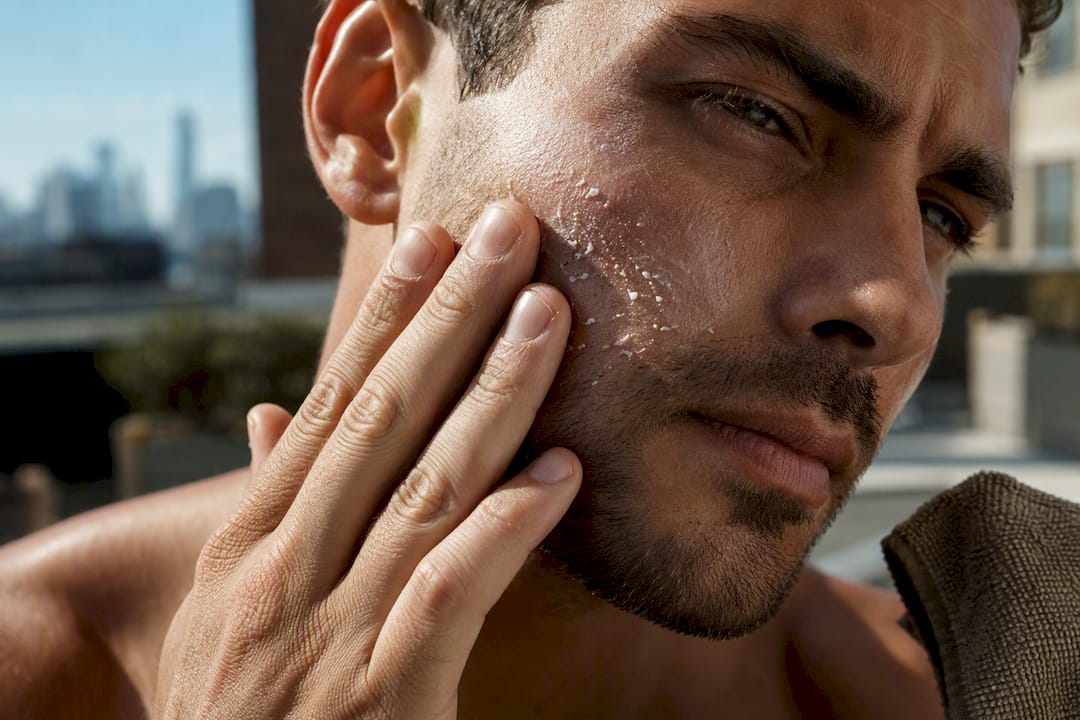
Pilling is when sunscreen balls up into little white or gray flecks instead of sinking in, and it’s almost always caused by mismatched product layers or rubbing too hard during application. The fastest fix: switch to two thin passes instead of one thick coat, pat the sunscreen in rather than rubbing, and wait 30 to 90 seconds between each skincare layer. Fixing your technique, not your entire routine, usually solves it without sacrificing sun protection.
TL;DR:
- Pilling mostly results from layer mismatch, friction from rubbing instead of patting, and applying products on dry or dehydrated skin.
- Using thick or fast-setting formulas, especially those with silicones, zinc oxide, or xanthan gum, increases the likelihood of pilling.
- Correct application order involves applying water-based products first, patting sunscreen in two thin layers, and waiting at least 90 seconds between steps.
- Adjusting technique by patting, waiting, and simplifying routines can eliminate most pilling issues without changing products.
- Reapplying on uneven, pilled areas requires gently wiping the flakes and reapplying a thin layer to restore full SPF coverage.
Table of Contents
- Why Sunscreen Pills in the First Place
- Ingredients and Textures Most Likely to Pill
- The Application Order That Prevents Pilling
- What to Do When Sunscreen Keeps Pilling on You
- Does Pilled-Up Sunscreen Still Protect Your Skin?
- A Simpler Routine Beats a Complicated Fix
- What Actually Matters Here (and What Doesn’t)
- Try a Single Balm That Skips the Layering Problem Entirely
- Sources
- FAQ
Why Sunscreen Pills in the First Place
Pilling happens when a thin film of product can’t stay smooth on the skin. It buckles, tears, and rolls into visible flecks instead of drying flat. This is a mechanical problem more than an ingredient problem in most cases.
A 2024 clinical study on skincare pilling found that a substantial portion of volunteers experienced pilling during testing, and 80% of those pilling events happened specifically when sunscreen was applied over another base product, like a moisturizer or serum. Rubbing motions, whether circular or back and forth, produced far more pilling than gentle patting.
A few mechanical culprits show up again and again:
- Layer mismatch: silicone-based products under water-based sunscreen (or the reverse) creates friction between incompatible films.
- Friction from application: rubbing disturbs a half-set film before it can bond to the skin.
- Dry or low-sebum skin: less natural oil means less flexibility in that surface film, so it cracks more easily.
- Applying too fast: not giving each layer time to set before adding the next one traps instability into the film.
Dehydrated skin is a major, often overlooked factor. Skin low on moisture creates a stiffer surface for product to sit on, and stiff surfaces crack under pressure the same way dry paint does.
Ingredients and Textures Most Likely to Pill
Some formulas are simply more pilling-prone by design, and once you know what to look for, you can spot trouble before you even open the bottle. Silicone oils in the dimethicone family are common offenders. They create a smooth, silky feel but form a film that doesn’t always mesh well with water-based products layered on top or underneath.
Thickening agents like xanthan gum and carbomer, which give lotions their gel-like texture, tend to set fast. If your next layer goes on before that film finishes forming, it fights for space and pills. Mineral sunscreens loaded with zinc oxide or titanium dioxide, especially non-micronized versions, add another risk factor because the mineral particles sit on the surface rather than absorbing, making the film thicker and less forgiving. Heavily pigmented or powdery formulas, including tinted sunscreens, behave the same way.
Pro Tip: Check the ingredient list for “dimethicone” near the top and pair it only with other silicone-forward products. Mixing silicone with a gel or watery serum underneath is one of the most reliable ways to trigger pilling.
If a product feels tacky within seconds of applying rather than gliding, that’s often your first clue it’s a fast-setting formula that needs extra wait time.
The Application Order That Prevents Pilling
Layer products from thinnest to thickest, and always let water-based formulas go on before heavier emollients or balms. Getting the order of moisturizer and sunscreen right matters more than most people realize, since applying a rich cream before a fluid sunscreen almost guarantees friction between the two films.
Here’s a routine that minimizes pilling risk:
- Cleanse and pat skin dry. Damp, slightly hydrated skin holds product more evenly than bone dry skin.
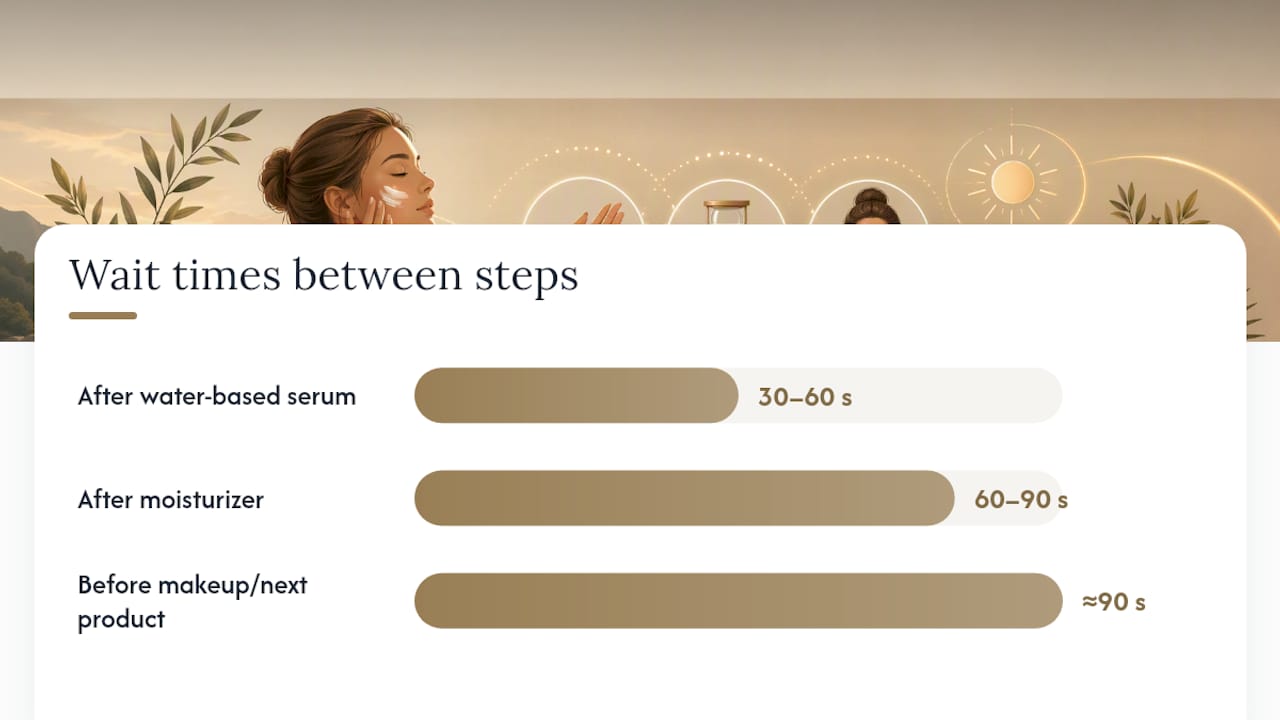
- Apply any water-based serum first, including hyaluronic acid, and give it 30 to 60 seconds to absorb.
- Follow with moisturizer, waiting about a minute to a minute and a half before moving on.
- Apply sunscreen in two thin passes rather than one heavy layer, patting or pressing it in instead of rubbing.
- Wait roughly 90 seconds before touching your face with makeup or another product.
For the face, aim for a modest amount per pass, which lines up with dermatologist guidance recommending about one teaspoon for the face when you count a full, even application.
The clinical pilling study found that rubbing motions produced significantly more pilling events than patting, which is the single biggest technique change most people can make. Reapply every couple of hours outdoors, per FDA sunscreen guidance, and always pat rather than rub when you top up.
What to Do When Sunscreen Keeps Pilling on You
If you’ve adjusted your technique and pilling still shows up, work through a short diagnostic instead of tossing your whole routine.
- Test sunscreen alone on clean, dry skin. If it doesn’t pill by itself, the problem is a layering conflict, not the sunscreen.
- Remove the most recently added product (a new serum, primer, or moisturizer) and retest.
- Compare patting versus rubbing on two different areas of your face to confirm technique is the trigger.
- Switch to a fluid or gel-textured SPF, which tends to layer more forgivingly than thick creams.
- Try a micronized mineral formula instead of a standard mineral sunscreen, since smaller particles create a thinner, more flexible film.
If pilling shows up constantly regardless of product, applying moisturizer to slightly damp skin instead of dry skin often solves it, because hydrated skin flexes with the product film rather than cracking under it.
Does Pilled-Up Sunscreen Still Protect Your Skin?
Pilling itself doesn’t chemically break down SPF, but it does create uneven coverage, and uneven coverage means uneven protection. The clinical pilling research is worth sitting with here.
A substantial portion of volunteers experienced pilling, and 80% of those events occurred specifically when sunscreen was layered over a base product. Rubbing, more than any ingredient alone, drove the highest number of pilling events.
Where the film balls up, sunscreen concentration drops in that spot, even if the surrounding skin is well covered. That’s the practical issue: SPF ratings assume an even, generous film, and pills disrupt that evenness. Don’t try to rub the pills into skin or smooth them out further. Wipe them away gently, then reapply a thin, even layer over the affected area to restore full coverage.
A Simpler Routine Beats a Complicated Fix
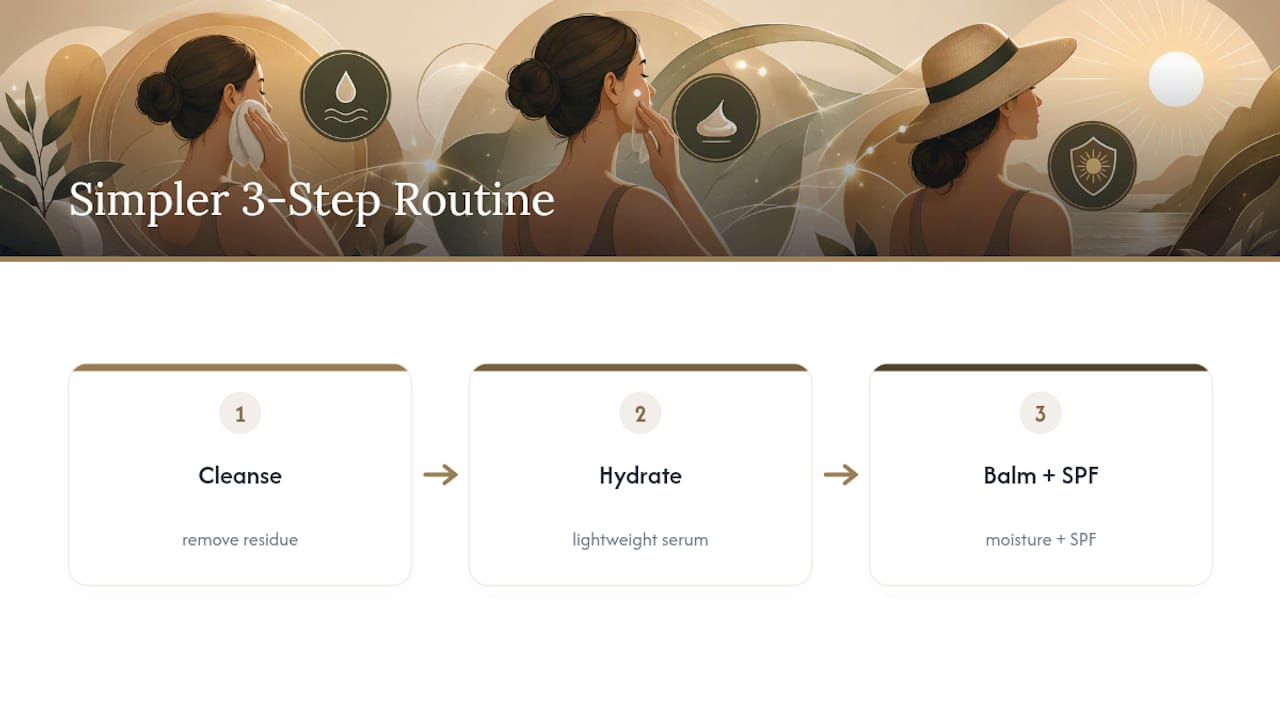
The more products stacked on your face each morning, the more chances you give pilling to happen. Fewer layers mean fewer conflicting films competing for the same real estate. A basic three-step approach, cleanse, hydrate with a lightweight serum, then apply a single balm that combines moisture and SPF, cuts out most of the friction points that cause pilling in the first place.
This is where an emollient, hydrating base matters. A balm formulated with tallow and hyaluronic acid sits closer to skin’s own lipid structure, so the film stays flexible rather than stiff and cracking. Fewer layers, better hydration, less pilling.
What Actually Matters Here (and What Doesn’t)
Most advice on sunscreen pilling treats it like a product-quality issue, something you fix by buying a “better” sunscreen. That’s backwards. The clinical data is clear that this is overwhelmingly a technique and layering problem, not a formulation failure. Rubbing motions and stacking incompatible bases caused the vast majority of pilling events, not some inherent flaw in the SPF itself.
Where conventional advice falls short is in assuming more products solve what more products actually caused. Adding a “pilling primer” or an extra smoothing step just adds another layer that can conflict with what’s already there. The better move is subtraction: fewer products, more compatible textures, and patience between steps.
If you take one thing from this, prioritize technique before you touch your product lineup. Patting instead of rubbing, waiting a beat between layers, and simplifying your morning routine fix most pilling without spending another dollar. Only after technique is dialed in does swapping to a more compatible texture make sense.
— Blaine
Try a Single Balm That Skips the Layering Problem Entirely
If matching bases and timing layers sounds like more effort than your mornings can handle, there’s a simpler route: use one product that handles hydration and sun protection at once. Iron Bull Tallow Sun Balm combines grass-fed Alberta tallow, hyaluronic acid, and reef-safe mineral SPF in a short ingredient list, which means there’s no serum-to-sunscreen handoff for pilling to sneak into.

Fewer layers means fewer chances for two incompatible films to fight each other on your skin. The tallow base is naturally close to skin’s own lipid makeup, so it spreads and sets without the stiff, cracking film that triggers pilling in lighter, silicone-heavy formulas. To try it, apply on clean, slightly damp skin in two thin passes rather than one heavy swipe, and if you still notice any flecking, run through the troubleshooting checklist above before reapplying. If a single balm fits your morning better than a multi-step stack, start with a simple three-step routine built around it.
Sources
- Understanding the causes of skincare product pilling
- Sunscreen: How to help protect your skin from the sun
- How to apply sunscreen (American Academy of Dermatology)
FAQ
Is sunscreen still effective if it pills?
Pilling itself doesn’t break down the SPF chemically, but it creates thin, uneven spots where less product sits on the skin, which lowers real-world protection in those areas. Wipe off the pills and reapply a thin layer rather than layering more product on top.
Why is my face pilling after applying sunscreen?
It’s usually a mismatch between your sunscreen and whatever product you applied underneath it, combined with rubbing the product in instead of patting. The 2024 clinical study found 80% of pilling events happened specifically when sunscreen went on over another base product.
How do I stop makeup from pilling over sunscreen?
Let your sunscreen fully set for 60 to 90 seconds before applying makeup, and press foundation in with a sponge or fingers rather than sweeping it on with a brush. A lightweight, fluid SPF texture also blends better under makeup than a thick cream.
Why does every sunscreen pill on me?
If pilling happens no matter which sunscreen you use, the issue is almost always your underlying routine or technique, not the sunscreen itself. Try simplifying to fewer layers, applying to slightly damp and hydrated skin, and patting instead of rubbing at every step.


