


Tallow can clog pores for some people, especially anyone with oily or acne-prone skin, but it isn’t a universal problem. For someone with genuinely dry, non-reactive skin who applies it sparingly, the risk drops considerably. A 2024 scoping review on tallow’s biocompatibility with skin found real gaps in the science, and Iron Bull Naturals, which builds its face balm around grass-fed Alberta tallow, thinks that gap is exactly why readers deserve a straight answer instead of a marketing line.
Here’s the short version before the rest of the detail:
- Oily or acne-prone skin: higher risk. Skip facial tallow or test extremely cautiously.
- Very dry, non-acne-prone skin: lower risk, especially in thin layers.
- Product formulation matters: raw, unrefined tallow blended with fragrance or other oils behaves differently than a purified balm.
- Application amount matters: a thin layer on clean skin is a different exposure than a thick, occlusive coat left on overnight.
- When in doubt, patch-test first. A jawline or forearm test for one to two weeks tells you more than any comedogenic chart ever will.
Key Takeaways
Tallow’s comedogenic risk depends on skin type, formulation, and application amount, not on some fixed universal rating that applies to every user.
| Point | Details |
|---|---|
| No universal verdict exists | The 2024 scoping review found tallow biocompatible in some contexts but flagged a lack of human comedogenicity trials. |
| Skin type drives outcome | Oily and acne-prone skin faces higher risk; very dry, non-reactive skin tolerates tallow better. |
| Formulation changes everything | Purified tallow behaves differently than tallow blended with coconut oil, butters, or fragrance. |
| Patch-test before facial use | Test on your jawline or forearm for one to two weeks, then extend to limited facial use over 4 to 8 weeks. |
| Iron Bull Tallow fits a specific user | Iron Bull Naturals’ balm uses grass-fed Alberta tallow and hyaluronic acid, suited to dry, non-acne-prone skin. |
Table of Contents
- Does Tallow Clog Pores? What the Research Says
- Why Does Tallow’s Fatty-Acid Profile Matter for Pores?
- Should You Avoid Tallow If You Have Acne-Prone Skin?
- How Do You Patch-Test Tallow Before Using It on Your Face?
- Why Do People Report Such Different Results With Tallow?
- Is Iron Bull Tallow Right for Your Skin?
- Where Conventional Advice on Tallow Gets It Wrong
- Try Iron Bull Tallow With Confidence, Not Guesswork
- Sources
- FAQ
Does Tallow Clog Pores? What the Research Says
The honest answer is that nobody has run the kind of large, controlled human trial that would settle this cleanly. The most rigorous available look at the subject is the 2024 scoping review published on tallow’s biocompatibility with skin, which pulled together the existing literature on rendered animal fat and skin health. Its authors were direct about the limitation: tallow is frequently marketed as non-comedogenic, but the studies that would actually prove or disprove that claim in humans are sparse.
That distinction matters for how you read every other claim in this space. A comedogenic rating chart, the kind that ranks oils on a 0 to 5 scale, was originally built using rabbit-ear assays from decades ago, not modern human facial skin. Tallow rarely appears on those legacy charts at all, which means most of what circulates online about its “rating” is inference, not measurement.
What the scoping review actually found:
- Tallow shares a fatty-acid composition reasonably close to human sebum, which is the basis for most of the biocompatibility claims.
- Existing evidence leans toward tallow being generally well tolerated on skin in a broad sense.
- The review explicitly flags that high-quality human testing focused specifically on comedogenicity is limited.
- No conclusion in the review claims tallow is “proven” non-comedogenic. It claims the opposite: the question remains open.
The evidence gap in numbers: the 2024 scoping review is one of the only academic sources to systematically examine tallow and skin at all, and even it concludes that comedogenicity specifically has not been rigorously tested in controlled human trials.
Beyond the scoping review, the mechanistic evidence is thinner and comes largely from adjacent lipid research rather than tallow itself. A Cureus article examining lipid and skin interactions discusses how certain saturated fats behave occlusively on skin and, under some conditions, may contribute to pore blockage. That research wasn’t designed around tallow specifically, so applying it to a beef tallow balm requires a mental asterisk: it’s directionally useful, not a direct verdict.
Journalism has filled some of the gap left by academic silence. Coverage from ABC News on dermatologists’ views of beef tallow in skincare reported that clinicians see real comedogenic potential in tallow and worry it can worsen acne or rosacea in people already prone to breakouts. That’s a clinical opinion built on experience treating patients, not a controlled trial, but it carries real weight given how few trials exist to contradict it.
Where does that leave the confidence level? Moderate at best, and lower than most product marketing implies. The compositional similarity to sebum is real and interesting. The absence of dedicated comedogenicity trials is also real, and it means anyone telling you tallow is “clinically proven” safe for acne-prone skin is overstating what the literature supports. A more accurate reviewer conclusion, echoed by outlets like The New Health Order’s breakdown of the tallow research, is that there’s no universal proof tallow always clogs pores, but there’s also no proof it never does. Individual response depends heavily on skin type and formulation.
Why Does Tallow’s Fatty-Acid Profile Matter for Pores?

Beef tallow is mostly a mix of three fatty acids: palmitic acid, stearic acid, and oleic acid, roughly in that order of concentration. Each one behaves differently on skin, and the balance between them is a big part of why some people tolerate tallow fine while others break out within days.
Palmitic acid is saturated and relatively heavy. It contributes to tallow’s semi-solid texture at room temperature and its strong occlusive quality, meaning it sits on the skin surface and slows water loss. That’s great for someone with a compromised, dry barrier. It’s less great for someone whose pores are already prone to trapping sebum and dead skin cells, because occlusion on top of an oily base can create the exact humid, blocked environment where a comedo forms.
Stearic acid behaves similarly, adding to the waxy consistency, while oleic acid, a monounsaturated fat, tends to increase penetration and can make a formula feel slightly less heavy. The ratio between these three fats varies noticeably depending on the cattle’s diet, which is part of why grass-fed tallow and conventional grain-fed tallow don’t always feel or perform the same on skin.
The occlusion trade-off works like this:
- On a dry, flaky, weakened barrier, occlusion slows moisture loss and gives skin room to repair itself. This is where tallow’s fans report their best results.
- On skin that already produces excess sebum, adding another occlusive layer can trap that oil against the follicle instead of letting it move and shed normally.
- Thicker application always increases occlusion. A thin film behaves very differently than a heavy, visible coat.
- Mixing tallow with other comedogenic oils (coconut oil is the most common culprit) compounds the occlusive effect rather than diluting it.
Processing changes the equation too. Rendering, the process of melting down raw fat and straining out tissue and impurities, determines how pure the final product is. Poorly rendered tallow can carry residual proteins or oxidized fats that irritate skin independent of the comedogenic question entirely. Refined, filtered tallow behaves more predictably. This is also where a manufacturer’s blend decisions come into play: a formula that pairs purified tallow with something like hyaluronic acid, which draws water into skin rather than sealing it in, behaves differently from straight rendered fat applied on its own.
Pro Tip: If you’re comparing two tallow products, check whether the ingredient list is short and purified or long and blended with multiple oils and butters. Fewer ingredients generally means fewer variables that could trigger a reaction.
Should You Avoid Tallow If You Have Acne-Prone Skin?
Dermatologists who address tallow directly tend to land on a consistent message: it’s not a blanket “no,” but it comes with real red flags that should stop certain people from trying it on their face at all.
Scripps Health’s clinical reporting on beef tallow in skincare states plainly that tallow may help very dry skin but is not recommended for acne-prone, oily, or sensitive facial skin. The reasoning is twofold: the occlusive texture itself, and the fact that most tallow-based products haven’t undergone the kind of formal stability and microbial testing that regulated pharmaceutical-grade skincare requires.
You should probably skip facial tallow if any of these apply:
- You have active acne, especially inflammatory or cystic breakouts.
- You’re currently using a retinoid or benzoyl peroxide, since layering an occlusive fat on top can trap those actives against skin and increase irritation.
- You have rosacea or a history of flushing and reactive skin.
- You’ve had a recent chemical peel, microneedling session, or laser treatment where the skin barrier is temporarily compromised.
- You’ve reacted to rich, occlusive moisturizers before, even non-tallow ones.
Clinicians at Curology explain a related concern: tallow isn’t a bio-identical match for human sebum the way marketing sometimes implies. It lacks the ceramide architecture of a properly engineered barrier repair product, and because much of the tallow sold for skincare is minimally regulated, it can carry contamination or oxidation risk depending on how it was rendered and stored.
For readers who fall into a red-flag category, dermatologists generally point toward specific ingredient classes instead: niacinamide for oil regulation and barrier support, ceramides for structured barrier repair, and hyaluronic acid for water-based hydration that doesn’t rely on heavy occlusion. Those three show up repeatedly in clinical recommendations precisely because they don’t carry the same open questions that tallow does.
How Do You Patch-Test Tallow Before Using It on Your Face?
If your skin doesn’t fall into one of the red-flag categories above and you want to try tallow, a structured test beats guessing every time. Skin reactions to occlusive fats aren’t always immediate. Some people look fine for two weeks and then start noticing closed comedones on their forehead or jawline once oil buildup catches up with them.
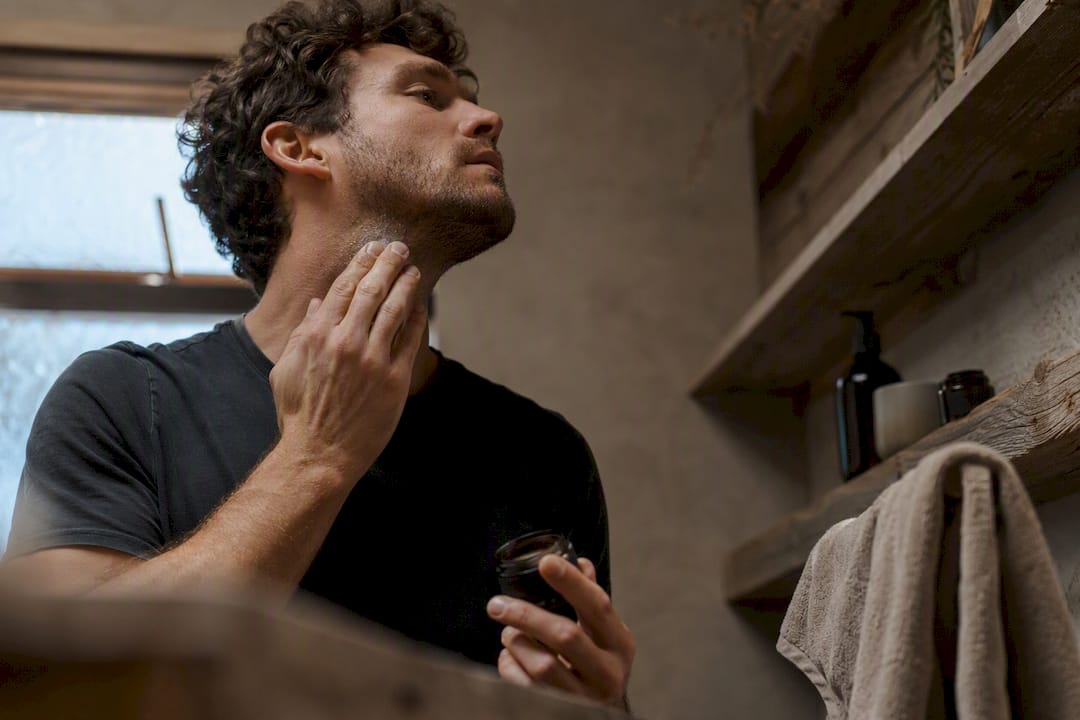
- Pick a small, contained test zone. Your inner forearm or the edge of your jawline works better than your whole face, since you want to isolate the reaction before committing.
- Apply a thin layer once daily for seven days. Watch specifically for redness, small bumps, tightness, or breakouts in that exact patch. Don’t add any other new product to that same area during the test.
- Extend to a second week if the first week looks clean. A short window can miss slow-building congestion, so patience here pays off.
- If the patch test is clean, move to limited facial use. Apply a thin layer to one section of your face, not the entire surface, for another one to two weeks before going all-in.
- Track your skin over a 4 to 8 week window. This is roughly the timeline dermatologists reference for judging whether a new occlusive product is genuinely compatible with your skin type, since a full skin cell turnover cycle takes time.
- Stop immediately if you notice new whiteheads, blackheads, or persistent oiliness that wasn’t there before. That’s the clearest early signal that the product is contributing to clogged pores for your specific skin.
Pro Tip: Apply tallow at night instead of in the morning during your trial period. That way, if you do react, you’ll spot it before you’ve layered sunscreen or makeup on top and muddied the picture.
Application technique matters as much as the timeline. A thin layer, roughly the amount you’d use for a standard moisturizer, is a fundamentally different exposure than a thick, visible coat. Avoid mixing tallow with active ingredients like retinoids, exfoliating acids, or benzoyl peroxide during your trial, since combining an occlusive fat with a penetration-enhancing active is exactly the kind of layering dermatologists warn against.
Why Do People Report Such Different Results With Tallow?
Scroll through enough skincare forums and you’ll find two camps that sound like they’re describing different products entirely: one swears tallow cleared their skin, the other says it wrecked it within a week. Both groups are probably telling the truth about their own experience.
Skin type is the biggest variable. Someone with naturally dry, low-sebum skin and someone with naturally oily skin are starting from opposite baselines, so the same occlusive product produces opposite outcomes. Formulation is the second variable, and it’s bigger than most people assume. Plain, purified tallow behaves nothing like tallow blended with coconut oil, shea butter, or fragrance oils, and research synthesis on formulation differences consistently points to blended products as the more likely trigger for breakouts.
Other sources of variability worth weighing:
- Sourcing and rendering quality. Home-rendered tallow from an unregulated source can carry impurities that a commercially purified balm won’t.
- Storage and shelf stability. Tallow can oxidize over time, especially if left in a warm bathroom, and oxidized fats irritate skin independent of comedogenicity.
- Where it’s applied. Body skin, especially on drier areas like shins or elbows, tolerates tallow far better than facial skin, where pore density and oil production are much higher.
- The “early glow, later congestion” pattern. Occlusive products often make skin look plumper and more hydrated in the first week, then congestion builds slowly over the following weeks as trapped oil accumulates.
A single glowing testimonial, or a single horror story, tells you about one person’s skin under one set of conditions. The 2024 scoping review and clinical guidance from providers like Scripps and Curology carry more weight precisely because they aggregate patterns across many cases rather than one anecdote pulled from a comment section.
Is Iron Bull Tallow Right for Your Skin?
Iron Bull Naturals built its flagship face balm, Iron Bull Tallow, around exactly the caution this article has been building toward: keep the formula simple, source the fat carefully, and be honest about who it’s for.
The product uses grass-fed Alberta tallow as its base, combined with hyaluronic acid for water-based hydration and a small set of supporting oils. Three core ingredients, nothing padded in for shelf appeal. That minimalism matters given everything covered above about formulation risk. Every additional ingredient in an occlusive balm is one more variable that could interact poorly with a given skin type, and Iron Bull Naturals’ approach keeps that list intentionally short.
Who this product fits well:
- Men with dry, flaky, or barrier-compromised skin who aren’t currently dealing with active acne.
- Readers whose skin has previously tolerated rich, occlusive moisturizers without breaking out.
- Anyone looking for anti-aging support around fine lines, since hyaluronic acid plumps and hydrates without the heavier feel of many traditional creams.
Who should hold off or check with a dermatologist first: anyone with active acne, oily and highly reactive skin, or a current retinoid or benzoyl peroxide routine, for the same reasons outlined in the clinical guidance section above.
Grass-fed sourcing is one factor tied to a more favorable fatty-acid ratio in tallow, since cattle diet influences the palmitic-to-oleic balance discussed earlier in this piece.
Practical safety steps stay the same as with any tallow product: patch-test on your jawline first, store it away from heat and direct sunlight to slow oxidation, apply a thin layer rather than a thick coat, and discontinue immediately if you notice new bumps or breakouts during your trial window.
Where Conventional Advice on Tallow Gets It Wrong
The tallow debate has split into two camps that are both overselling their side. One camp treats tallow as a miracle ingredient because it resembles sebum. The other treats it as universally comedogenic because it’s occlusive and animal-derived. Neither position survives contact with the actual 2024 scoping review, which found something less exciting than either headline: reasonable biocompatibility, real evidence gaps, and a lot riding on individual skin type.
What gets underestimated is formulation. Readers fixate on “tallow versus no tallow” when the real variable is often “purified tallow versus tallow blended with five other ingredients.” A short ingredient list isn’t a marketing gimmick here. It’s a genuine risk-reduction strategy, since every added oil or fragrance is another chance for irritation that has nothing to do with tallow itself.
If you take one thing from this piece, prioritize the patch test over any comedogenic rating chart you find online. Those charts weren’t built for tallow, and they can’t account for your specific skin. A two-week test on your own jawline will tell you more than any article, including this one.
Try Iron Bull Tallow With Confidence, Not Guesswork
If everything above has you leaning toward trying tallow rather than avoiding it, Iron Bull Naturals built its balm specifically for that decision point: dry, non-acne-prone skin that wants real barrier repair without a ten-ingredient label to decode.

Iron Bull Tallow pairs grass-fed Alberta tallow with hyaluronic acid in a formula limited to three core ingredients, which matters given how much of the comedogenic risk discussed in this article traces back to blended, multi-ingredient formulas rather than tallow on its own. Men dealing with dryness, fine lines, or irritation get a product built around purity instead of a long list of additives competing for space on their skin. If you’re ready to test it the right way, start with the simple three-step routine built around the balm, apply a thin layer during your patch-test window, and track how your skin responds over the next few weeks before committing to daily use. You can check out the product page to see current options and get started.
Sources
- Tallow, Rendered Animal Fat, and Its Biocompatibility With Skin: A Scoping Review
- Beef tallow for skin care: what dermatologists want you to know — Scripps Health
- Is beef tallow good for your skin? Curology providers explain
- Cureus article (related lipid/skin interaction research)
- Does Beef Tallow Clog Pores? What the Science Says — The New Health Order
FAQ
Does Tallow Make Your Face Break Out?
It can for some people, particularly those with oily or acne-prone skin, because its occlusive texture may trap sebum against the pore. It’s less likely to cause breakouts on dry, non-reactive skin used in thin layers.
Does Tallow Actually Clog Pores?
There’s no proof it always does or never does. The 2024 scoping review found limited human testing on this exact question, so the honest answer is that it depends heavily on your skin type and the specific formula.
Is Beef Tallow Skincare Comedogenic?
Beef tallow carries some comedogenic potential due to its occlusive fatty-acid profile, but it isn’t classified as universally comedogenic. Formulation and application amount both shift the risk up or down.
Why Do Dermatologists Caution Against Beef Tallow?
Many dermatologists caution against facial use for acne-prone or oily skin because tallow’s occlusive texture can trap oil against the pore, and most tallow products lack the formal stability and microbial testing regulated skincare undergoes, according to Scripps Health.
Is Iron Bull Tallow Safe for Acne-Prone Skin?
Iron Bull Naturals designed its balm for dry, non-acne-prone skin rather than active breakouts. Anyone dealing with active acne or using retinoids should consult a dermatologist before adding an occlusive tallow product to their routine.


