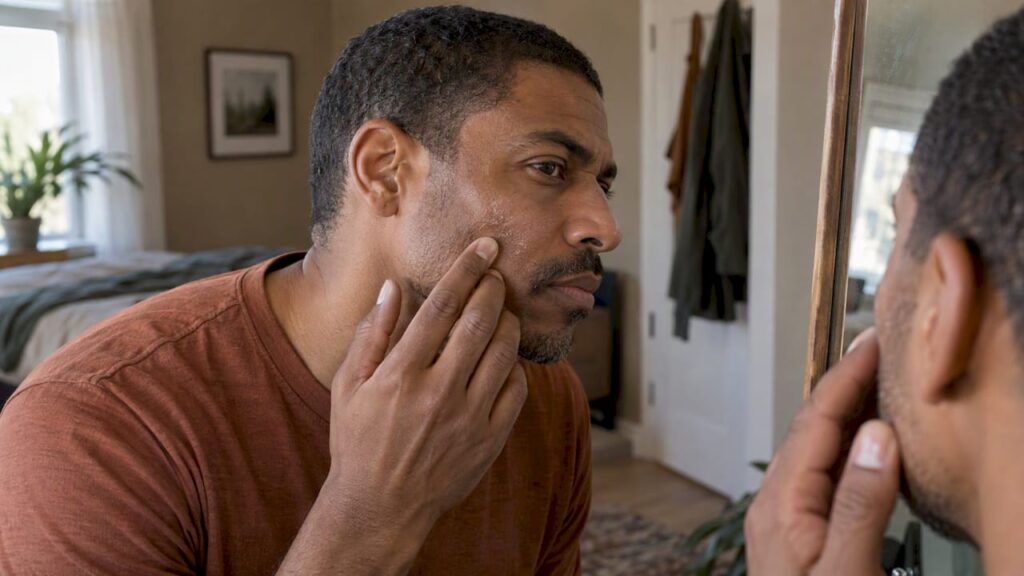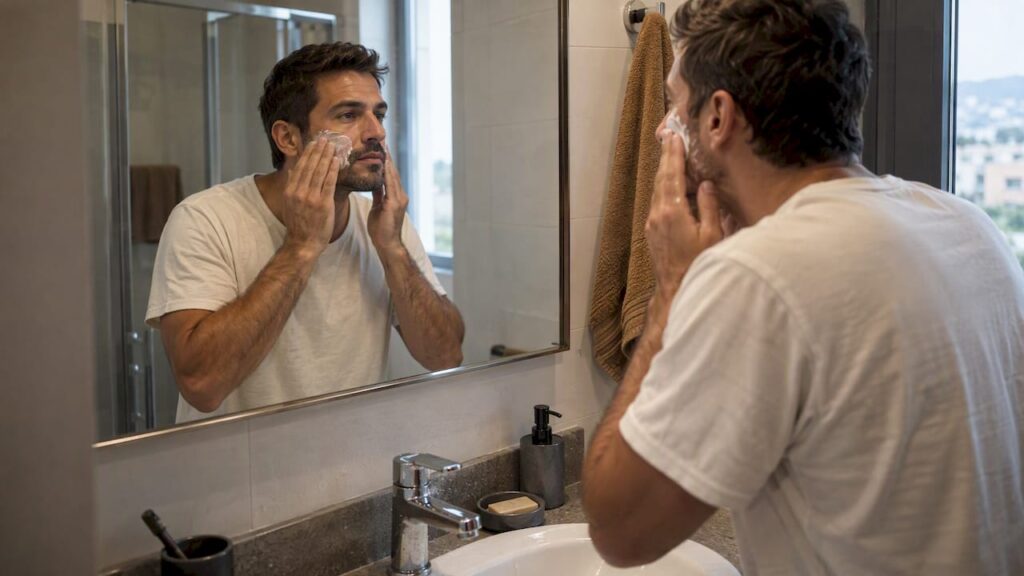


Crow’s feet, the lateral canthal lines that fan out from the outer corners of your eyes, are among the first wrinkles men notice, and they tend to run deeper and appear earlier in men than in women. The three most effective steps you can take right now:
- Apply SPF 30+ every morning without exception. UV exposure drives the enzyme activity that breaks down collagen faster than almost any other factor.
- Start a hydration and retinoid strategy. A hyaluronic acid moisturizer addresses surface dryness; a low-concentration retinol used carefully at night begins the slower work of stimulating collagen. For established lines, ask a dermatologist about prescription tretinoin.
- Consider a neuromodulator consult if your lines are deep and dynamic. Botox (onabotulinumtoxinA) relaxes the muscle contractions that carve those creases deeper with every squint and smile.
Male skin is thicker, carries stronger periocular muscles, and runs higher baseline levels of collagen-degrading enzymes than female skin. Those differences mean the same sun exposure hits harder, the same wrinkle forms faster, and the same treatment often needs a different dose or approach.
Key Takeaways
Daily SPF, consistent hydration, and a carefully introduced retinoid form the most effective long-term strategy for men to slow and reduce lateral canthal lines before clinical options become necessary.
| Point | Details |
|---|---|
| SPF is non-negotiable | UV-driven MMP activity is the leading accelerator of crow’s feet; SPF 30+ daily is the single highest-return prevention step. |
| Retinoids outperform other topicals | Prescription tretinoin and OTC retinol stimulate collagen remodeling; introduce near the eye slowly with a hydrating buffer. |
| Botox targets dynamic lines | OnabotulinumtoxinA relaxes the orbicularis oculi; men typically need higher doses and male-specific injection patterns for natural results. |
| Male skin needs different dosing | Thicker dermis, stronger muscles, and higher baseline MMP levels mean standard female protocols often underperform for men. |
| Iron Bull Naturals for daily maintenance | Iron Bull Tallow with hyaluronic acid supports barrier repair and hydration as the daily foundation layer alongside SPF and retinoids. |
Table of Contents
- What are crow’s feet and how does male facial aging differ?
- What causes crow’s feet in men and when do they typically appear?
- How to prevent crow’s feet: a practical AM/PM routine for men
- What are the treatment options for crow’s feet in men?
- Side effects, red flags, and when to see a dermatologist
- A 3-step at-home routine to reduce and slow crow’s feet
- What men actually need to know about realistic results
- Iron Bull Naturals fits naturally into a men’s anti-aging routine
- Sources
What are crow’s feet and how does male facial aging differ?
Crow’s feet are the radiating fine lines at the outer corners of the eyes, clinically called lateral canthal lines. They start as dynamic wrinkles, visible only when you squint or smile, and over time transition into static wrinkles that sit on your face at rest.
The mechanism is straightforward. The orbicularis oculi, the ring-shaped muscle surrounding each eye, contracts hundreds of times a day. Every contraction creases the overlying skin. Young skin with healthy collagen and elastin springs back. Older skin, or skin that has taken years of UV damage, loses that elasticity and the crease stays. UV exposure accelerates this by upregulating matrix metalloproteinases (MMPs), enzymes that actively degrade collagen and elastin in the dermis.
Where male anatomy changes the picture:
- Thicker dermis. Men’s skin is thicker than women’s, which provides some initial structural protection. The tradeoff is that once lines form, they tend to be deeper.
- Stronger periocular muscles. More muscle force means more repetitive microtrauma to the overlying skin with every expression.
- Higher baseline MMP levels. Men start with more collagen-degrading enzyme activity, which means UV damage compounds faster.
- Sun-protection behavior. Reviews of male facial aging consistently find that men adopt sun-protective behaviors less often than women, a behavioral gap that accelerates periocular aging significantly.
The practical upshot: men often see lateral canthal lines earlier and deeper than their female peers, and treatment planning needs to account for the extra muscle mass and skin thickness.
What causes crow’s feet in men and when do they typically appear?
How they present and progress
Early crow’s feet show up as faint lines visible only when you smile or squint. Most men notice them in their late 20s to mid-30s, though heavy sun exposure, smoking, or genetics can push that earlier. By the mid-40s, static lines that stay visible at rest are common. The progression from dynamic to static is the key clinical distinction, because it determines which treatments actually work.
The main causes, ranked by impact:
- Repetitive orbicularis oculi contractions. Every squint, smile, and blink folds the same skin in the same place. Over years, the fold becomes permanent.
- Collagen and elastin decline. Collagen production slows with age; elastin loses its recoil. The skin stops bouncing back from those folds.
- UV-driven MMP upregulation. Sun exposure triggers the release of MMPs that degrade the dermis’s structural proteins. Men’s higher baseline MMP levels mean this degradation compounds more aggressively than in women with equivalent sun exposure.
- Smoking. Nicotine constricts blood vessels, reducing oxygen and nutrient delivery to skin. Smoking also directly upregulates MMP activity.
- Genetics. Skin thickness, collagen density, and how quickly your body clears damaged proteins are all partly heritable.
- Chronic squinting. Outdoor work, screen time without corrective lenses, and bright environments without sunglasses all increase the daily contraction count.
The collagen timeline matters. Collagen synthesis begins declining in your late 20s. By the time static lines are visible, years of cumulative damage have already occurred. Prevention started early pays off far more than treatment started late.
How to prevent crow’s feet: a practical AM/PM routine for men
Prevention is not complicated, but it does require consistency. The goal is to reduce UV-driven MMP activity, keep the periocular skin hydrated and structurally supported, and minimize unnecessary muscle contraction.
Morning routine
- Gentle cleanser. Skip anything harsh or stripping around the eyes.
- Hyaluronic acid serum or moisturizer. Apply to damp skin so it pulls moisture into the dermis rather than off the surface. Hyaluronic acid plumps fine lines and improves hydration, though its effect is maintenance-level rather than corrective.
- Moisturizer. A non-greasy, barrier-supporting formula works well here. Tallow-based moisturizers like Iron Bull Tallow absorb without residue and pair well with the SPF step that follows. See the moisturizer-before-sunscreen layering guide for the correct AM order.
- SPF 30+ every day. Mineral (zinc oxide, titanium dioxide) or chemical, applied to the periocular area. This single step does more to slow lateral canthal aging than any topical active.
Evening routine
- Gentle cleanser to remove SPF and environmental residue.
- Low-concentration retinol or a dedicated eye retinol product. Start with a 0.025–0.05% retinol every other night. Retinoids stimulate collagen and elastin production; clinical literature confirms measurable improvement in fine lines with consistent use over weeks to months. Prescription tretinoin is significantly stronger and worth discussing with a dermatologist for deeper lines.
- Hydrating moisturizer over the retinoid to reduce irritation.
- Weekly gentle exfoliation as tolerated, not around the immediate eye area.
Behavioral prevention
- Wear UV-blocking sunglasses outdoors. They reduce squinting and block the UV that drives MMP activity simultaneously.
- Quit smoking. The vascular and enzymatic damage from nicotine accelerates periocular aging measurably.
- Manage sleep quality. Poor sleep elevates cortisol, which suppresses collagen synthesis.
- If you work outdoors, a wide-brim hat adds meaningful UV protection that SPF alone cannot fully replicate.
Pro Tip: When introducing retinoids near the eye, apply your hyaluronic acid moisturizer first as a buffer, wait two minutes, then apply a rice-grain amount of retinol to the orbital bone area, not directly on the eyelid. Increase frequency from every other night to nightly only after four weeks with no irritation.
What are the treatment options for crow’s feet in men?
Topicals
OTC retinol, prescription tretinoin, peptides, and hyaluronic acid all address crow’s feet at the surface level. Retinoids are the most evidence-backed topical option: they drive dermal remodeling and produce visible improvement in fine lines with months of consistent use. Prescription tretinoin works faster and at lower concentrations than OTC retinol, but it also carries a higher irritation risk near the thin periocular skin. Peptides and hyaluronic acid offer hydration and modest line-plumping but are better understood as maintenance tools than corrective ones.

Neuromodulators (Botox and similar)
Botox (onabotulinumtoxinA) is the clinical standard for dynamic crow’s feet. Injected into the orbicularis oculi, it temporarily reduces the muscle contractions that crease the skin. For men, dosing typically runs higher than for women because of greater muscle mass, and injection patterns need to respect masculine facial vectors to avoid a feminized or frozen result. Neuromodulators relax the orbicularis oculi, reduce repetitive creasing, and can prevent deeper lines when dosed carefully for male anatomy. Results last a few months, and regular treatment over time can reduce the depth of static lines as the skin recovers between sessions.

Fillers, lasers, chemical peels, and microneedling
These options address volume loss, sun-damaged texture, and deeper structural changes that neuromodulators and topicals cannot reach.
- Dermal fillers (hyaluronic acid-based) restore volume in the tear trough and lateral orbital area, softening the shadowing that makes lines look deeper.
- Laser resurfacing (fractional CO2 or erbium) removes damaged surface layers and stimulates collagen remodeling. Downtime runs 5–10 days for ablative options; non-ablative fractional lasers require less recovery.
- Chemical peels (glycolic, TCA) improve texture and mild sun damage. Medium-depth peels carry pigmentation risks, particularly for darker skin tones.
- Microneedling creates controlled micro-injuries that trigger collagen production. Lower downtime than laser, with 3–6 sessions typically needed for meaningful results.
Resurfacing procedures carry pigment change and downtime risks and require a provider experienced with male skin to avoid results that look incongruous with masculine facial structure.
Treatment comparison
Side effects, red flags, and when to see a dermatologist
What to expect by treatment type
- Topicals (retinol, tretinoin): Dryness, flaking, and redness are common in the first 2–4 weeks. These usually resolve as skin adjusts. Persistent burning or swelling warrants stopping use and consulting a provider.
- Neuromodulators: Temporary bruising at injection sites is the most common side effect. Rare but possible: temporary eyelid drooping (ptosis) from diffusion of the toxin. This resolves within weeks.
- Lasers and peels: Redness and peeling are expected and part of the healing process. Pigmentation changes, particularly hyperpigmentation in men with medium to dark skin tones, can occur and may take months to resolve.
- Fillers: Swelling and bruising are typical for 3–7 days. Vascular occlusion is a rare but serious risk that requires immediate provider attention.
Red flags that need prompt attention
- Sudden or persistent vision changes after any periocular treatment
- Signs of infection: increasing redness, warmth, pus, or fever
- Severe allergic reaction: hives, difficulty breathing, facial swelling beyond the treatment area
- Asymmetric eyelid drooping that worsens rather than improves
Choosing a qualified provider for male patients
Men often show different periocular aging patterns and aesthetic goals than women, which means not every injector or surgeon is equally equipped to treat them well. When selecting a provider:
- Ask specifically about their experience treating male patients and whether they adjust dosing and injection patterns for male anatomy.
- Request a before-and-after portfolio of male patients, not just female ones.
- Board-certified dermatologists and oculoplastic surgeons are the most qualified for periocular work.
- Avoid providers who offer a single standardized protocol regardless of sex or facial structure.
Pro Tip: At your consult, ask the provider what their target endpoint looks like for a male patient. The answer should reference preserving natural expression and masculine facial vectors, not just “reducing lines.” If they can’t articulate a male-specific approach, find someone who can.
A 3-step at-home routine to reduce and slow crow’s feet
This is the baseline every man should have in place before considering clinical options, and the maintenance layer that makes clinical results last longer.
-
AM: Hydrate and protect. Apply a hyaluronic acid moisturizer to damp skin, follow with a barrier-supporting moisturizer, then SPF 30+. The order matters: moisturizer seals in hydration, sunscreen sits on top. This step alone addresses the two biggest drivers of periocular aging: dehydration and UV exposure.
-
PM: Introduce a retinoid carefully. After cleansing, apply a hydrating buffer first, then a low-concentration retinol to the orbital bone area. Increase frequency gradually over 4–6 weeks. If irritation persists past the adjustment period, discuss prescription tretinoin with a dermatologist, which works at lower concentrations with a more predictable response. For men with dry or sensitive skin, a tallow-based moisturizer over the retinoid reduces the barrier disruption retinoids can cause.
-
Weekly: Light maintenance. A gentle exfoliant (lactic acid or a mild physical scrub, avoiding the immediate eye area) once a week removes dead cell buildup that makes fine lines look more pronounced. An occasional hydrating mask can boost moisture levels before a demanding week.
Product selection tips for men
- Texture matters. Men’s skin tends to be oilier in the T-zone but can run dry around the eyes. Look for moisturizers that absorb fully rather than sitting on the surface.
- Eye retinol vs. face retinol. Dedicated eye retinol products are formulated at lower concentrations and with gentler carriers specifically for the thin periocular skin. If you use a face retinol near the eye, apply it conservatively and buffer it well.
- Peptides as a complement. Peptide serums (look for palmitoyl tripeptide-1 or acetyl hexapeptide-3) work well alongside retinoids and add a signal for collagen synthesis without the irritation risk.
- When you’re ready to step up from OTC retinol, a dermatologist visit for prescription tretinoin is the most evidence-backed move. The no-BS men’s skincare routine covers how to layer these actives efficiently.
What men actually need to know about realistic results
The most common mistake men make with crow’s feet treatment is expecting erasure. That’s not what any treatment delivers, and chasing that outcome leads to overdone results that look worse than the original lines.
What treatment actually does is soften. A well-dosed Botox session reduces the depth and frequency of the crease without eliminating the expression that caused it. A consistent retinoid regimen improves skin texture and slows new line formation, but it won’t reverse a decade of sun damage in a month. Laser resurfacing can meaningfully reduce static lines, but the skin still ages after the procedure.
The male aesthetic goal is different from the female one, and that distinction matters clinically. Men generally want to look rested and refreshed, not treated. That means conservative dosing, injection patterns that follow masculine facial vectors, and a provider who understands that a man’s crow’s feet at 45 can look distinguished rather than problematic. The goal is not a face that looks 25; it’s a face that looks like the best version of 45.
Maintenance timelines are real. Botox requires repeat sessions every 3–4 months to sustain results. Retinoids require daily use indefinitely. SPF is a lifetime commitment. Men who approach this as a one-time fix consistently end up disappointed; men who treat it as a low-effort ongoing routine consistently see the best long-term outcomes.
Iron Bull Naturals fits naturally into a men’s anti-aging routine
Prescription treatments and clinical procedures handle the heavy lifting for established lines. For the daily maintenance layer, the barrier support, and the hydration that makes every other treatment work better, Iron Bull Tallow is built for exactly that role.

Iron Bull Tallow is a grass-fed beef tallow face balm with hyaluronic acid, formulated specifically for men’s skin. It absorbs without a greasy residue, supports the skin barrier that retinoids and environmental stress can compromise, and delivers the deep hydration that keeps periocular skin supple between clinical sessions. In the morning, apply it after your hyaluronic acid serum and before your SPF. In the evening, use it as the final moisture-sealing step over your retinoid. Pair it with Iron Bull’s mineral zinc oxide sun balm for complete AM protection.
Iron Bull Tallow supports hydration and topical barrier maintenance. It is not a substitute for clinical treatments like neuromodulators or prescription tretinoin when those are clinically indicated. Start your anti-wrinkle routine with the right foundation, then add clinical options as needed.

Sources
The following clinical and peer-reviewed resources were used to build this guide. Each covers a distinct aspect of lateral canthal aging and treatment in men.
- Crow’s Feet (Lateral Canthal Lines) — Cleveland Clinic
- “Man-some”: A Review of Male Facial Aging and Beauty — JDDOnline
- Review article on retinoids and skin aging — NCBI PMC
For a personalized assessment of your crow’s feet and a treatment plan matched to your skin type and goals, consult a board-certified dermatologist or oculoplastic surgeon experienced with male patients.