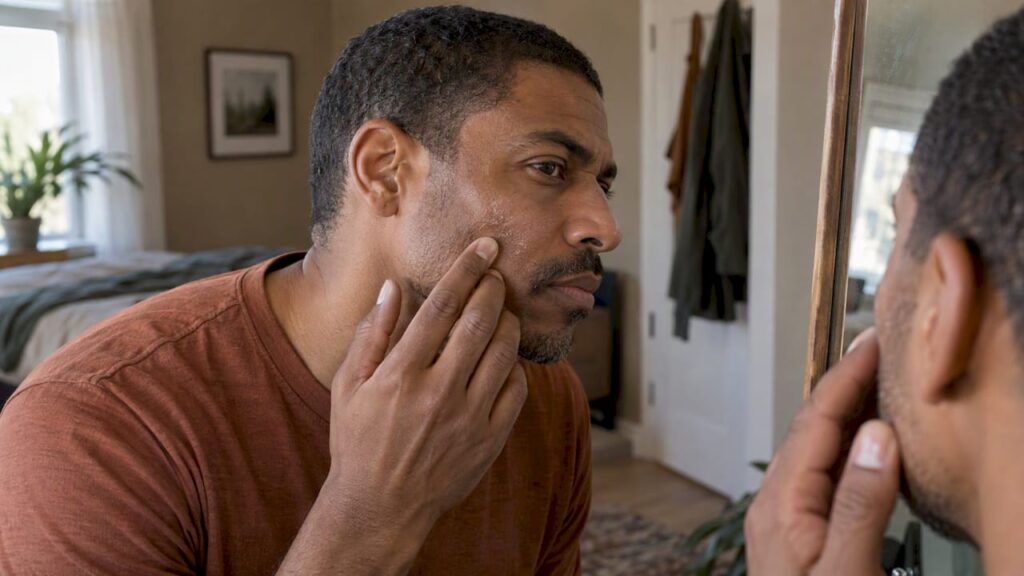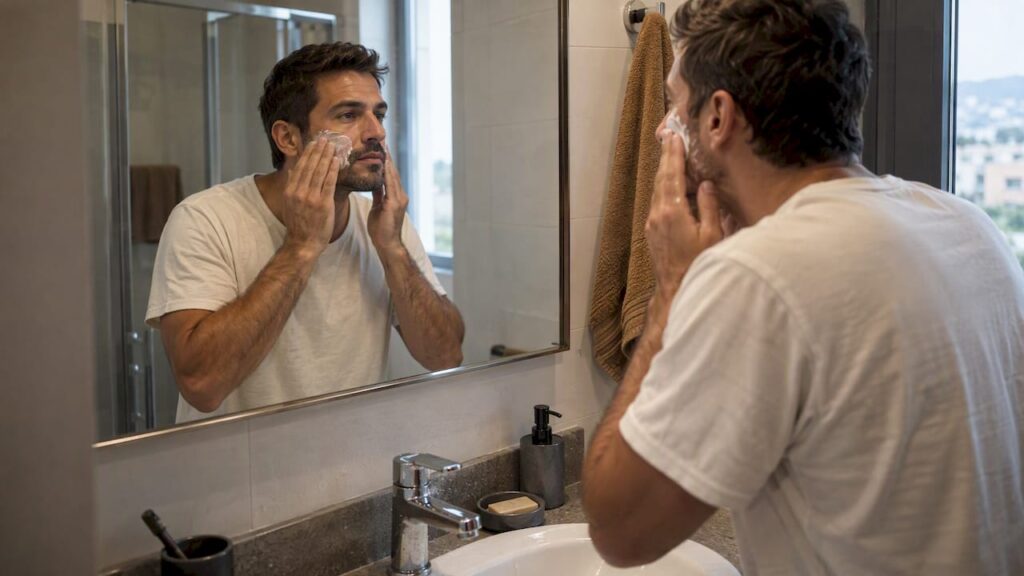

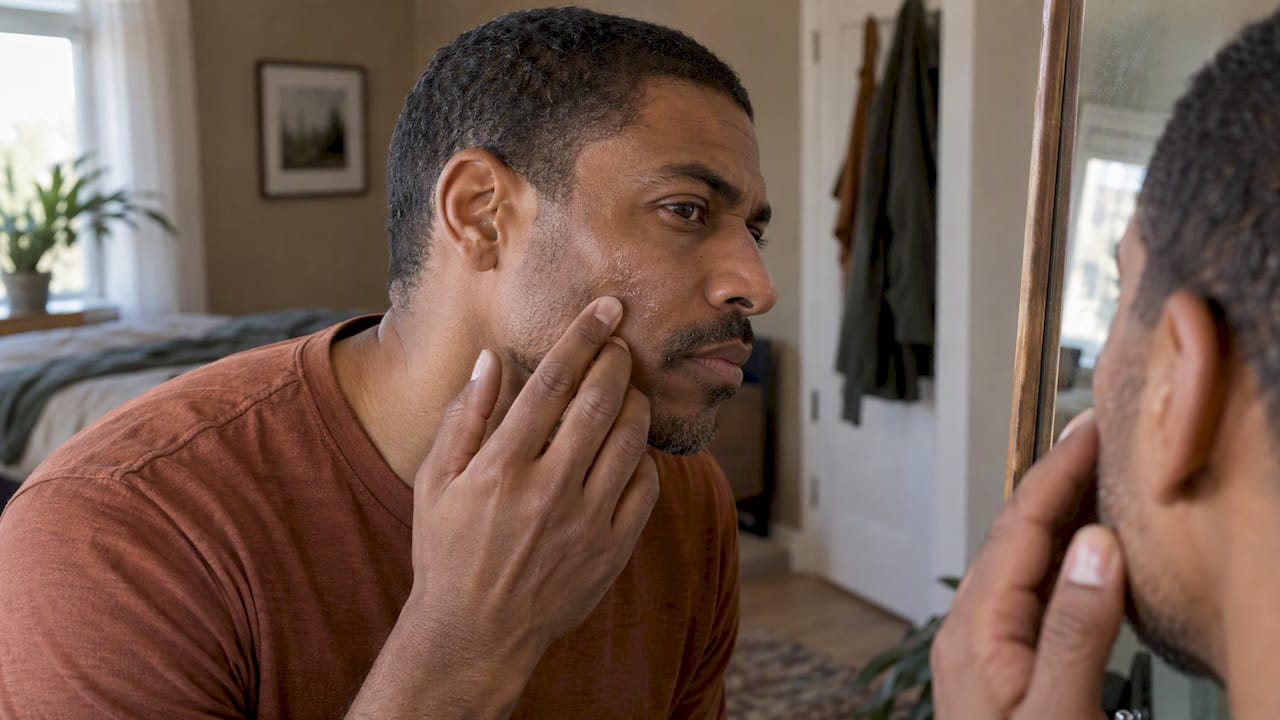
Dry, flaky skin on a man’s face usually comes down to one thing: the outer skin layer is losing water faster than it can hold it. Cold air, hot showers, daily shaving, harsh soap and age all speed that loss. The fix is rarely complicated: a gentle cleanser, lukewarm water, a moisturizer applied while skin is still damp, and daily sun protection. Below you will find the causes, a routine, a midday rescue plan and the signs that mean it is time to see a professional.
TL;DR
- Flaking happens when skin loses water too fast. Mayo Clinic lists aging, cold or dry climates and harsh products as common triggers.
- Shaving with a dull blade, against the grain or without lubrication can add irritation on top of dryness.
- Wash with a mild cleanser and lukewarm water, then moisturize within five minutes and wear SPF outdoors.
- Skip fragrance, alcohol and other irritants in anything you put on a flaking face.
- If self-care does not help in about two weeks, or the skin itches nonstop, looks infected or hurts, see a dermatologist.
Table of Contents
- What causes dry, flaky skin in men
- How shaving makes flaky skin worse
- A simple daily routine for dry, flaky skin
- Quick relief when your face feels tight or starts flaking midday
- Choosing a moisturizer: ingredients and natural claims
- Our perspective: why we built a three-ingredient balm
- Try our face balm
- Don’t forget sun protection
- Everyday habits that keep flakes away
- When to see a dermatologist or doctor
- FAQ
- Sources
What causes dry, flaky skin in men
Healthy skin has an outer layer that holds water in, helped by natural oils. When that layer loses water faster than the body replaces it, skin feels tight and rough, and it can itch, flake, show fine lines and, in worse cases, crack or bleed. That is the picture Mayo Clinic gives for dry skin in general, and it applies to your face as much as your shins.
Several things push that balance the wrong way.
Age
Skin makes less oil and gets thinner over time, so it holds less water. Mayo Clinic names aging as a major factor. If your face was fine at 25 and started flaking at 45, that is not your imagination.
Climate and environment
Dry or cold climates raise the risk, and so does work that keeps you outdoors or has you washing your hands often, according to Cleveland Clinic. Heated indoor air in winter does similar damage. We cover the cold-season angle in our guide to winter dry skin for men.
Harsh products and long hot showers
Strong soaps, foaming cleansers, alcohol-based aftershaves and scented products strip oils and irritate the barrier. Long, hot showers do the same. A man who scrubs his face twice a day with a deodorant bar and then wonders why it flakes is a very common case.
Medical conditions and medications
Sometimes dryness is a symptom of something else. Cleveland Clinic lists diabetes, thyroid disease, kidney disease, atopic dermatitis, psoriasis and seborrheic dermatitis among the conditions that can dry the skin. The American Academy of Dermatology adds that certain medications, including statins and diuretics, and cancer treatment can cause excessively dry skin. If you take any of these or have one of these conditions, mention the dryness to your doctor rather than treating it alone.
How shaving makes flaky skin worse
Most men scrape their face with a blade several times a week, and that is where dryness often turns into redness, stinging and rough patches. Cleveland Clinic says razor burn comes from dry shaving, dull blades, shaving too fast or going against the direction of hair growth. All of these disrupt the skin barrier and cause inflammation.
A few habits that keep the damage down:
- Soften the skin first. Shave after a warm (not scalding) rinse, never on a dry face.
- Use a fresh, sharp blade. A dull one drags and takes extra passes.
- Go slowly and with the grain while your skin is dry or flaky.
- Skip fragrance and alcohol afterward. Cleveland Clinic advises avoiding fragrances, alcohol and other irritants on irritated skin.
- Moisturize right after. A barrier-supporting balm beats a stinging splash.
If razor burn is your main complaint, our piece on shaving irritation in men goes deeper on cutting the extra passes.
A simple daily routine for dry, flaky skin
You do not need ten steps. The American Academy of Dermatology recommends men wash with a mild facial cleanser and lukewarm water, moisturize right after bathing while skin is damp, and use sunscreen whenever outdoors. That is the whole framework.
Morning
- Rinse with lukewarm water, or use a mild cleanser if your face feels dirty or sweaty.
- Pat dry, leaving the skin slightly damp.
- Apply moisturizer within five minutes. Cleveland Clinic gives that window for moisturizing after washing your face.
- Finish with sun protection. Cleveland Clinic suggests choosing a moisturizer with SPF or layering sunscreen over it.
Evening
- Wash once with a mild cleanser and lukewarm water to remove sweat, sunscreen and grime.
- Pat dry and moisturize again while the skin is still damp.
- On very rough patches, use a slightly richer layer than in the morning.
What to leave out
Hold off on scrubs, hot water, scented aftershave and anything that stings. Flaking skin looks like it needs scraping off, but rough exfoliation on a compromised barrier tends to make it angrier. If you want to exfoliate at all, keep it gentle and occasional, and stop if your face burns or turns red.
Want the stripped-down version? Our no-nonsense three-step routine takes about five minutes, and our guide to fixing dry facial skin in a few weeks walks through the timeline.
Quick relief when your face feels tight or starts flaking midday
Sometimes you notice it at 2 p.m.: the skin around the nose and brows feels tight and little flakes are showing. Here is what helps.
- Moisturize when it feels dry. The AAD’s dermatologist tips say to apply moisturizer whenever skin feels dry, and that a cream or ointment can help relieve it. A balm is closer to an ointment than a thin lotion, so it tends to stay put.
- Use a little, warm it between your fingers, and press it on. Rubbing hard on flaking skin just irritates it.
- Spot-treat severe patches at night. Cleveland Clinic suggests dabbing a petroleum jelly-based product on severe dry spots before bed, and stopping or cutting back if it causes pimples. We compare that approach with moisturizers in petroleum jelly vs moisturizer.
- Layer smartly. Water-attracting ingredients first and a sealing layer on top is a pattern worth knowing, and we explain it in humectants and occlusives.
Choosing a moisturizer: ingredients and natural claims
For a flaking face, look at what is in the jar before you look at the label on the front.
Avoid irritants. Cleveland Clinic’s advice is to steer clear of fragrances, alcohol and other irritants. If your skin is reactive, a fragrance-free product is a safer start. See our note on fragrance-free face balms.
Know the ingredients dermatologists use. The AAD says dermatologists may choose moisturizers with urea, ceramides, lactic acid or glycerol to hydrate skin and help restore its outer layer. Those are worth recognizing on a label.
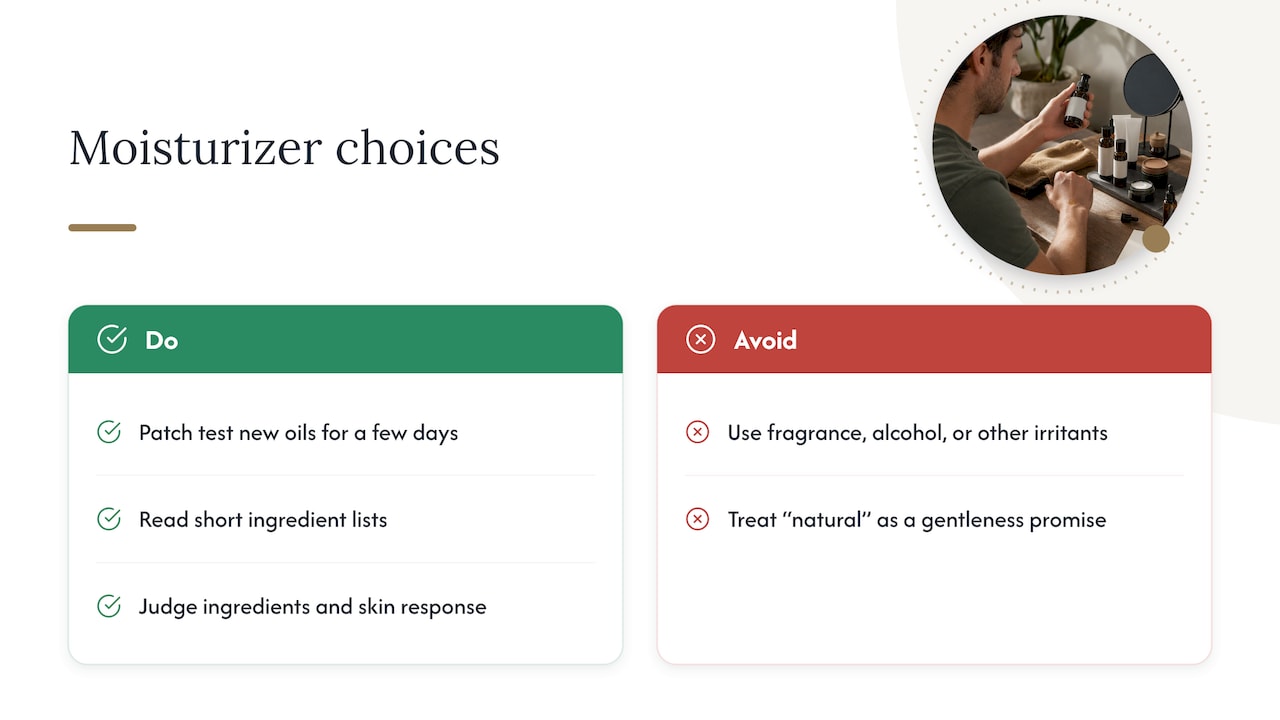
Oils can help too. Cleveland Clinic notes that natural oils such as avocado, coconut and olive oil can help moisturize skin. Oils differ in how they feel and how they sit on the face, so patch test a new one on a small area for a few days before using it everywhere.
Read short ingredient lists. The shorter the list, the easier it is to spot what bothers you. That is the logic behind simple formulas, and it is why we wrote a natural moisturizer buying guide for men and a roundup of the best moisturizers for dry skin.
Treat the word natural as a starting point. It is not a regulated promise of gentleness. Judge a product by its actual ingredients and by how your skin responds over a couple of weeks.
Our perspective: why we built a three-ingredient balm
We started Iron Bull Naturals because most men’s skincare asks guys to run a routine they will never keep. Busy men want something that goes on fast, absorbs without a greasy film and does not sting. So we built our face balm around purity: grass-fed Alberta beef tallow, hyaluronic acid and jojoba oil, with essential oils in some formulas, and nothing we consider filler.
Here is our thinking. Tallow is a rich, skin-compatible fat, and we pair it with hyaluronic acid to draw in water, which is why our formula is designed to hydrate and repair without the heavy feel many moisturizers leave. A short ingredient list also makes it easier to see what is going on your face, which matters when your skin is already irritated. Customers tell us they notice better hydration and texture within weeks, and we stand behind it with a 60-day money-back guarantee.
We also think men do better with fewer products. One balm in the morning and evening, a sun balm outdoors, and a gentle wash is a routine you can keep up on a Tuesday when you are tired. Consistency, not a long shelf of bottles, is what lets dry skin recover. If you want to see how tallow fits into skincare more broadly, our page on beef tallow for skin covers it.
— Blaine
Try our face balm
If your face is flaking and you want a simple fix, our Iron Bull Beef Tallow Face Moisturizer for Men is made for exactly that: a non-greasy balm with three key ingredients, designed for dry, irritated and sensitive skin. Pair it with the Iron Bull Naturals Sun Balm for daytime protection. You can see both in our shop.

If irritation is your main issue, read about our face balm for irritated skin. Prone to breakouts? See why we designed a non-comedogenic balm that rinses clean.
Don’t forget sun protection
Dry skin is more vulnerable skin, and flaking often shows up on the parts of your face that see the most sun: forehead, nose, cheekbones. The AAD advice above is to wear sunscreen whenever you are outdoors, and Cleveland Clinic suggests an SPF moisturizer as one convenient step. If you want a single-step daytime option, our sun balm is a mineral formula with zinc oxide. Our comparison of sun balm and sunscreen explains how we see the difference. If chemical sunscreens sting your already dry skin, our note on chemical sunscreen irritation lists the clues to watch for.
Everyday habits that keep flakes away
- Shorten showers. Keep them lukewarm and brief, and pat dry rather than rubbing.
- Run a humidifier in the bedroom during heating season. Dry indoor air pulls moisture from skin overnight.
- Switch soaps. Use a mild cleanser on your face, and keep deodorant bars and body wash away from it.
- Protect your face outdoors. Wind and cold are two of the climate triggers named by Cleveland Clinic, so a scarf and a balm layer before you head out make a real difference.
- Drink water, but do not expect it to fix everything. Topical care and gentler habits do most of the work for the skin barrier.
When to see a dermatologist or doctor
Self-care solves most cases, but not all. With effective self-care, you should usually see improvement within about two weeks, and the AAD says to see a dermatologist if dryness continues or gets worse.
Book a visit sooner if:
- The skin itches so much it interferes with sleep or daily activities.
- It looks infected or is painful.
- You develop a rash.
Those are the warning signs Cleveland Clinic lists for seeing a healthcare provider. A dermatologist will often ask about your own and your close relatives’ history of eczema, asthma, hay fever or food allergies, plus how long it has lasted and what you have tried, as the AAD explains. Write those details down before your appointment. Persistent flaking along the brows, sides of the nose and hairline, with redness, can point to a condition such as seborrheic dermatitis, which needs a professional diagnosis, not another moisturizer.
FAQ
What causes dry, flaky skin on a man’s face?
The usual cause is water loss from the outer skin layer, triggered by aging, cold or dry climates and harsh products, according to Mayo Clinic. Frequent shaving adds irritation. Some medical conditions and medications also dry the skin, so mention persistent dryness to your doctor.
How fast can I fix flaky facial skin?
With consistent self-care, most people see improvement within about two weeks, per the AAD. Cleanse gently, moisturize within five minutes of washing and use sunscreen outdoors. If nothing changes in that time, see a dermatologist.
Should I exfoliate flaky skin?
Be cautious. Flaking is a sign the barrier is already stressed, so scrubs and strong acids can make it angrier. Start by moisturizing consistently with a mild routine. If you do exfoliate, keep it gentle and occasional, and stop if your skin stings or reddens.
Is coconut oil good for dry facial skin?
Cleveland Clinic says natural oils such as coconut, avocado and olive oil can help moisturize skin. How well an oil suits your face varies from person to person, so test a small patch for a few days first. A balm with a short, simple ingredient list gives you fewer variables to track.
Does shaving cause flaky skin?
It can make it worse. Dry shaving, dull blades, rushing and shaving against the grain all disrupt the skin barrier, per Cleveland Clinic. Shave on softened skin with a sharp blade, go with the grain and moisturize right afterward.
Sources
- Dry skin – Symptoms and causes, Mayo Clinic
- Dry Skin (Xeroderma): Symptoms, Causes, Treatment, Cleveland Clinic
- Tips for Getting Rid of Dry Skin on Your Face, Cleveland Clinic
- Razor Burn: Causes & Treatment, Cleveland Clinic
- Dry skin: Who gets and causes, American Academy of Dermatology
- Dry skin: Diagnosis and treatment, American Academy of Dermatology
- Skin care tips for men, American Academy of Dermatology
- Dermatologists’ top tips for relieving dry skin, American Academy of Dermatology
- Dry skin: Overview, American Academy of Dermatology