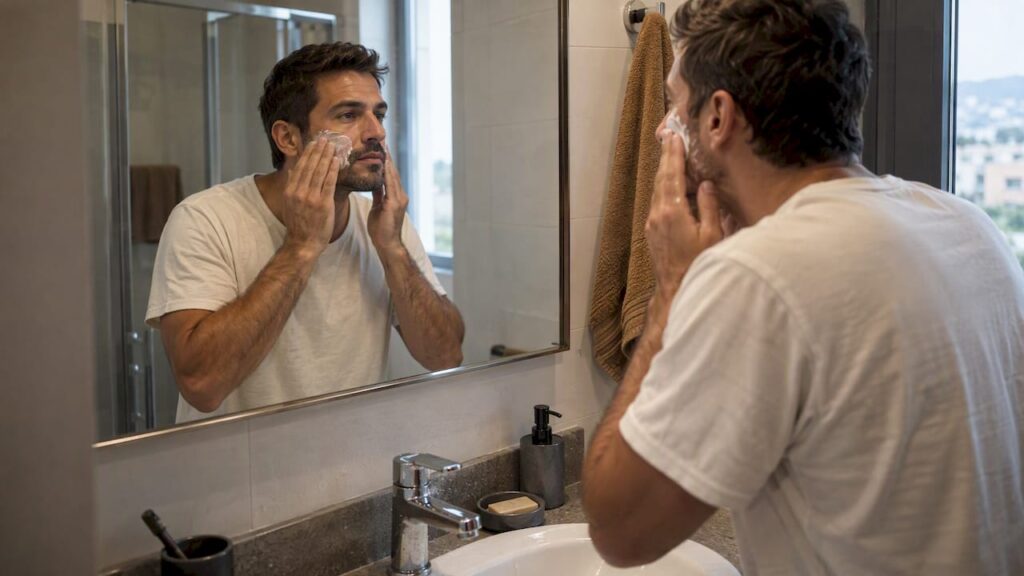


Stinging or burning minutes after applying sunscreen usually points to irritant contact dermatitis, while an itchy rash that shows up a day or two later suggests an allergic or photoallergic reaction. Either way, stop using the product, rinse gently with cool water, and apply a bland moisturizer. Seek emergency care if you notice swelling, trouble breathing, or rapid spreading, and photograph the rash along with the product label before you toss it.
TL;DR:
- An itchy rash that appears 12 to 72 hours later and spreads beyond the application site suggests allergy; sun exposed areas alone suggest photoallergy.
- A 2025 review found about 99.5% of roughly 38,950 subjects showed no sensitization to studied chemical filters; oxybenzone is the most frequently reported sunscreen allergen.
- Test new sunscreen on your forearm daily for 7 to 10 days, then try a small facial area for 2 to 3 days.
- Recurring reactions or rashes limited to sun exposed skin warrant dermatology evaluation rather than continued home testing; photopatch testing checks whether ultraviolet exposure triggers symptoms.
Table of Contents
- Types of Sunscreen Reactions: Irritant, Allergic, and Photoallergic
- Which Ingredients Most Often Cause Reactions
- How to Tell if It’s an Allergy or an Irritant at Home
- Immediate Relief and Short-Term Treatment You Can Safely Try
- How to Find a Sunscreen That Won’t Irritate
- When to See a Dermatologist and What Patch Testing Involves
- Evidence Snapshot: What the Safety Data Actually Shows
- A Conservative, Testing-First Approach
- A Simpler Mineral Option Worth Testing
- FAQ
- Sources
Types of Sunscreen Reactions: Irritant, Allergic, and Photoallergic
Three distinct reactions get lumped together as “sunscreen irritation,” and telling them apart changes what you should do next.
Irritant contact dermatitis shows up almost immediately, often within minutes, as stinging, burning, or redness right where you applied the product. It is a direct chemical effect on the skin, not an immune response, and it is the most common reaction people report.
Allergic contact dermatitis takes longer to appear, typically 12 to 72 hours after contact, and presents as itching, swelling, or a rash that can spread beyond the application site. Photoallergic dermatitis is triggered only when a specific ingredient absorbs UV light, so it appears in sun-exposed areas and tends to spare shaded skin like the upper eyelids or under the chin.
A few patterns help with quick triage:
- Immediate stinging at the application site usually means irritation, not allergy.
- A delayed, itchy rash that spreads suggests a true allergic reaction.
- A rash confined to sun-exposed skin, sparing shaded areas, points to photoallergy.
People with eczema, rosacea, or an already damaged skin barrier react more easily to both irritants and allergens, since compromised skin lets more of the product penetrate.
Which Ingredients Most Often Cause Reactions
Not all sunscreen ingredients carry the same risk, and knowing which ones to watch narrows the search for a tolerable formula considerably.
Among chemical UV filters, a handful show up repeatedly in reaction reports:
- Oxybenzone (benzophenone-3) is the most frequently reported sunscreen allergen among chemical filters, particularly for photoallergic reactions.
- Octocrylene has been linked to both allergic and photoallergic responses in some users.
- Avobenzone and octinoxate appear less often as allergens but can still cause irritation, especially in combination formulas.
A 2025 retrospective safety review found that about 99.5% of roughly 38,950 subjects showed no sensitization to the chemical filters studied, with most of the remaining reactions classified as irritant rather than allergic. That is a meaningful distinction: true allergy to modern chemical filters is uncommon, while irritation from the formula itself is far more frequent.
Mineral filters, zinc oxide and titanium dioxide, have very low reported allergenicity. But a “mineral” label does not guarantee a reaction-free experience, because fragrance, preservatives, emulsifiers, and solvents in the base formula are common culprits, as are degraded or expired products. You can read more about how mineral vs chemical sunscreen filters compare on sensitive skin.
How to Tell if It’s an Allergy or an Irritant at Home
Before you assume you are allergic to every sunscreen on the shelf, a few home checks can narrow things down.
- Note the timing: stinging within minutes points to irritation; itching or rash 12 to 72 hours later suggests allergy.
- Check distribution: a reaction confined to sun-exposed skin that spares shaded areas suggests photoallergy.
- Try a semi-open patch test: apply a small amount to your inner forearm daily for 7 to 10 days and watch for redness, itching, or bumps — see detailed guidance on the patch test tinta vegetale for insights on how to read the results.
- Photograph any reaction each day and keep the bottle with its full ingredient list for reference.
If you only get mild stinging that fades quickly, you are likely dealing with simple irritation and can try a gentler formula. Recurrent reactions across multiple products, a clear sun-exposed pattern, or symptoms that worsen over several days are signs to escalate to professional patch or photopatch testing rather than continuing to self-test.
Immediate Relief and Short-Term Treatment You Can Safely Try
Once you suspect a reaction, the priority is calming the skin and protecting the barrier, not treating the sunscreen as the enemy of all SPF.
- Stop using the product immediately and rinse the area with cool water and a mild, fragrance-free cleanser.
- Apply cool compresses for 10 to 15 minutes at a time to reduce stinging and swelling.
- Follow with a bland, fragrance-free moisturizer to support the skin barrier while it recovers.
- For itching, a short course of over-the-counter 1% hydrocortisone cream or an oral antihistamine can help if appropriate for you.
- Hold off on retinoids, exfoliating acids, and other strong actives until the skin has fully calmed down.
Pro Tip: Keep a fragrance-free moisturizer in your medicine cabinet specifically for reaction flare-ups, so you are not reaching for whatever is on hand.
Most irritant reactions improve within a day or two. Worsening pain, spreading rash, blistering, or facial swelling are signs to see a doctor rather than wait it out.
How to Find a Sunscreen That Won’t Irritate
Finding a sunscreen your skin tolerates is a process of elimination, not guesswork, and a methodical approach gets you there faster.
- Start with a 100% mineral, fragrance-free formula built around zinc oxide or titanium dioxide and a short ingredient list.
- Patch-test on your inner forearm once daily for 7 to 10 days before trying it anywhere near your face.
- If the forearm test is clear, apply a small amount to one area of your face for 2 to 3 days before going full-face.
- Change only one variable at a time, one new product, so you know exactly what caused any reaction.
A few formulation details matter more than people expect:
- Creams and lotions tend to be better tolerated than sprays, which can irritate via inhalation and uneven coverage.
- Alcohol-heavy vehicles dry out and irritate skin that is already sensitized.
- Checking the difference between fragrance-free and unscented labeling helps you avoid products that still contain masking fragrance chemicals.
When to See a Dermatologist and What Patch Testing Involves
If home trialing does not resolve things, or your reaction pattern suggests photoallergy, formal testing gives you a clear answer rather than more guessing.
Standard patch testing places suspected allergens on your skin under occlusion for 48 hours, with results read at 48 to 72 hours. When a sun-exposed pattern suggests photoallergy, dermatologists add photopatch testing, exposing duplicate patches to UV light to see whether that triggers the reaction.

Clinicians weigh how relevant a positive result is to your actual exposure and may follow up with repeat open application testing (ROAT) on your forearm over several days to confirm a culprit before you commit to avoiding it long term.
Before your appointment:
- Bring photos of the reaction at different stages.
- Bring the actual product, or its full ingredient list, not just the brand name.
- Write down a timeline: when you applied it, when symptoms started, and how they progressed.
Evidence Snapshot: What the Safety Data Actually Shows
The research on chemical sunscreen reactions is more reassuring than the anecdotes suggest, while still pointing toward specific, avoidable triggers.
The 2025 retrospective safety review cited above found sensitization to be rare across tens of thousands of subjects, with most reported reactions tied to irritation from vehicles and preservatives rather than true allergy to the active filters. Separate review literature consistently names oxybenzone and related benzophenones as the filters most often implicated in photoallergic reactions, while mineral filters remain comparatively low-risk.
Many sunscreen reactions trace back to excipients such as fragrances, preservatives, and emulsifiers rather than the active UV filter itself, which is why combined patch and photopatch testing is recommended for persistent or photo-pattern cases.
That pattern is exactly why formulas built around a short, recognizable ingredient list tend to cause fewer surprises for reactive skin.
A Conservative, Testing-First Approach
Most sunscreen reactions are manageable once you identify whether you are dealing with irritation or true allergy, and neither means giving up on sun protection. Lean on shade and clothing while you test alternatives, record what you try and when, and see a dermatologist if a pattern keeps repeating or follows sun exposure specifically. Patience with the process beats guessing with your face.
— Blaine
A Simpler Mineral Option Worth Testing
If you are rebuilding your sunscreen routine from scratch after a reaction, starting with a short, recognizable ingredient list takes a lot of the guesswork out. We built our mineral sun balm around zinc oxide and tallow, with no fragrance and none of the excipients that tend to cause problems for reactive skin.

A few things worth knowing before you switch:
- It is formulated as a balm rather than a lotion or spray, which avoids alcohol-heavy vehicles and uneven spray coverage.
- It is built for those looking for a straightforward routine without a long ingredient list to parse.
- You should still patch-test any new product, including ours, on your forearm before applying it to your face.
Read more on how sun balms compare to traditional sunscreen, or browse the full shop to see current options.
This article is general information, not a substitute for advice from a qualified doctor. Consult a qualified healthcare professional about your own circumstances before acting on anything here.
FAQ
Can you have an allergic reaction to sunscreen?
Yes, though true allergy is less common than irritation. Chemical filters, especially oxybenzone, are the most frequently reported sunscreen allergens, while mineral filters rarely cause allergic reactions.
What is irritant contact dermatitis?
Irritant contact dermatitis is a direct chemical reaction on the skin, not an immune response, causing stinging, burning, or redness right where a product was applied. It typically appears within minutes of application and is the most common type of sunscreen reaction.
What are the stages of an allergic reaction?
An allergic reaction to sunscreen generally progresses from initial sensitization on first exposure to a delayed rash, itching, or swelling appearing 12 to 72 hours after a later exposure. Severe reactions can include spreading rash or swelling and warrant prompt medical attention.
What are the potential side effects of using avobenzone?
Avobenzone is less commonly reported as an allergen than oxybenzone but can still cause irritation or, in some cases, a photoallergic reaction when combined with other filters. If you notice stinging or a delayed rash after using an avobenzone-containing sunscreen, switching to a mineral formula is a reasonable next step.
How can I prevent sunscreen irritation going forward?
Choose fragrance-free, mineral-based formulas with short ingredient lists and patch-test any new product on your forearm before applying it to your face. Keeping your skin barrier healthy with a gentle, bland moisturizer between sunscreen trials also reduces the chance of a reaction.
Sources
- Retrospective safety review of chemical sunscreen filters (PubMed)
- Contact allergens among sunscreen filters (PubMed review)
- Review: Photodermatitis and contact sensitivity to sunscreens (Indian Dermatology Online Journal, 2024)
- Patch testing: American Academy of Dermatology patient guidance