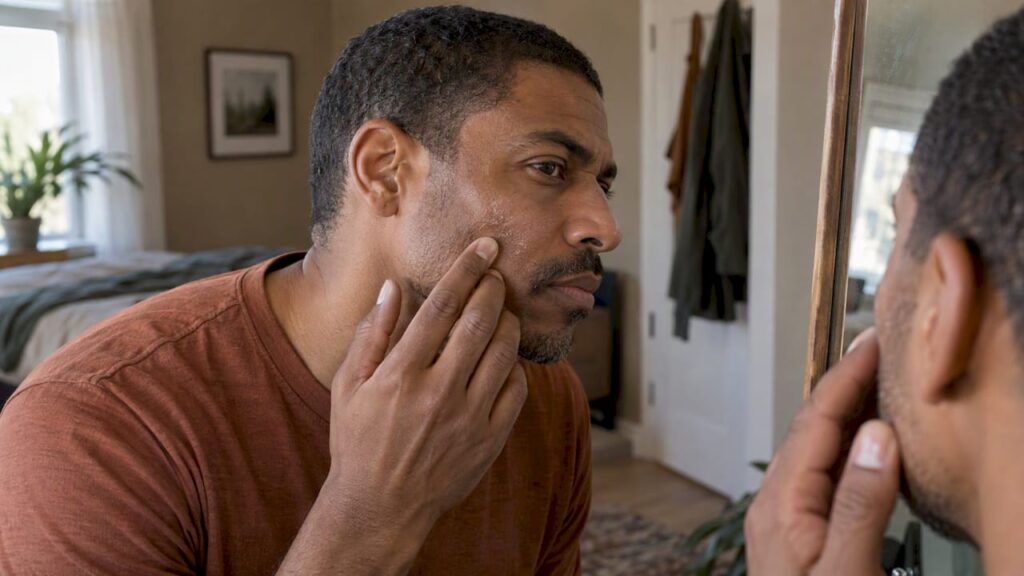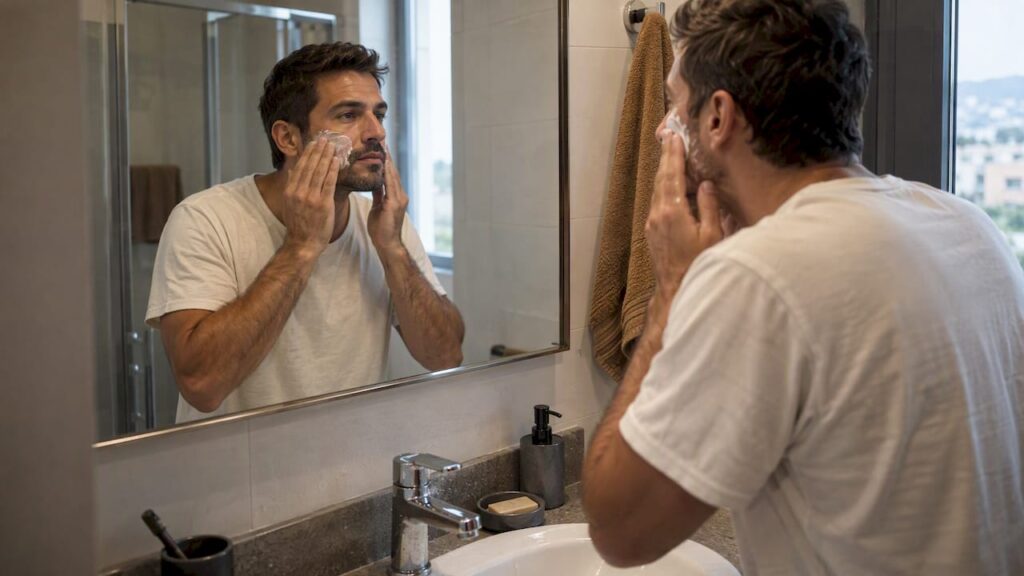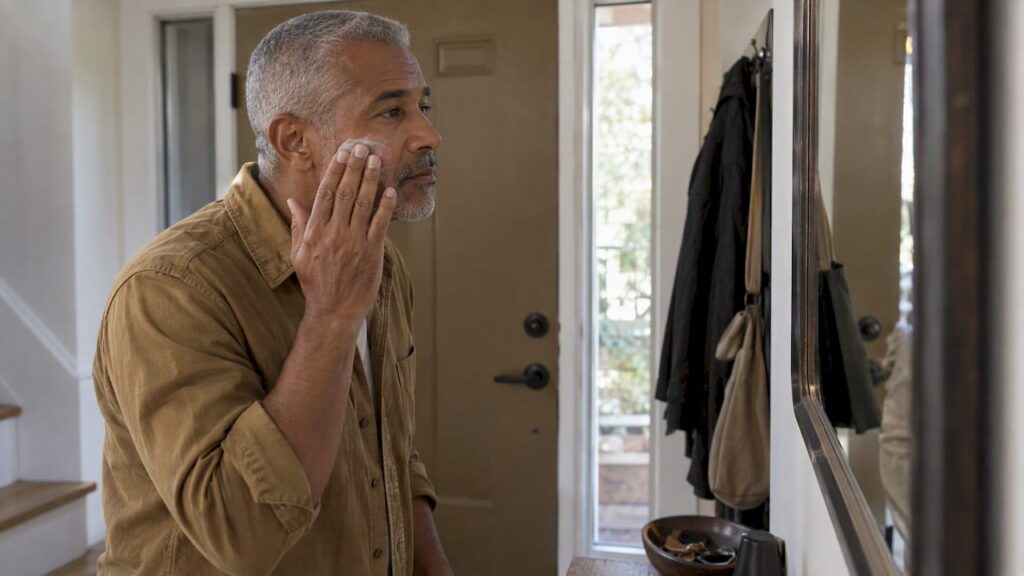


Dry skin is an oil problem: your skin isn’t making enough sebum. Dehydrated skin is a water problem: your skin’s outer layer is low on moisture, regardless of how much oil it produces. That distinction matters because the fixes are different. Dry skin needs lipid-rich products that replace oil, while dehydrated skin needs water-attracting ingredients and habit changes. The two can also overlap, and a quick pinch test can help you figure out which one you’re dealing with.
TL;DR:
- Dryness that has been lifelong and causes flaking or cracks points to low oil production; use creams rich in lipids on damp skin.
- Sudden tightness or dullness after a flight, weather change, or new cleanser suggests dehydration; apply a humectant to damp skin and pause strong actives.
- Oily skin can still be dehydrated: slow bounce back after pinching suggests low water, while a return within seconds generally indicates adequate hydration.
- Seek a dermatologist for bleeding cracks, infection signs, persistent widespread itching, or a rash that does not improve; routine care usually helps within weeks.
Table of Contents
- What is dry skin: causes, signs, and how to treat it
- What is dehydrated skin: triggers and warning signs
- Pinch test, timeline clues, and a quick diagnostic checklist
- How to treat dry skin: ingredients, routine, and daily habits
- How to treat dehydrated skin: humectants and quick fixes
- When to see a dermatologist: red flags and what happens next
- Diet and nutrition’s role in skin hydration
- A simpler approach for men who want fewer steps
- Try a one-product fix for dry, tired-looking skin
- FAQ
- Sources
What is dry skin: causes, signs, and how to treat it
Dry skin, sometimes called xerosis, is a baseline skin type rather than a passing condition. If your skin has always leaned dry, oil production is the underlying issue, and it tends to stay that way without ongoing care.
Common causes include:
- Genetics and naturally lower sebum production
- Aging, which reduces oil output over time
- Harsh cleansers that strip natural oils
- Low humidity and indoor heating
- Long, hot showers or baths
Signs include flaking, roughness, cracking, and itching. These can be harder to spot on darker skin tones, where ashy or gray patches are often the first visible clue.
The fix is lipid replacement: creams and ointments with emollients and occlusives that seal in moisture and rebuild the skin’s barrier. Applying moisturizer to damp skin right after a shower helps trap water before it evaporates.
Pro Tip: Keep showers warm instead of hot. Hot water strips the oils your skin needs to hold moisture.
What is dehydrated skin: triggers and warning signs
Dehydrated skin is different from dry skin at a basic level. It’s a temporary deficit of water in the stratum corneum, the outermost layer of skin, and it can affect any skin type, including oily skin.
Common triggers include:
- Low humidity or extended time in heated indoor air
- Hot, long showers
- Air travel
- Strong actives like retinoids or exfoliating acids
- Diuretics, including excess caffeine or alcohol
The signs look different from dry skin too: dullness, a tighter feeling after cleansing, and fine lines that seem more noticeable than usual. Some men notice a shiny T-zone alongside patches that feel tight, which is a sign that oil and water are two separate issues.
Treatment centers on restoring water with humectants and adjusting daily habits rather than piling on heavier creams.
Pinch test, timeline clues, and a quick diagnostic checklist
The fastest way to check which issue you have is the pinch test. Gently pinch a small section of skin on your cheek or the back of your hand, hold for a second, and release.
- Watch how fast the skin bounces back.
- A return within a few seconds is generally considered a sign of adequate hydration, according to Medical News Today.
- A slow, delayed bounce-back suggests your skin is low on water.
- Note whether the skin also flakes or cracks, which points more toward an oil deficiency.
Timeline matters as much as the pinch test. If dryness has been a lifelong pattern, you’re likely dealing with a dry skin type. If the symptoms showed up suddenly after a flight, a weather change, or a new cleanser, dehydration is the more likely cause.
Visual cues help too. Flaking and cracking lean dry; dullness and exaggerated fine lines lean dehydrated. And oily skin isn’t immune: sebum doesn’t equal hydration, so you can have a shiny complexion and still test as dehydrated.
A short checklist: Does it bounce back slowly? Did it start suddenly? Is it dull rather than flaky? Does it feel tight but still look oily? Two or more “yes” answers point toward dehydration rather than dry skin.

How to treat dry skin: ingredients, routine, and daily habits
Once you’ve confirmed dry skin, look for products built around lipid-replenishing ingredients: emollients that smooth rough patches, ceramides that rebuild the barrier, and occlusives that lock in moisture.
A simple approach for men:
- Apply a humectant-light, lipid-rich cream right after washing your face
- Use ointments for especially dry patches, particularly on hands or elbows
- Choose gentle, non-foaming cleansers instead of harsh soap
- Run a humidifier in dry indoor air
- Wear gloves in cold weather or when using cleaning products
- Apply sunscreen daily, since sun exposure worsens dryness over time
Layering can help: a humectant first, then an emollient, then an occlusive on top if your skin needs extra sealing. For most men, one well-formulated balm applied to damp skin once or twice daily covers the basics without extra steps.
Pro Tip: If dryness persists for weeks despite consistent moisturizing, it may be time to talk to a dermatologist about an underlying condition like eczema.
How to treat dehydrated skin: humectants and quick fixes
Dehydrated skin responds to a different strategy. Prioritize humectants like hyaluronic acid and glycerin, which draw water into the skin, and apply them to damp skin so they have moisture to pull from.
Practical steps:
- Apply a humectant serum or lotion right after washing
- Hold off on strong exfoliants or retinoids until the tight feeling resolves
- Cut back on hot showers, which pull more water out of the skin
- Keep fluid intake steady throughout the day
- Reduce excess caffeine and alcohol, which act as diuretics
- Run a humidifier if you’re in a dry or heated room often
Improvement usually shows up within days to a couple of weeks once you adjust these habits. If your skin still feels tight and dull after a few weeks of consistent care, that’s a signal to dig deeper rather than keep guessing.
When to see a dermatologist: red flags and what happens next
Most dry or dehydrated skin responds to a few weeks of consistent self-care. See a dermatologist sooner if you notice bleeding cracks, widespread itching that won’t quit, signs of infection like warmth or pus, or a rash that doesn’t improve.
A dermatologist will typically review your history and examine the affected skin, and may prescribe a stronger barrier-repair cream or treat an underlying condition such as eczema or psoriasis. If self-care hasn’t helped after a few weeks, that’s a reasonable point to book a visit instead of waiting longer.
Diet and nutrition’s role in skin hydration
Water intake matters, but what you eat also shapes how well your skin holds onto moisture. Fats are a big piece of this. Diets that include enough omega-3 fatty acids, found in fish like salmon and in walnuts and flaxseed, support the lipid layer that keeps water from escaping through the skin.
Protein matters too, since skin cells and the structural proteins that hold them together are rebuilt from amino acids. A diet that’s consistently low in protein can slow how fast skin repairs itself after dryness or irritation.
Certain vitamins and minerals play supporting roles. Vitamin E and vitamin C, found in nuts, seeds, citrus, and leafy greens, are involved in skin repair processes, and zinc deficiency has been linked to slower wound healing and rougher skin texture. None of this replaces a direct treatment for dry or dehydrated skin, but a diet consistently low in healthy fats, protein, or key micronutrients can make both conditions harder to resolve, even with a solid topical routine.
Alcohol and excess caffeine deserve a second mention here because they show up twice in this picture: they act as diuretics that pull water out of the body, which can show up as skin dehydration even when your topical routine is otherwise solid.

A simpler approach for men who want fewer steps
Most men don’t want a seven-step routine, and they don’t need one. The practical fix for combined dryness and dehydration is pairing a water-attracting step with a single lipid-rich product that seals it in.
One balm can combine ingredients like grass-fed tallow paired with hyaluronic acid, so the humectant draws in moisture while the tallow locks it in, without a greasy finish. For a minimalist routine, apply it to damp skin after washing, once in the morning and once at night. That’s often enough for most men, and a third step, like a dedicated sun balm for daytime protection, covers the rest.
— Blaine
Try a one-product fix for dry, tired-looking skin
If you’ve read this far and suspect your skin needs both water and oil support, a single well-formulated balm is often the simplest starting point. We built Iron Bull Tallow around three ingredients: grass-fed tallow, hyaluronic acid, and jojoba oil, so you get lipid repair and water retention without stacking five products on your bathroom shelf.

This suits men who:
- Want visible improvement in texture and hydration within weeks
- Prefer a non-greasy balm over heavy creams
- Would rather run one product than manage a multi-step routine
The product comes with a satisfaction guarantee that encourages testing it against whatever you’re using now. Check out the full shop to see the face balm and sun balm side by side.
This article is general information, not a substitute for advice from a qualified doctor. Consult a qualified healthcare professional about your own circumstances before acting on anything here.
FAQ
How do I fix dehydrated skin?
Apply a humectant like hyaluronic acid or glycerin to damp skin, cut back on hot showers, and keep your fluid intake steady throughout the day. Most people see improvement within days to a couple of weeks once these habits are consistent.
What does dehydrated skin look like?
Dehydrated skin often looks dull, feels tight after cleansing, and shows more visible fine lines than usual. It can also show up as a shiny T-zone with tight, uncomfortable patches elsewhere, even on skin that produces plenty of oil.
How long does dehydrated skin take to heal?
Mild dehydration often improves within a few days of consistent humectant use and reduced hot water exposure. More persistent cases can take a couple of weeks, and if nothing changes by then, it’s worth checking with a dermatologist.
What is the difference between dry and dehydrated skin?
Dry skin is a skin type caused by low oil production, while dehydrated skin is a temporary condition caused by low water content in the skin’s outer layer. Dry skin needs lipid-rich creams, while dehydrated skin needs water-attracting humectants and habit changes.
Sources
- PubMed: Dry skin vs dehydrated (2025)
- Medical News Today: Dehydrated vs dry skin
- American Academy of Dermatology: Dermatologists’ tips for relieving dry skin
- Mayo Clinic: Dry skin — diagnosis and treatment