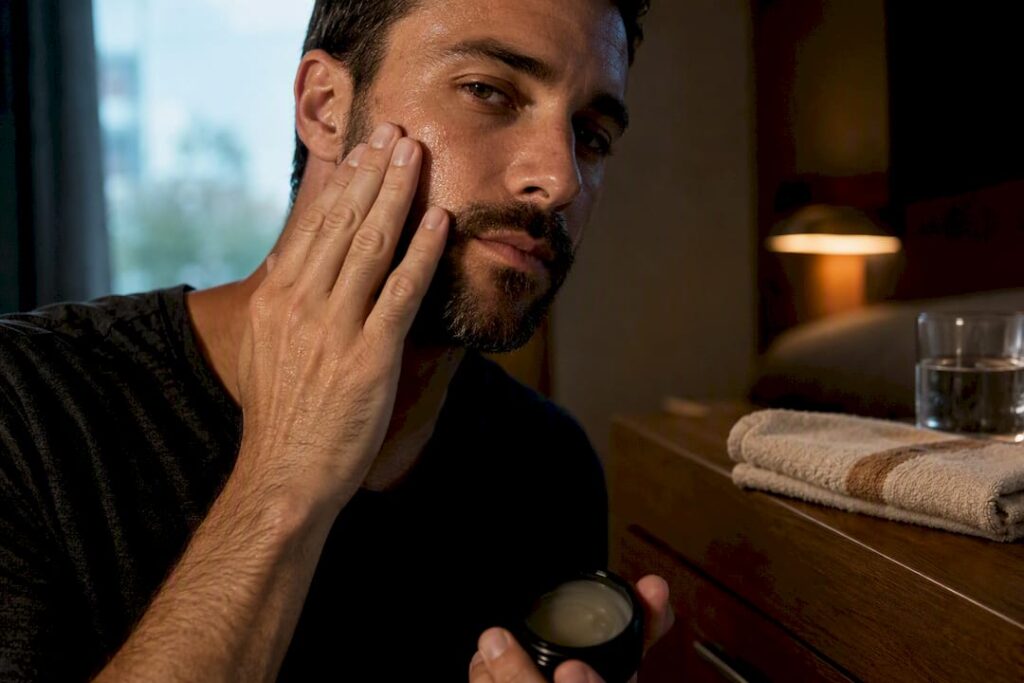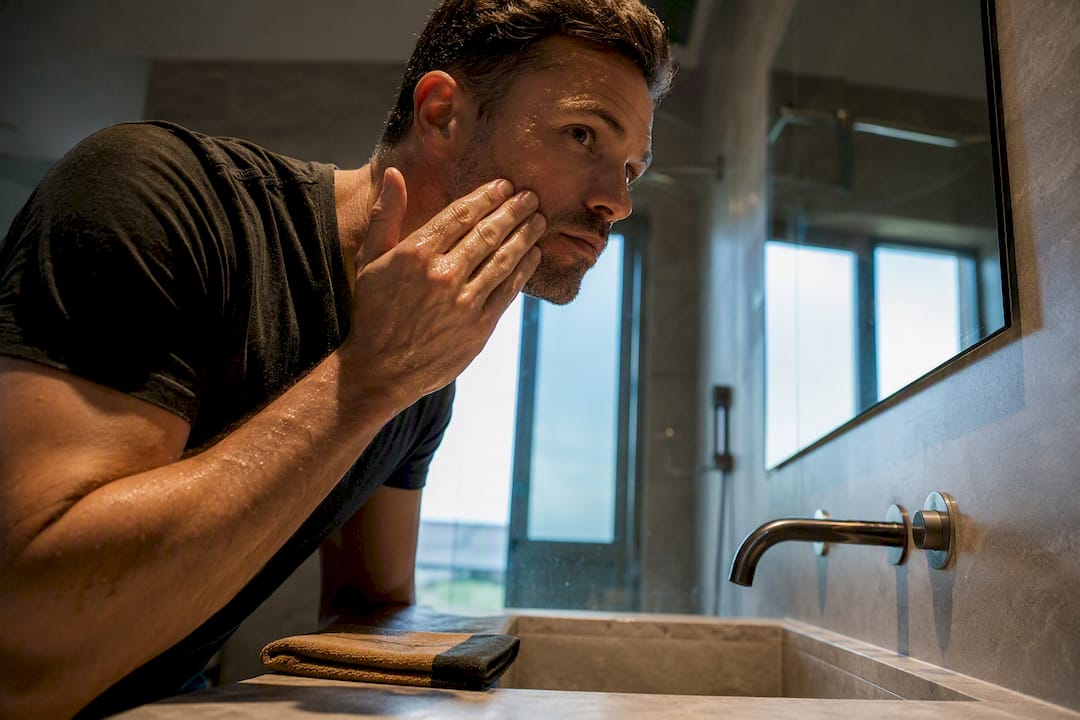
The fix is a humectant applied to slightly damp skin, then sealed immediately with a barrier-repair moisturizer, plus daily SPF in the morning. Hyaluronic acid or glycerin pulls water into the skin; the moisturizer traps it there. Most men notice less tightness within days. Full barrier repair takes a few consistent weeks.
TL;DR:
- Applying a humectant like hyaluronic acid or glycerin immediately after cleansing on damp skin can significantly improve hydration within days.
- Sealing with a barrier-repair moisturizer containing emollients and occlusives is essential for maintaining water in the skin and takes several weeks for full barrier repair.
- Dehydrated skin is characterized by tautness, dullness, visible fine lines, and flaking, and can affect oily skin types, not just dry skin.
- Avoid sulfates, alcohol-heavy aftershaves, heavy fragrances, and overuse of exfoliants, as these can strip lipids and worsen dehydration.
- Consistent use of SPF helps prevent barrier breakdown over time, which is crucial for reversing dehydration and avoiding further skin damage.
Table of Contents
- Dehydrated Skin vs. Dry Skin: What’s Actually Different
- How to Tell If Your Skin Is Dehydrated
- A 3-Step Routine That Actually Fixes Dehydration
- Ingredients That Help, and Ones That Work Against You
- Shaving and Daily Habits That Make or Break Hydration
- Why Iron Bull Naturals Fits This Exact Routine
- What Most Men Get Wrong About Dry, Tight Skin
- Try the Routine With One Simple Product
- Sources
- FAQ
Dehydrated Skin vs. Dry Skin: What’s Actually Different
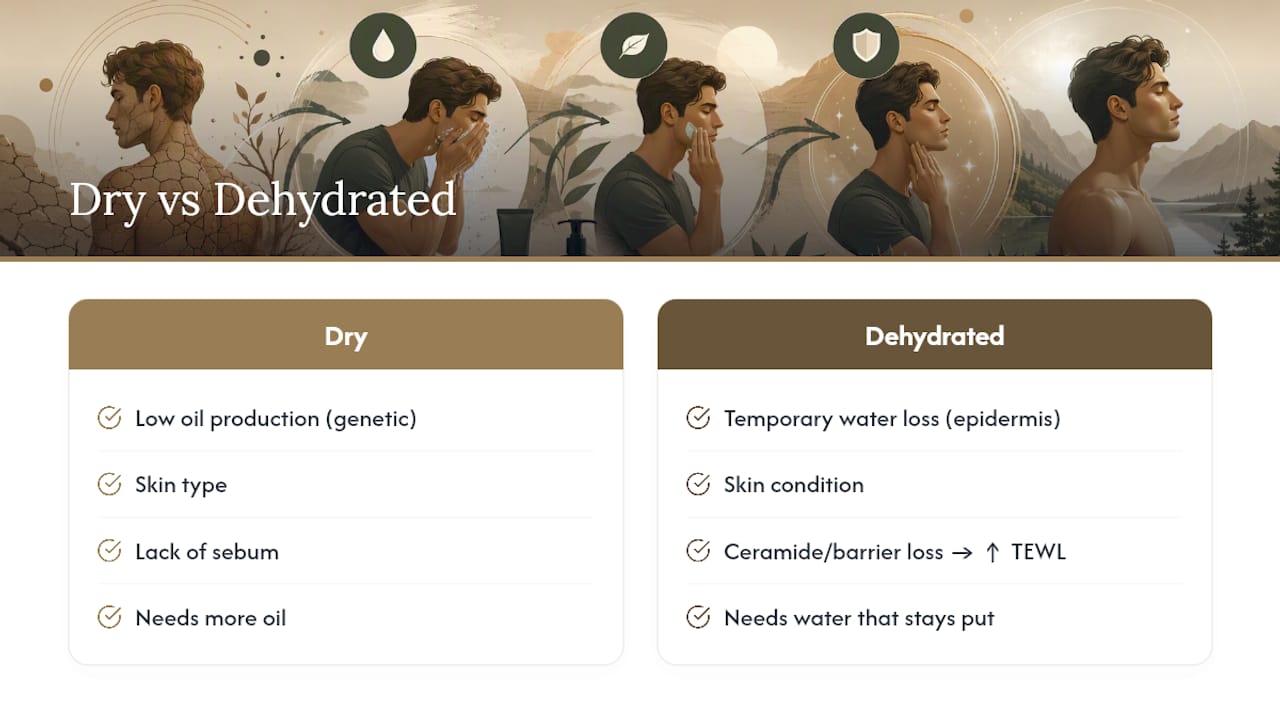
Dry skin is a skin type. It means your sebaceous glands don’t produce much oil, and that’s mostly genetic. Dehydration is a condition, a temporary lack of water in the outer layer of skin (the epidermis), and it can hit anyone, even guys with naturally oily skin. That distinction from the NCBI’s overview of skin barrier and hydration matters because the fix is different: dry skin needs more oil, dehydrated skin needs water that actually stays put.
Water loss through the skin’s surface, called transepidermal water loss (TEWL), speeds up when the barrier lipids that hold moisture in start breaking down. Those lipids are mostly ceramides, and when they’re depleted, water evaporates faster than your body can replace it, according to research on the epidermal barrier and ceramides. That’s why a guy with oily, acne-prone skin can still feel tight and flaky after a day in a heated office. Oil production and water retention are two separate systems.
How to Tell If Your Skin Is Dehydrated
The pinch test is the fastest home check. Pinch the skin on your cheek or the back of your hand for a couple of seconds, then let go. Skin with good hydration snaps back almost instantly. Dehydrated skin holds the fold for a second or two before smoothing out, sometimes leaving faint lines where you pinched.
Beyond the pinch test, watch for these signs:
- Skin feels tight or “stretched” within an hour of washing your face
- Fine lines around your eyes or mouth look more visible than usual
- Your complexion looks dull or grayish instead of having a slight sheen
- Flaky patches show up even though your skin doesn’t feel greasy
- Products that never bothered you before start stinging slightly
If you’re dealing with persistent stinging, deep cracking, or any lesion that isn’t healing, that’s past the range of a home routine. See a dermatologist instead of layering on more products.
A 3-Step Routine That Actually Fixes Dehydration
This is the entire routine. No ten-step regimen, no guesswork about product order.
- Cleanse gently. Skip foaming cleansers loaded with sulfates like SLS, and skip hot water. Both strip the lipids you’re trying to protect. Use lukewarm water and a cleanser that doesn’t leave your skin feeling squeaky.
- Apply a humectant to damp skin. Right after cleansing, while your face is still slightly wet, apply a hyaluronic acid or glycerin serum. A pea-sized amount covers the face. This timing isn’t a preference, it’s the mechanism: hyaluronic acid binds water molecules from whatever’s around it, and applying it to dry skin in a low-humidity room can actually pull moisture from deeper skin layers instead of the air, leaving you more dehydrated, not less.
- Seal immediately with a moisturizer. Within a minute or two, layer on a moisturizer that contains both emollients (to soften) and an occlusive ingredient (to lock everything in). In the morning, that means a formula with SPF 30 or higher. At night, if your skin still feels tight after a few weeks, move to a richer, occlusive-heavy cream.
The American Academy of Dermatology backs this exact sequence: cleanse, moisturize on damp skin, and apply broad-spectrum SPF every day, rain or shine.
Pro Tip: Keep your humectant serum next to the sink, not in a drawer. If you have to hunt for it, you’ll skip the “apply to damp skin” window, and the whole point of the step is timing.
In winter, swap to a thicker moisturizer and consider a second, lighter layer of humectant if indoor heating dries out the air. In summer, a lighter gel moisturizer with SPF may be enough on its own. The whole routine takes under five minutes, including a shave.
Ingredients That Help, and Ones That Work Against You
Shopping by ingredient category beats chasing brand names, because the same active shows up in dozens of products at wildly different qualities.
Humectants draw water in. Hyaluronic acid is the standout, but glycerin and urea do similar work and cost less. All three need a damp-skin application and a sealing step behind them, or they can backfire in dry air.
Barrier builders and occlusives lock the water in. Ceramides, fatty acids, and squalane rebuild what a stripped barrier is missing. Heavier occlusives like petrolatum or dimethicone create a physical seal, which is especially useful overnight or on cracked, chapped patches.
Soothing actives calm irritation without adding much moisture on their own. Niacinamide and panthenol both show up often in barrier-repair formulas for that reason.
Steer clear of:
- Alcohol-heavy aftershaves, which the FDA notes can dry and irritate skin that’s already compromised
- Sulfate cleansers (SLS) that strip natural lipids along with dirt
- Heavy synthetic fragrances, a common trigger for sensitized, dehydrated skin
- Daily use of exfoliating acids, which can thin the barrier further if overdone
Shaving and Daily Habits That Make or Break Hydration
Shaving is one of the most aggressive things you do to your face on a regular basis, and it happens right where dehydration shows up first. A blade doesn’t just cut hair. It also scrapes away a thin layer of skin cells and disrupts the barrier underneath.
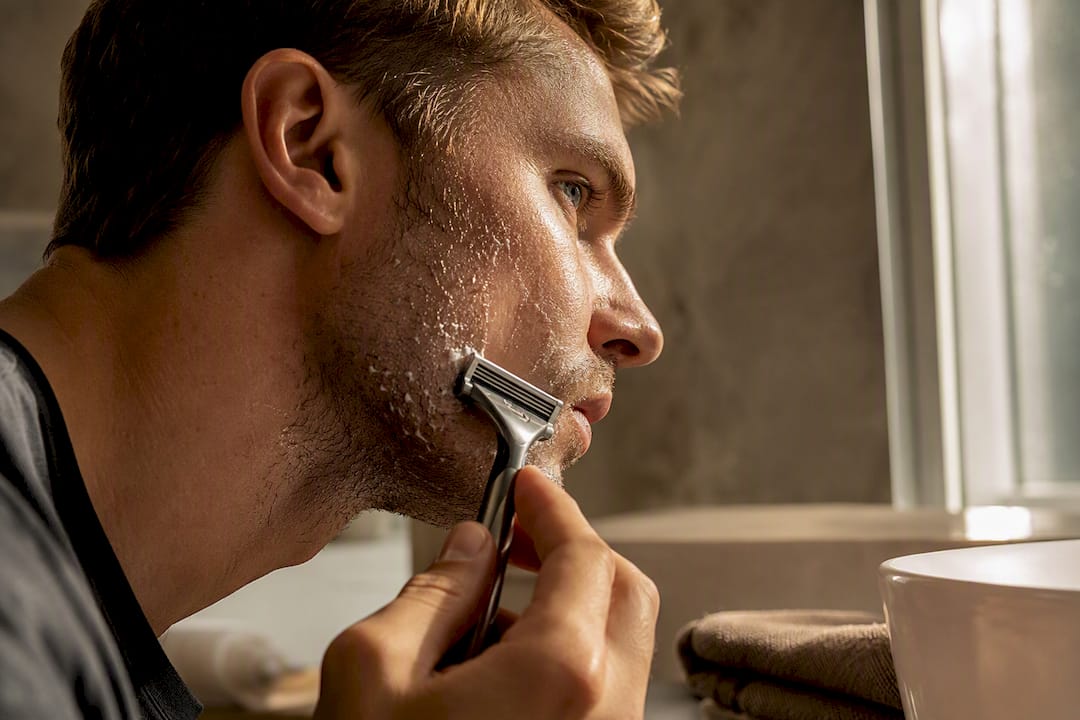
The Cleveland Clinic’s grooming guidance recommends wetting skin thoroughly before shaving, using a moisturizing shave cream instead of soap, shaving with the grain, then patting (not rubbing) dry and moisturizing right away. Men recovering from procedures like a beard transplant face an even more sensitive barrier, and the aftercare guidance for post-transplant skin follows the same logic: gentle handling and immediate moisture, every time.
A few environmental habits matter more than people expect:
- Run a humidifier in winter; indoor heating drops humidity and speeds up TEWL
- Cut shower time and temperature; long, hot showers strip lipids faster than they hydrate
- Drink water for your overall health, but don’t expect it to fix dry, tight skin on its own, since topical treatment does the heavy lifting there
Pro Tip: Right after shaving is the best possible moment to apply your humectant. Skin is already damp, slightly warm, and more receptive. Don’t let it dry out first.
Expect visible improvement in surface hydration within a few days. Full barrier repair, the kind that stops the flaking and tightness for good, takes several weeks of consistent use.
Why Iron Bull Naturals Fits This Exact Routine
A humectant plus a sealing moisturizer is the whole game, and that’s precisely what Iron Bull Naturals built its tallow balm around. The formula pairs hyaluronic acid, which does the water-binding, with grass-fed tallow and jojoba oil, which supply the emollient and occlusive layer that locks moisture in.
Three ingredients, no filler, which matters if you’re someone who’d rather not decipher a twelve-ingredient label before bed. The brand’s own guidance on applying moisturizer to damp skin lines up with the same damp-skin timing dermatologists recommend. Guys use it post-shave, as a nightly repair step, or as extra protection while traveling through dry climates or long flights, where cabin air can strip moisture fast. Some users report smoother, less tight skin within weeks, which tracks with the barrier-repair timeline you’d expect from consistent ceramide and lipid support.
What Most Men Get Wrong About Dry, Tight Skin
The biggest mistake I see is men treating dehydration like a dry skin problem and reaching for something heavier and oilier when what they actually need is water, delivered correctly and sealed in. Slathering on a thick cream without a humectant underneath treats the symptom, not the deficit.
The second mistake is skipping SPF because “it’s just a moisturizing thing.” Sun damage accelerates barrier breakdown, which makes dehydration worse over time, not just wrinkles worse.
And the third: expecting water intake to solve a topical problem. Staying hydrated matters for your body generally, but a glass of water doesn’t replace what a humectant and sealant do directly on the skin’s surface. If there’s one thing worth prioritizing first, it’s the timing, not the products. Get the damp-skin, seal-immediately sequence right, and even a modest, three-ingredient formula will outperform an expensive routine applied at the wrong moment.
— Blaine
Try the Routine With One Simple Product
You don’t need five products to fix dehydrated skin. You need a humectant and a sealant, applied in the right order, at the right moment. Iron Bull Tallow covers the sealing step on its own, since it already contains hyaluronic acid alongside grass-fed tallow and jojoba oil, so you’re not juggling a separate serum and cream if you don’t want to.

Apply it to damp skin right after cleansing or shaving, morning and night, and give it a few weeks before judging results, since barrier repair isn’t instant. If you have particularly sensitive skin, patch-test on your inner forearm for a day before applying it to your face. For the full step-by-step version of this routine, check the simple 3-step skincare routine for men, or head straight to the product page to get started.
Sources
- Skin barrier and skin hydration (NCBI book chapter)
- Skin care tips for men | American Academy of Dermatology (AAD)
- Men’s Dry Skin Routine for 2026: Fix Tight, Flaky Skin With the Right 3 Products | The Modern Observer
- FDA – cosmetics labeling claims (alcohol-free)
- Cleveland Clinic – skin care for men
FAQ
Can you reverse dehydrated skin?
Yes. Dehydration is a temporary water deficit, not a permanent skin type, and it responds quickly to a humectant applied on damp skin followed by a sealing moisturizer. Most men see visible improvement within days, with fuller barrier repair over several weeks.
How do you fix dry skin for men, specifically?
Switch to a gentle, non-stripping cleanser, apply a hyaluronic acid or glycerin serum to damp skin, then seal it in with a barrier-repair moisturizer containing ceramides or occlusives, and use SPF 30 or higher every morning.
What drink helps dry skin?
None directly. Drinking water supports overall health, but topical treatment does the actual work of hydrating skin, since water intake alone has limited effect on skin’s surface hydration.
How can you tell if someone has dehydrated skin?
Look for tightness after washing, more visible fine lines, a dull or grayish complexion, and flaking that shows up even without an oily-skin history. The pinch test, where skin holds a fold briefly instead of snapping back, confirms it.
Is hyaluronic acid safe to use every day?
Yes, but only when applied to damp skin and followed by a moisturizer. Used on completely dry skin in a low-humidity room, it can pull moisture from deeper layers instead of adding it, which defeats the purpose.