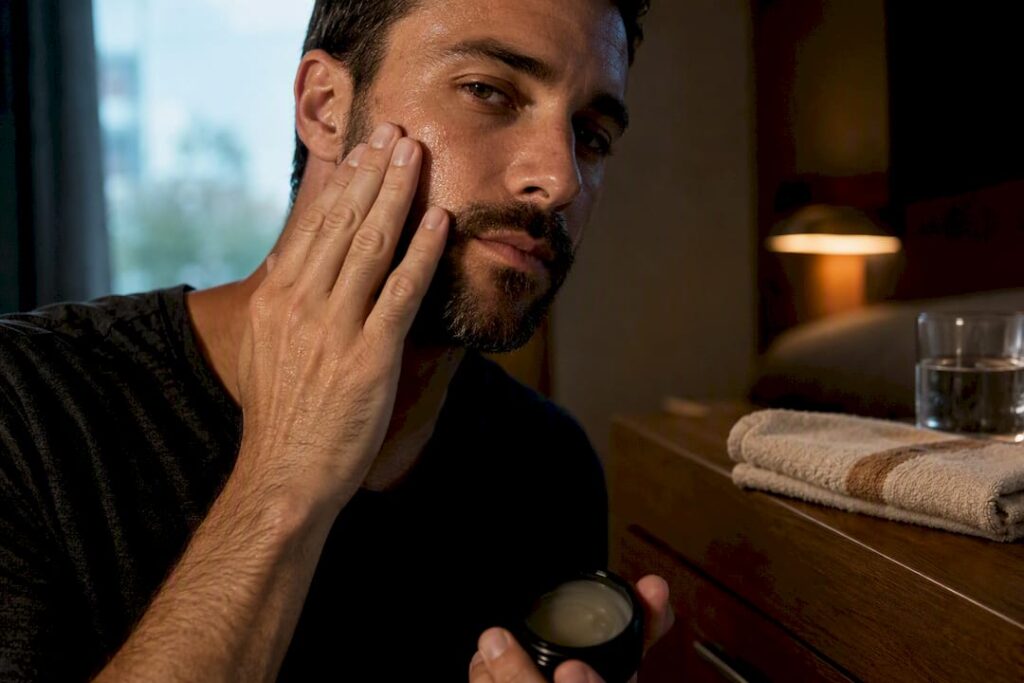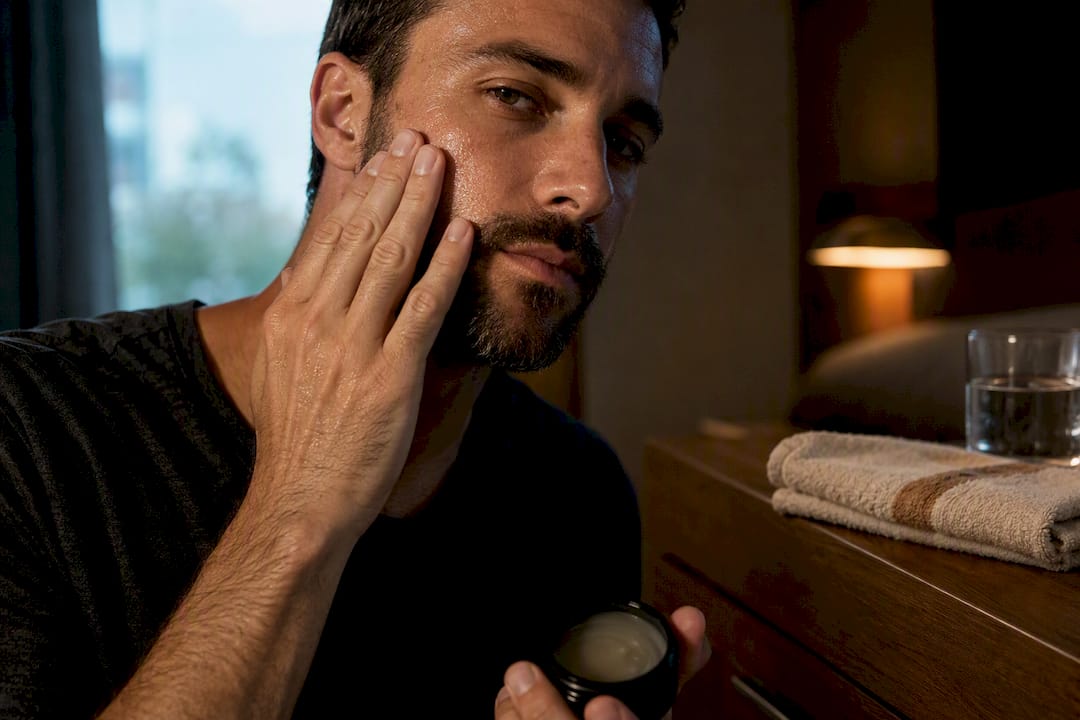
Humectants attract and hold water at the skin’s surface. Occlusives seal that water in with a barrier that stops it from evaporating. The simplest routine that works for almost anyone is to apply a humectant to damp skin, then follow with an occlusive (or a product that combines both) to lock the moisture in. Adjust how heavy that occlusive layer is based on your skin type and the climate you’re in.
TL;DR:
- Humectants can increase water loss in dry environments if not followed by an occlusive, especially when applied to dry or low-humidity skin.
- Heavy occlusives like petrolatum are best reserved for nighttime or targeted areas like lips, to avoid clogging pores or worsening breakouts.
- Applying a humectant to damp skin and sealing with an occlusive creates an effective routine, with the order being crucial for optimal hydration.
- In humid climates, a humectant alone may suffice, but in winter or dry air, always finish with an occlusive, regardless of skin type.
- Single products combining humectants and occlusives, such as tallow-based balms with hyaluronic acid, offer a simple, effective hydration solution for men and busy routines.
Table of Contents
- What Are Humectants and How Do They Work?
- What Are Occlusives and How Do They Work?
- How Should You Layer Humectants and Occlusives Together?
- Which Ingredients Fit Your Skin Type?
- What Do Real Routines Look Like?
- Why This Mix Matters for Men’s Skincare
- A Simple Take on Hydration That Actually Works
- A Simpler Way to Get Both in One Step
- Sources
- FAQ
What Are Humectants and How Do They Work?
Humectants are water-loving molecules. They pull moisture from the air around you and, when the air is too dry to supply enough, from the deeper layers of your own skin. That’s the mechanism, and it’s why a humectant on its own can be a gamble in a dry climate. Used correctly, though, they’re one of the fastest ways to plump up the outer skin layer.
The most common humectants you’ll see on an ingredient label:
- Glycerin — cheap, effective, found in nearly every moisturizer
- Hyaluronic acid — can hold a large amount of water relative to its weight
- Urea — doubles as a mild exfoliant
- Panthenol (pro-vitamin B5) — hydrating with a soothing side effect
- Propylene glycol — common in gels and lighter serums
The catch: humectants alone, in a low-humidity room or a cold, dry winter, can actually increase water loss from the skin if there’s nothing to stop the moisture they’ve gathered from evaporating right back out. That’s not a flaw in the ingredient. It’s just a job humectants were never designed to finish alone. They also tend to feel tacky in serum or gel form, which is a texture trade some people notice and others never do.
What Are Occlusives and How Do They Work?
Occlusives are hydrophobic, meaning they repel water instead of attracting it. Spread across the skin, they form a physical film that reduces transepidermal water loss, the process by which moisture escapes through your skin into the air. Where a humectant recruits water, an occlusive stands guard over it.
The ingredient most dermatology sources point to first is petrolatum, which is widely regarded as the most effective occlusive at limiting water loss. Others you’ll recognize from ingredient lists:
- Petrolatum — the benchmark for blocking TEWL
- Dimethicone — a silicone that feels lighter than petrolatum
- Mineral oil — inexpensive, widely used in lotions
- Beeswax — common in balms and lip products
- Lanolin — effective, but a known allergen for some people
The trade-off is texture and, in some cases, pore-clogging risk. A heavy layer of petrolatum on active acne can make things worse, and anyone with oily, breakout-prone skin should be selective about where and how much they use—much like the Wren | Go-To Balm uses suggest for practical occlusive application. That’s why occlusives tend to shine at night, on lips, on hands, or anywhere skin takes a beating, rather than as an all-day, all-over facial layer.
How Should You Layer Humectants and Occlusives Together?
The order is not a style preference. It’s the reason the combination works at all.
- Apply a humectant to damp skin. Water on the skin gives the humectant something to grab onto and pull inward, rather than pulling moisture from your dermis instead.
- Add an emollient if your skin needs it. This step is optional. Emollients smooth and condition without necessarily blocking water loss the way a true occlusive does.
- Seal with an occlusive if your skin or climate calls for it. This is the step that actually stops the water you just added from leaving again.
Skip that last step in a dry environment and you can undercut the whole routine. A humectant applied to bare, dry skin in a heated room in January isn’t wrong. It’s just incomplete, since it has nothing to prevent net water loss once the air pulls back.
Application technique matters as much as the order. Applying products to damp skin rather than bone dry skin measurably improves how much moisture gets retained. Warm the product between your palms first. It softens balms and creams so they spread thin instead of sitting on top of the skin in a greasy layer.
Pro Tip: If you only have five minutes at night, skip the emollient step entirely. Humectant on damp skin, then a thin occlusive layer, covers most of what your skin needs before you sleep.
Avoid piling a heavy occlusive directly onto an active breakout, and remember lips and hands can usually take a thicker layer than your face ever will.
Which Ingredients Fit Your Skin Type?
Dry skin tolerates, and often needs, the full combination: a humectant serum followed by a rich cream or balm, with a heavier occlusive layer at night when there’s no makeup or sunscreen to work around.
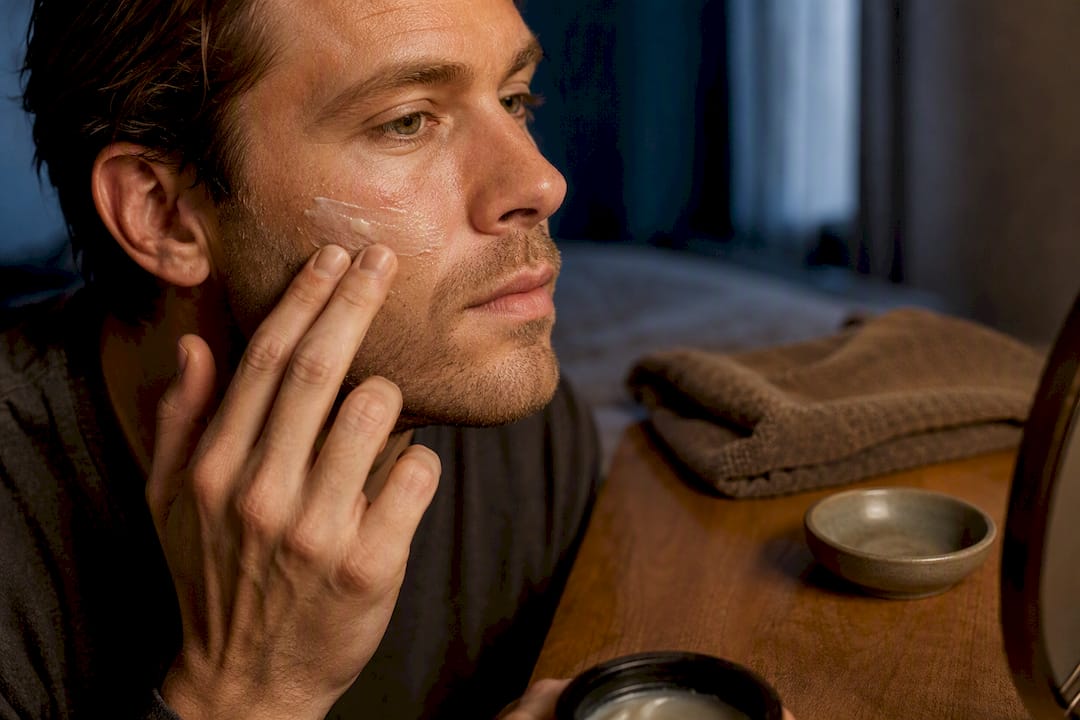
Oily and acne-prone skin does better with a lighter hand. A lightweight humectant like glycerin or hyaluronic acid, paired with a non-comedogenic option like dimethicone, gives you the sealing benefit without the breakout risk that heavier petrolatum can carry over active blemishes.
Sensitive skin has its own rules:
- Look for fragrance-free, hypoallergenic labeling on both categories
- Patch test any new occlusive on your inner arm for a couple of days before using it on your face
- Skip lanolin entirely if you have a known wool or lanolin allergy
Skin doesn’t stay in one category forever. Cold months push almost everyone toward heavier occlusion, and what worked in July can feel like too little in January.
What Do Real Routines Look Like?
- Daytime, normal to oily skin: hydrating serum for the humectant step, followed by a lightweight moisturizer with mild emollients. Skip the heavy occlusive during the day. It’s rarely necessary once sunscreen and makeup go on top.
- Nighttime, dry skin: humectant serum on damp skin, an emollient cream to smooth, then a thin occlusive balm to hold everything in while you sleep and your skin has hours of uninterrupted repair time.
- Hands and lips, any skin type: these areas lose water fast and show damage first. Use an occlusive balm after every wash and again before bed.
- Humidity check: in a humid climate, a good humectant might do nearly all the work on its own. In a dry climate or during winter heating season, always finish with an occlusive, no exceptions.
Why This Mix Matters for Men’s Skincare
Blaine has spent years studying practical, low-fuss hydration for men who want results without a ten-step routine. The pattern holds across nearly every skincare category: a humectant that attracts water and an occlusive that seals it work better together than either does alone.
Iron Bull Naturals builds this principle directly into its tallow-based face balm, where naturally occlusive lipids in grass-fed tallow are combined with hyaluronic acid in a single formula. It’s one product doing the work of two ingredient categories.
- Grass-fed tallow supplies lipids that behave like a natural occlusive
- Hyaluronic acid supplies the humectant pull
- Applying the balm on damp skin after cleansing follows the same technique dermatology guidance recommends for any moisturizer
A Simple Take on Hydration That Actually Works
Chasing a single “miracle” ingredient misses the point. Humectants and occlusives solve two different problems, and skin needs both handled, not one obsessed over. Stick with a routine you’ll actually repeat every day, then adjust the weight of your occlusive by season and how your skin responds. Test new products for a week before judging them.
— Blaine
A Simpler Way to Get Both in One Step
Most guys don’t want to stack three products every night just to keep their skin from drying out. Some balms are built to address this problem by pairing occlusive lipids with humectants like hyaluronic acid, providing moisture-attracting and moisture-sealing benefits in a single application instead of two.

Such balms are designed for those who want a repair product without the greasy film that heavier petroleum-based products can leave behind, and without needing to memorize ingredient functions. If you’re dealing with dry patches, fine lines, or skin that feels tight by midday, the tallow face moisturizer covers both jobs at once. For a full step-by-step approach, check the 3-step routine built for men and pick a starting point tonight.
Sources
- Beyond emollients: A review of moisturizers in dermatology
- Moisturization technologies and occlusive agents (PubMed)
FAQ
What Is the Difference Between a Humectant and an Occlusive?
A humectant attracts and holds water at the skin’s surface, while an occlusive forms a barrier that prevents that water from evaporating. They solve opposite halves of the same hydration problem.
What Are Some Examples of Occlusive Creams?
Petrolatum-based ointments, dimethicone-rich creams, and balms made with beeswax or grass-fed tallow, like Iron Bull Naturals’ tallow balm, all function as occlusives.
What Are Examples of Humectants?
Glycerin, hyaluronic acid, urea, panthenol, and propylene glycol are the humectants you’ll see most often on ingredient labels.
Is Aquaphor an Occlusive Moisturizer?
Yes. Aquaphor is built around petrolatum, the ingredient most consistently cited as the most effective occlusive for reducing water loss through the skin.
Should I Use a Humectant or an Occlusive First?
Apply the humectant first, ideally on damp skin, then follow with an occlusive to seal that moisture in. Reversing the order lets the occlusive block the humectant from ever reaching the skin.