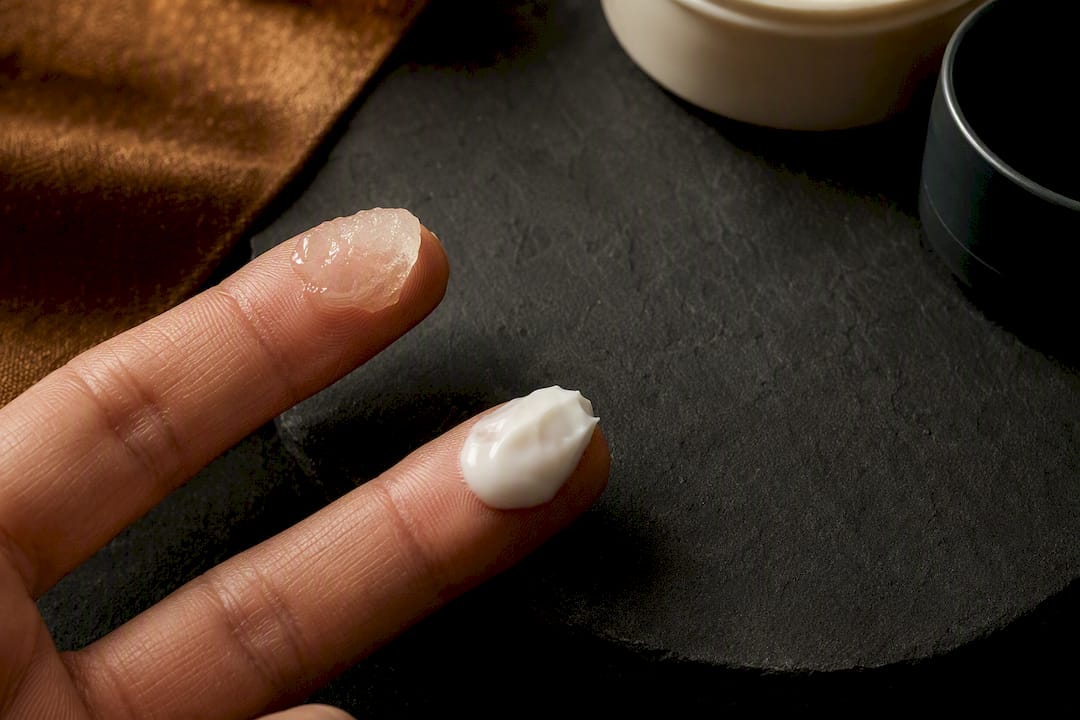
Petroleum jelly seals moisture in but adds none of its own, while a moisturizer supplies water and lipids through humectants and emollients your skin can actually absorb. That means the two aren’t interchangeable: petroleum jelly can’t replace a moisturizer for daily skincare, but it earns its place as a spot treatment and sealant. The practical rule is simple. Reach for a moisturizer to hydrate and treat your skin every day, and save petroleum jelly for wound care, extreme dryness, or locking in moisture on top of a treated area.
TL;DR:
- Petroleum jelly effectively forms a barrier to prevent water loss but does not hydrate or treat the skin unlike moisturizers that contain humectants and emollients.
- Modern moisturizers typically combine multiple ingredients such as humectants, emollients, and active barrier repair agents, which give them a broader skincare function.
- Petroleum jelly is best suited for specific uses like wound healing, extreme dryness, or outdoor protection, rather than daily face hydration.
- A layered routine of hydrating, moisturizing, and sealing with petroleum jelly is recommended, especially for healing or dry skin, avoiding full slugging on active acne.
- Nutrient-dense balms like grass-fed tallow blends can replace both moisturizer and petroleum jelly for daily hydration and barrier support in a simplified skincare routine.
Table of Contents
- Petroleum Jelly vs Moisturizer: What’s Actually Different
- When Petroleum Jelly Is the Right Choice
- When a Moisturizer Is the Better Choice
- How to Layer Petroleum Jelly and Moisturizer Together
- Risks and What Dermatologists Actually Warn About
- A Simpler Approach: Nutrient-Rich Balm Instead of Plain Petrolatum
- Why the “Just Use Vaseline” Advice Misses the Point
- Build a Simpler Routine With Iron Bull Naturals
- Sources
- FAQ
Petroleum Jelly vs Moisturizer: What’s Actually Different
Skincare ingredients fall into three functional buckets, and knowing which is which explains almost every disagreement about this topic. Occlusives form a physical film that blocks water from evaporating off your skin. Humectants pull water into the skin, often from the air or from deeper skin layers. Emollients fill in the gaps between skin cells, smoothing rough patches and softening texture.
Petroleum jelly, or petrolatum, is the textbook occlusive. A 2024 clinical review published in JAAD confirms it reduces transepidermal water loss, the rate at which water escapes through your skin, more effectively than most other over-the-counter ingredients. That’s the entire mechanism. It doesn’t hydrate anything; it just stops water already in your skin from leaving.
A moisturizer is a formulated blend built to do more:
- Humectants like hyaluronic acid and glycerin draw water into the outer skin layer
- Emollients such as jojoba oil or squalane soften and smooth the surface
- Active ingredients (ceramides, peptides, antioxidants) support barrier repair and address aging or irritation
- Occlusives are sometimes blended in too, which is why some moisturizers feel richer than others
According to DermNet NZ, most modern moisturizers combine all three ingredient types in a single formula, which is the real distinction between “moisturizing” and simply “sealing.” Petroleum jelly does one job well. A good moisturizer does three or four at once.
When Petroleum Jelly Is the Right Choice
Petroleum jelly earns its keep in specific, mostly medical situations rather than as a daily face product. The American Academy of Dermatology recommends it for localized treatment of extremely dry or injured skin, including cuts, scrapes, and diaper rash, because it creates a protective barrier that supports healing and helps prevent scarring.
Good use-cases include:
- Minor wounds, cuts, and scrapes, where it keeps the area moist and reduces scab formation
- Diaper rash and chapped skin on babies or adults
- Windburn and extreme cold exposure, where it blocks moisture loss outdoors
- Post-procedure care after certain dermatologic treatments, when your provider recommends it
- Severe eczema flares, where the National Eczema Association lists 100% petroleum jelly among its accepted products for barrier support
Apply it to clean, dry skin in a thin layer, and target the specific area rather than your whole face. It’s not cosmetically discreet: it stays shiny, can transfer onto pillowcases and clothes, and feels heavier than any lotion.
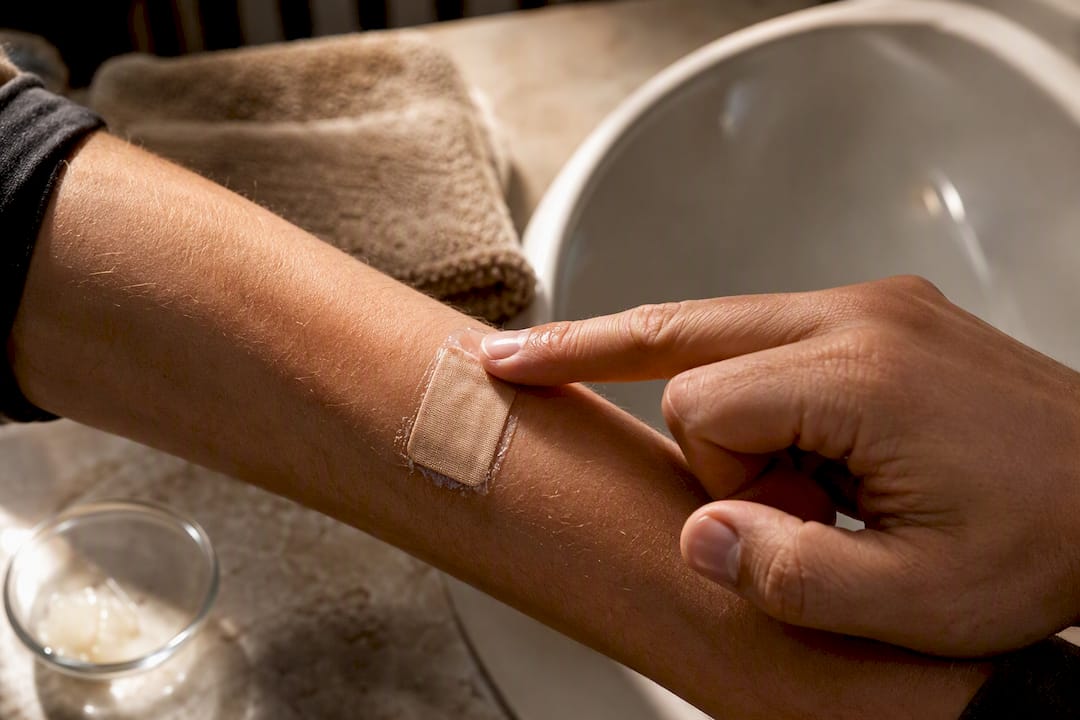
Pro Tip: If you’re using petroleum jelly on a healing cut or scrape, apply it after cleaning the wound but before covering it with a bandage. It keeps the dressing from sticking and speeds visible healing.
When a Moisturizer Is the Better Choice
For daily use, a moisturizer almost always outperforms plain petroleum jelly, because it actually replenishes what your skin loses instead of just trapping what’s left. Healthline points out that Vaseline retains moisture effectively but is heavy and greasy, and recommends formulas with active ingredients for anti-aging and daily skin concerns instead.
Match the formula to your skin type:
- Dry skin: look for a richer cream with both humectants and emollients, plus ceramides for barrier repair
- Normal to combination skin: a lightweight lotion with hyaluronic acid absorbs fast without feeling heavy
- Oily or acne-prone skin: choose an oil-free, non-comedogenic gel or lotion so pores stay clear
- Sensitive skin: fewer ingredients and no fragrance reduce the odds of irritation
A partner guide on daily moisturizer ingredients breaks down which actives to look for depending on your goals, whether that’s hydration, anti-aging, or calming redness. Moisturizers also absorb faster, layer cleanly under makeup or sunscreen, and won’t leave the greasy film petroleum jelly does. That’s the real advantage for anyone building a routine they’ll actually stick with.
How to Layer Petroleum Jelly and Moisturizer Together
You don’t have to pick one. Dermatologic guidance generally favors a layered approach: hydrate first, moisturize second, seal only if needed. Here’s the order that works:
- Cleanse your face with a gentle cleanser and pat it damp, not fully dry.
- Apply a hydrating serum or moisturizer with humectants while skin is still slightly damp, since applying to damp skin helps humectants pull in more water.
- Seal with a thin layer of petroleum jelly only on spots that need extra protection, like cracked knuckles, chapped lips, or a healing patch.
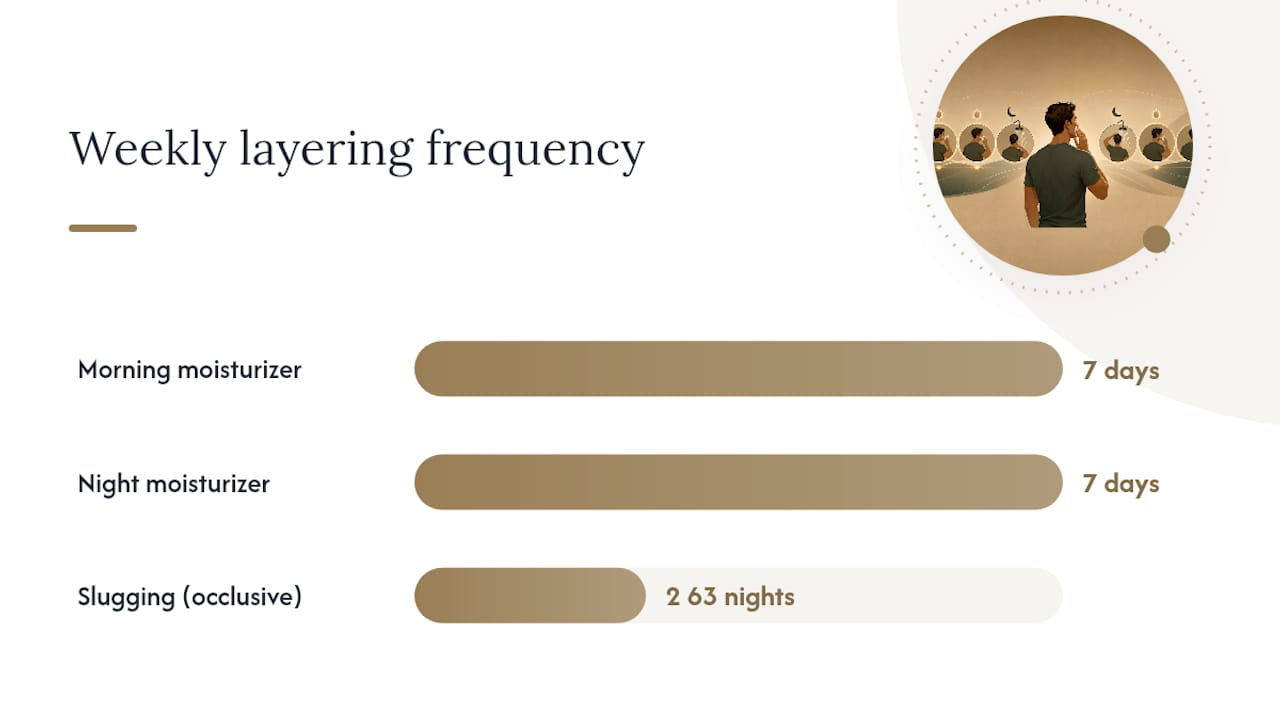
This is the technique behind “slugging,” where a thin occlusive layer goes on last, usually at night, to lock in everything underneath. Keep it to two or three nights a week if you’re prone to breakouts, and skip it entirely over active acne.
Pro Tip: A simple two-step routine, moisturizer in the morning and moisturizer plus a spot-seal at night, covers almost everyone. Save full slugging for the driest months of the year.
Risks and What Dermatologists Actually Warn About
Petroleum jelly’s biggest real risk is trapping oil and debris underneath it, which can raise breakout risk on skin that wasn’t clean or already prone to acne. A dermatologist’s breakdown of petrolatum and acne risk explains that petrolatum itself is non-comedogenic, meaning it doesn’t clog pores on its own, but sealing it over unwashed or oily skin traps whatever’s already there.
A few myths and cautions worth clearing up:
- The “skin can’t breathe” myth is false. Petroleum jelly doesn’t suffocate skin or block oxygen exchange in any meaningful way.
- Avoid it inside the nose. In rare cases, inhaling petroleum-based products has been linked to lipid pneumonia.
- It’s not compatible with latex condoms. Petroleum-based products degrade latex and increase failure risk.
- Watch for redness, itching, or breakouts after use, and see a dermatologist if irritation persists beyond a few days.
The JAAD 2024 review also addresses lingering concerns about allergenicity, finding true petrolatum allergies are uncommon relative to its widespread use.
A Simpler Approach: Nutrient-Rich Balm Instead of Plain Petrolatum
For men who want fewer products and less mess, a nutrient-dense balm can do more than plain petroleum jelly without the greasy tradeoff. Iron Bull Naturals built its tallow face balm around that idea: grass-fed Alberta tallow paired with hyaluronic acid, using only three ingredients total.
The logic follows the layering principle dermatologists already recommend, just condensed into one step:
- Tallow supplies fatty acids that mimic skin’s own lipids, functioning as an emollient
- Hyaluronic acid acts as a humectant, drawing water into the skin
- The finish absorbs rather than sitting on the surface like petroleum jelly does
That combination lets a single grass-fed tallow moisturizer handle daily hydration duty on its own. Petroleum jelly still has a place for cracked knuckles or a healing nick, but your everyday routine doesn’t need it.
Why the “Just Use Vaseline” Advice Misses the Point
The advice to just slather on petroleum jelly and call it a routine sounds appealingly simple, but it skips the part where your skin actually needs something to seal in. Petrolatum without any prior hydration is like shrink-wrapping a container that’s already empty. It looks protected. It isn’t nourished.
Where conventional advice falls short is treating occlusives and moisturizers as competitors instead of teammates. The research doesn’t support an either/or framing. It supports layering: hydrate, then seal, matched to what your skin is actually doing that day.
If you take one thing from this comparison, prioritize a real moisturizer for daily use and keep petroleum jelly in reserve for the specific jobs it’s good at, cuts, cracked skin, harsh weather. Men especially tend to skip moisturizer altogether and reach for whatever’s in the medicine cabinet. That’s the habit worth breaking first, not the ingredient list.
— Blaine
Build a Simpler Routine With Iron Bull Naturals
If everything above tells you one thing, it’s that your skin needs a real moisturizer doing the daily work, not just a jar of petroleum jelly standing in for one. Iron Bull Naturals makes that easy by putting the hydration and the seal into a single balm instead of asking you to juggle two separate products every morning.

Iron Bull Tallow is built from three ingredients, grass-fed Alberta tallow, hyaluronic acid, and jojoba oil, formulated specifically for men who want results without a ten-step routine or a greasy finish. It hydrates, supports barrier repair, and softens fine lines, doing in one application what a moisturizer and an occlusive would normally split into two steps. If you’re ready to simplify, check out the no-BS three-step skincare routine and see how the balm fits into your morning or night in under five minutes.
This article is general information, not a substitute for advice from a qualified doctor. Consult a qualified healthcare professional about your own circumstances before acting on anything here.
Sources
- American Academy of Dermatology — petroleum jelly guidance
- JAAD review (2024) — petrolatum: barrier repair and myths
- DermNet NZ — emollients and moisturisers
FAQ
Is it okay to use petroleum jelly as a moisturizer?
Petroleum jelly can seal moisture into your skin, but it doesn’t add any water or active ingredients on its own, so it works better as a supplement to a moisturizer than a replacement for one.
Where should you not use petroleum jelly?
Avoid using it inside your nose, since inhaling petroleum-based products has been linked to lipid pneumonia in rare cases, and avoid it with latex condoms, since it degrades latex and raises failure risk.
Do dermatologists recommend Vaseline as a moisturizer?
Dermatologists at the American Academy of Dermatology recommend petroleum jelly for localized dry or injured skin, but they don’t recommend it as a substitute for a daily moisturizer formulated with humectants and emollients.
Why do people avoid petroleum jelly?
Some people avoid it because it feels heavy and greasy, can stain fabric, and may trap oil or debris on acne-prone skin if applied without cleansing first, though petrolatum itself doesn’t clog pores.
Can a tallow balm replace both petroleum jelly and moisturizer?
For everyday hydration, a nutrient-rich balm like Iron Bull Tallow can cover the moisturizing step on its own, though petroleum jelly still has a role for wound care or extreme dryness that a daily balm isn’t designed to treat.