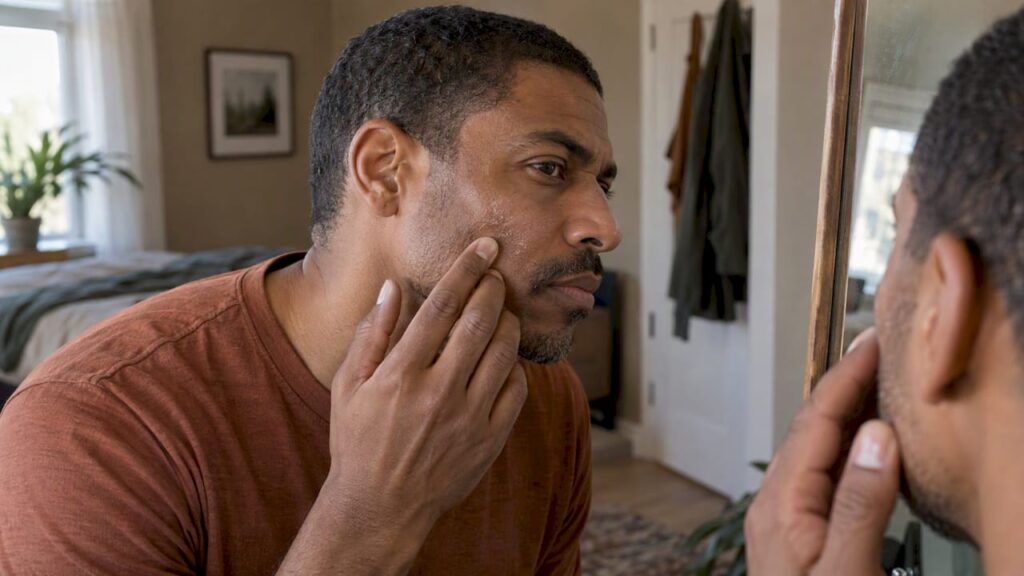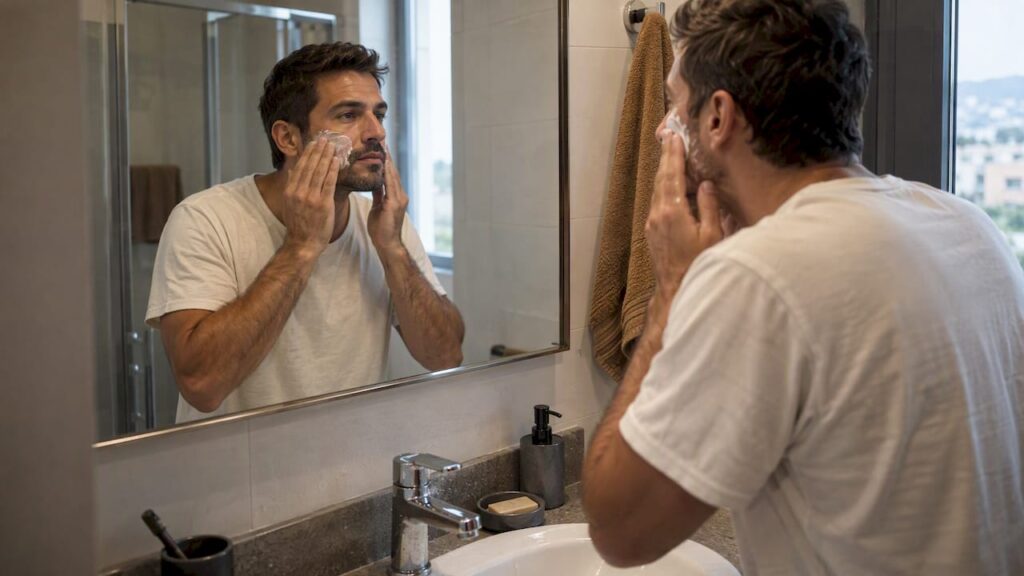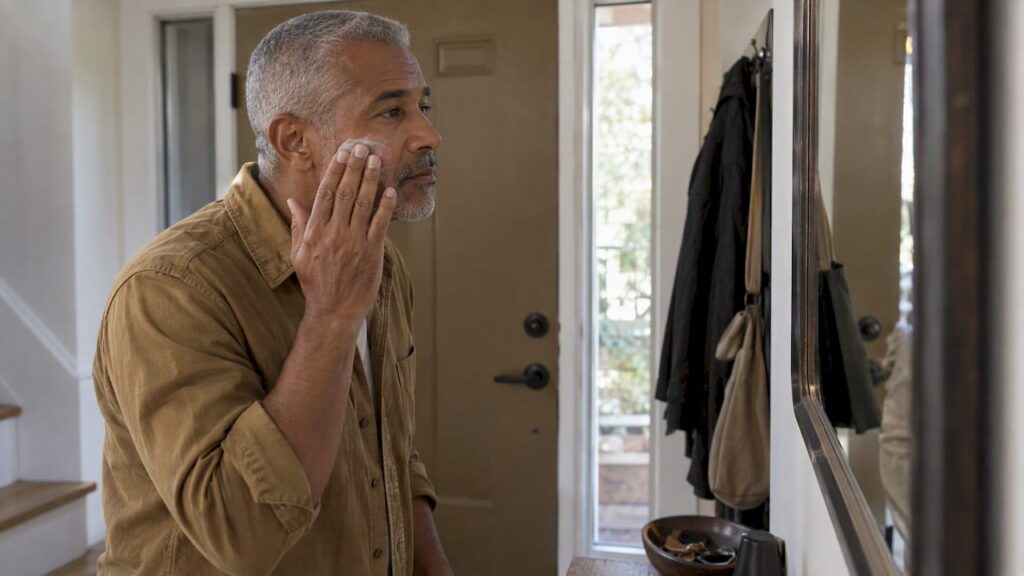


Yes, hard water commonly contributes to dry, itchy skin by leaving mineral residue and reacting with soap. A practical first step is a gentle, pH-balanced cleanser plus a thick cream or ointment applied to damp skin within 3 minutes of drying off. If a few weeks of consistent changes bring no relief, check your water hardness and see a dermatologist.
TL;DR:
- Post shower tightness, itching, or flaking, plus poor lather or mineral film at home, can point to hard water; compare how skin feels after softened water.
- Home strips or municipal reports measure hardness; readings above 120 mg/L are hard, while readings above 180 mg/L are very hard.
- Keep showers warm and 5 to 10 minutes, avoid scrubbing irritated skin, and apply a cream or ointment while skin remains damp.
- Whole house softeners use extra water and discharge brine, and trials show no clear eczema benefit; reserve them for very hard water or plumbing scale.
- Skip home experiments and seek a dermatologist for severe cracking, bleeding, intense itch, or symptoms that persist despite several weeks of consistent care.
Table of Contents
- How do you know hard water is affecting your skin?
- Why does hard water dry out your skin?
- How can you test your water and confirm the cause?
- What skincare steps reduce hard-water dryness?
- Do shower filters and water softeners help?
- Where does this guidance come from?
- How does hard water interact with tallow and hyaluronic acid?
- What does a daytime vs nighttime routine look like with hard water?
- How do seasons change hard water skin effects?
- Which fixes should you try first?
- How does our balm fit into the routine?
- FAQ
- Sources
How do you know hard water is affecting your skin?
Hard water rarely announces itself with one dramatic symptom. It shows up as a pattern, on your skin and around your house. Look for these clues:
- Skin feels tight, dry or stiff right after washing
- Itching or flaking that starts or worsens after showers
- Skin that seems more sensitive than it used to be
- Eczema flares that cluster around bathing
- Soap that barely lathers and leaves a film on skin or fixtures
- Scale on shower glass and towels that look dingy
Timing is the best tell. If symptoms improve when you rinse with bottled or softened water, say while traveling or at a friend’s place, hard water is a likely contributor. Skin issues can have many causes, so treat this as a clue rather than a diagnosis.
Why does hard water dry out your skin?

The culprit is less the water itself and more what happens when its minerals meet your soap. Clinical work on calcium and surfactants found that hard-water minerals interact with cleansing agents to form residue that stays on skin, and that residue is more drying and irritating than the water alone. The U.S. Geological Survey explains the same chemistry in plain terms: that “squeaky clean” feeling often means a mineral film from soap is still sitting on your skin, while soft water rinses cleaner and feels slippery.
The population data point the same direction. A systematic review and meta-analysis found that children in harder-water areas had higher odds of atopic eczema.
A pooled odds ratio of 1.28 for eczema in harder versus softer water areas, though the certainty of the evidence was graded very low. That is a modest signal, not proof that hard water is the sole cause.
A UK Biobank cohort study in adults also linked higher domestic hardness to more eczema, suggesting a small association with prevalence. What the evidence does not show is that fixing the water reliably clears up eczema that is already established, which matters when you decide where to spend money first.
How can you test your water and confirm the cause?
Start cheap. A home test strip works, or you can read your municipal water quality report, where hardness is listed in mg/L (ppm) or grains per gallon. Extension guidance from Oklahoma State University puts water above 120 mg/L in the hard range and above 180 mg/L as very hard.
Then run a simple experiment:
- Adopt the gentle cleanser and thick moisturizer routine below for 2 to 4 weeks
- If you can, rinse with bottled or softened water for several days and compare how your skin feels
- Escalate if symptoms are severe, you are weighing a whole-house softener, or your reading lands in the hard or very hard range
Pro Tip: Change one thing at a time. If you swap your cleanser, moisturizer and water all on the same day, you will never know which one worked.
What skincare steps reduce hard-water dryness?
These steps follow dermatologist guidance from the American Academy of Dermatology, adjusted for hard water.
- Shower in warm, not hot, water for 5 to 10 minutes.
- Skip scrubbing and exfoliating while your skin is dry or irritated.
- Switch to a pH-balanced syndet or gentle creamy cleanser, and avoid harsh bar soaps that leave a film with minerals.
- Pat skin until it is just damp, not dry.
- Apply a cream or ointment within 3 minutes. For persistent dryness, thicker creams and ointments add and hold more moisture than thin lotions.
- Layer a humectant such as hyaluronic acid first, then an occlusive balm on top to lock water in. Our guide to layering humectants and occlusives walks through it.
- Run a humidifier if your indoor air is dry, as dermatologists suggest for dry-skin care.
Pro Tip: Keep the moisturizer where you towel off. If it is in another room, you will miss the 3-minute window.
See a dermatologist if you have severe cracking, bleeding, intense itch, or no improvement after a few weeks of conservative care. If texture issues linger, a professional evaluation such as the one offered at Unity by MD can sort out what is actually going on.
Do shower filters and water softeners help?
They can help your plumbing and your shower glass. Whether they fix your skin is less certain.
- Showerhead and cartridge filters may help with mineral residue, but results and maintenance needs vary by product.
- Whole-house ion-exchange softeners lower hardness effectively, but they discharge brine and use extra water, so the EPA’s selection guide stresses choosing and maintaining one carefully.
- Check local requirements before you buy a softener.
- Randomized trials have not shown a clear skin payoff for people who already have eczema.
An observer-blind randomized trial in children found no clinically important difference in eczema severity when a softener was added to usual care. Some families felt better, but the objective measures did not favor softeners.
The practical rule: focus on skincare first and consider a softener when hardness is very high or scale is affecting household needs. Treat any skin improvement as a bonus.
Where does this guidance come from?
We built these recommendations on a few layers of evidence rather than on brand claims:
- Dermatologist guidance on bathing, moisturizer timing and product choice from the American Academy of Dermatology
- Mechanistic research on calcium, surfactants and irritant dermatitis
- A systematic review and meta-analysis concluding that observational links exist but evidence for softeners improving established eczema is lacking
- Our own minimal routines for men, including applying moisturizer to damp skin and a 3-step routine for dehydrated skin
How does hard water interact with tallow and hyaluronic acid?
Minerals in hard water do their damage at the cleansing stage, where they react with surfactants and leave residue. A balm cannot remove that residue, but moisturizing may help keep skin comfortable after washing. After a hard-water shower, focus on moisturizing and helping retain moisture.

That is where our formula comes in. Iron Bull Tallow pairs grass-fed Alberta tallow with hyaluronic acid. Hyaluronic acid is a humectant, while the tallow base forms the balm’s richer moisturizing layer. Applied to damp skin, the two work as a built-in version of the humectant-then-occlusive layering described above.
Our formula combines tallow and hyaluronic acid in a simple product made for men. It is meant to hydrate without the greasy feel of many moisturizers. It is skincare, not a treatment: it does not soften your water, and it is not a cure for eczema. Think of it as the sealing step that makes a gentle cleanser and a short shower count for more.
What does a daytime vs nighttime routine look like with hard water?
Keep both routines short. Skincare you will actually do beats an elaborate plan you will abandon.
Morning
- Rinse with lukewarm water, or use a gentle cleanser only if you feel oily or sweaty.
- Pat your face until just damp.
- Apply Iron Bull Tallow while skin is still damp.
- If you will be outside, follow with our Sun Balm for daytime protection.
Night
- Wash with a gentle, pH-balanced cleanser to remove sweat, dirt and any mineral film from the day.
- Rinse thoroughly, lukewarm, and pat dry to damp.
- Apply the balm within 3 minutes, working it into your cheeks, forehead and around your nose and jaw.
- Use a little extra on rough patches, since skin repairs overnight and the occlusive layer keeps moisture in.
Our pages on night skincare for men and the skincare steps men need, morning and night cover the same rhythm in more detail.
How do seasons change hard water skin effects?
Your water does not change much, but your skin’s tolerance does. Winter air is dry, heated indoor air is drier, and long hot showers feel tempting, so the same hard water that was a nuisance in July can become a real problem in January. Cold weather strips moisture, and mineral residue on already-stressed skin can tip it into tightness and itch. Hardness can also vary with your supply source, so a fresh test strip each season is cheap insurance.
Adjust accordingly:
- Winter: Apply the balm more generously, add a bedside humidifier, and keep showers on the shorter, cooler side.
- Spring and fall: Stick with the two-step routine and reassess if your skin feels different.
- Summer: Use a lighter amount in the morning, rinse off sweat and chlorine after swimming, and wear the Sun Balm outdoors. Frequent showers mean more exposure to mineral residue, so keep the cleanser gentle.
If your skin flares at the same point every year, that pattern is worth mentioning to a dermatologist.
Which fixes should you try first?
Here is how I would order it. Start with your cleanser and moisturizing habits, because they cost little and work fastest. Next, try a shower filter or a bottled-water rinse. Only then consider a whole-house softener, and mainly if hardness is high or scale is damaging your plumbing. Changing your routine may help, while hardware requires a separate investment. If your skin is cracked, bleeding or relentlessly itchy, skip the experiments and see a dermatologist.
— Blaine
How does our balm fit into the routine?
A thick balm is exactly what dermatologists describe for locking in moisture after bathing, and that is the role our face balm plays. We keep it simple: grass-fed tallow, hyaluronic acid and a short ingredient list, made for men’s skin and designed to hydrate without a greasy finish.

- One step after you pat dry, no complicated layering
- Pairs with the cleanser and shower habits above
- Backed by a 60-day money-back guarantee
Browse the Iron Bull Beef Tallow Face Moisturizer for Men, or see how it fits our simple skincare routine for men and start with tonight’s shower.
This article is general information, not a substitute for advice from a qualified doctor. Consult a qualified healthcare professional about your own circumstances before acting on anything here.
FAQ
Does hard water contribute to skin dryness?
Yes, it can. Minerals in hard water react with soap to leave a residue that dries and irritates skin, as shown in research on calcium and surfactants. The effect varies from person to person.
How do you know if hard water is affecting your skin?
Look for tightness, itch or flaking right after showers, plus poor lather and soap scum at home. If your skin feels better with bottled or softened water, hard water is a likely factor. A simple test strip can confirm your water’s hardness.
How to fix dry skin from hard water?
Switch to a gentle, pH-balanced cleanser, take shorter warm showers, and apply a thick cream or ointment to damp skin within 3 minutes. Layering a humectant under an occlusive balm helps seal moisture in. If dryness persists after a few weeks, see a dermatologist.
How to reverse damage from hard water?
Skin usually recovers once the residue is rinsed away and the barrier is replenished with consistent moisturizing. Gentle cleansing and thick moisturizers do most of the work. A softener is optional, since trials have not shown it clearly improves established eczema.
Sources
- Dermatologists’ top tips for relieving dry skin
- The influence of hard water (calcium) and surfactants on irritant contact dermatitis – PubMed
- The effect of water hardness on atopic eczema, skin barrier function: A systematic review, meta-analysis
- Soften Water Without Wasting It: Guide to Selecting and Maintaining a Water-Efficient Water Softener