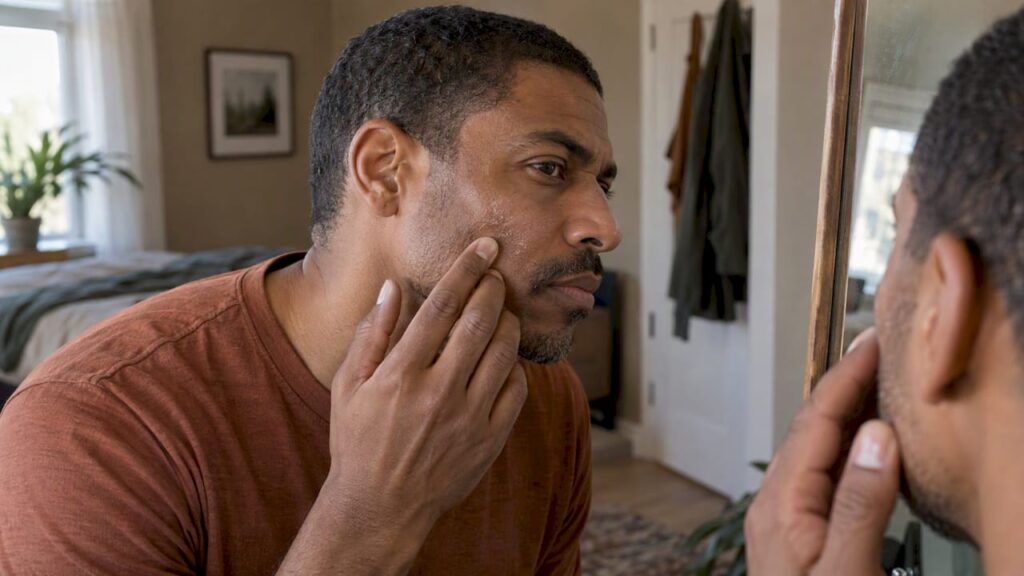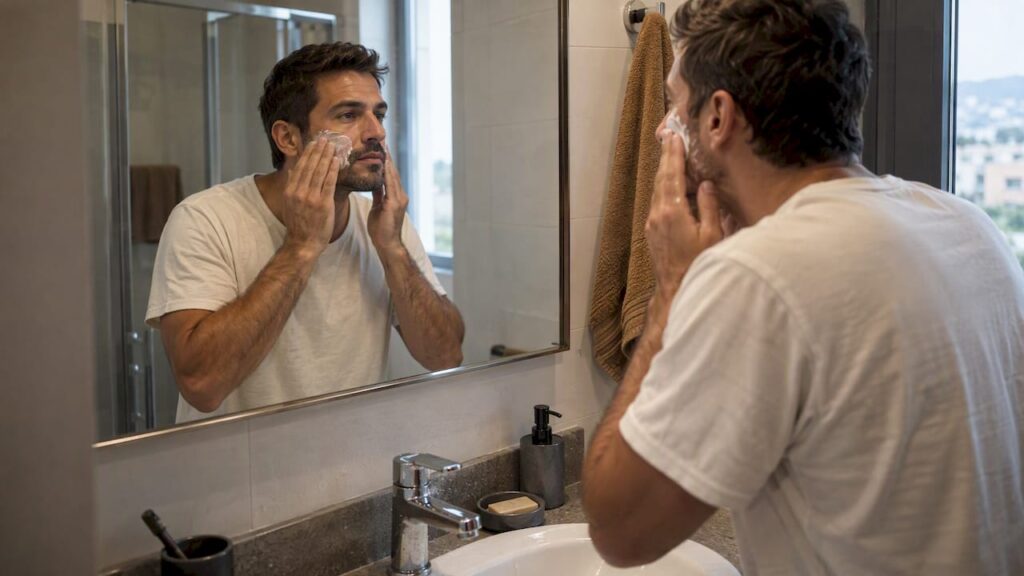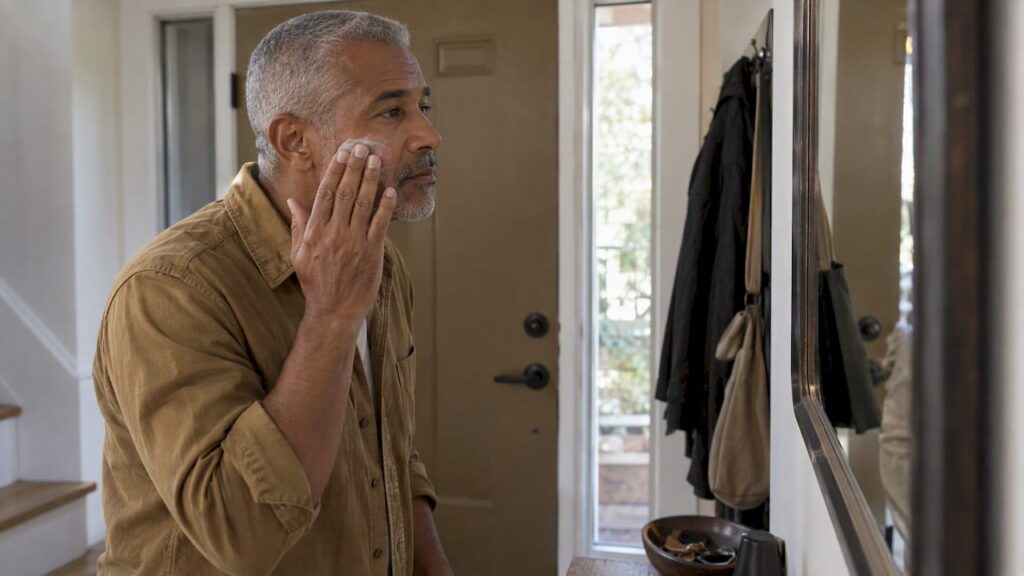


A face barrier balm is an occlusive-rich product that locks in moisture and helps repair a compromised skin barrier. If your skin is very dry, irritated, or weakened by acne treatments, a simple balm is often the fastest, lowest-friction fix, and a straightforward option like Iron Bull Tallow can cover that need without adding steps to your routine.
TL;DR:
- Barrier balms with long-chain ceramides, hyaluronic acid, and natural lipids are more effective for skin repair than lighter formulations; look for these ingredients on labels.
- Heavy occlusives like petrolatum and dimethicone are best suited for severe dryness, eczema flares, or post-sun skin recovery, especially when lotions fail to hydrate.
- Men with oily or acne-prone skin should apply barrier balms only on dry patches rather than the entire face to prevent clogging pores and over-sealing.
- Applying a barrier balm after washing damp skin and before sunscreen maximizes hydration benefits without interfering with lighter skincare steps.
- Iron Bull Tallow uses a simple formula of grass-fed tallow, hyaluronic acid, and jojoba oil, making it easy to patch test, use daily, and trust for minimal skincare routines.
Table of Contents
- What makes a barrier balm different from creams and ointments
- The ingredients that actually repair your skin barrier
- Who benefits most from a barrier balm, and who should be cautious
- How to apply a barrier balm without overdoing it
- What to look for when scanning a barrier balm label
- Why Iron Bull Tallow fits a minimal, barrier-first routine
- Barrier balm options for different skin concerns
- Balms versus skin protectants and ointments: what the labels actually mean
- Common myths about barrier balms worth clearing up
- The case for simple barrier-first care
- Buying path: how to get started with Iron Bull Tallow
- Sources
- FAQ
What makes a barrier balm different from creams and ointments
A barrier balm sits in the middle of a texture spectrum built around one job: slowing water loss through the skin’s outer layer. Dermatology resources group moisturizers by how much oil they hold and how heavy they feel, which is also a rough guide to how well they block transepidermal water loss. Ointments sit at the heaviest end, balms come next, then creams, then lotions, which are the thinnest and most water-based.

That order matters because occlusion strength tracks with how badly your skin needs repair. Someone with mildly dry skin might do fine with a lotion. Someone dealing with cracked, flaking, or treatment-irritated skin usually needs the heavier end of that spectrum.
Some barrier products are formulated and labeled to meet the FDA’s definition of a skin protectant, which carries specific rules about permitted claims and ingredient concentrations under Monograph M016. Not every balm on the shelf is marketed this way, but the monograph is useful context for understanding why some labels say “skin protectant” and others just say “moisturizer.”
Common situations where a balm format earns its place include severe dryness that lotions and creams have failed to fix, eczema flares with visibly cracked or inflamed skin, post-sun skin needing heavier repair after burns, and cold-weather conditions where wind and low humidity strip moisture quickly.
The ingredients that actually repair your skin barrier
Effective barrier repair usually comes down to three jobs working together: an occlusive to seal the surface, a humectant to pull in water, and an emollient to smooth and soften. A product that only does one of these is incomplete.
- Occlusives like petrolatum and dimethicone form a physical layer that slows water loss, and the AAD notes these ingredients are regulated by the FDA for their role as skin protectants
- Humectants like hyaluronic acid and glycerin draw water into the skin’s outer layer, which is why they pair well with an occlusive rather than standing in for one
- Emollients like jojoba oil and plant-based lipids fill gaps between skin cells, improving texture and flexibility
- Ceramides replace lipids that are naturally lost through dryness, aging, or harsh weather
Barrier balms built around ceramides, hyaluronic acid, and multi-pathway lipid blends have shown measurable reductions in water loss alongside longer-lasting hydration. A narrative review of ceramide-dominant formulations found a moderate reduction in transepidermal water loss along with hydration improvements lasting several days, though the review notes a need for larger independent trials.
Not all ceramides perform the same. Human skin data show that ultra-long-chain ceramides, those in the C24 to C30 range, produce stronger barrier recovery than shorter-chain versions, so a product’s ceramide claim is only half the story. A quick label check: if you see an occlusive, a humectant, and either ceramides or a lipid-rich natural fat near the top of the ingredient list, you’re likely looking at a formula built for real barrier repair rather than a light cosmetic finish.
Who benefits most from a barrier balm, and who should be cautious
Barrier balms are not universal. Some skin types benefit immediately, while others need a more selective approach.
- Very dry or flaking skin benefits most, since the heavier occlusive load addresses the root problem directly.
- Eczema-prone skin often responds well, particularly during flares when the barrier is visibly compromised.
- People using topical acne medications like retinoids or benzoyl peroxide often develop dryness and irritation as a side effect, and a barrier balm can offset that without undoing the treatment.
- Oily or acne-prone skin should use balms selectively, often just on dry patches rather than the full face, since heavy occlusives can feel too rich for naturally oily areas.
- Anyone trying a new balm should patch test first: apply a small amount to the inner forearm or jawline for two to three nights and watch for redness, bumps, or itching before using it on the full face.
If irritation persists after patch testing, or if you have a diagnosed skin condition that isn’t improving, a dermatologist visit is worth the time before continuing with over-the-counter products on your own.
How to apply a barrier balm without overdoing it
Getting the technique right matters as much as picking the product. A few simple steps cover most of what you need.
- Wash your face and leave it slightly damp rather than towel-drying completely, since dermatologists recommend applying moisturizer to damp skin to trap water at the surface.
- Apply lighter products first. Serums and watery treatments go on damp skin before anything heavier.
- Apply the balm last. Its job is to seal in everything underneath, not to absorb alongside it.
- Use a small amount, roughly a pea-sized dab warmed between the fingers, and spot-apply to the driest areas rather than coating the entire face if your skin is only patchily dry.
- Reserve heavy balms for night when possible, since thick occlusives can interfere with sunscreen spreadability during the day.
Pro Tip: If a balm pills or feels greasy, you’re likely using too much or applying it over products that haven’t fully absorbed yet. Wait sixty seconds between layers.
Frequency depends on severity. Mild dryness often does fine with nightly use, while more severe cases may call for twice-daily application, with the heavier option reserved for night if daytime shine is a concern. If you notice new breakouts after a week of consistent use, scale back to targeted spots rather than quitting the product outright.
What to look for when scanning a barrier balm label
Most men don’t want to compare a dozen products, so a short checklist is more useful than a side-by-side review. Look for these signals before buying:
- An occlusive near the top of the ingredient list, since that’s what actually slows moisture loss
- A humectant like hyaluronic acid or glycerin, which pulls water into the skin rather than just sitting on top
- Ceramides, ideally long-chain, if barrier repair after irritation or acne treatment is the goal
- Fragrance-free formulation, since added fragrance is a common irritant on already-compromised skin
- Non-comedogenic labeling, especially important if you’re prone to breakouts
Texture matters too. A true ointment feels heavy and slow to absorb, which some men avoid entirely regardless of how well it works. A balm-to-cream texture, like the kind used in combining occlusives and humectants in a single product, tends to absorb faster while still providing meaningful occlusion, which is often the better fit for a daily routine.
Marketing language is worth reading critically. “Skin protectant” on a label points to specific FDA-regulated claims under Monograph M016, while terms like “barrier repair” or “clinically proven” are marketing phrases without a single regulatory definition, so they’re worth weighing against the actual ingredient list rather than taking at face value.
Practical buying cues that save money and frustration: check whether a brand offers a smaller size to test fit before committing to a full-size jar, look at the return or satisfaction policy, and calculate price per ounce rather than comparing sticker prices across differently sized containers.
Why Iron Bull Tallow fits a minimal, barrier-first routine
Some balms are built around a short list of ingredients such as natural tallow, hyaluronic acid, and jojoba oil. That combination maps directly onto the occlusive and humectant framework above: the tallow provides a lipid-rich occlusive layer close to skin’s own fat composition, while the hyaluronic acid pulls in moisture rather than leaving the skin simply coated.
The simplicity is the point. A formula with fewer ingredients can be easier to patch test, easier to trust on sensitive or irritated skin, and easier to stick with daily, which matters more than most men expect. A routine only works if it gets used, and a single balm that handles occlusion and hydration in one step removes the excuse to skip it. Some brands formulate specifically for men who want effective, uncomplicated skincare rather than a shelf full of serums and separate steps.
Barrier balm options for different skin concerns
No single formula suits every skin type, so matching the product to the concern makes more sense than chasing one “best” option.
For general dryness and daily maintenance, a tallow-based balm with hyaluronic acid covers both occlusion and hydration in one step, which fits a minimal routine well. For eczema-prone or highly reactive skin, a fragrance-free formula with ceramides is usually the safer starting point, since added botanicals or essential oils can irritate compromised skin. For men using drying acne treatments, a lighter balm applied only to irritated patches, rather than the whole face, helps avoid clogging pores while still calming retinoid or benzoyl peroxide side effects.
For post-sun repair, heavier lipid-based occlusives applied within the first couple hours after exposure can help calm and rehydrate stressed skin, an approach covered in more detail in guidance on post-sun skin repair. Some men also look to balm-format body products as a reference point for texture and ingredient simplicity; a heavier balm-style body butter, like the one sold by eneleo, illustrates how the same occlusive-plus-emollient logic applies beyond the face. For men who prefer fragrance-free, minimal-ingredient grooming products generally, balm-format options from brands like Feared Beard VT show the same formulation principle applied to beard and lip care.

Balms versus skin protectants and ointments: what the labels actually mean
The terms “balm,” “ointment,” and “skin protectant” get used loosely, but they aren’t interchangeable. A balm is a texture category, typically semi-solid and rich in natural fats or waxes, without a fixed regulatory definition. An ointment is also a texture category, generally the heaviest and most oil-dominant of the common moisturizer forms.
“Skin protectant,” by contrast, is a regulatory term. The FDA’s Monograph M016 sets specific active ingredient concentrations, permitted uses, and labeling language for products that can legally carry that claim. A product can be balm-textured without meeting that regulatory bar, and a skin protectant product doesn’t have to be balm-textured at all; it just has to meet the monograph’s ingredient and labeling requirements.
For most men shopping for everyday barrier repair, the practical difference is less about the label and more about ingredient concentration and texture fit. A fragrance-free tallow or ceramide balm can deliver real barrier support without needing the “skin protectant” designation, while a thick ointment might carry that label but feel too heavy for daily face use.
Common myths about barrier balms worth clearing up
A few misconceptions keep men from using barrier balms correctly or avoiding them altogether.
One common myth is that barrier balms are only for women or for skin that’s already damaged. In reality, everyday dryness, windburn, and the drying effects of shaving all respond to the same occlusive-plus-humectant approach, regardless of who’s using it. Another myth is that heavier always means better. A balm with the right ingredients in modest amounts outperforms a thick, poorly formulated ointment applied the same way; layering guidance and ingredient quality matter more than sheer thickness.
Some men also assume a balm will cause breakouts because it feels rich. Non-comedogenic formulations are specifically designed to avoid clogging pores, and spot-applying to dry areas rather than coating the full face sidesteps most of that concern. Finally, there’s a belief that barrier balms replace sunscreen or treatment products. They don’t. A balm supports the skin barrier and locks in hydration, but it isn’t a substitute for SPF or for prescribed topical treatments; it works alongside them.
The case for simple barrier-first care
Most men abandon multi-step routines within weeks, not because the products fail, but because the routine itself is too much friction. A single, well-formulated barrier balm that handles occlusion and hydration in one step removes that friction entirely.
The tradeoff is realistic: a simple balm won’t replace targeted treatments for acne or aging, and expectations should stay grounded in what occlusion and hydration can actually do. But for the dryness, irritation, and barrier stress most men actually deal with, simple beats complicated almost every time.
— Blaine
Buying path: how to get started with Iron Bull Tallow
A routine that takes thirty seconds is a routine you’ll actually keep. Iron Bull Tallow is built for exactly that: one balm, applied after washing, that covers occlusion and hydration without a five-step routine behind it. It suits dry, irritated, or treatment-weakened skin on men who want results without managing a shelf of products.

- Best for: dryness, fine lines, post-shave irritation, and men who want a minimal routine
- Key ingredients: grass-fed Alberta tallow, hyaluronic acid, jojoba oil
- Where to start: the Iron Bull Tallow product page covers sizing and current options
- Backed by: a 60-day money-back guarantee if the balm doesn’t work for your skin
If you want to see how this balm fits into a full routine rather than a single step, the simple three-step skincare routine for men walks through the order of application from cleanser to balm. For men ready to buy, the shop page lists current sizing and any multi-pack options.
Sources
These sources ground the claims made throughout this article in regulatory standards and clinical findings rather than marketing copy.
- How to pick the right moisturizer for your skin | American Academy of Dermatology
- Oryza Ceramax in Dermatologic Care: A Multi-pathway Approach to Skin Hydration and Barrier Repair – PMC
FAQ
Is barrier cream good for the face?
Yes, for most skin types, especially dry, irritated, or treatment-weakened skin, since barrier creams and balms reduce water loss and support repair. Oily or acne-prone skin should apply it selectively to dry patches rather than the entire face to avoid feeling overly heavy.
What is the best barrier cream for the face?
The best option depends on your skin’s needs, but a formula combining an occlusive, a humectant like hyaluronic acid, and ideally long-chain ceramides covers the core job of barrier repair. Iron Bull Tallow is one straightforward option built around tallow and hyaluronic acid for men who want a simple, effective formula.
Does barrier balm go on before or after moisturizer?
Barrier balm goes on last, after lighter serums or moisturizers, since its job is to seal everything underneath and slow moisture loss. Applying it first would block lighter products from absorbing properly.
Are balms good for your face?
Balms work well for dry, irritated, or barrier-compromised skin because their higher occlusive content slows water loss more effectively than lighter lotions. People with oily or acne-prone skin should use them selectively, often just on dry areas, to avoid an overly heavy finish.