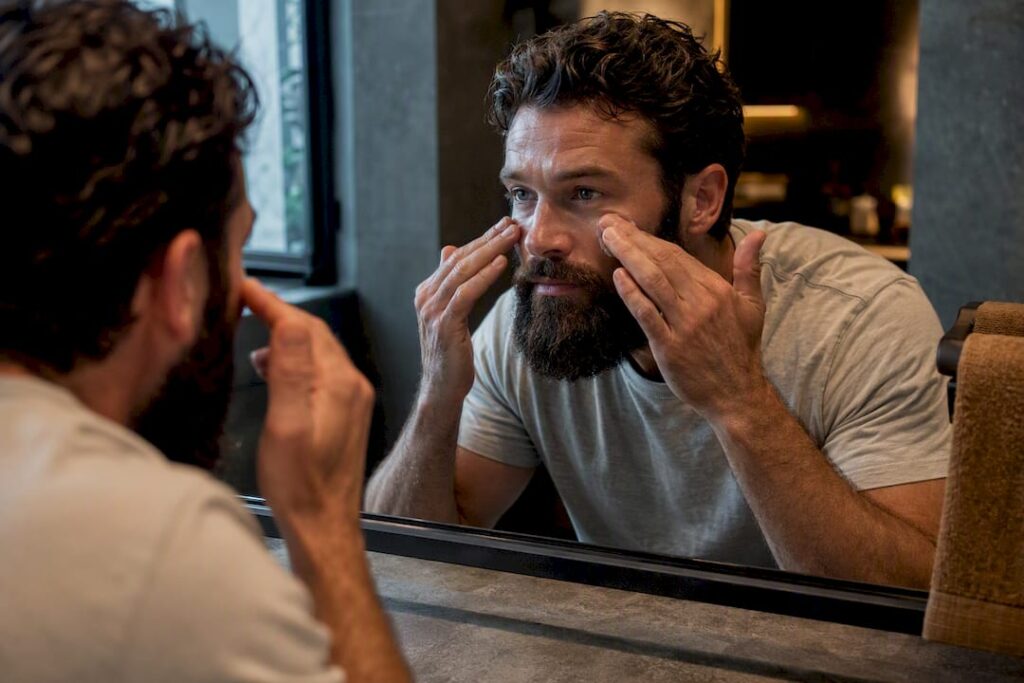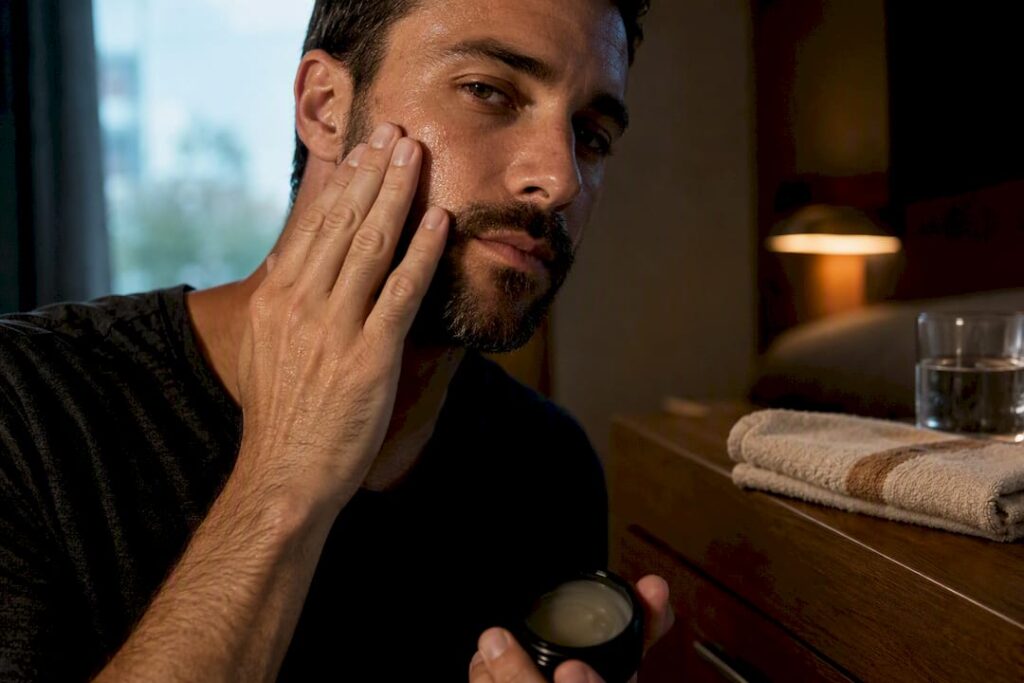
You usually don’t have to shave. Most beard dandruff clears up with a targeted antifungal wash, gentle exfoliation, and a light, non-greasy moisturizer applied consistently for a few weeks. If the skin stays cracked, red, or unimproved after about four weeks of consistent care, that’s the signal to see a dermatologist rather than keep guessing.
TL;DR:
- Consistent use of antifungal shampoos with a 3 to 5 minute contact time is key to effectively reducing beard dandruff caused by Malassezia yeast.
- Dry skin flakes are small and white, while seborrheic dermatitis flakes are larger, yellowish, greasy, and often accompanied by redness and itchiness.
- Natural oils like jojoba or MCT oil are safer for skin prone to seborrheic dermatitis, whereas high-oleic oils can feed yeast and worsen the condition.
- A simple routine of daily cleansing, moisturizing, and exfoliating twice weekly outperforms more complicated skincare regimens.
- Seek a dermatologist if flakes persist beyond four weeks of proper treatment, especially if symptoms include cracking, oozing, or hair loss.
Table of Contents
- What Causes Beard Dandruff, and Is It Dry Skin or Seborrheic Dermatitis?
- A Quick Beard Dandruff Checklist You Can Start Today
- How Do You Use Antifungal Shampoos and Treatments Safely on Your Face?
- Which Natural Remedies and Beard Oils Actually Help?
- What Does a Daily and Weekly Beard Care Routine Look Like?
- When Should You See a Dermatologist About Beard Dandruff?
- Why Simple, Skin-First Routines Beat Complicated Ones
- Where a Low-Ingredient Moisturizer Fits Into Your Routine
- Sources
- FAQ
What Causes Beard Dandruff, and Is It Dry Skin or Seborrheic Dermatitis?
Most beard dandruff traces back to one of two things: plain dry skin or seborrheic dermatitis driven by Malassezia yeast, a fungus that lives on everyone’s skin but overgrows in oily, warm patches like the one hiding under facial hair. Dry skin flakes tend to be small, white, and dusty. Seborrheic dermatitis flakes are usually larger, yellowish, and greasy looking, often paired with redness and an itch that gets worse a day or two after washing.
A few things tend to trigger or worsen either type:
- Cold, dry weather that strips moisture from the skin
- Heavy, comedogenic beard products left on too long
- Stress and hormonal shifts, both linked to increased oil production
- Infrequent washing, which lets oil, sweat, and dead skin build up under the hair
Shaving removes the hair, not the underlying skin condition, so it’s not a fix. Getting the cause right matters because dry skin responds to moisture, while seborrheic dermatitis responds to antifungal treatment first.
A Quick Beard Dandruff Checklist You Can Start Today
Before diving into specifics, here’s the condensed version dermatologists generally point to:
- Rinse and cleanse your beard daily, then moisturize while the skin is still damp.
- Use a ketoconazole-based antifungal wash 2 to 3 times a week, leaving it on for 3 to 5 minutes before rinsing.
- Exfoliate or brush with a boar-bristle brush 1 to 2 times a week to lift trapped flakes.
- Skip heavy, high-oleic oils while you’re actively treating flare-ups.
Pro Tip: Set a phone reminder for your antifungal wash days. The five-minute contact time only works if you actually wait it out instead of rinsing the second it lathers.
How Do You Use Antifungal Shampoos and Treatments Safely on Your Face?
Ketoconazole shampoo is the go-to option for facial skin because it’s effective against Malassezia without being as harsh as some alternatives. Work a small amount into the beard and skin underneath, and let it sit for 3 to 5 minutes before rinsing. That contact time is the detail most guys skip, and it’s the difference between a shampoo that actually kills yeast and one that just cleans hair.
Zinc pyrithione and selenium sulfide washes work too, but they can be more drying and irritating on facial skin than on scalp skin, so dilute them slightly or shorten contact time if you notice stinging. Use a medicated wash 2 to 3 times weekly, not daily. Overdoing it strips the skin barrier and can make flaking worse, not better.
- Ketoconazole: preferred for facial skin, 3 to 5 minute leave-on, 2 to 3 times weekly
- Zinc pyrithione: effective, watch for dryness, consider shorter contact time
- Selenium sulfide: potent, best diluted or used less often on the face
Consistency in leave-on time is the single biggest technique difference between people who see results and people who don’t. If flakes persist after a few weeks of proper use, a dermatologist can prescribe a stronger ketoconazole 2% formula or a short course of a low-potency topical steroid to calm inflammation quickly.
Which Natural Remedies and Beard Oils Actually Help?
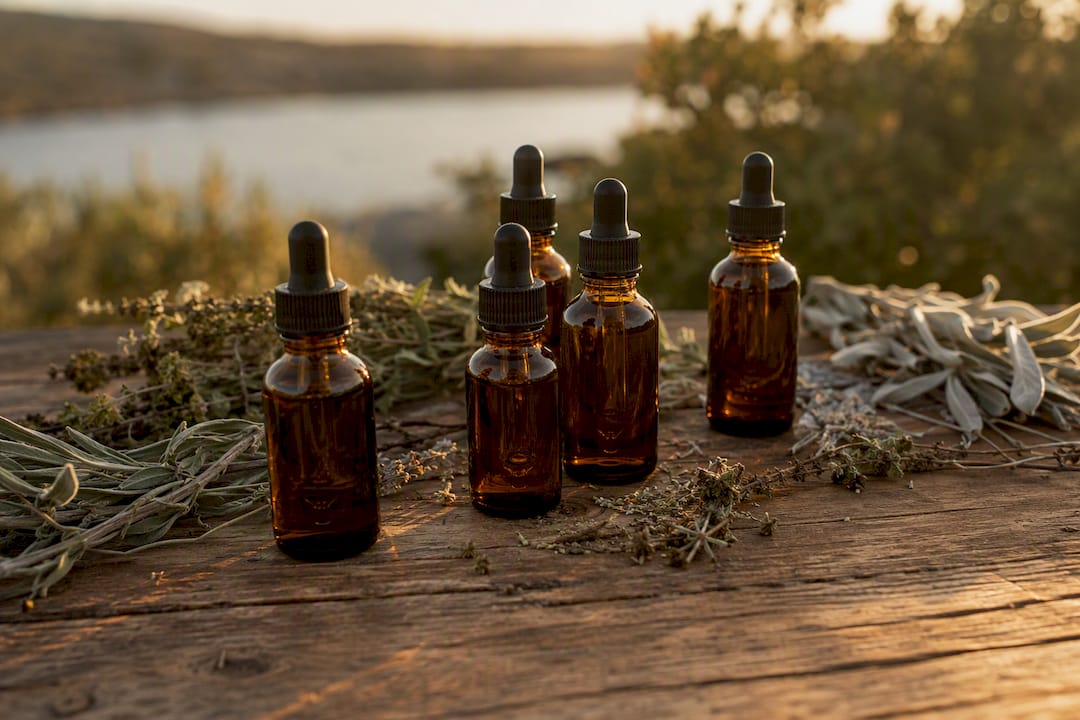
Not all beard oils are equal here, and some popular ones can quietly make seborrheic dermatitis worse. MCT oil (caprylic acid, or C8) and jojoba oil are the safer picks because they’re lightweight and don’t feed Malassezia the way heavier oils can. High-oleic oils like olive, castor, and argan are commonly recommended in DIY beard care, but oleic acid is a preferred food source for the yeast behind seborrheic dermatitis, so they can undo the progress an antifungal wash just made.
A few other natural options come up often:
- Diluted tea tree oil has mild antifungal properties, but always patch test since it’s a common irritant at full strength.
- Aloe vera can soothe redness and itch without clogging pores.
- Diluted apple cider vinegar (roughly one part vinegar to three parts water) may help some people, but skip it if your skin is already cracked or raw.
Checking whether a carrier oil is non-comedogenic and safe for sensitive skin before adding it to your routine saves a lot of trial and error.
Pro Tip: Skip petroleum jelly and other heavy occlusives during an active flare. They trap moisture and oil against the skin, which is exactly the environment Malassezia wants.
What Does a Daily and Weekly Beard Care Routine Look Like?
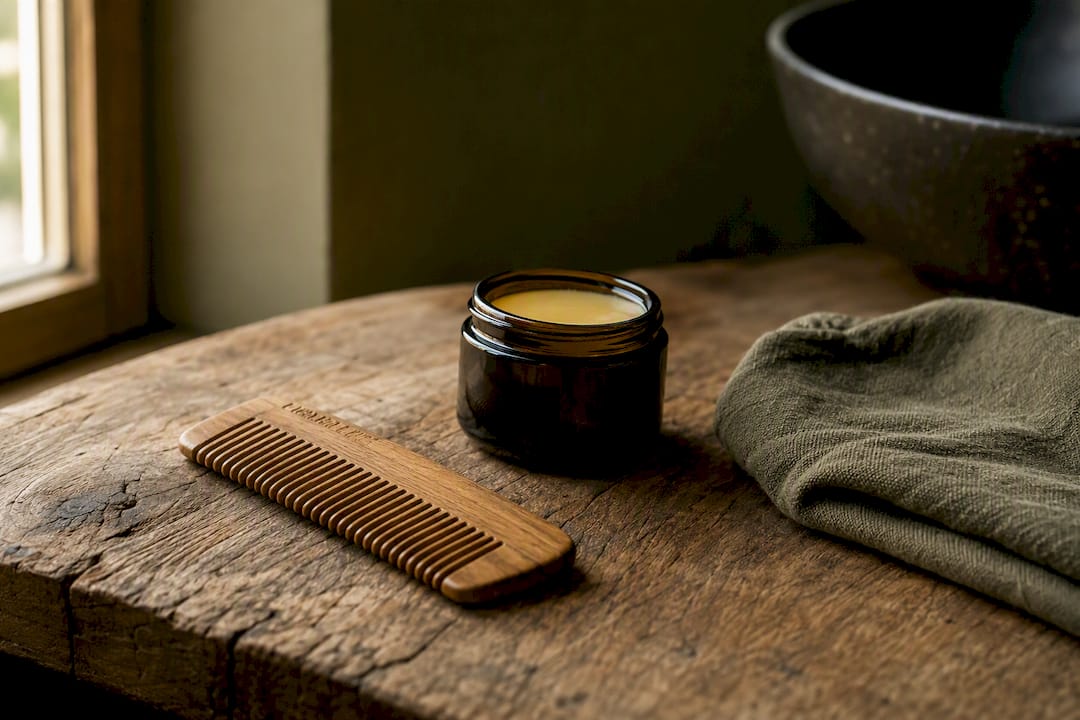
Skin care under a beard doesn’t need to be complicated, but it does need to be repeated. Mornings and evenings, cleanse with a gentle, fragrance-free wash (skip bar soap, which strips the skin barrier), pat dry, and apply a light moisturizer to damp skin before combing or brushing the beard into place. That damp-skin timing matters more than most people realize, since it helps lock in hydration rather than letting it evaporate.
On wash days, that’s when the medicated shampoo comes in, 2 to 3 times a week, always followed by a real moisturizer since antifungal ingredients tend to dry the skin. On the days in between, a normal gentle cleanse is enough.
- Exfoliate 1 to 2 times weekly for shorter beards, less often for longer or thicker growth where over-brushing can cause irritation
- Exfoliating before cleansing helps free trapped flakes so the wash can actually reach the skin
- Disinfect trimmer blades with 70% isopropyl alcohol between uses to avoid reintroducing bacteria or fungus
- Switch to a richer moisturizer in winter months when indoor heat and cold air both pull moisture from skin
Following a simple three-step plan of washing, moisturizing, and grooming, done consistently, outperforms any complicated ten-step routine.
When Should You See a Dermatologist About Beard Dandruff?
Give a consistent routine 1 to 4 weeks before judging whether it’s working. Most people see visible improvement in that window if they’re using antifungal shampoo correctly and moisturizing daily.
A few signs mean it’s time to stop self-treating:
- Skin that’s cracked, oozing, or bleeding
- Flaking that spreads beyond the beard area
- Patches of hair loss showing up alongside the flakes
- No improvement at all after about four weeks of consistent care
A dermatologist can step in with prescription-strength ketoconazole 2%, a short course of topical steroids, or calcineurin inhibitors for stubborn or steroid-sensitive cases.
Why Simple, Skin-First Routines Beat Complicated Ones
Most guys overcomplicate this. They stack five products hoping one of them works, when the actual fix is boring: hydrate the barrier, don’t feed the yeast, repeat daily. A short routine you’ll actually stick to beat a perfect one you abandon after a week. That’s the same logic behind a minimal skincare approach built around a few ingredients that do their job without extra fillers or fragrance that can irritate already-stressed skin.
— Blaine
Where a Low-Ingredient Moisturizer Fits Into Your Routine
Antifungal washes work, but they’re drying by design, which is exactly why the moisturizing step can’t get skipped. Iron Bull Naturals makes a beef tallow face balm built around three ingredients: grass-fed Alberta tallow, hyaluronic acid, and jojoba oil, the same lightweight oil recommended earlier for seborrheic-prone skin.

There’s no fragrance, no filler, and no heavy occlusive layer sitting on top of skin that’s already trying to recover. Apply a small amount to damp skin right after your cleanse, before or after a medicated wash day. If you’re in the middle of a bad flare, use a thinner layer and patch test on your jawline first, since any new product on inflamed skin deserves a trial run. For guys who want the whole routine mapped out in one place, from cleansing to moisturizing, the simple skincare routine for men walks through it step by step. Grab the balm and start tonight.
Sources
This guide draws on dermatology and clinical references from the American Academy of Dermatology, WebMD, and Healthline.
This article is general information, not a substitute for advice from a qualified doctor. Consult a qualified healthcare professional about your own circumstances before acting on anything here.
- Beard Dandruff: What Causes It and How Do You Treat It? — WebMD
- Healthy beard guidance — American Academy of Dermatology (AAD)
- Seborrheic dermatitis beard care — SEBDERMATOLOGY
FAQ
How Can I Get Rid of Dandruff in My Beard?
Wash with a ketoconazole antifungal shampoo 2 to 3 times weekly, leaving it on for 3 to 5 minutes, then moisturize with a lightweight, non-greasy product like a beef tallow balm while the skin is still damp.
Why Is Beard Dandruff So Bad Sometimes?
Flare-ups usually get worse from cold weather, stress, heavy oils that feed Malassezia yeast, or infrequent washing that lets oil and dead skin build up under the beard.
How Do I Get Rid of Facial Dandruff Beyond the Beard?
The same antifungal wash and moisturizing routine works on facial skin outside the beard line; just use a smaller amount and watch for extra sensitivity around the eyes and nose.
Will Beard Dandruff Go Away If I Shave?
No, shaving removes the hair but not the underlying dry skin or Malassezia overgrowth causing the flakes, so the dandruff typically returns once hair grows back unless the skin itself is treated.