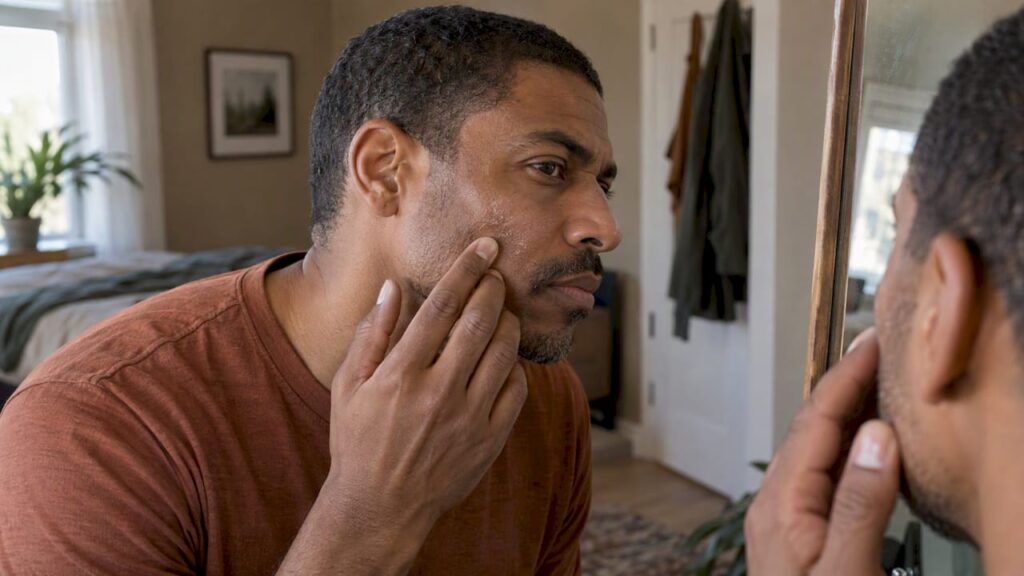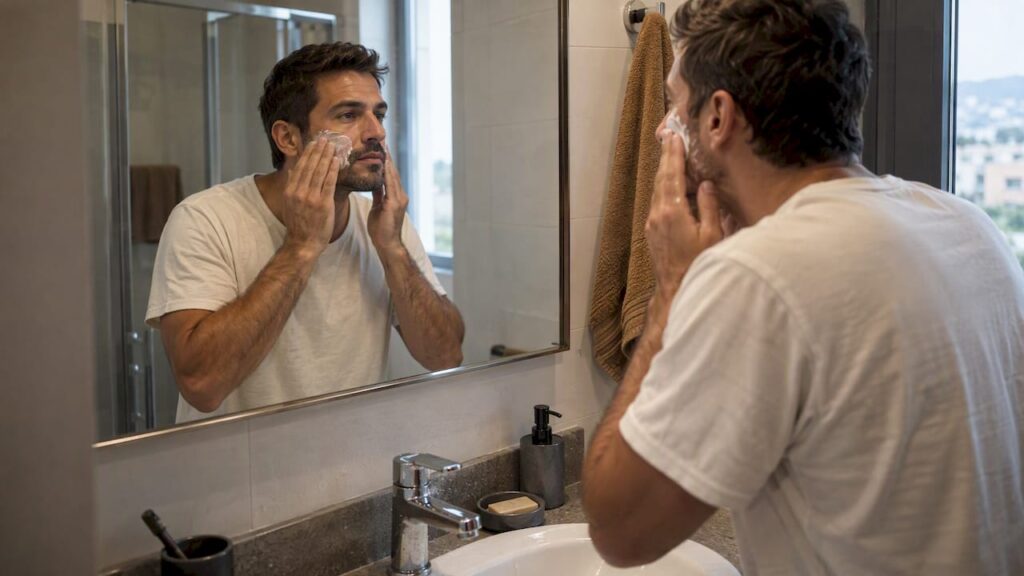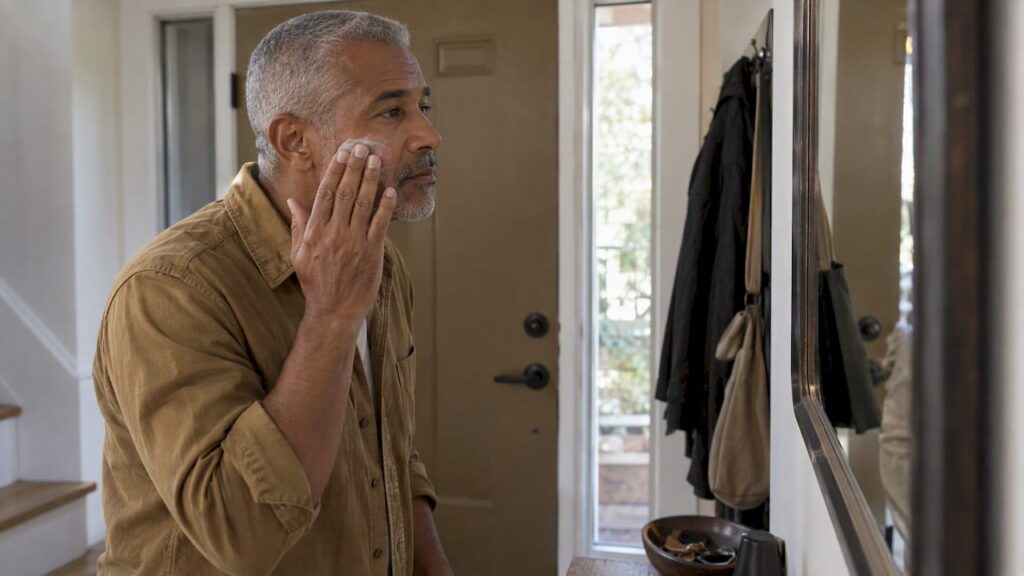


Wash the beard and the skin underneath it with warm water and a gentle cleanser, then pat it mostly dry and work an oil-based balm into the skin while it’s still damp. Simple dryness usually calms down in a few days of doing this consistently; irritation from new growth or ingrown hairs can take two to three weeks. A grass-fed tallow balm like Iron Bull Tallow fits this exact job since it seals moisture into the skin instead of just sitting on top of the hair.
TL;DR:
- Proper beard hygiene involves washing with warm water and a gentle, sulfate-free cleanser that reaches the skin underneath the hair to prevent dryness and irritation.
- Applying an oil-based balm or oil to damp skin seals in moisture more effectively than lotions, especially when using simple formulas like grass-fed tallow.
- Beard itch caused by dry skin, new hair growth, or ingrown hairs requires targeted treatments such as moisturizing, softening hair, or gentle exfoliation, while dermatitis and folliculitis may need medical intervention.
- Consistent routine practices, including daily washing and moisturizing, weekly exfoliation, and careful shaving, are more effective than sporadic product use or complex routines.
- Signs of needing professional care include spreading redness, pus, swelling, or worsening pain, which often require medicated treatments from a dermatologist rather than self-treatment.
Table of Contents
- The Best Beard Itch Remedy Checklist to Try Tonight
- Why Do Beards Get Itchy? Match the Cause to the Cure
- A Daily and Weekly Routine That Actually Prevents Recurrence
- When Beard Itch Needs a Doctor, Not Just a Routine
- Why Oil-Based Balms Work Better Than Lotion for Beard Skin
- The One Habit That Beats Every Fancy Product
- A Simpler Way to Calm Beard Itch
- Where This Advice Comes From
- Sources
- FAQ
The Best Beard Itch Remedy Checklist to Try Tonight
Most guys treat beard itch like a hair problem. It’s a skin problem. Every remedy that actually works targets the skin underneath the beard, not the hair on top of it, and the order you do things in matters almost as much as the products you use.

Wash it right, not just often. Dermatologists recommend washing at least daily or every other day with warm water and a mild or exfoliating cleanser rather than scalding water, which strips oil the skin actually needs. Skip your regular hair shampoo. Standard shampoo is formulated to strip oil from scalp hair, and that same stripping action on facial skin leaves it drier and itchier within days. A dedicated beard wash or a gentle, sulfate-free face cleanser does the job without the collateral damage.
Get the cleanser onto the skin, not just the hair. This is the step almost everyone skips. Many men only scrub the outside of the beard and never reach the skin underneath it, which is exactly where the itch originates. Part the beard with your fingers in the shower and massage cleanser down to the skin the same way you’d wash your scalp.
Moisturize while the skin is still damp. Oil-based beard oils and balms outperform lotions here because they seal in moisture rather than just adding it temporarily. Apply a dime-sized amount, work it into the skin first, then run it through the hair.
Exfoliate once or twice a week. A soft brush, a damp washcloth, or a mild chemical exfoliant clears dead skin and flakes before they clog follicles and trigger ingrown hairs. Daily exfoliation is overkill and irritates skin that’s already inflamed.

Shave and trim with intention. Shave with the grain, use a fresh blade (swap monthly if you shave often), and soften hair with warm water before you start. Over-trimming a beard you’re trying to grow out just resets the itchy new-growth phase.
Skip the fragrance and alcohol. Scented aftershaves and alcohol-based products feel refreshing for about ten seconds, then leave skin drier than before.
Pro Tip: Apply your balm right after you towel off, while your face is still slightly damp. Water gets trapped under the oil layer instead of evaporating, so you get noticeably better hydration than applying the same product to bone-dry skin.
Why Do Beards Get Itchy? Match the Cause to the Cure
Beard itch has more than one cause, and treating the wrong one wastes weeks. Here’s how to tell them apart:
- Dry skin (xerosis): Tight, flaky, itches worse right after washing. Fixed with gentler cleansers and consistent oil-based moisturizing.
- New growth and bristle friction: Sharp new hairs curling against skin, common in the first few weeks of growing out a beard. Softening the hair with beard oil and resisting the urge to shave it off usually solves it within days.
- Ingrown hairs (pseudofolliculitis): Small red or skin-colored bumps where curled hair reenters the skin. Gentle exfoliation and shaving with, not against, the grain address the root cause. For a deeper dive, see this guide to treating ingrown hairs in the beard.
- Seborrheic dermatitis: Greasy yellow or white scaling, often on the cheeks and jawline, that plain moisturizer won’t fix. This one usually needs a medicated shampoo.
- Folliculitis: Red, tender, pus-filled bumps around individual hairs, sometimes from bacteria introduced by dull razors or dirty combs. This is the version that needs medical treatment, not just better skincare.
A Daily and Weekly Routine That Actually Prevents Recurrence
Consistency beats any single product. Here’s the routine that keeps beard itch from coming back once you’ve calmed the initial flare-up:
- Every day: Wash face and beard skin with warm water and a gentle cleanser, then apply an oil-based balm to damp skin, morning or night, whichever fits your schedule.
- One to two times a week: Exfoliate gently with a soft brush or washcloth to clear dead skin before it clogs follicles.
- Shaving days: Wet the beard with warm water first, shave with the grain, and rotate to a fresh blade monthly if you shave a few times a week.
- When trying something new: Introduce one product at a time and patch-test it on your jawline for a couple of days before applying it everywhere.
For simple dryness, expect noticeably less flaking and itch within a few days to two weeks of sticking to this. Ingrown hairs and new-growth irritation take a bit longer, usually two to three weeks, since you’re waiting on hair growth and skin turnover rather than just rehydrating.
Pro Tip: Keep a one-week log of what you apply and when. Beard itch that seems random almost always traces back to a specific product introduced days earlier, and you won’t catch it without writing it down.
When Beard Itch Needs a Doctor, Not Just a Routine
Most beard itch responds to better hygiene and consistent moisturizing. Some signs mean it’s time to stop self-treating: spreading redness, visible pus, swelling that doesn’t go down, fever, patchy hair loss, or pain that’s gotten worse over several days.
Depending on the cause, a dermatologist may prescribe a topical antifungal like ketoconazole for scaling tied to seborrheic dermatitis, or a topical antibiotic like mupirocin for bacterial folliculitis. Short courses of topical steroids sometimes calm severe inflammation. Improvement from these treatments usually shows up within days to a couple of weeks; if nothing changes by then, follow up rather than switching remedies on your own. Skip the DIY instinct to squeeze pustules or self-medicate with leftover steroid cream. Both tend to make things worse.
Why Oil-Based Balms Work Better Than Lotion for Beard Skin
Cleveland Clinic dermatologists note that oil-based moisturizers form a stronger, longer-lasting seal over the skin’s moisture barrier than water-based lotions, which matters when you’re dealing with skin trapped under a layer of hair all day. That’s the same logic behind Iron Bull Tallow.
- Grass-fed Alberta tallow mirrors the lipid structure of human skin, helping it absorb without a greasy film.
- Hyaluronic acid pulls moisture into the skin before the tallow seals it in.
- Three total ingredients, non-toxic and hypoallergenic, which matters for skin that’s already irritated and reactive.
The One Habit That Beats Every Fancy Product
The routine matters more than the ingredient list. Guys who apply balm to damp skin every single day, without fail, see better results than guys who buy three new products and try them all at once. Introducing everything simultaneously makes it impossible to know what’s helping and what’s making things worse.
— Blaine
A Simpler Way to Calm Beard Itch
Between medicated washes, exfoliating brushes, and a drawer full of half-used lotions, most guys end up with more products than answers. Iron Bull Naturals built Iron Bull Tallow around the opposite idea: three ingredients, one job, done well.

For beard itch specifically, warm up a dime-sized amount between your fingers, work it into the skin underneath your beard while your face is still damp from washing, then run the rest through the hair. Do that every night and you’re covering the moisture-sealing step dermatologists point to as the difference-maker for dry, irritated skin. If you want the full sequence laid out, from cleanser through balm, the simple skincare routine for men walks through it step by step. Grab a jar and put it to work tonight.
Where This Advice Comes From
- Cleveland Clinic Health Essentials: What may be causing your itchy beard?
- Healthline: Itchy beard causes and care
- Medical News Today: 7 itchy beard remedies
- Hair Art Clinics: Beard-area aftercare and hygiene guidance
This article is general information, not a substitute for advice from a qualified doctor. Consult a qualified healthcare professional about your own circumstances before acting on anything here.
Sources
- What may be causing your itchy beard? — Cleveland Clinic Health Essentials
- Itchy beard: causes and care — Healthline
- 7 itchy beard remedies — Medical News Today
FAQ
What can I put on my beard to stop itching?
An oil-based beard balm or oil applied to damp skin, not just the hair, is the most effective first move; grass-fed tallow formulas like Iron Bull Tallow are built specifically for that barrier-sealing job.
How long does it take for beard itch to go away?
Simple dryness usually improves within a few days to two weeks of consistent washing and moisturizing; itch tied to new growth or ingrown hairs can take two to three weeks.
Why do beards get itchy?
Dry skin, friction from new growth, ingrown hairs, seborrheic dermatitis, and bacterial folliculitis are the five most common causes, and each one calls for a different fix.
What is the best cream for itchy beard?
Oil-based balms generally outperform water-based lotions for beard skin since they hold moisture in longer; look for simple, fragrance-free formulas without alcohol or sulfates.