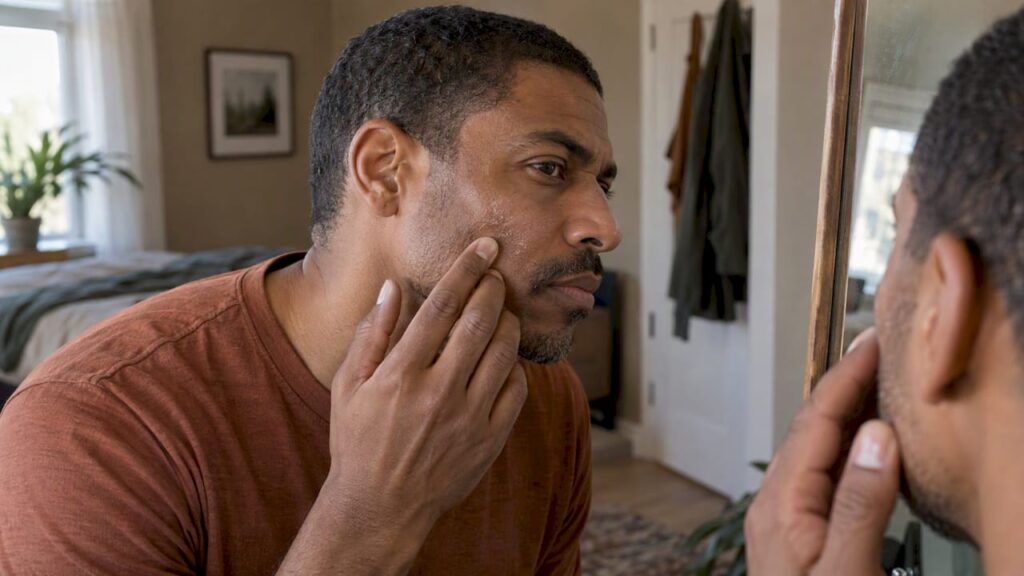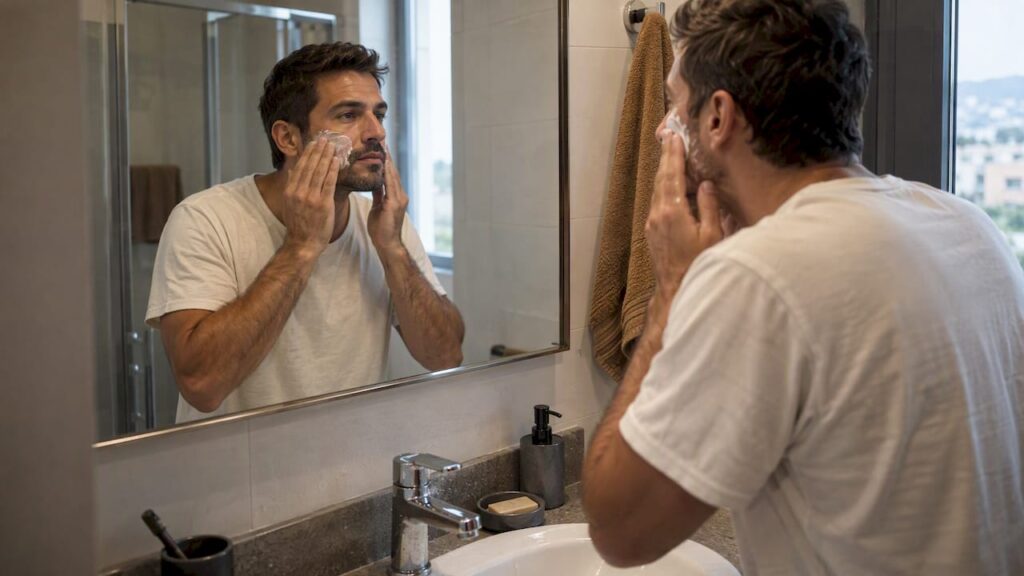


Daily broad-spectrum SPF paired with a nightly retinoid is the highest-value routine for softening fine forehead lines, and it’s the one most men skip. Botox remains the most effective fix for lines that move with expression, while deep creases that stay put at rest usually need resurfacing or filler. Start SPF and a retinoid this week, and book a consult only if lines are already visible when your face is relaxed.
TL;DR:
- Consistent daily use of broad-spectrum SPF 30+ is the most effective prevention for new forehead lines, especially when reapplied after sweating or outdoor activity.
- Retinoids improve skin texture and collagen over 8 to 12 weeks, but starting with low strength two to three nights weekly is crucial to avoid irritation and failure.
- At-home ingredients like hyaluronic acid support hydration and can make the skin appear smoother immediately, but only professional treatments like Botox or laser address deep static lines effectively.
- Botox remains the best choice for dynamic, movement-related lines, with results appearing within days and lasting three to four months, requiring higher doses for men due to thicker skin.
- A conservative, experienced provider focusing on small doses and proper technique is key to minimizing risks like brow drop, frozen expression, or vascular complications from injections.
Table of Contents
- Your 0 to 3 Month Plan for Reducing Forehead Lines
- What At-Home Ingredients Actually Work?
- Which In-Clinic Treatments Work for Forehead Lines?
- Risks and Male-Specific Treatment Considerations
- How Do You Choose a Provider for Forehead Line Treatment?
- What Realistic Results Actually Look Like
- Where Iron Bull Naturals Fits in Your Routine
- The Honest Take on Forehead Lines and Male Vanity
- Start the Simple Routine Iron Bull Naturals Recommends
- Sources
- FAQ
Your 0 to 3 Month Plan for Reducing Forehead Lines
Forget the 12 step routines you see marketed everywhere. Men get results from about four habits done consistently, not a shelf full of serums. Here’s the order that actually matters, broken down by when you do it.
- Morning: Apply a broad spectrum SPF 30+ across your forehead and hairline, even on cloudy days. This single habit does more to prevent new lines than any cream you’ll buy, and dermatology guidance consistently ranks it as the top preventive step.
- Morning, continued: If you sweat through workouts or work outdoors, pick a sweat-resistant formula and reapply after heavy exertion. Sunscreen that slides off by 10 a.m. isn’t protecting anything.
- Evening: Introduce a retinoid two to three nights a week, not nightly, for the first two weeks. Your skin needs time to adjust, and going in too hot causes flaking and redness that make men quit before week four.
- Evening, continued: Apply a hyaluronic acid serum before your moisturizer to offset the dryness retinoids can cause. This isn’t optional. Skipping hydration is the number one reason guys give up on retinoids.
- Lifestyle: Sleep on your back when you can, and wear sunglasses outdoors to cut down on the squinting and forehead scrunching that deepen lines over years, not months.
- Checkpoint: By week 8 to 12, you should notice smoother texture. If lines are still visible when your face is completely still, that’s your cue to consult a provider about Botox or an in-office resurfacing option.
Pro Tip: Buy a cheap desk mirror and check your forehead at rest, no expression, once a week. It’s the fastest way to tell whether you’re dealing with dynamic lines (from movement) or static lines (etched in even when relaxed), and that distinction decides your entire treatment path.
A simple three-step morning and night routine removes the guesswork here. The goal isn’t complexity. It’s consistency.
What At-Home Ingredients Actually Work?
Retinoids are the closest thing to a proven over-the-counter fix for forehead lines. They speed up cell turnover and stimulate collagen production, which is why Harvard Health notes visible improvement typically shows up after 8 to 12 weeks of consistent use, not two. That timeline trips up a lot of men who expect results in a week and quit before the product has a chance to work.
Here’s how to actually use one without wrecking your skin barrier in the process:
- Start with a lower-strength retinol (not prescription tretinoin) two to three nights a week.
- Apply to fully dry skin. Retinoids on damp skin absorb faster and irritate more.
- Follow with a barrier-supporting moisturizer within a few minutes.
- Always pair retinoid use with daily sunscreen. Dermatology UK is clear that retinoids increase sun sensitivity, and skipping SPF while using one undoes the benefit.
- Increase frequency gradually over 6 to 8 weeks as tolerance builds.
Peptides and so-called neuropeptides show up in a lot of men’s anti-aging products with big promises attached. The honest picture: they work by mildly interrupting the nerve signals that trigger muscle contraction, giving a soft, temporary smoothing effect. Think of it as a much weaker cousin of Botox, delivered topically instead of injected. Don’t expect it to touch a deep static line. It’s a supporting player, not the star.
Hyaluronic acid deserves more credit than it gets. It draws water into the skin and plumps the surface almost immediately, which is why so many men notice their forehead looking smoother within a day of using it. That plumping effect isn’t fixing the underlying line, but it’s doing something equally useful: keeping your skin barrier hydrated enough to tolerate a retinoid without flaking or stinging. The two ingredients work as a pair, not competitors.
Forehead patches and silicone strips are the wildcard. They work through simple mechanical compression, holding skin flat overnight so lines look temporarily softer in the morning. There’s no collagen rebuilding happening. It’s a cosmetic trick, useful the night before a big meeting, useless as a long-term strategy.
Layering order matters more than most guys realize. In the morning: cleanser, hyaluronic acid serum if your skin runs dry, moisturizer, then sunscreen last. At night: cleanser, retinoid, then moisturizer to lock it in. Applying moisturizer before a retinoid dilutes it and slows results. Applying the right product first in each routine is a small detail that changes outcomes.
Which In-Clinic Treatments Work for Forehead Lines?
Once lines show up with your face at rest, at-home products stop being enough. This is where a needle or a laser earns its cost.
Botox is still the most effective option for dynamic lines, the ones that appear when you raise your eyebrows or look surprised. It works by temporarily blocking the nerve signal to the frontalis muscle, and The Aesthetic Society notes results typically appear within 3 to 5 days and last around 3 to 4 months. Men generally need a higher unit dose than women because the frontalis tends to carry more muscle mass, but more isn’t automatically better here. Over-treating this muscle is exactly what causes a flat, frozen forehead or an unnaturally heavy brow, so a conservative starting dose with a follow-up adjustment beats going aggressive on the first visit.
Microneedling and fractional lasers take a slower, more physical approach. Tiny controlled injuries to the skin trigger the body’s own collagen remodeling process, and clinical reviews show this rebuilding happens gradually over weeks to months, usually across a series of 3 to 6 sessions. These are the better choice for static lines and rough texture rather than movement-based creases, since there’s no muscle involved to relax.
Dermal filler is the one to approach with real caution on the forehead. The area carries blood vessels close to the surface, and improper placement carries a genuine vascular risk, which is why many experienced injectors avoid forehead filler altogether or reserve it for very specific, shallow static lines that haven’t responded to anything else.
| Treatment | Best for | Onset | How long it lasts |
|---|---|---|---|
| Botox | Dynamic (expression) lines | 3 to 5 days | About 3 to 4 months |
| Microneedling | Static lines, texture | Builds over weeks | Gradual, cumulative |
| Fractional laser | Static lines, texture | Builds over weeks to months | Gradual, cumulative |
| Dermal filler | Select shallow static lines | Immediate | Months, case dependent |
Many men do best combining a light Botox dose to quiet the muscle with microneedling or laser to rebuild the skin underneath it. Neither treatment alone addresses both the movement and the texture, and a conservative combination usually beats maxing out one modality.
Risks and Male-Specific Treatment Considerations
Male forehead skin runs about 25% thicker on average than female skin, with denser muscle underneath. That’s why a dose calibrated for a female patient often underdelivers on a man, and why a provider who doesn’t adjust for this ends up either undertreating or, worse, guessing high and causing problems.
The real risks to know about before you book anything:
- Brow drop: happens when too much toxin relaxes the muscles that normally hold your eyebrows up, leaving a heavy, tired look.
- Frozen appearance: overtreatment flattens natural expression entirely, which most men find far more noticeable and disliked than the original lines.
- Bruising and swelling: common with any injectable, usually resolving within a week.
- Vascular complications: rare but serious with filler in the forehead, given the blood vessels running through that area.
Injectable safety literature points to a specific technique that reduces these risks: spreading a lower total dose across more injection points on the frontalis rather than concentrating it in fewer spots, which helps preserve some natural movement in the lower forehead. This is a technique question, and it’s exactly why picking the right injector matters as much as picking the right treatment.
Pro Tip: Ask your injector directly whether they check eyelid and brow position before treating the forehead. A provider who skips this step is skipping the exact check that prevents brow drop.

Lifestyle factors compound the anatomy issue. Smoking accelerates collagen breakdown and reduces the skin’s repair capacity, according to Mayo Clinic, and heavy alcohol use dehydrates skin in ways that make existing lines look deeper. Neither factor is treated with a needle. Both respond to habit change.
How Do You Choose a Provider for Forehead Line Treatment?
The provider matters more than the treatment. A skilled injector using a conservative dose will outperform an inexperienced one using the “right” product every time.
- Verify board certification through a dermatology or plastic surgery board, and confirm they specifically treat men, not just a general aesthetic practice that occasionally sees male patients.
- Ask to see male before-and-after photos. Female forehead anatomy responds differently to filler and toxin, and a portfolio full of women tells you little about how they’ll dose you.
- Ask directly about their dosing philosophy. A good answer sounds like “we start conservative and adjust at a follow-up visit.” A red flag answer sounds like a flat guarantee of a specific result on the first try.
- Ask how they handle complications if brow drop or asymmetry occurs. Providers with a real plan for touch-ups and corrections have clearly dealt with this before.
- Watch for pressure tactics, like upselling filler you didn’t ask about or pushing a package deal before you’ve even discussed your goals.
Expect Botox maintenance roughly every 3 to 4 months once you find a dose that works for your face, per The Aesthetic Society’s guidance on typical duration. Cost varies widely by region and provider, so get a specific quote at consultation rather than anchoring to a number you saw online.
What Realistic Results Actually Look Like
Softening is the target, not erasing. A good outcome leaves you looking rested and less creased, while still able to raise an eyebrow and show real expression. A frozen, line-free forehead at 45 doesn’t look younger. It looks like you had work done, which is the opposite of what most men actually want.
Timelines vary by approach. Retinoids need 8 to 12 weeks minimum before judging results. Botox shows change within days but needs the full 3 to 4 month cycle to evaluate whether the dose was right. Microneedling and laser build gradually across a full series, often three to six sessions, before the collagen rebuilding shows up visibly.
If a treatment isn’t delivering after its realistic timeline, or if side effects like heaviness or asymmetry show up, that’s the signal to go back to your provider for an adjustment rather than pushing through or adding more product on top.
Where Iron Bull Naturals Fits in Your Routine
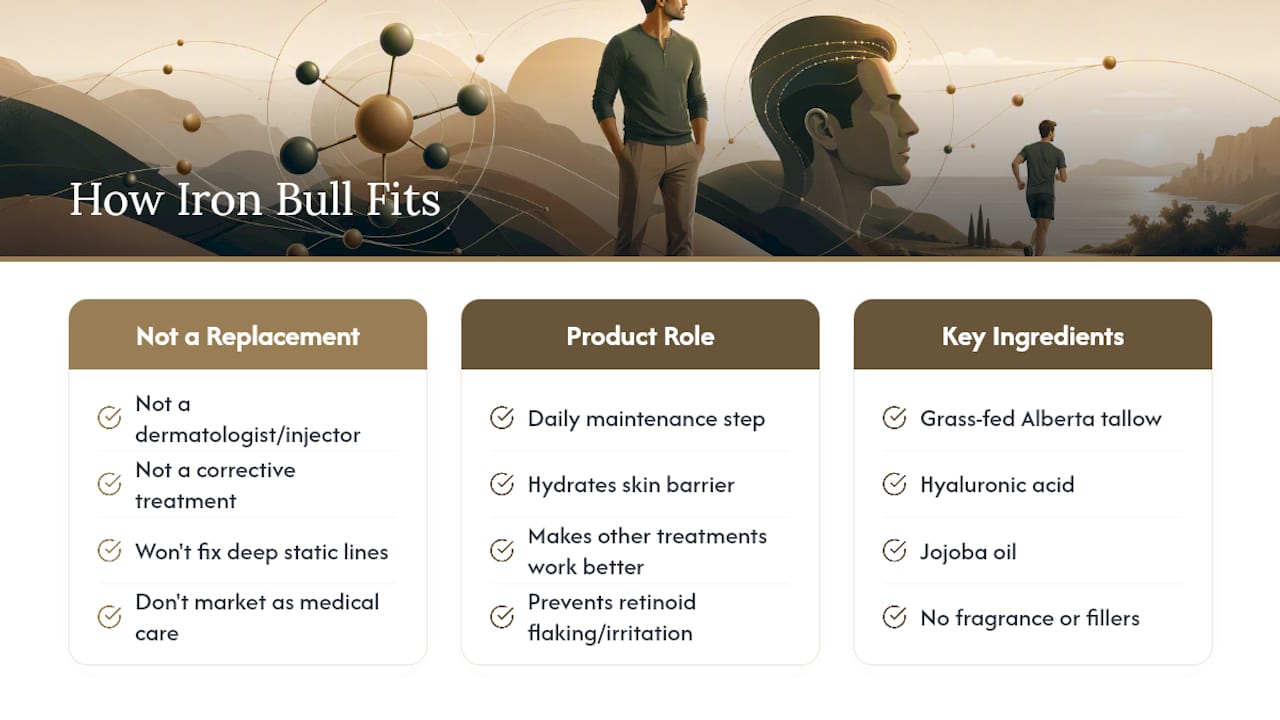
Iron Bull Naturals doesn’t replace a dermatologist or an injector, and it shouldn’t be marketed like it does. What it does well is the daily maintenance work that makes every other treatment work better: keeping the skin barrier hydrated so a retinoid doesn’t turn into flaking, dry irritation.
The Iron Bull Tallow balm is built around exactly three ingredients: grass-fed Alberta tallow, hyaluronic acid, and jojoba oil. No fragrance, no filler, no long list of things you can’t pronounce. That simplicity is deliberate. Fewer ingredients means fewer chances to irritate skin that’s already dealing with a retinoid or fresh Botox. Customers report smoother, better-hydrated skin within weeks, which lines up with what hyaluronic acid is known to do on contact.
For deep static lines already etched into your forehead, this balm won’t do what Botox or laser resurfacing does. It’s a support product, not a correction. Use it as the foundation your treatments sit on top of.
The Honest Take on Forehead Lines and Male Vanity
Most advice aimed at men treats forehead lines like a problem to eliminate entirely, and that framing is backwards. A completely smooth, motionless forehead on a grown man reads as artificial faster than the lines ever did. The actual goal, and the one the evidence supports, is softening: less depth, less shadow in bad lighting, more rested. Not zero movement.
The conventional wisdom oversells retinoids as a quick fix and undersells how much daily sunscreen actually prevents. Most men treat SPF as a summer beach habit instead of the single highest-leverage thing they can do year round. That’s backwards, and it’s also the cheapest fix on this entire list.
If you’re weighing where to spend effort first, spend it on consistency before you spend it on a needle. A hydrated, sun-protected forehead responds better to any procedure you eventually choose, and a lot of men skip that step entirely and wonder why their results underdeliver.
— Blaine
Start the Simple Routine Iron Bull Naturals Recommends
Most men trying to fix forehead lines end up with a bathroom counter full of half-used serums and no real plan. Iron Bull Naturals built the opposite: one balm, three ingredients, and a routine simple enough that you’ll actually stick with it past week two, which is usually where retinoid routines fall apart from irritation and neglect.

The Iron Bull Tallow face balm hydrates and supports your skin barrier without the greasy residue typical of drugstore moisturizers, which matters if you’re also running a nightly retinoid that needs a calm, well-hydrated base underneath it. Grass-fed Alberta tallow and hyaluronic acid do the work; nothing else is in the formula to get in the way.
If you want the full daily framework instead of piecing one together yourself, the simple skincare routine for men lays out exactly what to apply, in what order, morning and night. Start there, add sunscreen, and give it the full 8 to 12 weeks before judging results.
Sources
This guide draws on Harvard Health’s research on retinoid timelines, The Aesthetic Society’s clinical guidance on Botox, and peer-reviewed findings on frontalis anatomy and skin remodeling. Prevention guidance comes from Dermatology UK, with lifestyle context from Mayo Clinic and additional habits research.
This article is general information, not a substitute for advice from a qualified doctor. Consult a qualified healthcare professional about your own circumstances before acting on anything here.
- Do retinoids really reduce wrinkles? | Harvard Health
- Brotox: What is it and why is it popular | The Aesthetic Society
- NCBI review on skin remodeling modalities
FAQ
Why do men get forehead lines?
Repeated muscle movement (raising eyebrows, squinting), thinner collagen support with age, sun exposure, and smoking all contribute, and male forehead skin’s greater thickness and muscle mass can make lines appear deeper once they form.
Can forehead lines go away completely?
Fine, early lines often soften significantly with consistent SPF and retinoid use, and Botox can smooth dynamic lines almost completely, but deep static creases rarely disappear entirely without resurfacing or filler, and the realistic goal is softening rather than full erasure.
Is it normal to have fine lines on my forehead at 25?
Yes. Expression lines from normal muscle movement can start appearing in your twenties, especially with sun exposure or a habit of raising your eyebrows or squinting; starting sunscreen and a mild retinoid now is the most effective prevention step at this age.
Do forehead lines mean anything about my health?
Not directly, though deeper or premature lines are often a visible marker of cumulative sun exposure, smoking, or dehydration rather than a sign of any underlying medical condition on their own.