


For health-conscious shoppers who want physical UV protection and a short, readable ingredient list, a mineral sun balm built on zinc oxide is one of the most straightforward choices on the shelf. Our Iron Bull Tallow Sun Balm is a tallow-based option formulated around that same principle: fewer ingredients, mineral actives, and a format you apply where sun exposure is heaviest.
TL;DR:
- A higher zinc oxide concentration generally provides stronger UV blocking but may create a thicker texture and more white cast on darker skin tones.
- Water resistance claims are limited to 40 or 80 minutes and require reapplication sooner if swimming, sweating, or towel drying occurs.
- Mineral balms are best for targeted protection on high-exposure areas and should be applied at least 15 minutes before sun exposure and reapplied every two hours.
- Marketed terms like reef safe and cruelty-free are not regulated, so buyers should focus on active ingredient percentages and full ingredient lists.
- The effectiveness of a mineral sun balm depends on proper application, reapplication habits, and choosing a product with a broad-spectrum SPF 30 or higher.
Table of Contents
- What makes a sun balm “mineral” and how do the actives work
- How to choose a mineral sun balm: a practical checklist
- Reading the ingredient label: what belongs and what to avoid
- How to apply and reapply a mineral sun balm correctly
- Benefits and downsides of mineral sun balms
- How Iron Bull’s tallow-based sun balm fits this kind of buyer
- How long does one application actually protect you
- What mineral sun balms typically cost
- Packaging and how it affects stability and convenience
- Certifications and eco-claims: reef-safe, cruelty-free, and what they really mean
- Our take: the label matters more than the marketing
- Try a simpler mineral sun balm
- FAQ
- Sources
What makes a sun balm “mineral” and how do the actives work
A mineral sun balm is a solid or semi-solid sunscreen that uses physical UV filters, mainly zinc oxide and sometimes titanium dioxide, instead of chemical absorbers like oxybenzone. These minerals sit on the surface of your skin and work as soon as you apply them, unlike some chemical filters that need time to bind before they’re effective.
The American Academy of Dermatology recommends mineral sunscreens for people with sensitive skin, and advises choosing a broad-spectrum, water-resistant product rated SPF 30 or higher. Zinc oxide and titanium dioxide create a layer on the skin that absorbs and reflects UV rays, a mechanism dermatologists frequently point to when recommending them for reactive or easily irritated skin.
Balm formats add a practical twist. Because they’re built on a solid base, usually an occlusive like tallow or beeswax, they tend to stay put on targeted areas like the nose, ears, and part line rather than running the way a thin lotion can. That makes them useful as a dual hydration and protection product, especially for drier skin types that want fewer separate steps in a routine.
How to choose a mineral sun balm: a practical checklist
Shopping for a mineral balm gets easier once you know which label details actually matter and which are marketing noise.
Start with the SPF and spectrum claim. The FDA’s over-the-counter sunscreen guidance notes that broad-spectrum products with SPF 15 or higher should be applied liberally and reapplied on a set schedule, and dermatologists generally steer people toward SPF 30 or above for daily outdoor use. “Broad spectrum” means the product covers both UVA and UVB rays, not just the UVB rays that cause sunburn.
Next, check the active ingredient line and percentage. Under the FDA’s OTC sunscreen monograph, zinc oxide and titanium dioxide are each permitted at concentrations up to 25%. A higher percentage of zinc oxide generally signals stronger physical coverage, though it can also mean a thicker texture.
A few more things worth confirming before you buy:
- Water-resistance claim: labels state either 40 or 80 minutes of protection during swimming or sweating, never indefinite resistance.
- Fragrance-free status: added fragrance is one of the most common triggers for reactive skin.
- Filter list: confirm there’s no oxybenzone or octinoxate hiding alongside the mineral actives.
- Format fit: a balm suits targeted, high-exposure areas, while a lotion covers large surface areas faster.
Pro Tip: Keep your balm in your bag or car during summer, but check it for separation or a grainy texture after extreme heat exposure before applying.
Reading the ingredient label: what belongs and what to avoid
Mineral balm labels are usually short, which makes outliers easy to spot once you know what to look for.
- Non-nano zinc oxide is the primary active in most mineral balms and is the ingredient doing the UV-filtering work.
- Occlusive and carrier ingredients like tallow, beeswax, or jojoba oil give the balm its texture and add a hydrating layer on top of the sun protection.
- Antioxidant extracts sometimes appear in small amounts and are included for skin support rather than UV filtering.
- Chemical UV filters such as oxybenzone or octinoxate have no place in a genuinely mineral formula. Their presence means the product is a hybrid, not a true mineral sunscreen.
- Unexplained “natural” claims without a full ingredient list are a red flag. A trustworthy label spells out every component.
“Non-nano” refers to zinc oxide particles large enough that they don’t penetrate skin cells, a distinction many sensitive-skin shoppers look for specifically. “Reef safe” is not a regulated certification in the United States, so treat it as a formulation signal rather than a verified claim, and look for the fuller ingredient story behind it.
How to apply and reapply a mineral sun balm correctly
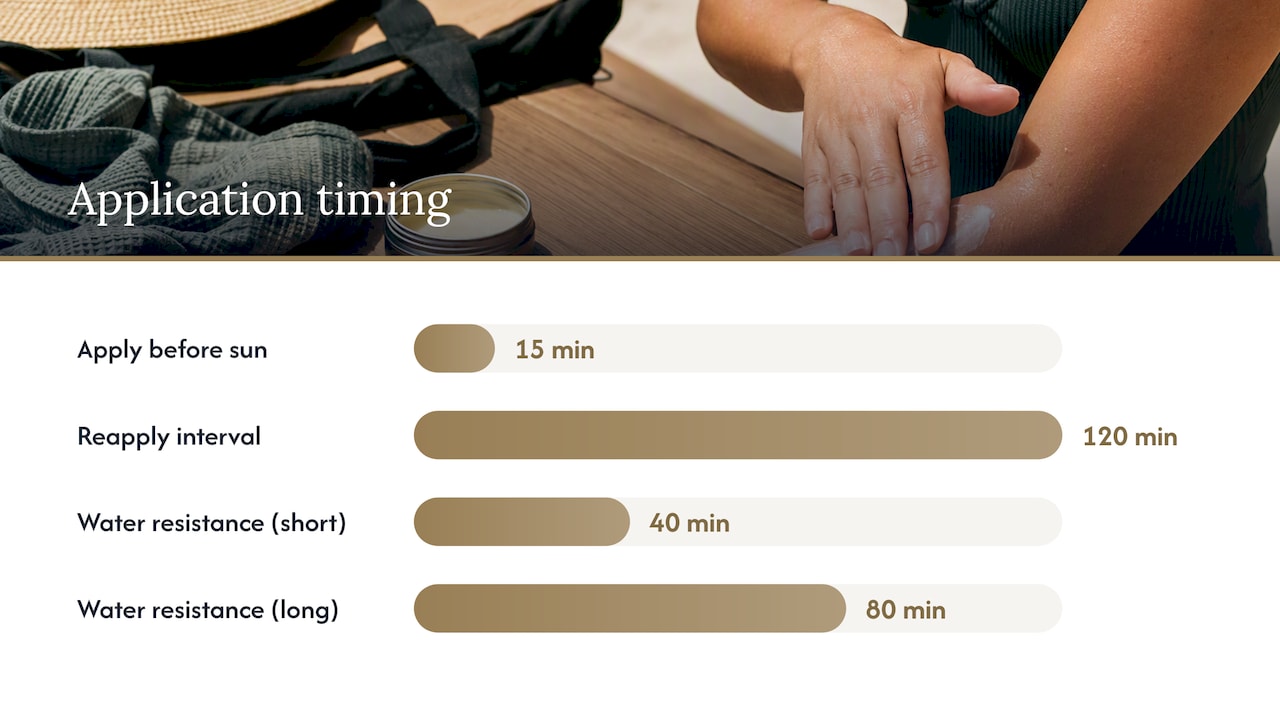
A mineral balm only works as well as its application. The FDA recommends applying sunscreen liberally about 15 minutes before sun exposure and reapplying at least every two hours, or sooner after swimming, sweating, or towel-drying, based on whether the product is labeled for 40 or 80 minutes of water resistance.
Balms can feel stiff straight out of the tin. Warming a small amount between your fingers before applying helps it glide on evenly and cuts down on any white residue.
A few application habits make a real difference:
- Cover commonly missed spots: ears, nose tip, lips, and the part line in your hair all burn easily and get skipped often.
- For beards, work the balm into the skin underneath rather than just over the hair, since UV still reaches skin through facial hair.
Pro Tip: Apply your balm at the sink before you get dressed. It’s easier to catch missed spots like your ears and hairline in a mirror than on the go.
Benefits and downsides of mineral sun balms
Mineral balms earn their popularity with sensitive-skin users for good reason, but they come with real trade-offs worth weighing honestly.
On the benefit side, mineral actives tend to cause less irritation than chemical filters, which matters for anyone with reactive or easily inflamed skin. The ingredient lists are typically short, and because zinc oxide works by sitting on the skin’s surface, protection starts the moment you apply it rather than after an absorption period.
The downsides are mostly cosmetic. Balms can feel thicker than a lotion, and higher zinc oxide concentrations sometimes leave a visible white cast, particularly noticeable on deeper skin tones. No sunscreen, mineral or chemical, blocks all UV rays or prevents all tanning, so a balm should never be treated as a total shield. Some brands address the white cast with tinted formulations or by reducing particle size within the non-nano range, though that’s a formulation choice rather than a guarantee.
How Iron Bull’s tallow-based sun balm fits this kind of buyer
We built our Iron Bull Tallow Sun Balm around the same priorities that matter to health-conscious buyers: a short ingredient list, grass-fed Alberta tallow as the base, and zinc oxide as the active layer doing the UV work. Our broader line, including the tallow face moisturizer, uses the same philosophy of keeping formulas simple and specifically suited to men’s skin.
The practical fit here is straightforward. If your priority list includes a mineral active, a hydrating base instead of a drying one, and an ingredient panel you can read in ten seconds, that’s the lane we design for. We built the sun balm as a targeted option for high-exposure areas rather than a full-body lotion replacement, which lines up with how most people actually use balm-format sunscreens day to day.
How long does one application actually protect you
A single application doesn’t protect you indefinitely, regardless of the SPF number on the label. The FDA’s sunscreen guidance sets reapplication at a minimum of every two hours under normal conditions, and sooner, specifically after 40 or 80 minutes, if you’re swimming or sweating heavily, depending on what the water-resistance label states.
SPF numbers describe the ratio of protection against UVB-caused sunburn relative to unprotected skin, not a timer counting down minutes of safety. A higher SPF, such as 50 versus 30, offers incrementally more UVB protection, but it doesn’t extend how long a single application lasts before reapplication is needed.
This matters most for anyone outdoors for extended stretches: hiking, yard work, or a day at the beach. Setting a two-hour reminder is a simple habit that closes the gap between what the label promises and what actually happens on your skin after sweat, water, and friction from clothing wear away at the protective layer. For people reapplying during a workday near windows or while wearing makeup, a practical reapplication routine can make the two-hour rule easier to stick to without starting your look over from scratch. Balm formats make midday touch-ups easier than some lotions since there’s no need to rub in a large amount, just a quick pass over the areas that see the most direct sun.

What mineral sun balms typically cost
Mineral sun balms generally sit in a similar price bracket to premium mineral lotions and sticks, reflecting the cost of non-nano zinc oxide and natural base ingredients like tallow or beeswax compared to cheaper chemical-filter formulas. Products built around fewer, higher-quality ingredients tend to cost more per ounce than mass-market sunscreens packed with fillers and synthetic fragrance.
Cost per application is often a more useful comparison than price per tin, since balms are applied in smaller, targeted amounts rather than slathered across your entire body the way a lotion is. A small tin that lasts through a season of face and neck application can work out cheaper over time than it first appears, even with a higher upfront price.
When you’re comparing options, weigh the ingredient quality against how the product is actually priced rather than assuming a lower sticker price means better value. A simple formula with a shorter shelf life of filler ingredients often means you’re paying for the actives doing the work, not for bulk.
Packaging and how it affects stability and convenience
Balms are typically packaged in metal tins, paperboard push-up tubes, or small plastic containers, and the choice affects both how the product holds up and how easy it is to use on the go.
Metal tins conduct heat, which can help a balm that’s softened in a hot car or gym bag firm back up once it cools, while also protecting the product from direct light exposure that can degrade some active ingredients over time. Push-up tube formats reduce finger contact with the product, which some users prefer for hygiene, though they can be harder to judge for “how much you’re using” compared to scooping from a tin.
Heat sensitivity is worth planning around no matter the packaging. A balm left in direct sun or a hot car may soften or separate slightly; stirring or cooling it typically restores the original texture without affecting how well the zinc oxide performs. Always follow the storage directions on your specific product rather than assuming all balm packaging behaves the same way in heat.
Certifications and eco-claims: reef-safe, cruelty-free, and what they really mean
Terms like “reef safe” and “cruelty-free” show up often on mineral sunscreen packaging, but it helps to know that neither is a government-regulated certification in the United States. “Reef safe” generally signals the absence of oxybenzone and octinoxate, chemical filters that have raised environmental concerns, but there’s no single enforced standard behind the phrase, so it functions more as a formulation signal than a verified label claim.
“Cruelty-free” similarly depends on the brand’s own practices and disclosures rather than a uniform federal standard, which means it’s worth looking at a brand’s actual ingredient sourcing and testing claims rather than taking the phrase at face value.
Mineral ingredient sourcing and formulation choices matter more than the marketing terms wrapped around them. For readers who want a deeper look at how mineral actives function within a formula, this explainer on minerals in skin care breaks down the science in more detail. The more useful buyer habit is checking the actual active ingredient percentage and the full ingredient list rather than relying on a badge or buzzword to do that work for you.
Our take: the label matters more than the marketing
The sunscreen aisle rewards buzzwords: “natural,” “reef safe,” “dermatologist recommended.” Most of that language isn’t regulated, and it tells you far less than the two things that actually matter, the active ingredient and its percentage, and the SPF and broad-spectrum claim backed by FDA testing requirements.
Where conventional advice falls short is treating mineral sunscreen as a single monolithic category. A 5% zinc oxide lotion and a 20% zinc oxide balm behave very differently on skin and in the sun, yet both get marketed under the same “mineral” umbrella. Buyers who read the percentage, not just the word “mineral” on the front label, make better decisions.
If you take one thing from this guide, make it reapplication discipline. The best formula in the world does nothing for you at hour three if you never put more on. Prioritize a short ingredient list, a real zinc oxide percentage, and a reapplication habit you’ll actually keep, in that order.
— Blaine
Try a simpler mineral sun balm
If you want mineral protection without decoding a chemistry label, our Iron Bull Tallow Sun Balm keeps things to grass-fed tallow and zinc oxide, built for men who want straightforward sun care.

Browse the full lineup, including our face moisturizer and sun balm, and check the product page for current return and guarantee details before you order.
This article is general information, not a substitute for advice from a qualified doctor. Consult a qualified healthcare professional about your own circumstances before acting on anything here.
FAQ
Is mineral sun cream better for you?
Mineral sunscreens are often recommended for sensitive skin because dermatologists favor zinc oxide and titanium dioxide for people prone to irritation. Whether one type is “better” depends on your skin’s reactivity and the specific formula, so checking the active ingredient and avoiding known irritants matters more than the mineral-versus-chemical label alone.
Are there downsides to mineral sunscreen?
Yes, mineral sunscreens can feel thicker than lotions and sometimes leave a visible white cast, especially at higher zinc oxide concentrations. They also require careful, even application since missed spots get no physical barrier at all.
What is the best mineral sunscreen?
The best mineral sunscreen is the one with a broad-spectrum SPF 30 or higher claim, a clear zinc oxide or titanium dioxide percentage, and no added fragrance or chemical filters. Our tallow-based sun balm follows that same formula logic for buyers who want a short, readable ingredient list.
Do you still get a tan with mineral sunscreen?
Yes, no sunscreen blocks all UV radiation, so some tanning can still occur even with correct application. Higher SPF values reduce UVB exposure more than lower ones, but none eliminate tanning entirely.
Sources
- Sunscreen: How to help protect your skin from the sun (FDA)
- Understand sunscreen labels (American Academy of Dermatology)
- OTC Monograph M020: Sunscreen Drug Products for Over-the-Counter Human Use (FDA)