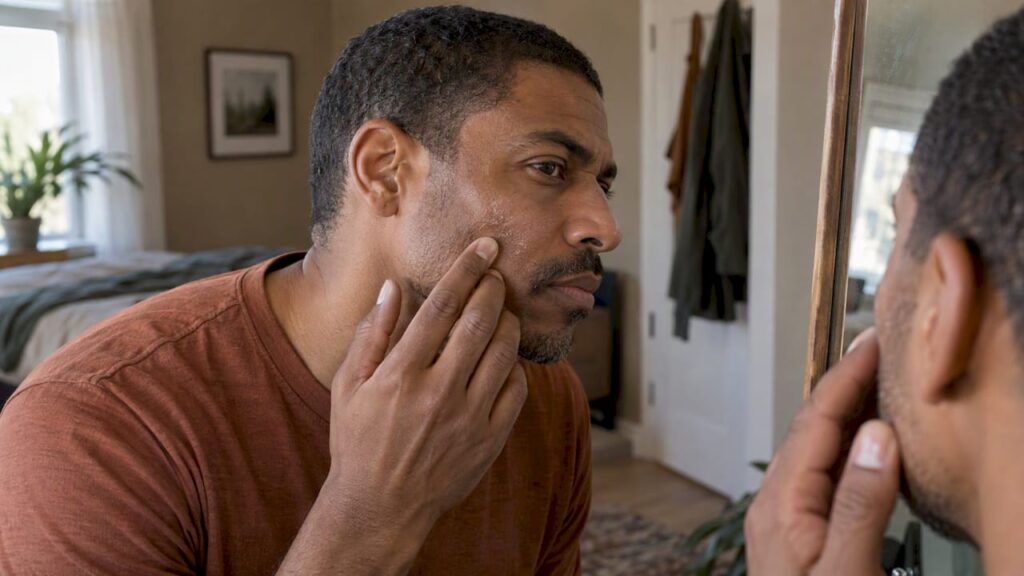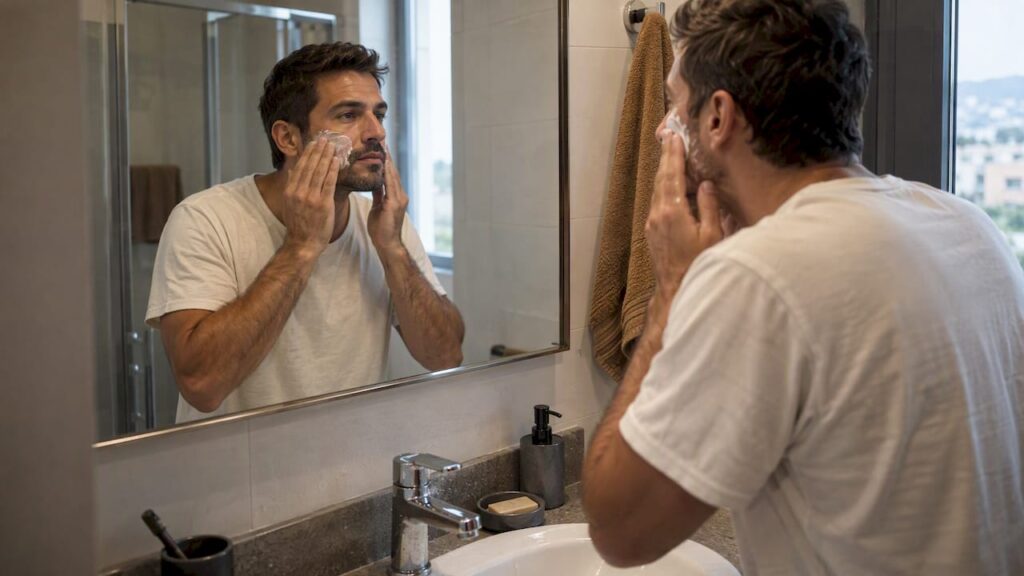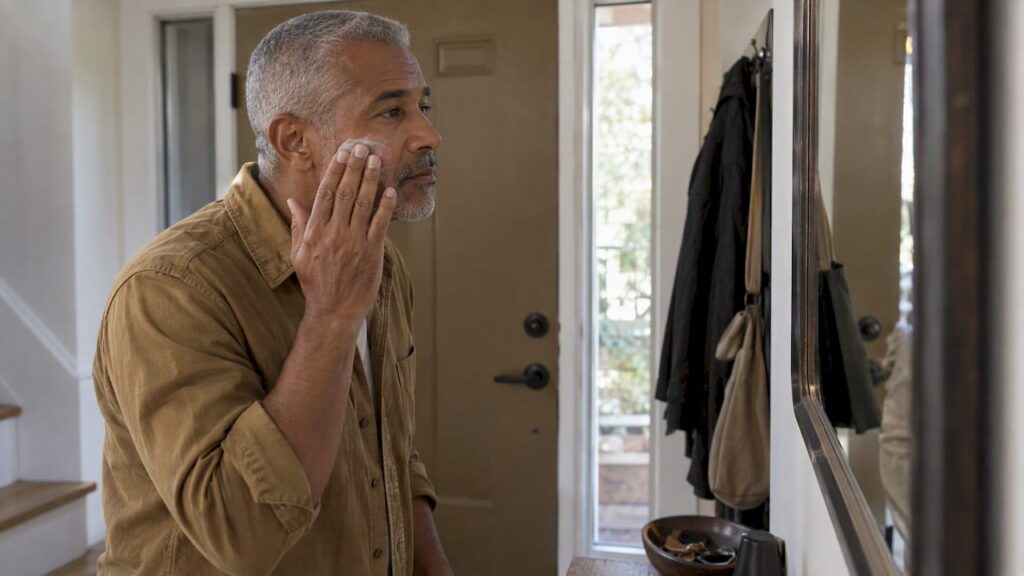


For sensitive or dry skin, our top fragrance-free pick is the Iron Bull Beef Tallow Face Moisturizer for Men, built on a minimal formula of tallow, hyaluronic acid, and jojoba oil. That short ingredient list keeps fragrance and common irritants out while still pairing an occlusive with a humectant, the combination that matters most for calming dry, reactive skin. Below, we cover how to verify a balm’s claims and apply it correctly.
TL;DR:
- Ensuring the ingredient list is short and free of fragrance, essential oils, or botanicals helps prevent irritation and sensitization in sensitive skin.
- Pairing a humectant with an occlusive, like hyaluronic acid with tallow or petrolatum, promotes effective hydration and barrier repair.
- Patch testing new balms behind the ear or on the inner forearm for several nights reduces the risk of reactions before facial application.
- Water-containing balms with preservatives usually last 12 to 24 months if stored properly in a cool, dry place.
- Premium tallow balms tend to be more cost-effective long-term due to longer-lasting, concentrated formulations with fewer ingredients.
Table of Contents
- What makes this balm work, and what else to consider
- How to check ingredient labels before you buy a fragrance-free balm
- How humectants, occlusives, and preservatives affect your skin
- How to apply and layer a fragrance-free balm correctly
- What “fragrance-free” actually means under U.S. labeling rules
- Why Iron Bull’s approach fits this checklist
- What fragrance-free face balms typically cost
- How long a face balm lasts once opened
- A practical take on low-ingredient balms
- Try Iron Bull’s fragrance-free balm for yourself
- FAQ
- Sources
What makes this balm work, and what else to consider
A short ingredient list is one of the clearest signs that a balm was built for sensitive skin, not just marketed to it. Our tallow balm uses tallow, hyaluronic acid, and jojoba oil: an occlusive to seal in moisture, a humectant to draw water into the skin, and a lightweight oil to help it all absorb without feeling greasy. That combination is designed to help with:
- Everyday dryness and flaking, especially in cold or low-humidity conditions
- Post-shave irritation and razor burn
- A weakened skin barrier that needs repair rather than more active ingredients
- Fine lines that look worse when skin is dehydrated
If animal-derived occlusives aren’t your preference, a few category alternatives exist. Plant-based butters like shea or mango butter offer similar occlusion with a vegan profile, though they can feel heavier. Petrolatum-based balms are extremely effective at sealing in moisture and rarely trigger allergic reactions, but some people dislike the texture. Mineral-based balms, often built around zinc oxide, work well for sun protection as well as barrier support.
Whichever option you choose, buy a small size first or request a sample if one is offered, and patch test before applying it to your whole face.
Pro Tip: Apply any new balm to a small patch of skin behind your ear or on your inner forearm for two to three nights before using it on your face.
How to check ingredient labels before you buy a fragrance-free balm
Reading a label correctly takes less than a minute once you know what to look for. Follow this order every time:
- Confirm the product has a visible, complete ingredient list, not just a marketing description.
- Scan for the words “fragrance” or “parfum.” Either term means added scent compounds, even on a product marketed as unscented.
- Check that the ingredient list is short and that the first several entries are familiar, simple compounds rather than a long chain of unfamiliar names.
- Look for at least one humectant (like hyaluronic acid or glycerin) paired with an occlusive (like tallow, shea butter, or petrolatum).
Red flags include listed essential oils, vague “masking agents” meant to cover a base odor, long proprietary fragrance blends, and botanical extracts known to cause sensitization in some people, such as certain citrus oils or lavender.
Marketing terms like “hypoallergenic” are worth treating with caution. The claim has no standardized federal definition, and the FDA confirms that manufacturers aren’t required to prove it before using it on a label. That means your best evidence is still the ingredient list itself, not the front-of-package claim.
Once you’ve found a product that passes this checklist, patch test it for a few days before applying it to your full face, watching for redness, itching, or bumps at the test site.
How humectants, occlusives, and preservatives affect your skin
Every face balm is built from a few functional ingredient categories, and understanding them helps you judge a formula faster than any marketing claim can.
Humectants like hyaluronic acid and glycerin pull water into the outer layer of skin. On their own, though, they can backfire in dry climates by drawing moisture and then letting it evaporate, which is why pairing a humectant with an occlusive matters. Editorial reviews of cleansing balms consistently point to that humectant-plus-occlusive pairing as a key reason certain fragrance-free formulas work well for dry and sensitive skin.
Occlusives form the physical seal. Tallow, petrolatum, and plant butters all do this job, but they differ in feel and in irritation risk. Petrolatum is the most studied and rarely causes reactions. Tallow has a fatty acid profile close to human skin lipids, which may help it absorb without feeling heavy. Plant butters vary more by source and processing.
Preservatives are the part shoppers overlook most. Water-containing balms need one to prevent bacterial growth, and some preservative classes are more likely to irritate sensitive skin than others. Anhydrous balms with little to no water content, like many tallow-based formulas, may need minimal or no added preservative, which is worth asking about if you react to typical lotions.
- Morning: a humectant-light moisturizer under sunscreen
- Night: a richer balm that leans more occlusive, since you don’t need to layer makeup or SPF on top
Pro Tip: If your skin feels tight by midday even after moisturizing, you likely need more occlusive, not more humectant.
How to apply and layer a fragrance-free balm correctly
Getting the order right matters as much as picking the right product.
- Cleanse with a gentle, fragrance-free cleanser and pat skin damp, not fully dry.
- Apply a humectant serum or the balm itself to slightly damp skin, since humectants work best when there’s water nearby to draw in.
- Follow with a thin layer of balm, using less than you think you need. A pea-sized amount usually covers the full face.
- Use it nightly, or during the day in cold or dry weather, and after shaving to calm irritation.
- Skip it, or use a lighter layer, during an active acne flare, since heavier occlusives can sometimes contribute to clogged pores on acne-prone skin.
For patch testing, apply a small amount to your inner forearm or behind the ear once daily for 48 to 72 hours. No redness, itching, or bumps means it’s likely safe to try on your face. If you notice clogged pores or new breakouts after regular use, cut back to every other night or switch to a lighter occlusive instead of abandoning the humectant-occlusive approach entirely. For more on combining the two correctly, see how to layer humectants and occlusives for dry, reactive skin.
What “fragrance-free” actually means under U.S. labeling rules
“Fragrance-free” is not as strict a term as it sounds. Under FDA cosmetic labeling guidance, fragrance components can legally be grouped and listed simply as “fragrance,” and some ingredients qualify for trade-secret exemptions under 21 CFR 701.3, meaning they don’t have to appear on the label at all.
That matters because a handful of compounds, including some used as fragrance-masking agents in supposedly unscented products, can hide inside that single word. There’s no required percentage or threshold; a product is either declaring fragrance or it isn’t.
“Hypoallergenic” carries similar limits. The term has no standardized federal definition, as the FDA explains directly, so it reflects a brand’s own judgment rather than a government-verified standard.
Practical steps that actually protect sensitive skin:
- Read the full INCI ingredient list, not just the front label
- Avoid any product listing “fragrance,” “parfum,” or “aroma” unless the brand discloses the specific components
- Contact the manufacturer directly if you need a full fragrance breakdown
- Patch test any new product, regardless of its label claims
Why Iron Bull’s approach fits this checklist
Our focus at Iron Bull Naturals is premium skin care built specifically for men, and our flagship tallow balm is made from 100% natural, grass-fed Alberta tallow infused with hyaluronic acid to address dryness, fine lines, and irritation. We built it around only three key ingredients, all non-toxic and formulated to be suitable for sensitive, reactive skin. There’s no greasy residue and no padded ingredient list.
Users often notice improvements in skin texture and hydration within weeks of consistent use, which lines up with what the humectant-occlusive pairing is designed to do. We built this formula around the same checklist we just walked you through: minimal ingredients, no hidden fragrance, and a deliberate balance between sealing in moisture and drawing it in.
What fragrance-free face balms typically cost
Fragrance-free face balms span a wide price range depending on ingredient sourcing, packaging, and brand positioning. Mass-market petrolatum-based balms sit at the low end and are widely available at drugstores. Mid-range options, including many plant-butter and mineral-based balms, cost more because of sourcing and formulation complexity. Premium tallow-based and grass-fed formulas sit at the higher end, reflecting the sourcing standards behind the fat itself and the smaller ingredient lists that require higher-quality inputs to perform well.
Value isn’t just about price per ounce. A balm with a short, simple ingredient list often lasts longer per use than a watery lotion, since a little goes further when it’s doing both occlusive and barrier-repair work. For current pricing on our tallow moisturizer and sun balm, visit our shop page, since pricing is best checked directly rather than estimated. When comparing any two balms, weigh ingredient quality and label transparency as much as the sticker price. A cheaper product with a vague “fragrance” entry or a long filler list may cost less upfront but deliver less benefit, or trigger a reaction that costs you more in the long run.

How long a face balm lasts once opened
Most face balms, especially anhydrous ones with little to no water content, have a longer shelf life than water-based lotions because they’re less hospitable to bacterial growth. Many balms remain stable and effective for 12 to 24 months after opening, though this varies by formula and by how the product is stored.
Heat, direct sunlight, and introducing water into the jar (by scooping with wet fingers, for example) all shorten a balm’s usable life. Keep balms in a cool, dry place and use clean, dry hands or a small spatula when scooping from a jar rather than a pump.
Watch for practical signs that a balm has turned: a change in smell, a separated or grainy texture, or a color shift. Any of these mean it’s time to replace the product, regardless of how long it’s technically been open. Checking the batch code or expiration marking on the packaging, when provided, is the most reliable way to track age if you’ve lost track of your purchase date.
A practical take on low-ingredient balms
The simplest formulas tend to be the safest bet for reactive skin, mainly because there’s less for your skin to react to. A three-ingredient balm gives you almost nothing to troubleshoot if irritation shows up. If you’ve reacted to plant extracts or essential oils before, an animal-derived occlusive like tallow is worth trying. If you have a known lanolin or animal-fat sensitivity, start with a plant-based or mineral option instead. Either way, run the checklist from earlier in this article before you commit to a full-size product.
— Blaine
Try Iron Bull’s fragrance-free balm for yourself
If the checklist above is what you’ve been missing in your current moisturizer, our formula was built to pass it: tallow, hyaluronic acid, and jojoba oil, with nothing added to mask or disguise the ingredient list.

- Minimal, fragrance-free formula designed for sensitive and dry skin
- Pairs an occlusive with a humectant for daily hydration and barrier support
- Backed by a 60-day money-back guarantee if it isn’t right for your skin
Visit our shop page to pick up the tallow face moisturizer or pair it with our tallow sun balm for daytime protection.
FAQ
What is the best fragrance-free cleansing balm?
The best fragrance-free cleansing balms share a short ingredient list with no “fragrance” or “parfum” entry and a gentle oil or butter base. Editorial roundups and retailer filters both treat fragrance-free status as a top criterion for sensitive skin.
What is the best fragrance-free face cream for sensitive skin?
For sensitive skin, look for a cream or balm that pairs a humectant like hyaluronic acid with an occlusive, and that lists no fragrance ingredients. Our tallow and hyaluronic acid balm follows that exact structure with only three ingredients total.
What are some good fragrance-free face creams?
Good options include petrolatum-based balms, plant-butter moisturizers, and minimal animal-fat formulas like tallow balms, as long as each has a short ingredient list with no fragrance entry. Checking the full INCI list is more reliable than trusting a “fragrance-free” claim alone.
What is the best face balm for mature skin?
Mature skin tends to benefit most from a balm that combines strong occlusion with a humectant, since both barrier repair and hydration support the look of fine lines. A fragrance-free formula reduces the chance of irritation that can make fine lines more noticeable on already-dry, reactive skin.
Sources
- Hypoallergenic cosmetics | FDA
- Fragrance Free Cleansing Balms & Oils – Ulta
- The 6 Best Cleansing Balms of 2026, Tested and Reviewed — Byrdie