
Non-comedogenic means a skincare product is formulated to avoid clogging your pores. It is a statement about probability, not a promise. A “comedone” is a clogged hair follicle, the blackhead or whitehead you can see on your skin, and a non-comedogenic product is one that should be less likely to cause them. In the U.S. nobody regulates the term, so the label is a starting point for your decision and never the last word.
Below you’ll find the definition, how it differs from “oil-free,” why jojoba oil keeps coming up in this conversation, what the term means on a face wash, and how to pick a moisturizer if you break out easily.
TL;DR
- Non-comedogenic means a product is made or described as less likely to clog pores and cause blackheads or whiteheads.
- The FDA has no legal definition for the term, and there is no required test, so the label alone proves little.
- Jojoba oil is generally described as non-comedogenic, but individual skin reacts differently, so patch test first.
- A finished product can contain oils and still not clog pores. The whole formula matters, not a single ingredient’s number.
- If you’re acne-prone, judge a product by your skin’s response over several weeks, not by one word on the front of the jar.
Table of Contents
- What non-comedogenic actually means
- Comedogenic vs. non-comedogenic: the real difference
- Is the label regulated or tested?
- Why two people react differently to the same product
- Does jojoba oil clog pores?
- What non-comedogenic means on a face wash
- Oils, balms and breakouts: a fair look
- Our perspective on the label
- How to choose a moisturizer if you’re breakout-prone
- If you want a simple balm to try
- FAQ
- Sources
What non-comedogenic actually means
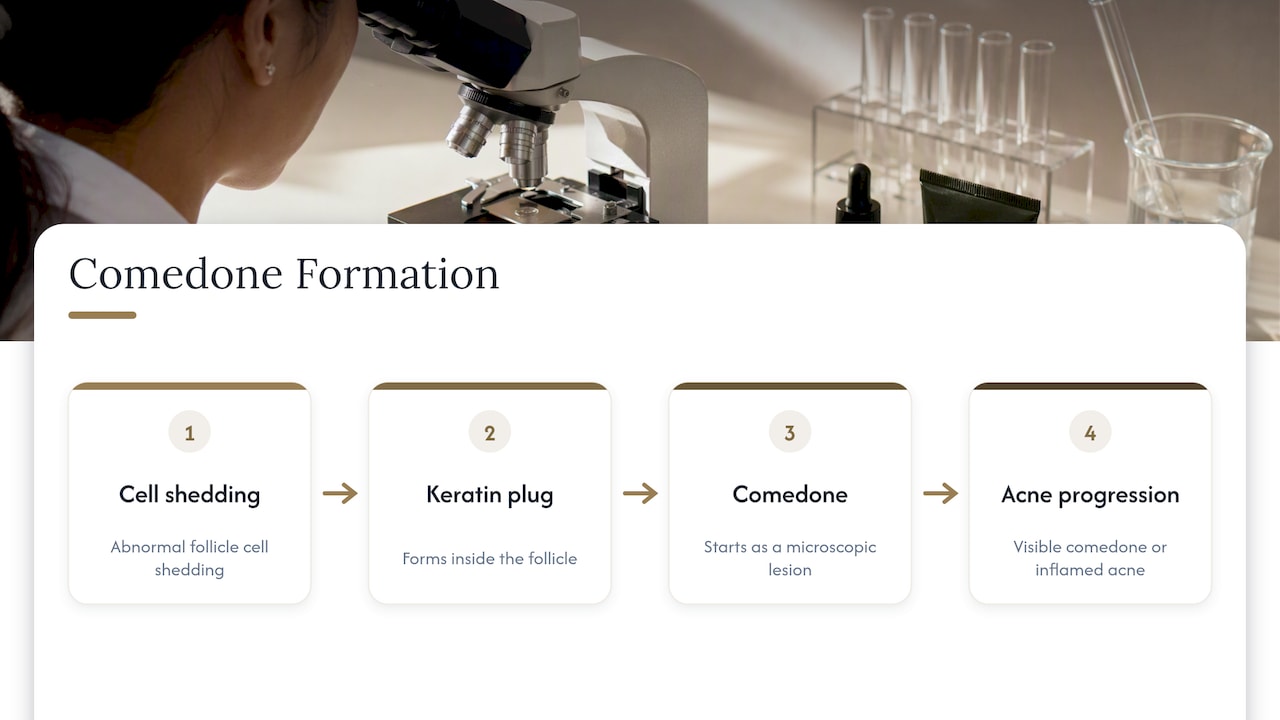
The word comes from “comedo” (plural “comedones”), the dermatology term for the most basic acne lesion. A 2025 review in JAAD Reviews defines a comedone as a clogged follicle: an open one is a blackhead, a closed one is a whitehead. It describes how abnormal shedding of cells inside the follicle can form a keratin plug. That plug starts as a microscopic comedone and can progress to a visible one, or to inflammatory acne.
So “comedogenic” describes a substance that tends to promote that plugging. “Non-comedogenic” describes one that, for most users, shouldn’t make comedones worse. The same review frames noncomedogenic as not further exacerbating comedones for most people. Notice the hedges: “tends to,” “for most.” Those words are the whole point.
If you want the cosmetic-chemistry side of how ingredients behave on skin, an explainer on cosmetic peptides and their skin benefits shows how different active ingredients are grouped and described.
Comedogenic vs. non-comedogenic: the real difference
The difference is likelihood. A comedogenic ingredient or product is considered likely to promote follicular plugging. A non-comedogenic one is formulated or described as less likely to. The JAAD Reviews authors are explicit that it is about probability, not an absolute guarantee.
Here is how the related packaging terms stack up:
| Label term | What it suggests | What it does not guarantee |
|---|---|---|
| Non-comedogenic | Formulated to avoid clogging pores | That you won’t break out |
| Oil-free | No added oils in the formula | That the product won’t clog pores (some oil-free ingredients can) |
| Won’t clog pores | Same intent as non-comedogenic | Any specific testing |
| Hypoallergenic | Formulated to reduce allergic reactions | Anything about pores |
The American Academy of Dermatology tells people with acne to use oil-free skincare, sunscreen and makeup, and it lists “oil-free,” “non-comedogenic” and “won’t clog pores” as packaging terms tied to avoiding clogged pores. Useful guidance, but notice that it points you toward a type of product, not toward a verified standard.
Is the label regulated or tested?
No. According to the 2025 JAAD Reviews article, the FDA has no legal definition for “noncomedogenic,” and no universal industry standard sets how the claim must be tested in the United States. An earlier systematic review indexed by PubMed in 2018 reached a similar conclusion: “non-comedogenic” and related marketing terms weren’t regulated by any governing body and had varied clinical usefulness.
That doesn’t mean every brand using the term is bluffing. Manufacturers can test. A paper on claim substantiation describes two human approaches to evaluating comedogenicity: a cheaper human model, and a costlier human clinical trial that it identifies as the gold standard. The catch is that the front label doesn’t tell you which method, if any, stood behind the claim.
Why old comedogenic scales mislead
You have probably seen charts that rate oils from 0 to 5 for pore-clogging potential. Many of those numbers trace back to older rabbit-ear assays. The 2025 review explains that rabbit skin is highly sensitive, so those assays can overpredict what happens on human skin. It also notes that results for an isolated ingredient don’t necessarily predict how the finished formula behaves.
Two practical lessons follow:
- A single ingredient’s rating can’t tell you whether the product in your hand will clog your pores.
- A finished product can contain an ingredient with a comedogenic result and still not be comedogenic itself. Concentration, the other ingredients and the base all change the outcome.
Charts are fine as a loose guide. Treat them as a conversation starter, never a verdict.
Why two people react differently to the same product
Skin type, the biology behind a person’s acne, and genetics all influence how someone responds, according to the same review. That is why your friend swears by a moisturizer that gives you whiteheads along your jaw.
For men there are a few real-world factors worth thinking about, though they are practical observations rather than study findings:
- Shaving. Razors cause tiny irritations. Heavy, occlusive products on freshly shaved skin may feel different than on unshaved skin.
- Sweat and sunscreen. If you work outdoors or train hard, a thick layer plus sweat can feel clogging even when the formula isn’t the issue.
- Layering. Cleanser, serum, moisturizer, sunscreen: any one product could be the culprit, and the label on one doesn’t clear the others.
Does jojoba oil clog pores?
This is the question behind most of the related searches, and it is a fair one because jojoba is everywhere in “natural” skincare.
The short answer: jojoba oil itself is generally described as non-comedogenic, meaning it shouldn’t clog pores. Medical News Today reports that, and adds the caution that any oil can behave differently depending on skin type, recommending a small-area test before you use it on your face.
The longer answer is that jojoba isn’t technically a typical oil. The Cosmetic Ingredient Review safety report says jojoba seed oil is about 97% wax esters. In clinical testing, the jojoba seed oil it reviewed was not a significant skin irritant or sensitizer. The same report notes that jojoba seed wax was moderately comedogenic in rabbit tests, while jojoba esters were reported as noncomedogenic, or non- to slightly comedogenic.
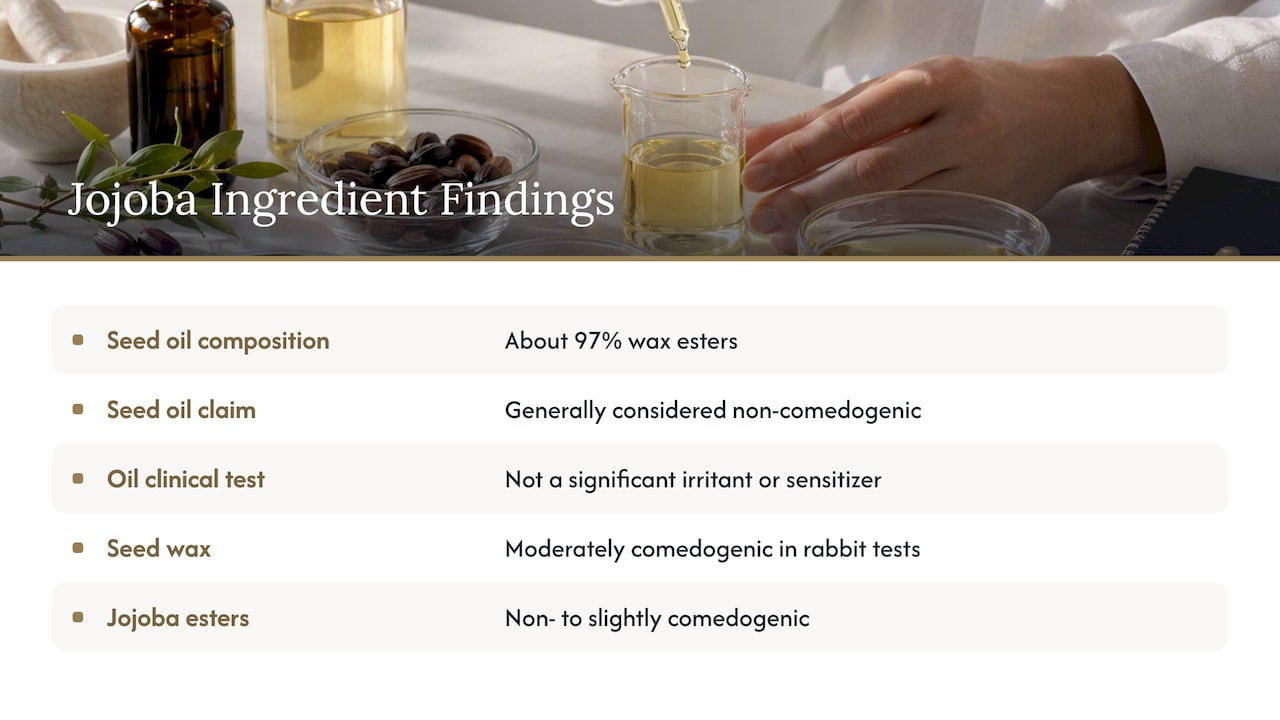
That spread of results shows why one number for “jojoba comedogenic rating” is slippery. Different jojoba-derived ingredients tested differently, and the rabbit model tends to overpredict. If you see a rating on a blog, ask which jojoba ingredient it’s about and how it was measured. For the oil itself, the safest reading is “generally considered non-comedogenic, but test it on your own skin.”
If you’re curious about how other gentle, barrier-supporting ingredients are used for irritated skin, this piece on how beeswax protects irritated skin covers a different corner of the same topic.
What non-comedogenic means on a face wash
On a cleanser, the claim carries the same meaning: the formula is intended not to clog pores. But a face wash is rinsed off in under a minute, so it has far less time on your skin than a leave-on moisturizer or sunscreen. A cleanser that isn’t labeled non-comedogenic is usually a smaller risk than a leave-on product that isn’t.
Where you should be pickier is anything that stays on: moisturizer, sunscreen, balm, shaving products and anything you apply before bed. If you are acne-prone, put your attention there first. A cleanser’s job is to remove sweat, sunscreen and grime without stripping your skin. Over-stripping can leave skin tight and irritated, and that pushes many men to over-moisturize.
Oils, balms and breakouts: a fair look
A lot of men hear “oil” and assume breakouts. That shortcut is too crude. The review is clear that the finished formula, not the ingredient list alone, determines the result. Plenty of oil-containing products are well tolerated, and plenty of “oil-free” ones cause trouble for someone.
That said, if you have active, inflamed acne, or you get frequent clogged pores, a thicker balm may not be where you want to start. A dermatologist is the right person to see for persistent or painful acne, particularly cysts or scarring. The American Academy of Dermatology’s acne overview is a good place to learn what treatment options exist.
Our perspective on the label
We make skincare for men, and we get asked about this term often. Here’s how we see it.
We don’t think a single word on a jar should make or break your buying decision. The term isn’t regulated, so we’d rather you understand what’s in a product and how it feels on your skin. That is why we keep our face balm formula short and say what’s in it: grass-fed Alberta beef tallow, hyaluronic acid, jojoba oil and essential oils in the sun balm, built around three key ingredients in the face balm. Fewer ingredients means fewer variables when you’re trying to work out what your skin likes.
If your skin is dry, irritated or showing fine lines, a rich balm can be exactly right. If you break out easily, start small: patch test behind the ear or along the jaw, use it for a week or two on part of your face, and watch. Our 60-day money-back guarantee exists because we know skin is individual and you shouldn’t have to take our word for it.
— Blaine
How to choose a moisturizer if you’re breakout-prone
Use this checklist instead of trusting one label:
- Read the full ingredient list. Short lists are easier to troubleshoot than long ones.
- Patch test first. Apply a small amount to a small area, such as along the jaw, for several days. This is also what Medical News Today advises for jojoba oil.
- Introduce one product at a time. Change one thing, then wait a couple of weeks before changing the next.
- Use less than you think. A thin layer absorbs better and is less likely to feel heavy.
- Match the product to the moment. A lighter layer in the morning under sunscreen, a richer one at night if your skin is dry.
- Know when to stop. If new bumps appear in areas you normally don’t break out, pause the product.
- Book a dermatologist if acne is painful, widespread, or leaves marks.
If you want a simple balm to try
If dryness, irritation or early fine lines are your concern, our Iron Bull Beef Tallow Face Moisturizer for Men and Sun Balm are made with grass-fed Alberta tallow, hyaluronic acid and jojoba oil, and are designed to hydrate without a greasy residue. They’re made for sensitive and all skin types, and every order is backed by our 60-day money-back guarantee.
FAQ
What does non-comedogenic mean in simple terms?
It means a product is made to avoid clogging your pores, so it is less likely to cause blackheads and whiteheads. The word comes from “comedo,” the dermatology term for those lesions. It describes likelihood, not a guarantee.
Does non-comedogenic mean oil-free?
No. Oil-free means no added oils, while non-comedogenic means the product was formulated to avoid clogging pores. A product can be oil-free and still bother your skin, or contain oils and still be well tolerated, because the finished formula is what counts.
Is jojoba oil comedogenic?
Jojoba oil is generally described as non-comedogenic, though effects can vary by skin type. The Cosmetic Ingredient Review reported mixed rabbit-test results for different jojoba-derived ingredients, and rabbit tests tend to overpredict human reactions. A patch test on your own skin is the practical answer.
Is the non-comedogenic claim regulated in the U.S.?
No. The FDA has no legal definition for it and no standardized test is required. Some brands do test their products, but the label alone doesn’t tell you how.
Sources
- Comedogenicity in cosmeceuticals: A review of clinical evidence (JAAD Reviews, 2025)
- Acne: Overview (American Academy of Dermatology)
- Clinical utility of marketing terms used for cosmetics (PubMed, 2018)
- Non-comedogenic and non-acnegenic claim substantiation (PubMed, 2017)
- Jojoba oil for acne: does it work, how to use it, and risks (Medical News Today)
- Safety report on jojoba-derived ingredients (Cosmetic Ingredient Review)