

Moisturizer burns your face because your skin barrier is damaged, because something in the formula is irritating you, or both. Burning, stinging or pain is not a sign the product is working. It’s a sign your skin is reacting. The fix is almost always the same: stop whatever is stinging, strip your routine back to the basics, and give the barrier a few weeks to heal.
This guide covers why it happens, how to tell an irritant from an allergy, what men do wrong most often, and what to put on your face instead.
TL;DR
- Burning or stinging after moisturizer means irritation or a weakened skin barrier. The American Academy of Dermatology says to stop using a product that causes it.
- The usual culprits for men: over-exfoliating, too many actives, fresh shaving micro-cuts, fragrance (including essential oils) and preservatives.
- Patch test any new product on your inner forearm for 7 to 10 days before it goes on your face.
- Rebuild with three things only: a gentle cleanser, a simple barrier-supporting moisturizer, and sunscreen. Apply moisturizer to slightly damp skin.
- Burning that lasts more than a minute or two, or no improvement after a few weeks, means it’s time to see a board-certified dermatologist.
Table of Contents
- What the burning actually means
- The most common reasons moisturizer burns your face
- Quick diagnosis: which one is it?
- What to do right now
- How to patch test before anything touches your face
- Why men’s routines go wrong
- Our perspective: what we’d want on a burning face
- If you want a simple, barrier-first moisturizer
- When to see a dermatologist
- FAQ
- Sources
What the burning actually means
A healthy skin barrier holds water in and keeps irritants out. When it’s compromised, the opposite happens. The Mayo Clinic’s guide to sensitive skin explains that moisture escapes more easily and irritants penetrate more deeply, and the result can be burning, redness, dryness or flares of conditions like eczema or rosacea.
So when a moisturizer stings, two things are usually true at once:
- Your barrier has tiny gaps, so ingredients that a healthy face would shrug off reach sensitive nerve endings.
- Something in the product, or the way you applied it, is pushing on that already-irritated skin.
Dermatologist Jenna Queller, MD, put it bluntly to Cosmopolitan: burning, stinging or pain is not normal and signals a damaged barrier.
There’s one nuance. A very brief tingle when you try a new product can happen and should fade quickly. Anything that keeps burning, turns red, or gets worse each day is not a “breaking in” phase.
The most common reasons moisturizer burns your face
Over-exfoliating or stacking actives
This is the big one for men who are trying to fix their skin. Retinoids, glycolic or salicylic acid, harsh acne treatments and scrubs all thin out the barrier when they’re used too often or together. The AAD’s advice on anti-aging products is to start with one product, since using several at once can irritate your skin, and irritated skin makes the signs of aging more noticeable.
The irony is that the routine meant to improve your skin is the thing making every moisturizer sting. If you’ve added a new active in the last month, that’s your first suspect.
Shaving
A razor removes the top layer of dead cells and leaves microscopic nicks. Put moisturizer on right after, and it hits skin that is literally open in places. Multi-blade razors, dry shaving, going over the same patch repeatedly and aftershave with alcohol all make it worse.
If you only get burning on the jaw, cheeks and neck, shaving is almost certainly part of the story. Try a sharp single pass with the grain, use a shaving cream or gel, rinse with cool water, and let the skin settle for a minute or two before you moisturize.
Fragrance, essential oils and preservatives
“Natural” does not mean gentle. Essential oils, plant extracts and resins such as Balsam of Peru are well-known contact allergens. The AAD skin care for men guidance lists fragrance, preservatives, alcohol and exfoliating acids among common irritants.
Two label traps to know:
- “Unscented” is not “fragrance-free.” Unscented products can contain masking fragrance to cover the smell of the base. If your face is reactive, look for “fragrance-free” on the label.
- Botanical does not mean hypoallergenic. Read the full ingredient list, not the front of the jar.
Dry, cracked skin and a formula that’s too watery
When skin is very dry, even a plain lotion can sting, because a high-water formula can slip into tiny cracks and carry other ingredients with it. Some people find thick, heavy creams sting, while lighter barrier-repairing formulas with ingredients like ceramides, hyaluronic acid or niacinamide calm things down. There’s no single right texture. What matters is that the formula is simple and the skin is ready for it.
Weather and heat
A product you’ve used for months can suddenly sting in January. Low humidity, cold wind and indoor heating weaken the lipid barrier. If the burning started when the season changed, our guide to men’s winter dry skin covers how to adjust.
A real allergy
Sometimes it isn’t a damaged barrier at all. Burning plus itching, swelling, small blisters or a rash that spreads past where you applied the product points to contact dermatitis from an allergen. True systemic reactions to moisturizers are rare, but case reports exist, including one involving a 69-year-old man. Swelling of the lips or face, trouble breathing or a spreading hives-type rash is an emergency: stop using the product and get medical help right away.
Other skin conditions
Eczema, rosacea and perioral dermatitis can all make products sting. Perioral dermatitis typically shows up as tiny red bumps on the lower face around the mouth and nose folds. If your burning comes with a persistent rash in those areas, a dermatologist should diagnose it rather than you guessing at products.
Quick diagnosis: which one is it?
| What you notice | Likely cause | What to do |
|---|---|---|
| Stings only on the jaw and neck, right after shaving | Razor micro-abrasions | Wait a few minutes, rinse cool, use a gentler shave routine |
| Stings everywhere since you started a new acid or retinoid | Over-exfoliation or too many actives | Pause the active, simplify |
| Stings with a product you’ve used for years, in winter | Weakened barrier from weather | Switch to a richer, simple moisturizer, apply to damp skin |
| Burning plus itching, swelling or a spreading rash | Possible allergy | Wash off with cool water, stop, see a dermatologist |
| Stings with every product, plus flaking and tightness | Damaged barrier | Strip routine to three steps, give it weeks |
| Red bumps around mouth and nose | Possible perioral dermatitis or rosacea | See a dermatologist |
What to do right now
- Wash it off. Rinse with cool water, not hot, and pat dry. If the burn is intense, don’t layer anything else on top.
- Stop the suspects. Pause exfoliating acids, retinoids, scrubs, toners, and alcohol-based aftershave. Pause any new product.
- Cleanse gently. A mild, fragrance-free cleanser, once or twice a day, with lukewarm water.
- Moisturize while skin is still damp. Applying moisturizer within a few minutes of washing, while the skin is slightly damp, traps water better and reduces the chance of stinging. We break the method down in apply moisturizer to damp skin.
- Protect it. Use sunscreen in the morning. Irritated skin is more vulnerable.
- Give it time. Improvement in burning, tightness and redness typically shows within a few weeks of a consistent, non-irritating routine. If you see none, get evaluated.
If it’s pure dryness behind the stinging, our minimal 3 step routine for dry facial skin and barrier repair guide for men go deeper.
How to patch test before anything touches your face
The AAD recommends testing new products before you use them widely, and its page on how to test skin care products walks through it. The practical version:
- Apply a small amount to a quarter-sized spot on your inner forearm.
- Repeat twice a day for 7 to 10 days. Delayed reactions can take that long to appear.
- No redness, itching or swelling means it’s likely fine for your face.
- If a reaction occurs, wash it off with cool water and don’t use it again.
- If irritation persists, see a board-certified dermatologist, who can run formal patch testing to identify the specific allergen.
This applies to every product, including ours. Test one new thing at a time, so if something does react, you know which one.
Why men’s routines go wrong
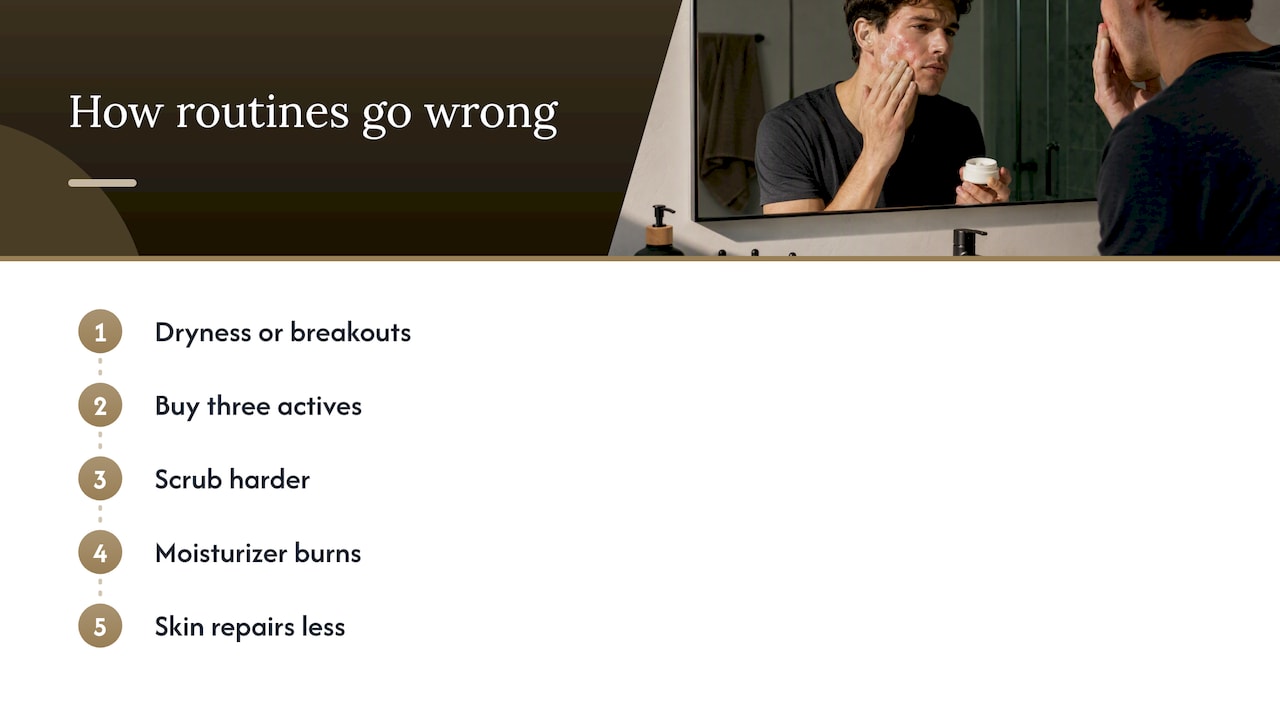
In our experience, and in what dermatologists describe, the pattern repeats: a guy gets some dryness or breakouts, buys three actives, scrubs harder, then wonders why his moisturizer burns. The more you stimulate irritated skin, the less it can repair itself.
The better frame is that moisturizer is barrier maintenance, not vanity. The goal for a burning face is always the same: cleanse gently, restore moisture, protect the barrier. Simplicity beats a shelf full of products. If you want a streamlined starting point, see our simple skincare routine for men, or this Spanish-language guide to natural men’s facial rejuvenation for another take on keeping men’s facial care simple.
Our perspective: what we’d want on a burning face
We make a men’s face balm, so we think about this problem a lot. Here is how we approach it.
Start with the formula. Iron Bull Tallow is built on grass-fed Alberta tallow, hyaluronic acid and a short ingredient list, because the fewer things in the jar, the fewer things there are to react to. Tallow is rich in the kind of lipids skin already uses, and hyaluronic acid pulls in water. Together they aim to hydrate and support the barrier without a greasy film.

Be honest about essential oils. Some of our products include essential oils, and as the dermatologists above point out, essential oils can irritate reactive skin. If your face is burning right now, don’t add anything with fragrance or botanical extracts until it’s calm. When it is, patch test our balm like you would anything else. Hypoallergenic is a goal, not a guarantee for every person.
And don’t fix burning with more products. One barrier-focused moisturizer, applied to damp skin, plus sunscreen. That’s it. It’s why we cover the one-step approach in barrier balm for the face.
— Blaine
If you want a simple, barrier-first moisturizer
Once your skin has calmed down and passed a patch test, a simple balm can do the heavy lifting. Iron Bull Beef Tallow Face Moisturizer for Men is made with grass-fed Alberta tallow and hyaluronic acid, and it’s designed to absorb without a greasy feel. For the daytime, our Sun Balm covers the sunscreen step. Both are on the shop page, and every order is backed by our 60-day money-back guarantee.
When to see a dermatologist
Don’t keep experimenting if:
- Burning lasts longer than a minute or two after every application.
- You have swelling, blisters, oozing, or a rash that spreads.
- You’ve simplified your routine and see no improvement after a few weeks.
- You suspect rosacea, eczema or perioral dermatitis.
- You’re taking isotretinoin and dryness is severe. The AAD has specific advice on dryness during isotretinoin treatment, and your prescriber should guide changes.
A board-certified dermatologist can diagnose the cause and do formal patch testing instead of leaving you to guess.
FAQ
Does burning mean the moisturizer is working?
No. Burning, stinging or tingling is a sign of irritation or a compromised barrier, not effectiveness. The AAD advises stopping any product that causes these sensations, since they interfere with the skin repairing itself.
Why does my moisturizer sting only after I shave?
Shaving leaves micro-abrasions and temporarily weakens the barrier, so ingredients reach nerve endings more easily. Rinse with cool water, give your skin a couple of minutes, and skip alcohol-based aftershave. If it keeps happening, check your razor and technique.
Why did my usual moisturizer suddenly start burning?
A product you tolerated can sting when the barrier is weakened by over-exfoliation, a new active, harsh shaving, or dry cold weather. Pause everything but a gentle cleanser, a simple moisturizer and sunscreen, then reassess in a few weeks.
What is the 3 minute moisturizer rule?
It means applying moisturizer within about three minutes of washing, while skin is still slightly damp, to trap water in the skin. It’s a useful habit for dry or reactive skin because it can reduce stinging.
Is unscented the same as fragrance-free?
No. Unscented products can still contain masking fragrance to neutralize the smell of the base ingredients. If your skin is reactive, choose products labeled fragrance-free and check the ingredient list for botanical allergens.
Sources
- Skin care tips for men, American Academy of Dermatology
- How to test skin care products, American Academy of Dermatology
- How to maximize results from anti-aging skin care products, American Academy of Dermatology
- Isotretinoin side effects and skin care, American Academy of Dermatology
- Sensitive Skin Decoded, Mayo Clinic
- Is it Normal For Your Skincare to Burn As You Apply It?, Cosmopolitan
- Moisturizer induced contact anaphylaxis, PMC
- Perioral dermatitis, MedlinePlus