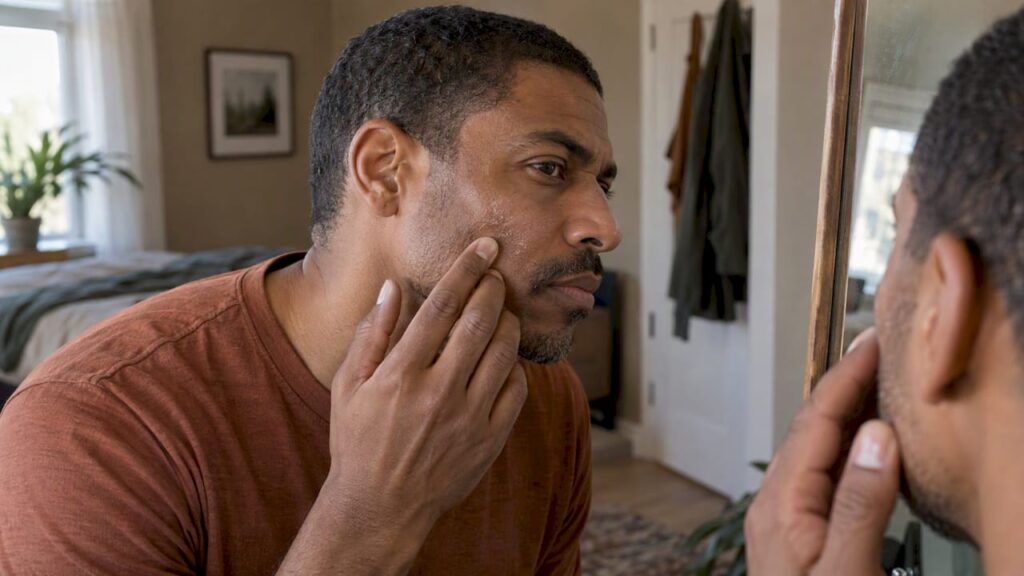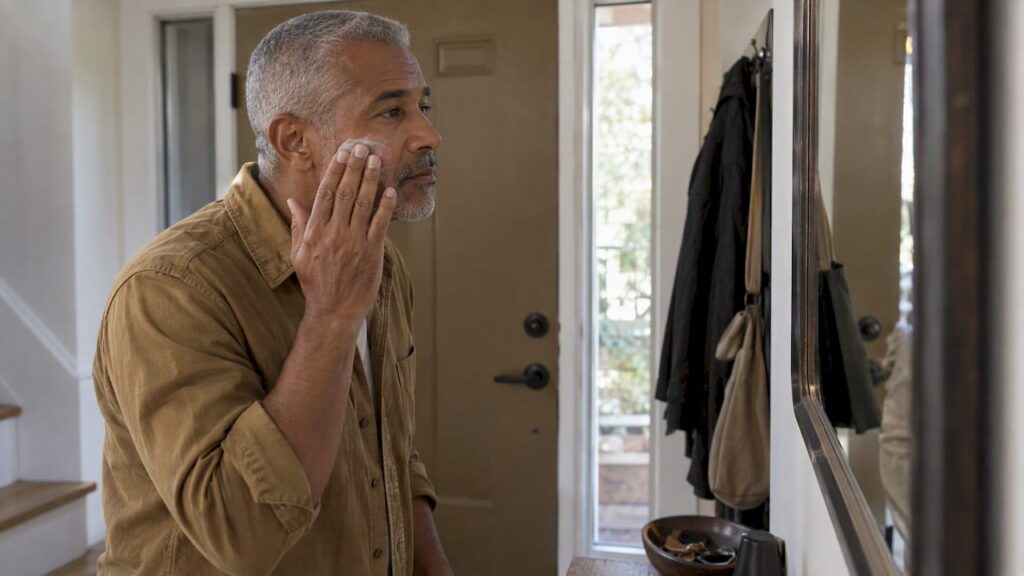

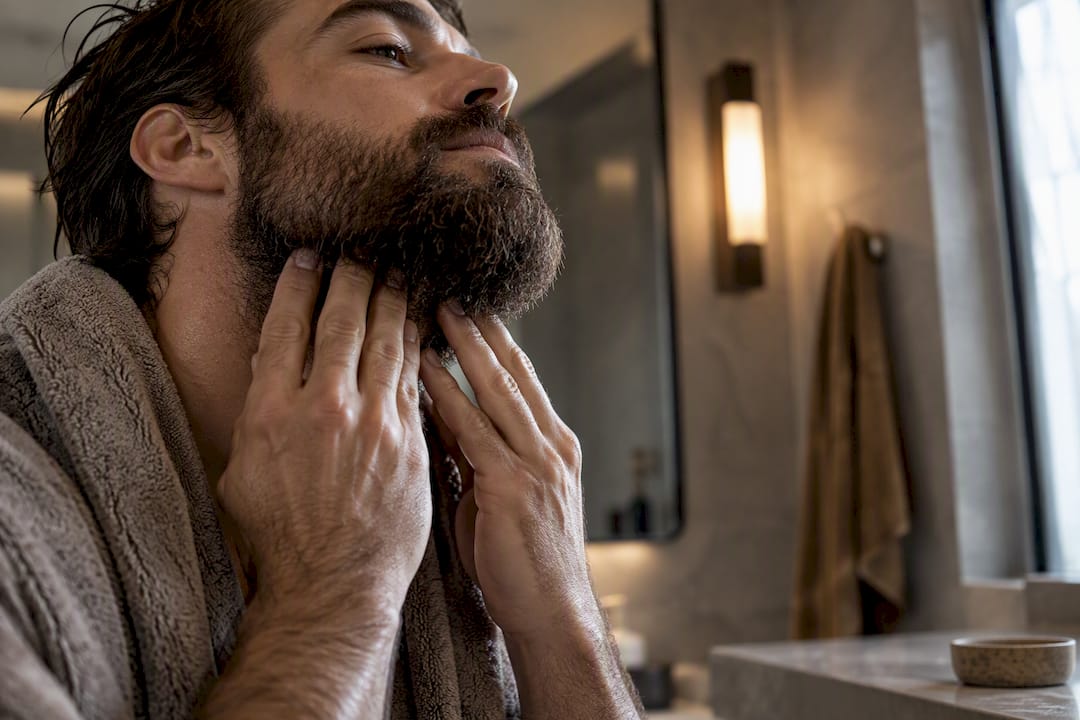
The fix for dry, itchy, or flaky skin under a beard starts with the skin, not the hair. Cleanse the skin beneath your beard with a gentle, fragrance-free cleanser, rinse well, then apply a lightweight moisturizer to slightly damp skin so it locks in hydration. Add beard oil or balm afterward only if you want softer hair. If flakes turn yellowish or redness sticks around after a week of consistent moisturizing, that’s usually a sign you need an antifungal wash, not more oil.
TL;DR:
- Using an antifungal wash is recommended if flakes turn yellowish or redness persists after a week of consistent moisturizing.
- Applying moisturizer within two to three minutes of patting the face dry enhances absorption, especially on damp skin.
- For beard skin issues, over-washing can worsen irritation by stripping the skin barrier, making gentle cleansing and daily moisturizing crucial.
- Beard density affects moisturizer penetration; direct application against the skin with fingertips and thorough work-in is necessary for effective hydration.
- A simple routine with a short ingredient list, like Iron Bull Tallow, supports barrier repair and avoids overusing oils that can feed yeast overgrowth.
Table of Contents
- How Do You Moisturize Under a Beard the Right Way?
- Why Skin-First Care Matters More Than Hair Care
- Choosing the Right Moisturizer, Oil, or Balm
- Is It Dry Skin or Something Else Causing the Flaking?
- How Do You Get Moisturizer Through Thick Beard Hair to the Skin?
- Routines by Beard Length: Stubble, Short, and Long
- Why a Simple Tallow Balm Fits This Routine
- The Real Problem Isn’t Your Beard, It’s Overcomplicating Skin Care
- Get a Simpler Routine With Iron Bull Naturals
- Sources
- FAQ
How Do You Moisturize Under a Beard the Right Way?
Most guys treat beard care like hair care. That’s backwards. The American Academy of Dermatology frames it correctly: the skin underneath is what needs attention, and the hair is just what’s covering it up.
Here’s the routine, start to finish:
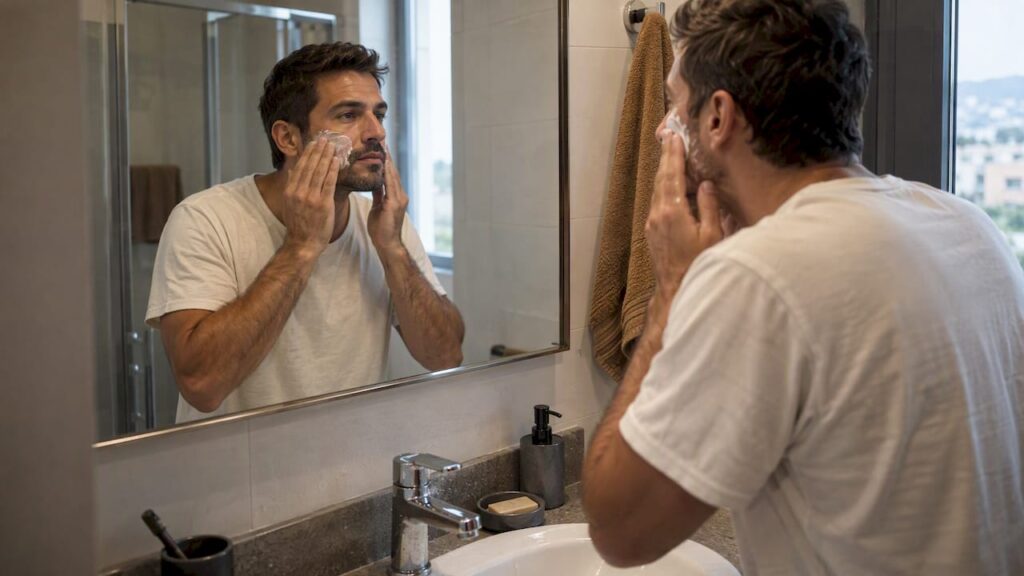
- Wet your face and work a mild, fragrance-free cleanser into the skin beneath the beard with your fingertips and not just the hair surface.
- Rinse thoroughly. Leftover cleanser residue is one of the most common causes of ongoing irritation.
- Pat down until your face is only slightly damp, not dry.
- Dispense a lightweight moisturizer close to the skin and massage it in with circular motions until it disappears.
- If you want conditioned, softer beard hair, follow with a few drops of beard oil worked through the strands, not the skin.
Cleanse daily if your skin runs oily or if you use styling products; every other day works fine for drier skin types. Moisturizer, on the other hand, is a daily habit regardless of beard length.
Pro Tip: Apply moisturizer within two to three minutes of patting your face dry. Damp skin absorbs product more efficiently than fully dry skin, which mostly just sits on the surface.

Why Skin-First Care Matters More Than Hair Care
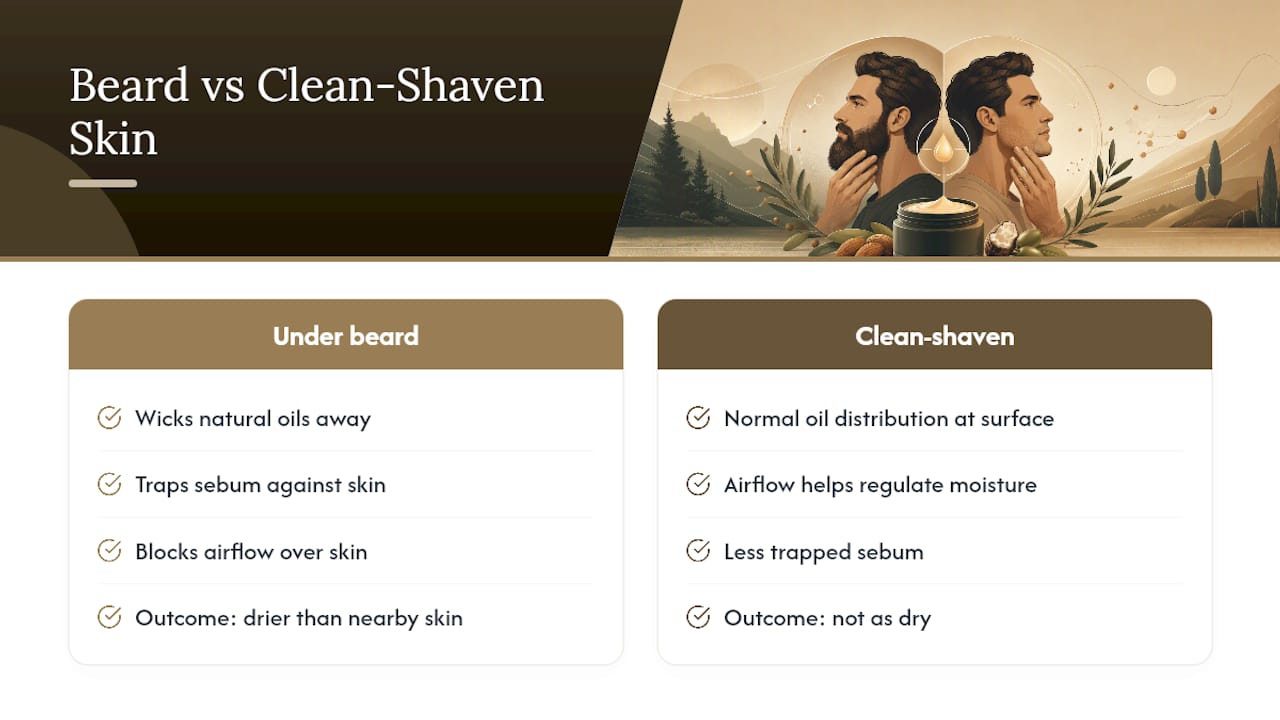
Beard hair changes the environment of the skin underneath it. It wicks natural oils away from the surface, traps sebum against the skin, and blocks airflow that would normally help regulate moisture. The result is skin that runs drier than the surrounding clean-shaven areas of your face, even though it feels “protected” by hair.
That dryness usually shows up as one of two things. Simple xerosis, or dry skin, responds well to consistent cleansing and moisturizing. Seborrheic dermatitis is different: it’s driven by yeast overgrowth and needs a different approach entirely, which the clinical literature on inflammatory skin conditions treats as a distinct category from ordinary dryness. Contact irritation from harsh soaps, heavy fragrance, or alcohol-based aftershaves is a third possibility, and it’s often self-inflicted.
Here’s where a lot of men make it worse: over-washing. Scrubbing daily with a harsh cleanser strips the skin barrier, which then overcompensates by producing more oil, or just stays chronically dry and flaky. Skin-first doesn’t mean wash more. It means wash smart and moisturize consistently.
Choosing the Right Moisturizer, Oil, or Balm
These three product types do different jobs, and mixing them up is why some routines feel like they’re not working.
- Lightweight facial moisturizers contain humectants like hyaluronic acid, which pull water into the skin and hold it there.
- Anhydrous beard oils (jojoba, argan, and similar carrier oils) condition hair strands and add shine but don’t hydrate skin the way a water-based moisturizer does.
- Waxy balms sit somewhere in between, sealing in moisture already on the skin rather than adding much of their own.
Look for fragrance-free, non-comedogenic labels on anything you apply near the skin. Fragrance is a common irritant, and comedogenic oils can clog follicles already crowded with beard hair.
One caveat worth knowing: if you suspect seborrheic dermatitis rather than plain dryness, heavy plant oils can actually feed the problem. The yeast responsible for that condition metabolizes certain lipids, so piling on oil-based products can make flaking worse instead of better, even though it feels like you’re moisturizing correctly.
Is It Dry Skin or Something Else Causing the Flaking?
If you’ve been cleansing and moisturizing consistently for a week or two and the flaking hasn’t improved, or it’s come with redness, greasy-looking yellowish scale, or persistent itch, you’re likely dealing with something moisturizer alone won’t fix.
- Persistent redness that doesn’t fade with hydration
- Yellowish, greasy flakes rather than dry, white ones
- Itch that intensifies rather than settles with regular moisturizing
A randomized trial found that 5% tea tree oil shampoo produced a significant improvement in dandruff severity compared to placebo, which supports its use as a mild antifungal option for beard-area flaking. Other common over-the-counter actives include ketoconazole, zinc pyrithione, and selenium sulfide, typically used two to three times a week rather than daily. If symptoms don’t improve within two to three weeks of antifungal washing, it’s time to see a dermatologist rather than keep experimenting.
How Do You Get Moisturizer Through Thick Beard Hair to the Skin?
Density is the enemy of good absorption. A pea-sized amount of moisturizer rubbed onto the outside of your beard mostly conditions hair, not skin, which is why so many men feel like nothing is soaking in.
- Dispense moisturizer directly against the skin using a dropper or pump bottle rather than rubbing it in from the hair’s surface.
- Use your fingertips in short, circular motions to work the product down through the hair to the skin itself, the same way you’d massage in a scalp treatment.
- Once it’s absorbed, comb or brush through the beard to distribute any remaining product evenly and cut down on tangling.
For longer beards, this takes patience. Skipping steps and just patting product onto the surface is the single biggest reason guys think moisturizer “doesn’t work” for beard skin.
Pro Tip: If you’re moisturizing after a shower, seal damp skin with a balm rather than a thin lotion. The extra hold time gives your skin more chance to actually absorb it before it evaporates.
Routines by Beard Length: Stubble, Short, and Long
Beard length changes what your skin needs. A three-day stubble behaves nothing like a six-month beard.
- Stubble: Cleanse in the morning if needed, then apply an SPF moisturizer, since stubble doesn’t block UV rays the way a fuller beard can. At night, a light moisturizer after washing is enough.
- Short beard: Cleanse gently every other day, moisturize daily, and add a light beard oil only if hair feels rough or dry.
- Long beard: Take extra time to work moisturizer all the way to the skin, since hair density makes shortcuts obvious fast. Add a weekly gentle exfoliation to clear built-up product and dead skin that a longer beard tends to trap.
Why a Simple Tallow Balm Fits This Routine
Most beard skin problems come down to a compromised barrier, not a lack of grooming products. That’s the case for keeping ingredients minimal rather than layering on five different serums and oils.
Iron Bull Tallow is built around that principle. It combines grass-fed Alberta tallow with hyaluronic acid, a pairing that supports barrier repair while the humectant pulls in and holds water, without leaving the greasy film that turns a lot of men off heavier balms.
- Works well as the “moisturize” step in a skin-first routine, applied to slightly damp skin right after cleansing.
- Suits short to long beards where you need a balm with enough hold to reach the skin without disappearing into the hair.
- Uses three ingredients total, which matters if you’re trying to rule out fragrance or filler irritants as a cause of flaking.
Users often notice improved skin texture and hydration with regular use over several weeks, consistent with typical skin barrier repair timelines.
The Real Problem Isn’t Your Beard, It’s Overcomplicating Skin Care
The conventional beard-care industry sells complexity: five-step routines, a dozen oils, specialty combs, and conditioning treatments that promise softness. Almost none of it addresses what’s actually causing the itch and flaking in the first place, which is a skin barrier that isn’t getting cleansed or hydrated properly underneath all that hair.
What the research actually supports is boring by comparison. Cleanse the skin, not just the hair. Moisturize while it’s damp. Keep the ingredient list short so you’re not accidentally feeding irritation with fragrance or heavy oils. Escalate to antifungal treatment only when hydration alone isn’t cutting it after a couple of weeks.
Where most advice falls short is treating beard oil as the primary fix. Oil conditions hair. It doesn’t hydrate skin the way a humectant-based moisturizer does, and in yeast-driven cases it can make things worse. If you prioritize one thing, prioritize getting a lightweight, non-comedogenic moisturizer onto damp skin every single day. Everything else, including oil, balm, and exfoliation, is a supporting step, not the main event.
— Blaine
Get a Simpler Routine With Iron Bull Naturals
Iron Bull Naturals is the alternative to a five-step grooming shelf: one balm, three ingredients, and a formula built specifically to reach skin through beard hair without leaving grease behind. If everything in this article pointed you toward “fewer products, better absorption,” that’s the entire premise behind Iron Bull Tallow.

It’s grass-fed Alberta tallow paired with hyaluronic acid, nothing else added to complicate what your skin actually needs. For stubble or shorter beards where sun exposure is a real factor, the Iron Bull Naturals Sun Balm covers that second half of the equation. These products are offered with a money-back guarantee period, allowing customers to evaluate their effectiveness with limited risk. Head to the Iron Bull Naturals shop to pick the balm that matches your beard length and start tonight.
Sources
The routine here isn’t guesswork. It’s built on the American Academy of Dermatology’s guidance on beard skin care, which recommends cleansing beneath the beard and moisturizing damp skin, with antifungal treatment reserved for persistent flaking. Clinical reviews on xerosis versus seborrheic dermatitis explain why the two conditions need different treatments even though they look similar at a glance. And practical breakdowns like DermApproved’s guide to beard skin care connect that clinical understanding to real grooming habits, including the tea tree oil evidence and the case for brushing gently rather than aggressively.
- A dermatologist’s top tips for a healthy beard | American Academy of Dermatology
- PMC review — dermatology review article
- Beard skin care: treating the skin underneath — DermApproved
FAQ
What Is the Best Moisturizer for Skin Under a Beard?
The best option is a fragrance-free, non-comedogenic moisturizer with a humectant like hyaluronic acid, applied directly to damp skin rather than rubbed onto beard hair. A tallow-based balm like Iron Bull Tallow works well because it supports barrier repair without a greasy finish.
How Can You Treat Dry Skin Under a Beard or Stubble?
Cleanse the skin gently, pat it slightly damp, and apply a lightweight moisturizer within a few minutes so it locks in hydration. If dryness persists after consistent use for a week or two, check whether flakes look yellowish or greasy, which points to a yeast-driven cause rather than simple dryness.
What Is the 3 Month Rule for Beards?
The “3 month rule” refers to the general timeline dermatologists cite for a beard to grow past the awkward patchy stage and reach a length where skin underneath is fully covered and needs a dedicated care routine. It’s a rough grooming guideline, not a medical standard, and skin needs (cleansing, moisturizing) apply from day one regardless of beard length.
How Do You Know If It’s Dandruff or Seborrheic Dermatitis?
Simple dryness produces fine, white flakes that improve with consistent moisturizing. Seborrheic dermatitis tends to show up as yellowish, greasy scale with redness and itch that doesn’t respond well to hydration alone, and it usually needs an antifungal wash with an active like ketoconazole or zinc pyrithione.
How Often Should You Moisturize Under Your Beard?
Daily moisturizing works for most men, applied to damp skin right after cleansing. Cleansing frequency depends on your skin type: daily if you run oily or use styling products, every other day if your skin trends dry.