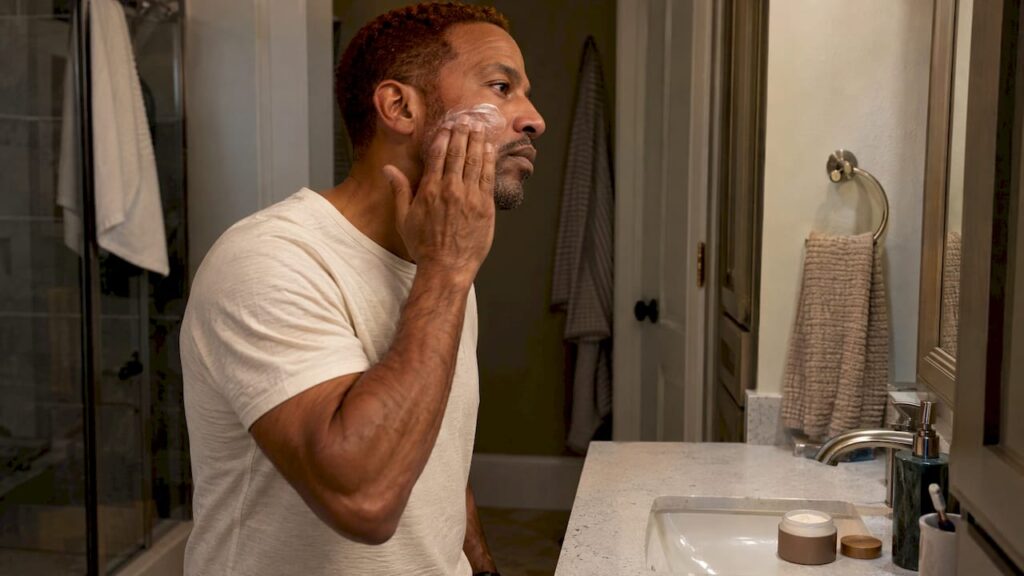

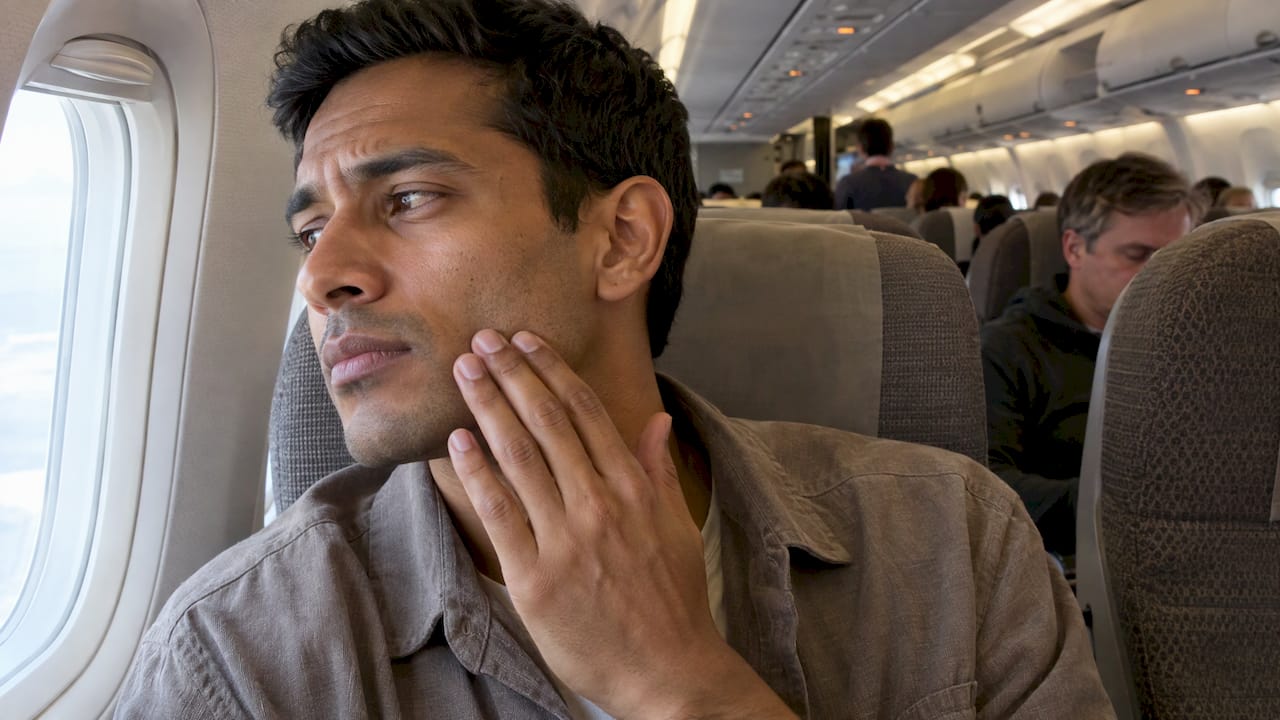
Flying dries out men’s skin because cabin air holds very little moisture, so your face loses water faster than it can replace it. The fix is simple: hydrate before you board, seal that moisture in with a non-greasy balm, keep your in-flight routine short, and rebuild your skin barrier after you land. This guide walks through each step, how to tell dry skin from dehydrated skin, and when itching means it is time to see a doctor.
TL;DR
- Cabin humidity commonly sits around 10 to 20%, far below what skin is used to, so tightness, dullness and itching are normal after a flight.
- Before boarding, apply a hydrating ingredient such as hyaluronic acid or glycerin, then lock it in with a moisturizer or balm.
- On the plane, skip harsh products, drink water, and reapply a small amount of balm to your cheeks, nose and lips.
- After landing, focus on barrier repair: gentle cleansing, hydration, and a rich but non-greasy moisturizer.
- Itching that lasts for weeks, disrupts sleep, or comes with fever or unexplained weight loss needs a dermatologist.
Table of Contents
- Why flying dries out your skin
- Is your skin dry or dehydrated?
- Before you fly: the 10-minute prep
- On the plane: keep it short and gentle
- After you land: repair the barrier
- Why is my skin itchy after a flight?
- Our perspective
- Build a travel routine around one balm
- A sample travel-day routine
- Common mistakes men make when flying
- FAQ
- Sources
Why flying dries out your skin
Dermatologist Dr. Whitney Hovenic describes cabin humidity of 10 to 20% as far below what skin is accustomed to. The result is tightness, dullness, and flare-ups of conditions like eczema or rosacea in people prone to them. For comparison, most indoor spaces sit well above that range, so your skin goes from a normal environment to desert-level dryness within an hour of takeoff.
The longer the flight, the longer your skin spends losing water through its surface. A short hop is a nuisance. A 10-hour haul is a real test of your barrier.
Why men often feel it more
Men tend to shave, and shaving removes a layer of dead cells and some of the surface oils that help hold moisture in. Add a razor pass the morning of a flight and your face has less protection when it hits that dry air. If you shave daily, the cheeks, jawline and neck are the first places you will notice tightness or a stinging feeling.
Why your face can look oily and dry at once
It sounds backward, but skin that loses water quickly can respond by making more oil. According to Allure’s reporting on skin on planes, skin that loses moisture rapidly may overcompensate with extra oil, which can leave a shiny forehead, chin and cheeks even while the skin underneath is parched. That is why piling on a heavy, greasy product is not the answer. You want hydration plus a light seal, not a layer of grease.
Is your skin dry or dehydrated?
The two get mixed up constantly, and the difference changes what you put on your face. Healthline explains that dry skin lacks oil, while dehydrated skin lacks water. Dehydration can affect any skin type, including oily skin, and often shows up as dullness, itchiness and more visible fine lines.
A quick way to check is the pinch test. Pinch a little skin on your cheek or abdomen and let go. If it is slow to snap back, the skin is likely dehydrated. If it bounces back but looks flaky or scaly, you are probably dealing with dry skin, a shortage of oil.
After a flight, most men have a bit of both. That is why the best approach layers a water-binding ingredient with something that seals it in. We cover the test in more detail in our guide on dry vs. dehydrated skin for men.
| What you notice | Likely cause | What helps most |
|---|---|---|
| Slow snap-back, dull look, more visible fine lines | Dehydrated (low water) | Humectants like hyaluronic acid or glycerin, then a seal |
| Flaky, scaly, rough patches | Dry (low oil) | Richer moisturizer or balm with skin-compatible fats |
| Tight, itchy, shiny T-zone | Both, often after flying | Hydrate first, then a light, non-greasy balm |
| Red, stinging after shaving | Irritated barrier | Gentle cleansing, barrier repair, skip actives |
Before you fly: the 10-minute prep
What you do in the hours before boarding matters more than anything you do in your seat.
Step 1: Cleanse gently
Use a mild cleanser, not a scrub. Harsh exfoliants, strong chemical peels and retinoids are better saved for when you are home, since they can leave your skin more reactive in dry cabin air. If you use a retinoid at night, give yourself a break the night before and the night after a long flight.
Step 2: Add a humectant
An ideal pre-flight routine includes a hydrating serum with hyaluronic acid or glycerin, as dermatologists told Forbes, because these ingredients draw water into the skin. Apply it to slightly damp skin so there is water for it to hold. If you want a deeper explanation, see our hyaluronic acid guide for men and the right order for layering hyaluronic acid.
Step 3: Seal it in
Dry air makes moisturizers work less well, and aesthetic physician Elizabeth Tanzi notes that hyaluronic acid binds water while a ceramide moisturizer helps keep moisture in. The principle is the same whatever you use: a water-binding layer first, then an occlusive layer on top to slow evaporation. Our walkthrough of layering humectants and occlusives breaks down how to do it in about five minutes.
Step 4: Protect the lips and hands
Lips and hands have fewer oil glands, so they show dryness fast. Put lip balm on before you board, and a little moisturizer on your hands after you wash them at the airport.
On the plane: keep it short and gentle
You do not need a ten-step routine at 35,000 feet. You need a few smart habits.
- Drink water. It will not fix your skin on its own, but it supports overall comfort on a long flight.
- Skip alcohol-based and heavy products. Travel guidance from skincare professionals consistently advises against drying or irritating products in flight, along with retinoids, strong peels and harsh scrubs.
- Reapply sparingly. A pea-sized amount of balm on the cheeks, bridge of the nose and around the eyes is plenty. Thin layers absorb better than one thick coat.
- Avoid touching your face. Airplane tray tables and armrests are not clean. Wash or sanitize your hands first.
- Use the window shade wisely. At altitude, sun exposure is stronger, so if you sit by the window on a daytime flight, protect your skin.
Packing your skincare for carry-on
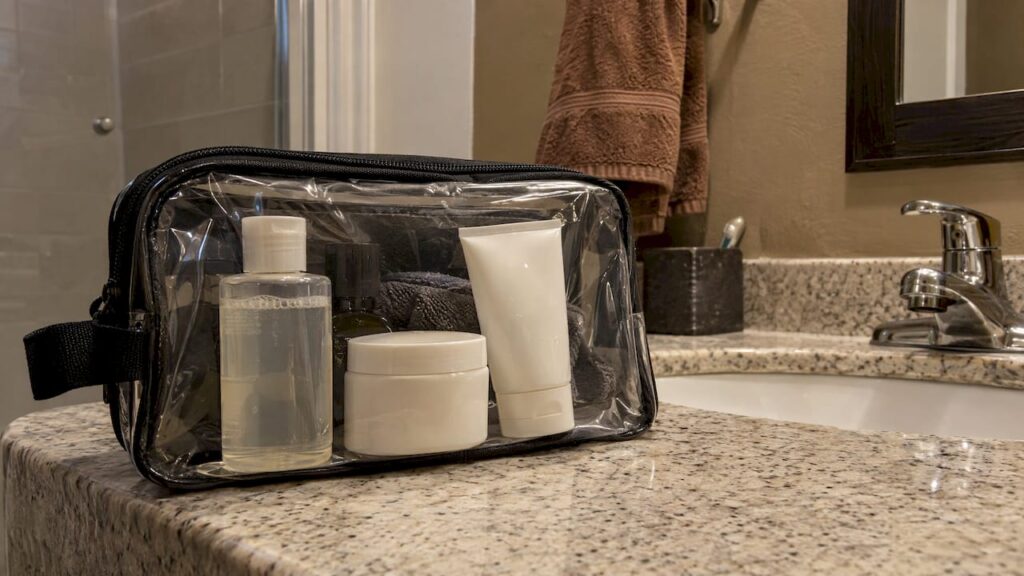
The TSA’s 3-1-1 liquids rule covers liquids, aerosols, gels, creams and pastes, limited to 3.4 ounces (100 milliliters) or less per item in a quart-sized bag. Check the size of any balm or cream you plan to carry on and keep it in that bag with your other toiletries. A compact, multi-purpose balm saves space: one product can handle your face after shaving, your dry cheeks mid-flight, and your hands after landing.
After you land: repair the barrier
A post-flight routine is where you recover. Dr. Camp recommends focusing on ceramides, niacinamide and hyaluronic acid to calm inflammation and rebuild the skin barrier after travel stress.
Here is a simple version:
- Rinse with lukewarm water. Hot showers strip more oil from skin that is already stressed.
- Pat, do not rub. Leave your skin slightly damp.
- Apply a hydrating layer. Hyaluronic acid or a similar humectant goes on first.
- Seal with a balm or moisturizer. This is the step that keeps the water from escaping overnight.
- Repeat at night for two or three days. Your skin needs time to settle, especially after long-haul flights and time zone changes.
Hold off on exfoliating, retinoids and strong acids until your face feels normal again. If your skin feels raw or stings, our skin barrier repair guide for men covers a fast, minimal approach, and the 3-step routine for dehydrated skin fits into under five minutes.
Why is my skin itchy after a flight?
Itching after flying is usually the same dryness problem showing up as irritation: the barrier is stressed, water escapes, and nerve endings in the skin react. It typically eases within a few days once you hydrate and seal.
Some situations call for a professional. Prevention reports that itching which persists for weeks, interferes with sleep, or comes with systemic symptoms such as fever or unexplained weight loss should be evaluated by a dermatologist. If you have eczema or rosacea, talk to your dermatologist before a long trip about what to bring, since cabin dryness can trigger flare-ups.

For flaky patches that keep returning even at home, see our guide to dry, flaky skin in men.
Our perspective
We built Iron Bull Naturals around a simple idea: men do not want a twelve-step routine, and they do not want a greasy face. Travel makes that even clearer. When you are racing through an airport, you need one product you can trust to do the work.
That is why our face balm is made with grass-fed Alberta tallow and infused with hyaluronic acid. The hyaluronic acid is there to attract water, and the tallow is there to help hold it in. We designed the formula to hydrate and repair without the heavy, slick feel of many moisturizers, and to be gentle enough for sensitive skin.
Our approach is minimal on purpose. We keep the formula simple, with no long list of ingredients to second-guess, which suits a carry-on bag and a tired face after a red-eye. Customers tell us they notice better hydration and skin texture within weeks of regular use, and we back every order with a 60-day money-back guarantee.
If you fly often, treat your skin the way you treat the rest of your travel kit: pack light, pack smart, and use what works.
Blaine
Build a travel routine around one balm
If you want a routine that fits in a toiletry bag, our Iron Bull Beef Tallow Face Moisturizer for Men pairs grass-fed Alberta tallow with hyaluronic acid and jojoba oil. It is designed to hydrate deeply and absorb without a greasy residue. For daytime trips, the Iron Bull Sun Balm adds sun protection in a balm format.

You can see both products, along with multi-pack and subscription options, in our shop. If you are curious about how tallow works on skin, start with our overview of beef tallow for skin.
A sample travel-day routine
Putting it all together, here is how a typical long-haul day might look.
Morning of the flight
- Cleanse with a mild face wash and lukewarm water.
- Pat dry, leaving skin slightly damp.
- Apply a hydrating serum or a hyaluronic acid product.
- Seal with a balm. If you shaved, use a thin, even layer on the jaw and neck.
- Put on lip balm and, if it is daytime, sun protection.
In the air
- Sip water through the flight.
- Reapply a pea-sized amount of balm to dry spots every few hours.
- Skip face mists with alcohol and avoid peels, scrubs and retinoids.
After landing
- Rinse your face with lukewarm water.
- Repeat hydrate-then-seal.
- Do the same before bed, and again the next morning.
The point is consistency, not complexity. Five minutes at each end of the trip does more than any amount of fiddling mid-flight.
Common mistakes men make when flying
- Shaving right before boarding. Give your skin a few hours, or shave the night before.
- Using only water. Splashing your face with water without sealing it afterward can leave skin drier as the water evaporates.
- Going heavy and greasy. A thick layer can feel clammy in a cramped seat and tends to rub off on pillows and headrests. A fast-absorbing balm is easier to live with.
- Trying a new product on travel day. Stick with what your skin already knows. If you are adding something new, test it at home first. For hyaluronic acid products, our guide on hyaluronic acid side effects in men explains patch testing.
- Forgetting the neck and ears. They face the same cabin air as your cheeks.
FAQ
Do planes dry out your skin?
Yes. Cabin air is very dry, with humidity often reported between 10 and 20%, which pulls water from the skin surface. You may notice tightness, dullness, or itching during or after the flight. A hydrating layer sealed with a balm before and after flying helps.
How do I fix dry skin as a man?
Cleanse gently, apply a humectant like hyaluronic acid to damp skin, then seal it in with a moisturizer or balm. Avoid hot water and harsh scrubs. Our best moisturizer for dry skin guide covers what to look for.
What can I do to help my dry skin after travel?
Focus on rebuilding the barrier. Rinse with lukewarm water, apply hydrating ingredients such as hyaluronic acid, and lock them in with a rich but non-greasy moisturizer morning and night for a few days. Pause exfoliants and retinoids until your skin feels normal.
How can I tell if my skin is dry or dehydrated after flying?
Try the pinch test: pinch skin on your cheek and release. Slow snap-back points to dehydration, while flaking or scaling points to dryness. Many men have both after a flight, so hydrate first and seal second.
When should I see a doctor about itchy skin after a flight?
See a dermatologist if itching lasts for weeks, keeps you from sleeping, or comes with fever or unexplained weight loss. If you have eczema or rosacea and your skin flares badly after travel, ask your dermatologist for a plan before your next trip.
Sources
- What Happens to Skin on a Plane (Allure)
- Inflight Skincare Guide: What To Do Before, During, After (Forbes)
- Dry vs. Dehydrated Skin: Treatments and How To Tell the Difference (Healthline)
- The Best Treatments for Itchy Skin (Prevention)
- Travel Tips: 3-1-1 liquids rule (TSA)