

A face balm for cyclists is a rich, water-free-feeling barrier you put on before the ride so wind and cold do not strip your skin, and a sun balm with zinc oxide handles UV on top of it. Chamois cream is a different product for a different part of the body. If you ride regularly and your face ends up tight, red or flaky, the fix is a simple two-step routine. We built Iron Bull Tallow, a face balm made from grass-fed Alberta tallow with hyaluronic acid, for men who want that routine to take under a minute and leave no greasy film under a helmet strap.
TL;DR
- Wind dries and irritates the skin on your face and strips off sunscreen, so a balm before the ride and sun protection over it do two separate jobs.
- Face balm is not chamois cream. Chamois cream reduces friction at the saddle; a face balm protects and repairs facial skin.
- Look for a short ingredient list, a humectant such as hyaluronic acid, and a rich emollient base. Skip fragrance and alcohol on dry, irritated skin.
- Apply a thin layer at least 30 minutes before you ride, add SPF 30 to 50 broad-spectrum protection, and reapply sun protection every two hours.
- Repeated wind exposure is linked to dryness, a weaker skin barrier and, over time, fine lines, so the routine pays off in how your skin looks years from now.
Table of Contents
- What riding does to your face
- Face balm is not chamois cream
- What a good face balm does for a rider
- How to apply it: a routine that takes a minute
- Winter riding: balm, then barrier
- Why wind matters for fine lines
- Our offer for riders
- Our point of view
- FAQ
- Sources
What riding does to your face
Cycling puts your face in the same conditions every time: moving air, changing temperature, and hours under the sun. Each one does something different.
Wind. The Skin Cancer Foundation explains that wind irritates skin directly and dries the outer layer so it fragments and sloughs off. That thinner layer gives less natural protection from UV light. Wind also blows off sunscreen you have applied. A dermatologist writing for RevZilla adds that windburn dries your natural oils, reduces skin flexibility and can create tiny cracks in the outer layer, followed by pain, itching and peeling. Riding with the visor up or the vents open does not change this, because the air still moves across your skin.
Cold. Bicycling’s winter skin guide lists windburn, dry and irritated skin, eczema flare-ups, cold sores, chilblains and frostbite among the problems riders can face. Frostbite is a risk when skin temperature drops below 28°F, which is why the face, ears and neck need real coverage on freezing mornings.
Sun. UVA and UVB rays cause sunburn and photoaging, which is the loss of collagen, wrinkles and brown spots. The same guide notes that sunburn is possible year-round and at all elevations, so a gray January ride is not an exemption.
If your face feels tight and looks red after a ride, that is the combined effect. The page we wrote on fast relief and prevention of windburn goes deeper on that specific problem.
Face balm is not chamois cream
Search for this topic and most of what comes up is chamois cream. That is understandable, since the two share the cyclist’s audience, but they do different work.
According to Bicycling’s guide, chamois cream goes on the saddle area to reduce friction, and anti-chafing products go where clothing rubs skin. Windburn and dryness on the face are handled with barrier ointments and moisturizers. Saddle sores are a separate condition, and an infected one may need antibiotics, so see your doctor if one does not clear.
A face balm never replaces chamois cream, and chamois cream has no business on your cheeks. Treat them as two tools in the same kit bag.
What a good face balm does for a rider
The job is to slow moisture loss and keep the skin barrier intact while the wind is working against it. A New York Times piece quotes a dermatologist from NYU Medical Center saying that a good balm helps the outer layer retain moisture, though everything is a trade-off between greasiness and effectiveness. That trade-off is the whole problem for men who ride to work or straight into a meeting: a heavy, slick balm works but feels awful under a helmet.
Three qualities matter.
A short ingredient list
A dermatologist quoted by Robb Report advises choosing products with the fewest ingredients for sensitive skin and avoiding fragrance and alcohol. The American Academy of Dermatology goes further: it says to stop using products with alcohol, fragrance or retinoids on dry skin and notes that even ‘unscented’ products can contain odor-masking chemicals that irritate sensitive skin. Our guide to how to choose a hypoallergenic face balm explains what that label does and does not tell you.
A humectant plus a rich base
The same Robb Report article lists hyaluronic acid among the clinically effective moisturizing ingredients and points to heavier, richer products for dry skin. Hyaluronic acid draws water into the skin, and a rich fat-based balm helps hold it there. That pairing is exactly how Iron Bull Tallow is built: grass-fed Alberta tallow with hyaluronic acid, with three key ingredients in total. If you want to know what hyaluronic acid does for a man’s skin, see our guide to hyaluronic acid for men.
A finish you can ride in
You will not keep using a balm that leaves your face shiny or sticky. Our formula is designed to absorb fast without a greasy residue, which is what makes it practical for a commute. Men who prefer to skip scented products can also read about how to pick an essential oil free balm.
How to apply it: a routine that takes a minute
The research on timing is consistent. The Skin And Cancer Institute, cited in Bicycling’s guide, advises applying moisturizer at least 30 minutes before riding, and the guide itself recommends a thin layer of barrier product before you pedal. Here is how that works in practice.
- Wash and pat dry. Use a gentle cleanser. The AAD recommends applying a cream or ointment while the skin is still slightly damp, which helps it hold moisture.
- Warm a small amount between your fingers. A pea-sized amount is a starting point for the whole face. A balm should be thin, not thick. If it looks white or sits on top, use less.
- Press it onto cheeks, nose, forehead and the tops of the ears. These are the areas the wind hits first. Do not forget the sides of the neck if you ride without a gaiter.
- Wait 30 minutes if you can. This lets the balm settle before you add anything else. If you are dressing and out the door, apply it first, then do your shoes, bottles and bike check.
- Add sun protection on top. Use SPF 30 to 50, broad-spectrum, before the ride and reapply every two hours, and more often if you sweat.
- Wash off sweat and reapply after the ride. The post-ride shower is the moment to moisturize again while the skin is still slightly damp.
The one-step version of this routine is on our page about the 30-second barrier balm step for a man’s face.
Putting sun protection over your balm
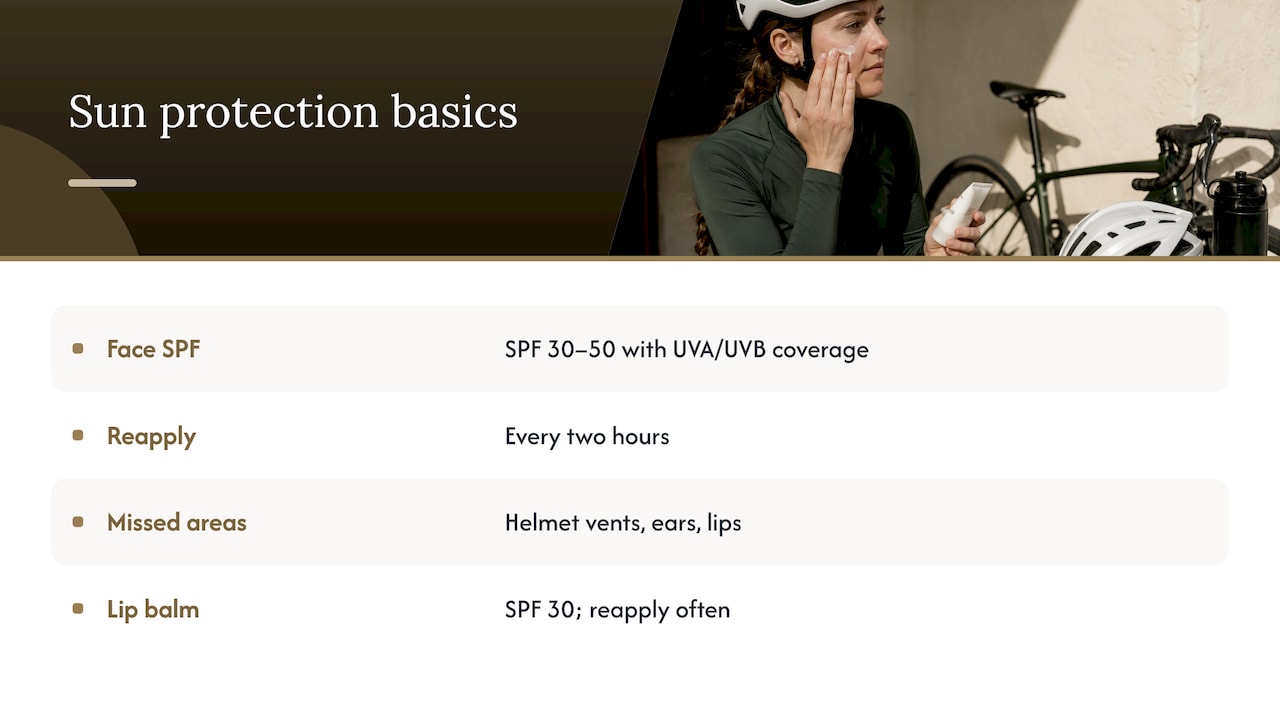
Bicycling’s guide advises SPF 30 to 50 with UVA and UVB coverage, and notes that a dermatologist points to zinc oxide products for good broad-spectrum coverage. It also tells riders to reapply every two hours and to cover the places that get missed: through helmet vents, behind the ears, and the lips. For lips, use a moisturizing balm with SPF 30 and reapply often. Wind-dried, wet lips are especially vulnerable, since the moisture evaporates quickly in moving air.
Our Iron Bull Sun Balm is a mineral sun balm with zinc oxide, so it is a one-product answer when you want protection that holds up outside. The comparison of sun balm versus sunscreen lays out the reasoning, and the article on reading the label of a mineral sun balm shows what to look at on the tin. If you work or ride outdoors all day, our page on sun protection for outdoor workers applies just as well to long rides.
Winter riding: balm, then barrier
Cold air holds less moisture, so the drying effect is stronger and the skin loses water faster. Bicycling’s guide recommends a thin layer of barrier ointment or thick cream before pedaling, plus wind-blocking gear such as a balaclava, skull cap, headband, neck gaiter or mask. A dermatologist quoted there adds that colder, drier or windier days call for more facial protection and more moisturizer.
One safety point for freezing rides: the New York Times article quotes a dermatologist saying that products containing water can increase the chance of frostbite in cold, windy conditions. If the temperature is near or below freezing, protect the face with a balm and physical cover, and bring it indoors if you feel numbness or waxy, hard skin. Frostbite needs medical attention, not more cream.
After a cold ride, Bicycling’s dermatologist advises thick moisturizers with humectants such as hyaluronic acid or glycerin for windburned skin, and avoiding acne creams, anti-aging treatments and aftershave for several days while it heals. If you are already dry, our guide to locking in hydration on cold-weather dry skin covers the whole winter routine.
Why wind matters for fine lines
Most riders think of windburn as a short-term nuisance. The longer view is less comfortable. A 2025 review on endurance athletes and skin aging reports that prolonged wind exposure depletes skin moisture, weakens the barrier and increases water loss in cyclists, and that it contributes to fine lines and wrinkles over time. In cold, windy conditions the combined effects can crack skin and speed the breakdown of collagen and elastin.
That is why we treat the balm as daily maintenance rather than a rescue product. Skin that is kept hydrated and shielded from the first ride of the season has less damage to repair later. For the ingredient-level detail, see what the science says about tallow for the face.
Our offer for riders
Iron Bull Naturals makes skin care for men. Iron Bull Tallow is a face balm made from 100% natural, grass-fed Alberta tallow with hyaluronic acid, built around three key ingredients and designed to hydrate and repair dry, irritated skin without a greasy feel. It is made for sensitive and all skin types. Iron Bull Sun Balm gives you the sun-protection step in the same simple format. Both are on the Iron Bull shop, and every order is covered by our 60-day money-back guarantee.

If you want the details on the face balm first, start with the Iron Bull Beef Tallow Face Moisturizer for Men.
Our point of view
Riders do not need a twelve-step routine. They need one thing that goes on in seconds, holds up against wind, and does not feel like grease under a helmet.
That is the reason we kept Iron Bull Tallow to three key ingredients. Tallow is rich and close to the skin’s own fats, hyaluronic acid brings water in, and the result is a balm designed to absorb quickly. We think a short list is easier to trust and easier to use every day, and consistency is what protects a rider’s face across a season.
Our advice is simple: balm on first, sun protection over it, and again after the ride. If you do that on the days you ride and the days you do not, you give your skin the best chance of staying comfortable.
Blaine
FAQ
Can I use a face balm instead of chamois cream?
No. They do different jobs. Chamois cream reduces friction where you sit on the saddle, while a face balm protects facial skin from wind, cold and dryness. Use each where it belongs.
Should I put face balm on before or after sunscreen?
Apply the balm first and give it time to settle, then add your sun protection on top. Bicycling’s guide recommends SPF 30 to 50 broad-spectrum protection before the ride and reapplying every two hours, more often when you are sweating.
How do I stop windburn on a winter ride?
Put a thin layer of balm on before you leave and cover the face, ears and neck with a balaclava, gaiter or headband. After the ride, moisturize again. If windburn does appear, avoid acne products, anti-aging treatments and aftershave for a few days while the skin heals.
Is a face balm too greasy to wear under a helmet?
It does not have to be. The trade-off between greasiness and effectiveness is real, which is why a thin layer matters. Our Iron Bull Tallow is designed to absorb fast without a greasy residue, so it works under a helmet and chin strap.
When should I see a doctor about my skin?
See a doctor if dryness does not improve with regular moisturizing, because the AAD notes that persistent dry skin can signal conditions such as atopic dermatitis or psoriasis. Also seek care for numb, waxy or blistered skin after cold exposure, which can be frostbite.
Sources
- Winter Cycling: How to Protect Skin While Riding in Cold Weather, Bicycling
- Against the Wind, Skin Cancer Foundation
- Ask the doc: How to prevent winter windburnt skin, RevZilla
- Balms for the Blue in the Face, The New York Times
- Expert Advice on Finding the Best Moisturizer for Your Face, Robb Report
- Dermatologists’ top tips for relieving dry skin, American Academy of Dermatology
- Endurance Athletes and Skin Aging: Mechanisms, Risks, and Protective Strategies, Journal of Dermatology