

A hypoallergenic face balm is one made to lower the odds of an allergic reaction, not one that rules it out. In the US the word has no official definition, so the label alone tells you very little. The ingredient list, the way the balm is made and a simple patch test tell you much more. This guide shows you how to read all three, and why a short, simple formula is an easy place to start.
TL;DR
- “Hypoallergenic” has no federal standard in the US. It means what each brand says it means.
- Read the ingredient list, not the front of the jar. Fewer ingredients means fewer chances for a reaction.
- Sensitive skin needs hydration and barrier support. Humectants like hyaluronic acid and emollients like plant oils are the classic pairing.
- Patch test for 7 to 10 days on the inner elbow before the balm goes on your face.
- Our Iron Bull Tallow balm is built on three main ingredients and backed by a 60-day money-back guarantee.
Table of Contents
- What “hypoallergenic” actually means on a face balm
- Why facial skin reacts more than the rest of you
- How to read the label: a practical checklist
- Our perspective
- How to patch test a new face balm
- What a good balm routine looks like
- Can a balm help with wrinkles and irritation?
- Try Iron Bull Tallow
- FAQ
- Sources
What “hypoallergenic” actually means on a face balm
The FDA is direct about this: there are no federal standards or definitions for the term, and a company can use it to mean whatever it wants. The same FDA page says manufacturers don’t have to submit evidence for a hypoallergenic claim.
Dermatologists describe the intent more usefully. Dr. Marisa Garshick told Byrdie that hypoallergenic means formulated to minimize the risk of allergic reactions, not that the product is free of everything that could ever bother you. Dr. Carina Woodruff, in the same piece, says a truly hypoallergenic product should leave out common triggers such as fragrance, quaternium-15 and methylisothiazolinone.
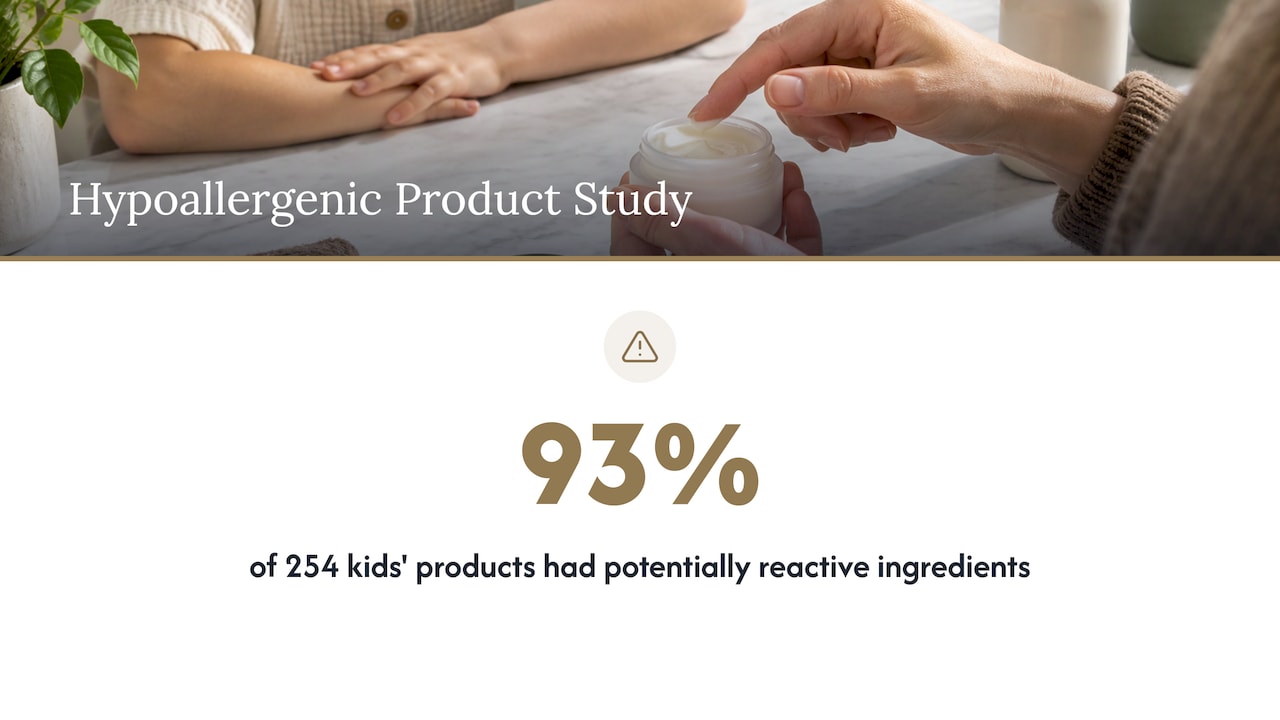
The gap between promise and practice is real. Healthline reports a Brazilian study in which 93 percent of 254 products marked hypoallergenic still contained at least one ingredient that could cause a reaction. That study looked at children’s products, but the lesson carries over: a claim on the front is a starting point, and the back of the package is where you verify it.
So treat the word as a prompt to look closer. A brand that makes the claim and keeps its formula short is making one you can check yourself in about thirty seconds.
Why facial skin reacts more than the rest of you
Your face is not like your forearm. A review of moisturizer allergy in PMC notes that facial skin appears more sensitive to moisturizers than other body areas, possibly because of a less efficient barrier, fewer stratum corneum layers and larger follicular pores.
Add shaving, wind, heated indoor air and sun, and a lot of men carry a low-grade irritation without naming it. Sensitive skin is common: a 2023 scoping review in the Journal of Drugs in Dermatology describes it as a subjective syndrome affecting approximately 40 to 50 percent of the population. The same review says long-term management comes down to daily skin care that improves hydration, strengthens the stratum corneum and reduces susceptibility to irritants.
That is the job a face balm is meant to do: seal in moisture and protect the barrier, every day, without adding new irritants.
How to read the label: a practical checklist
Here is what to look for, in the order we would check it.
- Count the ingredients. Every extra ingredient is another possible trigger. In a database of 276 moisturizers, the PMC review found that 68 percent contained fragrance and 62 percent parabens, with many also carrying propylene glycol, formaldehyde releasers and benzyl alcohol. A short list sidesteps most of that.
- Look for fragrance-free, not just unscented. Dr. Woodruff points out that fragrance-free isn’t the same as unscented, since an unscented product can still contain masking fragrance. We explain the difference in our guide to fragrance free vs. unscented labels.
- Know the usual suspects. Cleveland Clinic lists common contact allergens in skin care, including fragrance mix, Balsam of Peru, Euxyl K400 and propylene glycol. If you have reacted to one before, scan for it by name.
- Look for hydrators and emollients. The Journal of Drugs in Dermatology review says optimal moisturizers for sensitive skin contain humectants such as glycerin, hyaluronic acid and aloe vera, plus emollients such as ceramides and plant oils.
- Check your personal history. If you already know you react to a specific oil or additive, avoid it. Our pages on jojoba oil allergy and lanolin allergy risks show how to handle two common ones.
Quick comparison: what to prefer
| Label check | A better sign | Why it matters |
|---|---|---|
| Ingredient count | Short list you can read in full | Fewer possible triggers |
| Scent | Fragrance-free, stated plainly | Fragrance is a frequent allergen |
| Moisture support | Humectant plus emollient | Hydration and barrier support |
| Texture | Absorbs without a greasy film | You will actually use it daily |
| Return policy | A money-back window | Lets you try it after patch testing |
Our perspective
We started Iron Bull Naturals because most men’s skin care is either a long list of ingredients nobody can pronounce or a greasy jar that sits unused in the cabinet. Neither helps a guy with dry, irritated skin.
Our answer is simplicity. Iron Bull Tallow is built on three main ingredients: grass-fed Alberta tallow, hyaluronic acid and jojoba oil. We designed it to hydrate and repair deeply, soften the look of fine lines and absorb without a heavy, greasy feel. We describe it as non-toxic and hypoallergenic, and we mean that as our formulation goal: keep the list short so there is little to hide.
Tallow is rich in the kind of fats skin already knows, which is why many men with dry, reactive skin like how it feels. Hyaluronic acid adds the humectant side of the equation. If you want the background, our pages on tallow benefits for the face and hyaluronic acid for men go deeper.
Our advice to any man shopping for a sensitive-skin balm is the same: read the whole label, patch test, and pick the formula you can explain in one breath. That is what we built.
Blaine
How to patch test a new face balm
Even a short formula deserves a test. The American Academy of Dermatology recommends applying the product to a quarter-sized spot on the underside of your arm or the bend of your elbow twice daily for seven to 10 days, using the amount you would normally use.
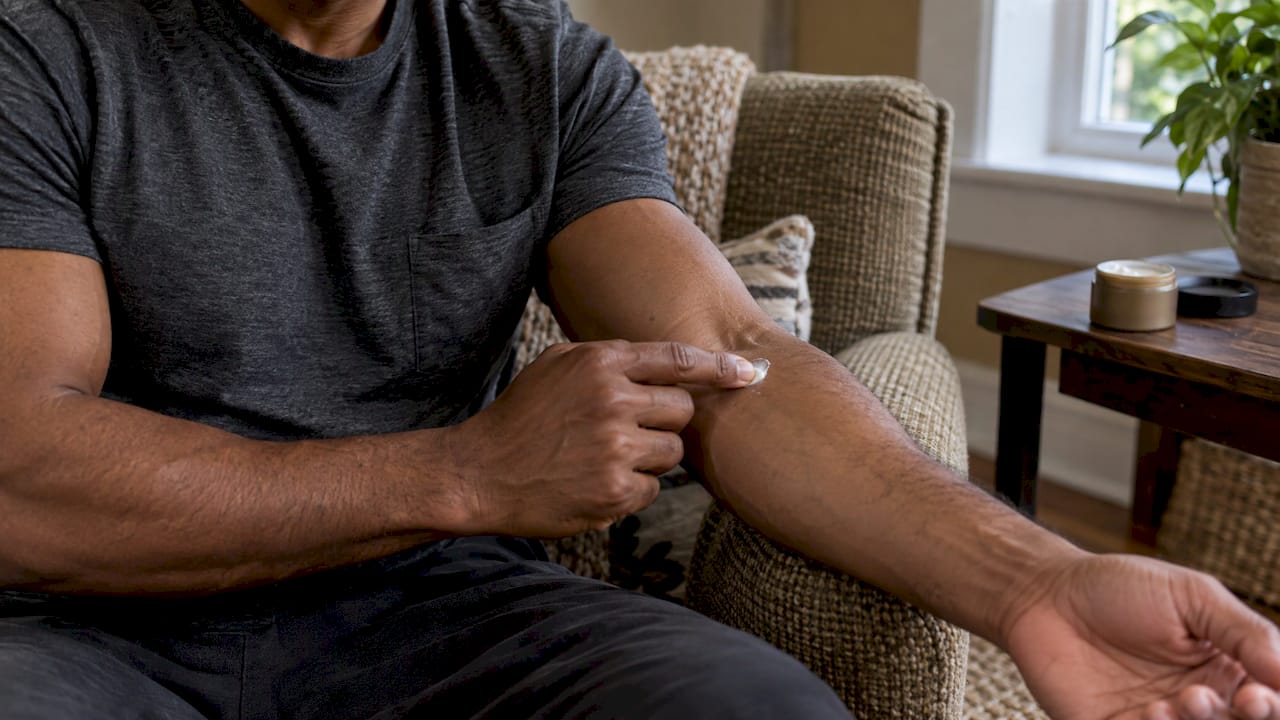
The inner elbow is a good test site because, as Cleveland Clinic dermatologist Dr. Hong explains, it is extremely sensitive, similar to the skin on your face. Using it for a week or more mimics how you will use the balm for real.
Here is the routine:
- Wash and dry a small patch of skin on the inner elbow.
- Apply a quarter-sized amount of balm and leave it.
- Repeat twice a day for seven to 10 days.
- If you see no redness, itching or swelling, go ahead and use it on your face.
- If a reaction appears, gently wash it off as soon as possible and stop using the product, per the AAD.
Timing matters. Byrdie reports that allergy signs such as redness, itching, swelling, burning or hives can appear within minutes for some people, while others see nothing for hours or days. That is why the full week is worth it, and why Healthline notes that dermatologists may suggest 7 to 10 days of testing to rule out delayed reactions. For face-specific testing, Healthline also suggests an inconspicuous spot such as behind the ear along the jawline.
The same habit applies in other situations where skin is under stress. If you are testing products around a tattoo, for example, this guide to testing a new balm on sensitive skin covers practical steps before regular use.
If you get a strong reaction, such as swelling, spreading rash or trouble breathing, stop using the product and contact a doctor or dermatologist right away.
What a good balm routine looks like
Simple works best. A routine you can keep up for months beats a perfect one you drop in a week.
- Morning: wash your face with a mild cleanser, pat dry, and apply a small amount of balm while the skin is still slightly damp. A little goes a long way.
- Daytime: if you are outdoors, use sun protection. Our sun balm is made for men who want a no-fuss option, and our comparison of sun balm vs. sunscreen explains how we see the difference.
- Evening: cleanse again and apply the balm as your last step so it can work overnight.
- After shaving: a thin layer on freshly shaved skin helps calm the tight, stingy feeling. Our page on a hyaluronic acid balm for razor burn goes into this.
Give it time. We see men notice better hydration and smoother texture within a few weeks of consistent use, which is why we publish a four-week minimalist routine.
Can a balm help with wrinkles and irritation?
A balm will not rewrite your skin, and we make no medical promises. What moisture does well is make dry skin look and feel better. Dermatologist Dr. Boull told Consumer Reports that because fine lines and wrinkles are more evident on dry skin than hydrated skin, keeping the face well moisturized can make them less visible. Occlusive balms also slow water loss from the skin’s surface, which is the reason a rich balm feels so different from a thin lotion in cold, dry weather.
For men who deal with redness and tightness, a calm, short formula is the practical route. We cover that approach in our guide to a men’s face balm for irritated skin. If breakouts are your worry too, see our piece on a non-comedogenic three-ingredient balm.
If you have a diagnosed condition such as eczema, rosacea or psoriasis, ask your dermatologist how a balm fits into your treatment plan.
Try Iron Bull Tallow
If you want a face balm with a short, readable formula, Iron Bull Tallow pairs grass-fed Alberta tallow with hyaluronic acid and jojoba oil. It is made for men, designed to hydrate and repair without a greasy finish, and meant to suit sensitive and all skin types.

We back every order with a 60-day money-back guarantee, so you can run your patch test, then use it properly in your routine. See the full range, including our Sun Balm, in the Iron Bull Naturals shop.
FAQ
Is hypoallergenic the same as non-allergenic?
No. Hypoallergenic means a product is formulated to reduce the chance of a reaction, not that a reaction is impossible. Dermatologists quoted by Byrdie stress that it does not guarantee a product is completely allergen-free, so patch testing still applies.
Does the FDA approve hypoallergenic claims?
No. The FDA states that there are no federal standards for the term, and companies are not required to submit proof of their hypoallergenic claims to the agency. That is why reading the ingredient list matters more than the front label.
How long should I patch test a face balm?
The American Academy of Dermatology recommends seven to 10 days, applying a quarter-sized amount twice daily to the inner elbow. If you have no redness, itching or swelling by the end, you can start using it on your face.
What should a face balm for sensitive skin contain?
Research in the Journal of Drugs in Dermatology points to humectants such as hyaluronic acid paired with emollients such as plant oils, in formulas that are fragrance-free and non-irritating. Our Iron Bull Tallow balm combines tallow, hyaluronic acid and jojoba oil on that principle.
Can I use a face balm every day?
Yes, daily use is how balms work best. Dermatology guidance on sensitive skin centers on consistent daily hydration. Apply a small amount morning and night, and stop and see a doctor if you notice persistent redness, swelling or rash.
Sources
- “Hypoallergenic” Cosmetics, FDA
- What Is “Hypoallergenic” Skincare? Dermatologists Explain, Byrdie
- Hypoallergenic: What Does It Mean, Healthline
- Moisturizer Allergy: Diagnosis and Management, PMC
- Practical Approaches to the Diagnosis and Management of Sensitive Skin, Journal of Drugs in Dermatology
- Allergic reaction to skin care, Cleveland Clinic
- How to test skin care products, American Academy of Dermatology
- How to Perform a Self Skin Patch Test, Healthline
- Slugging Could Be the Secret to Healing Dry Winter Skin, Consumer Reports