

If you have eczema, recurrent hand or lip dermatitis, or a rash that keeps coming back near a moisturizer or balm you use daily, stop that product now and avoid lanolin until a patch test proves you tolerate it. Most people use lanolin without any problem, but if your skin is already inflamed or barrier-compromised, the odds shift against you. See a dermatologist if the reaction is spreading, blistering, or not improving within a week.
TL;DR:
- People with inflamed or barrier-compromised skin should avoid lanolin and undergo patch testing before use, especially if experiencing recurrent dermatitis.
- Lanolin can cause delayed allergic contact dermatitis, with reactions typically appearing 48 to 72 hours after exposure, often in specific areas like lips or hands.
- Diagnostic patch testing uses lanolin alcohol and Amerchol L101, but false negatives can occur if skin is inflamed or testing is conducted on damaged skin.
- Those most at risk include individuals with eczema, stasis dermatitis, children, older adults, and occupational exposures in healthcare or wool processing.
- Choosing simple, lanolin-free emollients like petrolatum, ceramide formulas, or tallow-based balms reduces allergy risks and supports skin barrier recovery.
Table of Contents
- Understanding Lanolin Allergy Skincare: What Lanolin Actually Is
- What Does a Lanolin Allergy Look Like on Your Skin?
- How Do Dermatologists Diagnose a Lanolin Allergy?
- Who Is Most Likely to React to Lanolin?
- What to Do If You Think Lanolin Is Causing a Reaction
- Lanolin-Free Skincare: Safe Alternatives Worth Trying
- How to Home-Test a New Product Before You Trust Your Skin to It
- Authoritative Notes and Publisher Proof Points
- Why Fewer Ingredients Almost Always Means Fewer Allergy Risks
- A Simpler Path to Moisturizing Without the Lanolin Guesswork
- Sources
- FAQ
Understanding Lanolin Allergy Skincare: What Lanolin Actually Is
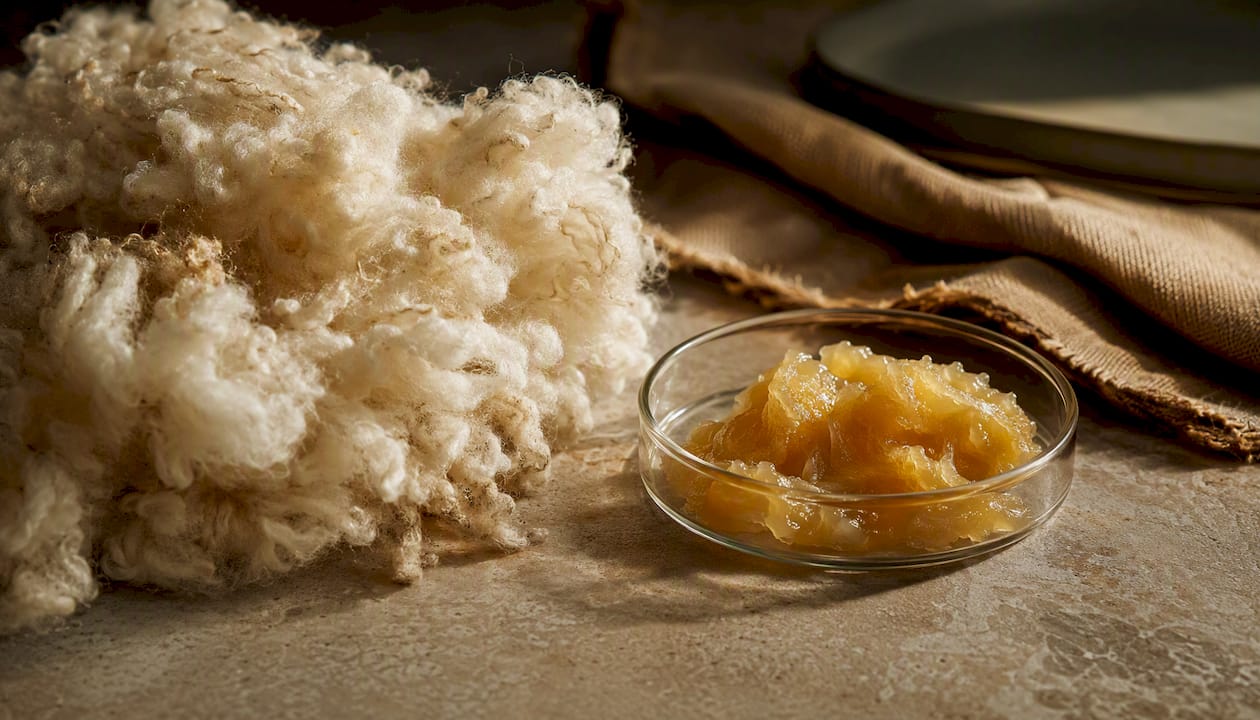
Lanolin is the waxy substance secreted by sheep to waterproof their wool, and once it is refined, it becomes one of the most widely used emollients in skincare. Chemically, it is a complex mix of esters, fatty acids, and alcohols, sometimes labeled as lanolin alcohols. Manufacturers like it because it mimics sebum, holds moisture against the skin, and softens rough or cracked patches better than many synthetic alternatives.
That functional strength is exactly why lanolin allergy skincare has become a real category of concern rather than a niche complaint. Anyone researching lanolin allergy skincare needs to understand that lanolin shows up far beyond the “wool grease” products people expect.
Lanolin turns up in an unusually wide range of everyday products, including moisturizers, lip balms, nipple creams, and medicated ointments marketed for dry, cracked, or irritated skin. Nipple creams for breastfeeding mothers and lip balms for chapped lips are two of the most common accidental exposure routes, since both target already-vulnerable, thin skin.
Because the ingredient goes by so many names, checking a label for the word “lanolin” alone is not enough. Watch for these common aliases:
- Lanolin alcohol or wool alcohols
- Adeps lanae (the pharmaceutical name)
- Amerchol L101 (a lanolin derivative used in many creams)
- Hydrous lanolin or anhydrous lanolin
- Wool wax or wool fat
- Cholesterin (a component sometimes listed separately)
DermNet’s clinical review classifies lanolin as a weak sensitizer overall, meaning it does not provoke reactions easily in healthy, intact skin. The catch is that “weak” does not mean “harmless” once the skin barrier is already damaged, which is precisely the population reaching for lanolin-based ointments in the first place.
What Does a Lanolin Allergy Look Like on Your Skin?
A true lanolin allergy follows a delayed hypersensitivity pattern, known clinically as type IV allergic contact dermatitis. That means the reaction does not appear the moment you apply the product. It typically builds over 48 to 72 hours, sometimes longer, which is exactly why so many people never connect the dots between the balm they used on Tuesday and the rash that shows up Thursday.
The clinical picture usually includes:
- Redness (erythema) that spreads slightly beyond the area of contact
- Persistent itching, often worse at night
- Fine scaling or flaking skin
- Small fluid-filled bumps (vesicles) in more severe cases
- Cracking or fissuring, especially on hands and lips
- Thickened, leathery skin (lichenification) if the exposure is repeated over weeks
Watch for signs the reaction has moved past simple irritation: spreading redness with warmth, pus, fever, or a rash that keeps worsening despite stopping the product. Any of those warrants urgent medical attention rather than home care.
Pro Tip: Location is a clue. Lip reactions point to balms or lipstick, nipple and areola reactions point to nursing creams, hand reactions point to hand cream or work gloves lined with lanolin, and lower-leg reactions in older adults often trace back to medicated leg ointments used for dry skin or wound care.
Sorting allergic contact dermatitis from simple irritant dermatitis matters clinically, because irritant reactions can happen to anyone on first exposure and tend to resolve fast once the product stops. Allergic reactions require prior sensitization, meaning your immune system had to “learn” to react to lanolin at some point before this flare, and they tend to persist or worsen with continued exposure even in small amounts.
The scale of the problem became hard to ignore in 2023, when the American Contact Dermatitis Society named lanolin its Allergen of the Year, a designation reserved for allergens the group believes are underrecognized relative to how often they cause reactions. That call followed a wave of patch-test data suggesting lanolin allergy was more common, and more frequently missed, than dermatologists had assumed for decades.
How Do Dermatologists Diagnose a Lanolin Allergy?
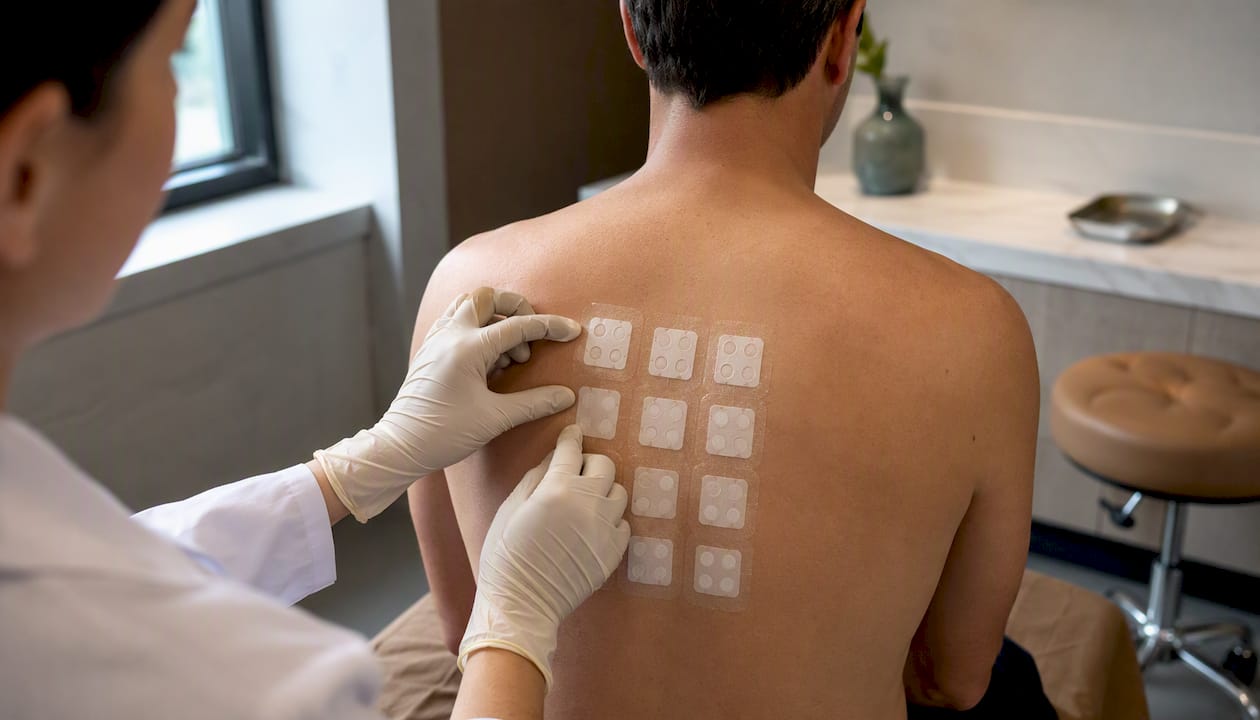
Patch testing is the diagnostic gold standard, and it works by taping small amounts of suspected allergens onto your back for 48 hours, then checking the skin’s reaction at set intervals afterward. For lanolin specifically, dermatologists typically use two different preparations, because they do not always catch the same patients.
- Lanolin alcohol 30% in petrolatum is the standard screening reagent used in most baseline patch-test panels.
- Amerchol L101 50% in petrolatum is a related but chemically distinct lanolin derivative tested separately.
- Bringing your own suspect product for supplemental testing lets the dermatologist test the exact formulation you reacted to, not just a generic lanolin extract.
- If the first round comes back negative but suspicion remains high, extended or repeat testing on a different skin site is often the next step.
Combining lanolin alcohol with Amerchol L101 increases detection rates compared with using either reagent alone, since each one appears to flag a somewhat different subset of sensitized patients. That is a meaningful clinical nuance: a single-reagent test that comes back negative does not fully clear lanolin as a cause.
False negatives are a genuine limitation you should know about going in. Testing on skin that is already inflamed, ulcerated, or actively flaring can suppress the immune response enough to produce a negative result even in someone who is truly allergic. This is particularly relevant if you have stasis dermatitis or a chronic leg wound, since testing directly on damaged skin in that scenario is unreliable, and dermatologists generally prefer to test on healthy, unaffected skin instead, sometimes repeating the test weeks later.
Pro Tip: Before your dermatology appointment, gather every product label from your recent routine, including anything you have stopped using in the past month. Photograph ingredient lists on your phone if you have already thrown the tube away. The more products you can rule in or out at once, the fewer repeat visits you will need.
Who Is Most Likely to React to Lanolin?
The best available epidemiology comes from a large retrospective analysis by the North American Contact Dermatitis Group, which reviewed patch-test results from 43,691 patients tested between 2001 and 2018. Among that group, 3.3% had a positive patch-test reaction to lanolin, and 2.8% were judged “currently relevant,” meaning the reaction was actively contributing to their skin problem at the time of testing, not just a past sensitivity.

That gap between 3.3% and 2.8% matters more than it looks. It tells you the overwhelming majority of people who test positive are dealing with a real, active problem, not an old sensitization sitting dormant.
Certain groups carry disproportionately higher risk:
- People with atopic dermatitis (eczema): an already-compromised skin barrier lets allergens penetrate more easily and triggers sensitization faster.
- People with stasis dermatitis or chronic leg ulcers: repeated, prolonged exposure to medicated ointments on already-damaged lower-leg skin is a classic sensitization setup.
- People with perianal or genital dermatitis: thin, occluded skin plus frequent use of soothing ointments creates similar risk.
- Children: thinner skin and frequent use of diaper creams and lip balms mean earlier, repeated exposure.
- Older adults: age-related skin barrier changes plus higher rates of leg ulcers and chronic wound care put this group at elevated risk too.
Occupational exposure is worth a mention if you work in health care, veterinary medicine, wool processing, or any job involving frequent glove use with lanolin-based hand creams. Repeated low-level exposure at work can sensitize skin over months even without a single dramatic reaction.
What to Do If You Think Lanolin Is Causing a Reaction
Stop the suspect product immediately. That single step matters more than anything else you do next, because continued exposure keeps the immune response active and delays healing regardless of what else you try.
After stopping, keep the care simple:
- Cleanse gently with lukewarm water and a mild, fragrance-free cleanser. Skip hot water, which worsens itching and barrier damage.
- Apply a bland emollient. Plain petrolatum or a short, simple-ingredient balm supports barrier repair without introducing another potential allergen.
- Avoid fragrance, essential oils, and botanical extracts on the affected area while it heals, since inflamed skin reacts more readily to secondary irritants.
- Skip harsh exfoliants or active ingredients like retinoids and acids until the skin has fully calmed. If you are unsure what over-exfoliation looks like, these signs of over-exfoliated skin are worth reviewing, since the recovery approach overlaps significantly.
- Resist the urge to scratch, which can break skin and introduce infection on top of the existing dermatitis.
Prescription topical corticosteroids come into play for reactions that are moderate to severe, widespread, or not settling with avoidance alone. A dermatologist will typically prescribe a mid-potency steroid cream for a limited course, tapering as the skin improves. Seek urgent medical care if you notice spreading redness with fever, pus, or a rash that covers a large body surface area, since those signs suggest infection or a systemic reaction rather than straightforward contact dermatitis.
Pro Tip: Choose fragrance-free over “unscented” when shopping for a recovery moisturizer. The two terms are not interchangeable, and “unscented” products sometimes contain masking fragrances that can still irritate healing skin. The difference between fragrance-free and unscented labels is worth understanding before you restock your medicine cabinet.
Once you stop exposure, most mild to moderate cases resolve within a few days to a couple of weeks. More severe or chronic cases, especially ones involving already-damaged skin like a stasis ulcer, can take longer and may flare again with even trace re-exposure. Factors that slow healing include continued accidental exposure, aggressive scratching, secondary infection, and underlying conditions like eczema that keep the barrier weaker than average.
Lanolin-Free Skincare: Safe Alternatives Worth Trying
Once lanolin is off the table, the good news is that plenty of effective emollients do the same job through a different mechanism. Choosing among them comes down to matching the ingredient to your specific skin need.
| Ingredient type | Best for | Why it works |
|---|---|---|
| Petrolatum | Cracked, chapped, or wound-adjacent skin | Forms an occlusive barrier that locks in existing moisture without penetrating the skin |
| Ceramide-based formulas | Eczema-prone or barrier-damaged skin | Replenishes lipids the skin barrier is naturally missing |
| Glycerin-based moisturizers | General daily hydration | Draws water into the outer skin layer (humectant action) |
| Mineral oil | Sensitive skin needing a lightweight seal | Chemically inert, very low sensitization risk |
| Tallow-based balms | Simple, minimal-ingredient routines | Fatty acid profile close to human sebum, few added ingredients |
For lip care and hand balms specifically, plain petrolatum remains one of the most reliably tolerated options on the market, largely because it has almost no capacity to cause allergic contact dermatitis. If you currently rely on a lanolin-containing lip or hand product, petroleum-free alternatives built around similar occlusive principles are worth a look if you are avoiding petroleum derivatives for other reasons.
When you are shopping for anything new, run it through this checklist before it touches your skin:
- Scan the full ingredient list for lanolin, lanolin alcohol, adeps lanae, wool wax, wool fat, or Amerchol.
- Favor short ingredient lists. A product with five ingredients has five ways to react badly; one with twenty has twenty.
- Skip products loaded with essential oils, plant extracts, or “natural fragrance” blends if your skin is currently inflamed, even though they sound gentler.
- Confirm the product is labeled fragrance-free, not just unscented.
- Patch-test anything new on a small area of intact skin, ideally the inner forearm, for 48 hours before applying it broadly.
If you have a confirmed dermatitis history and want reliable guidance on choosing gentle moisturizers generally, this overview of moisturizers for sensitive skin covers the same minimal-ingredient philosophy in more depth.
How to Home-Test a New Product Before You Trust Your Skin to It
You do not need a dermatology visit to do a basic screening test at home, though it does not replace professional patch testing if your reaction history is serious. Here is the protocol worth following before introducing anything new.
- Pick a healthy test site. Use the inner forearm, not the face, lips, or any area that is currently irritated, cracked, or broken. Testing on damaged skin gives unreliable results and can worsen an existing flare.
- Apply a small amount of the product to a dime-sized area and leave it uncovered.
- Wait the full 48 hours before judging the result. Because lanolin allergy is a delayed reaction, checking after just a few hours will miss most true positives.
- Check again at 72 to 96 hours if the 48-hour mark looks clean, since some reactions take slightly longer to appear.
- Introduce only one new product at a time into your routine, waiting at least a week between additions. This makes it far easier to pin down exactly which product caused a reaction if one shows up later.
- Photograph any reaction at each stage so you have a record to show a dermatologist if the issue persists or recurs.
Following a similarly cautious patch-testing approach before committing to a product is standard advice across the skincare industry, not just for lanolin specifically.
Pro Tip: Never patch-test on broken, weeping, or infected skin. If the area you are worried about is already open or clearly infected, skip home testing entirely and go straight to a dermatologist, since the results at home will not be reliable anyway.
Stop the self-management approach and book a dermatology appointment if a reaction spreads beyond the original site, if you have tried two or more product swaps without improvement, or if the rash is affecting your sleep or daily function. Recurring reactions across multiple unrelated products is also a signal that formal patch testing, not more trial and error, is the right next move.
Authoritative Notes and Publisher Proof Points
This guide draws on peer-reviewed dermatology literature, including the North American Contact Dermatitis Group’s multi-year retrospective analysis and the Cosmetic Ingredient Review’s formal safety assessment of lanolin derivatives, rather than general skincare marketing claims.
Iron Bull Naturals builds its Iron Bull Tallow face balm around exactly three ingredients: grass-fed Alberta tallow, hyaluronic acid, and jojoba oil, a formulation philosophy detailed on the brand’s ingredient page. None of those three ingredients is lanolin or a lanolin derivative.
That said, “simple” and “lanolin-free” are not automatically the same claim for every product on the market. Even minimally formulated balms can contain lanolin derivatives buried under names like Amerchol, so anyone with a confirmed lanolin allergy should still read the full ingredient list on any product, including this one, before applying it.
Why Fewer Ingredients Almost Always Means Fewer Allergy Risks
Every additional ingredient in a skincare formula is another chance for your skin to react badly to something. That is not a marketing line. It is the same logic dermatologists use when they recommend minimal-ingredient products to patients recovering from a confirmed contact allergy, regardless of which specific allergen caused it.
Iron Bull Naturals builds around that principle deliberately, keeping its formulas down to three functional ingredients rather than the fifteen or twenty found in a typical drugstore moisturizer. That approach will not replace a dermatologist’s diagnosis, and it should not try to. Patch testing remains the only way to confirm a lanolin allergy with real confidence, and transparency about what is and is not in a formula matters more than any claim about being “natural” or “clean.”
— Blaine
A Simpler Path to Moisturizing Without the Lanolin Guesswork
If lanolin is off your list, a tallow-based balm with only three ingredients gives you fewer variables to worry about and fewer places for a hidden allergen to hide. Grass-fed tallow’s fatty acid profile sits close to what your own skin already produces, which is part of why it absorbs without the greasy film that heavier lanolin-based ointments can leave behind.

The Iron Bull tallow face moisturizer is built for exactly this situation: dry, irritated, or sensitive skin that needs real hydration without a long ingredient list to scrutinize. If you have a confirmed lanolin allergy, still check the label and patch-test on your forearm for 48 hours before applying it to your face, the same precaution you should take with any new product.
For readers rebuilding a routine from scratch after a reaction, a simple three-step skincare routine removes the extra products that tend to introduce new allergens in the first place. Start with the moisturizer, patch-test it properly, and add the rest of your routine back one product at a time.
Sources
- Lanolin Allergic Reactions: North American Contact Dermatitis Group Experience, 2001 to 2018
- Hypersensitivity to Lanolin: An Old–New Problem
- Safety Assessment of Lanolin-Derived Ingredients as Used in Cosmetics
- Contact reactions to lanolin — DermNet
This article is general information, not a substitute for advice from a qualified doctor. Consult a qualified healthcare professional about your own circumstances before acting on anything here.
FAQ
What skincare products contain lanolin?
Lanolin most commonly appears in moisturizers, lip balms, nipple creams for breastfeeding, and medicated ointments for dry or cracked skin, often listed under names like lanolin alcohol, adeps lanae, or Amerchol.
How can you tell if you’re allergic to lanolin?
The clearest sign is a delayed rash, redness, itching, or scaling appearing 48 to 72 hours after using a lanolin-containing product, confirmed formally through dermatologist patch testing with lanolin alcohol and Amerchol L101.
Can lanolin trigger perioral dermatitis?
Lanolin in lip balms and lip products can cause allergic contact dermatitis around the mouth, and because that area’s skin is thin and frequently occluded, it is one of the more common sites for a lanolin reaction to appear.
Do dermatologists recommend lanolin?
Dermatologists generally consider lanolin safe and effective for most people, but they typically recommend avoiding it for patients with eczema, stasis dermatitis, or a history of contact allergy, and confirming any suspected reaction with formal patch testing before ruling it in or out.


