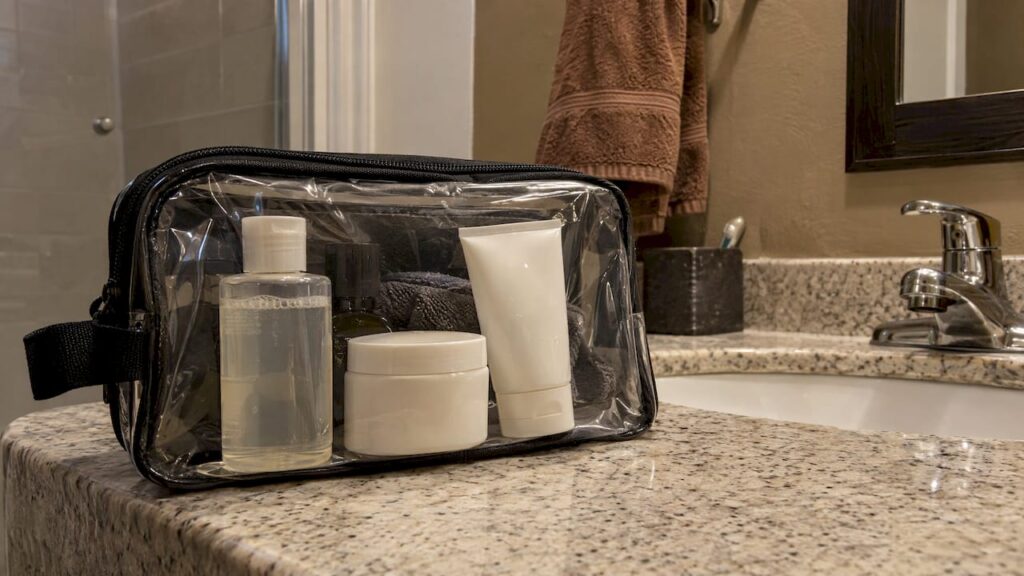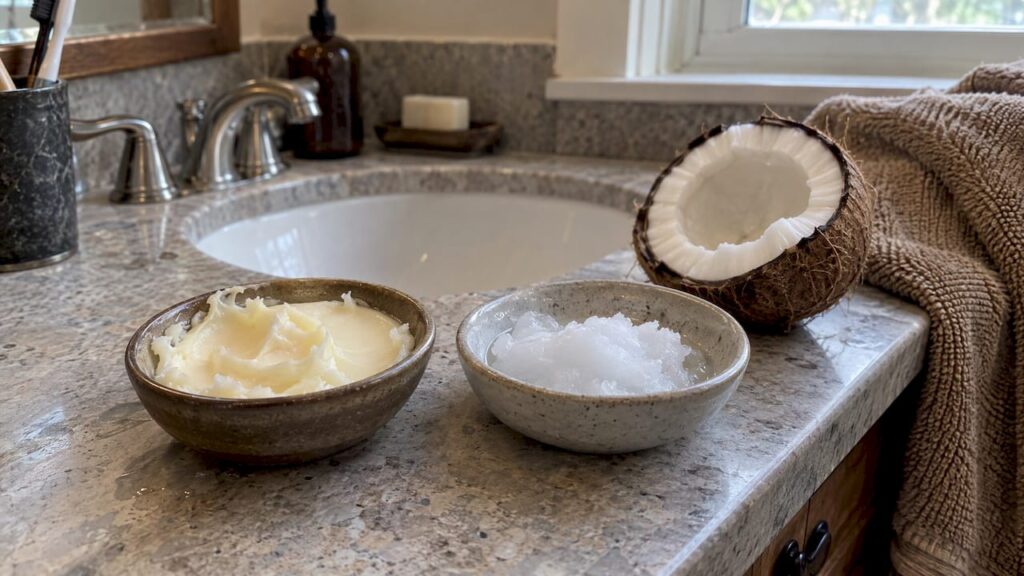


The safest way to shop for a balm without essential oils is to read the full ingredient list, look for the words “fragrance-free” rather than “unscented,” and patch-test before you commit. A short list built on a proven moisturizing base, such as grass-fed tallow, hyaluronic acid and jojoba oil, tells you far more than any front-of-jar claim. That is the approach behind our Iron Bull Beef Tallow Face Moisturizer for Men, which is built on three key ingredients.
This guide explains the label terms, what a balm should actually do for dry or irritated skin, and a simple routine for a busy morning.
TL;DR
- “Fragrance-free” and “unscented” are not the same thing. Dermatologists point dry, sensitive skin toward fragrance-free labels.
- A good balm pairs a coating ingredient that seals moisture in with one that draws water to the skin.
- Short ingredient lists make it easier to know exactly what touches your face.
- Patch-test any new balm on your inner forearm for 7 to 10 days before using it on your face.
- Apply balm right after washing, while skin is still slightly damp.
Table of Contents
- What “essential oil free” actually means on a label
- Why men with dry or irritated skin want a simpler balm
- What a balm needs to do: seal and hydrate
- How to read a balm label in five steps
- Patch-test before you commit
- How to apply a balm so it works
- Ingredients that give sensitive skin trouble
- Our perspective on simple balms
- A simple balm for men who want fewer steps
- FAQ
- Sources
What “essential oil free” actually means on a label
Essential oils are concentrated plant extracts, which McGill University’s Office for Science and Society describes as complex mixtures isolated from plant sources. They are added to balms for scent or for plant-derived properties. A balm marketed as essential oil free simply leaves them out.
That is a narrower promise than it sounds. A product can skip essential oils and still contain a synthetic fragrance, or a masking agent that hides the smell of other ingredients. So the phrase on the front of the jar is only the start. The ingredient list on the back is the real answer.
Unscented versus fragrance-free
These two terms trip up almost everyone:
- Unscented means the product is formulated to have no noticeable smell. According to McGill, it can still contain ingredients whose odor is neutralized by other components.
- Fragrance-free means no ingredient was added to give the product a smell. It may still contain an ingredient that has a natural scent for some other reason.
The American Academy of Dermatology recommends choosing products labeled fragrance-free for dry, sensitive skin, and notes that unscented products can contain chemicals that hide other odors and may irritate.
McGill adds a practical point: someone allergic to lavender, for example, can still react to a product where the lavender smell is masked, and may never realize the allergen is present because the label says “unscented.” The lesson is to trust the ingredient list over the marketing word.
Why men with dry or irritated skin want a simpler balm
If you shave daily, spend time in air conditioning, or work outdoors, your skin barrier takes a beating. Tightness, flaking and redness after shaving are common complaints, and every extra ingredient in a product is one more thing your skin has to tolerate.
Cleveland Clinic advises that if you have sensitive skin or allergies, you should choose a hypoallergenic or sensitive-skin formula with only a few ingredients. The same page notes that emollients (moisturizing creams, balms and ointments) are generally safe, but that some skin products can cause allergic reactions or irritation in some people.
That is why a short, legible formula appeals to the men we make products for: busy professionals who want one step that works, and guys whose skin gets irritated by crowded ingredient lists. You do not need a twelve-step routine. You need a balm you understand.
What a balm needs to do: seal and hydrate
A moisturizer works in two ways, and the best balms combine them. Cleveland Clinic describes two main types of emollient ingredients:
- Occlusives form a coating on top of the skin so it holds onto moisture. Examples include petroleum jelly, mineral oil and lanolin.
- Humectants attract and bind water to the skin. Examples include glycerin and hyaluronic acid.
The full list of emollient types shows why layering both kinds works: one pulls water in, the other keeps it from escaping. If you want a deeper look at how these two groups behave on the body, this guide to how occlusives and humectants work in a moisturizer is a good companion read.
The AAD’s own advice for dry skin is to look for a cream or ointment containing ingredients such as jojoba oil, glycerin, hyaluronic acid, lanolin, petrolatum or shea butter. Notice that hyaluronic acid and jojoba oil both appear on that list. They are also two of the three key ingredients in our face balm.
Where tallow fits
Beef tallow is an old skin-care base that has returned to men’s grooming. Naples Dermatology and Skin Cancer notes that tallow is rich in fatty acids such as oleic and stearic acid that mimic the structure of human sebum, the skin’s own oil, and that grass-fed tallow contains vitamins A, D, E and K. The practical benefit for dry skin is a strong barrier that locks hydration in.
That is the reasoning behind a tallow-based balm. If you want the full background, our guides on beef tallow for skin and what the science says about tallow benefits for the face go further.
How to read a balm label in five steps
Here is the routine to run on any balm, in the store or in your online cart.
- Find the real ingredient list. Skip the front of the jar. The back lists ingredients in descending order of amount. A balm where the first three items are the ones doing the work is a good sign.
- Look for the words “fragrance-free.” As covered above, this is the label dermatologists prefer for dry, sensitive skin. “Unscented” is not an equivalent promise.
- Check for a seal and a hydrator. You want at least one occlusive or fatty base plus a humectant such as hyaluronic acid. A balm with only a wax and no hydrator will feel protective but add little water.
- Count the ingredients. Fewer is easier to evaluate. If you have reacted to something before, a short list lets you spot the culprit quickly.
- Match the feel to your day. A heavy, greasy balm is hard to wear before a meeting. Look for one that absorbs without leaving a slick residue.
Where our balm is concerned, the formula is designed around three key ingredients, all grass-fed and hypoallergenic by our own description, and made to absorb quickly without a greasy feel. That is the kind of short, readable formula this checklist rewards.
Patch-test before you commit
Patch testing is the single most useful habit for anyone with reactive skin. Healthline, summarizing American Academy of Dermatology Association guidance, says to apply a new product to a quarter-sized spot on the inner forearm or elbow twice daily for 7 to 10 days. The long window matters because some allergic reactions are delayed.
The reason is allergic contact dermatitis, an inflammatory skin condition in which the immune system overreacts to an ingredient. A patch test helps predict whether a product is likely to cause a reaction before it reaches your face.
A few practical notes:
- Choose a spot that stays clean and is not rubbed by clothing.
- Stop and rinse the area if you see redness, itching, swelling or burning.
- If a reaction persists or worsens, see a dermatologist rather than guessing which ingredient caused it.
- The same page notes that the FDA does not monitor the purity or quality of essential oils, so the AAD-based advice is to talk with a healthcare professional before using them and to always patch-test first.
How to apply a balm so it works
Technique matters as much as the formula. Cleveland Clinic recommends applying emollients to dry, scaling or irritated skin ideally within three minutes of getting out of a warm shower or bath, after gently patting the skin dry.
For most men that translates to a simple morning or evening routine:
- Wash your face with lukewarm water and a gentle cleanser.
- Pat dry, leaving the skin slightly damp.
- Warm a small amount of balm between your fingertips.
- Press it into your cheeks, forehead and around the jawline, using a little more on dry patches.
- Give it a minute to settle before you dress or leave.
A pea-sized amount is a sensible start for the face. You can add more where skin is tight. If you want the whole routine in three steps, see our simple skincare routine for men and the minimalist skincare guide.
Lips and other sensitive spots
Lips are thinner and more reactive than the rest of the face. The AAD advises applying lip balm or petroleum jelly to keep dry lips hydrated, and switching to a different lip balm if your lips sting or tingle after application. A stinging balm is telling you something, so listen to it.
Ingredients that give sensitive skin trouble
If you are shopping specifically to avoid essential oils, it helps to know why people do. Essential oils naturally contain fragrance compounds such as linalool, limonene, geraniol and citral. A skin-analysis company’s blog notes that these are among the most common causes of contact dermatitis, which is why people with reactive skin often prefer to read labels closely.
Cleveland Clinic’s list of common irritants and allergens to watch for in an emollient includes alcohol, dyes, fragrance, latex and preservatives such as parabens. The point is not that any one of these is a villain. The point is that each is another variable, and you are better served by a formula where you can name every ingredient.
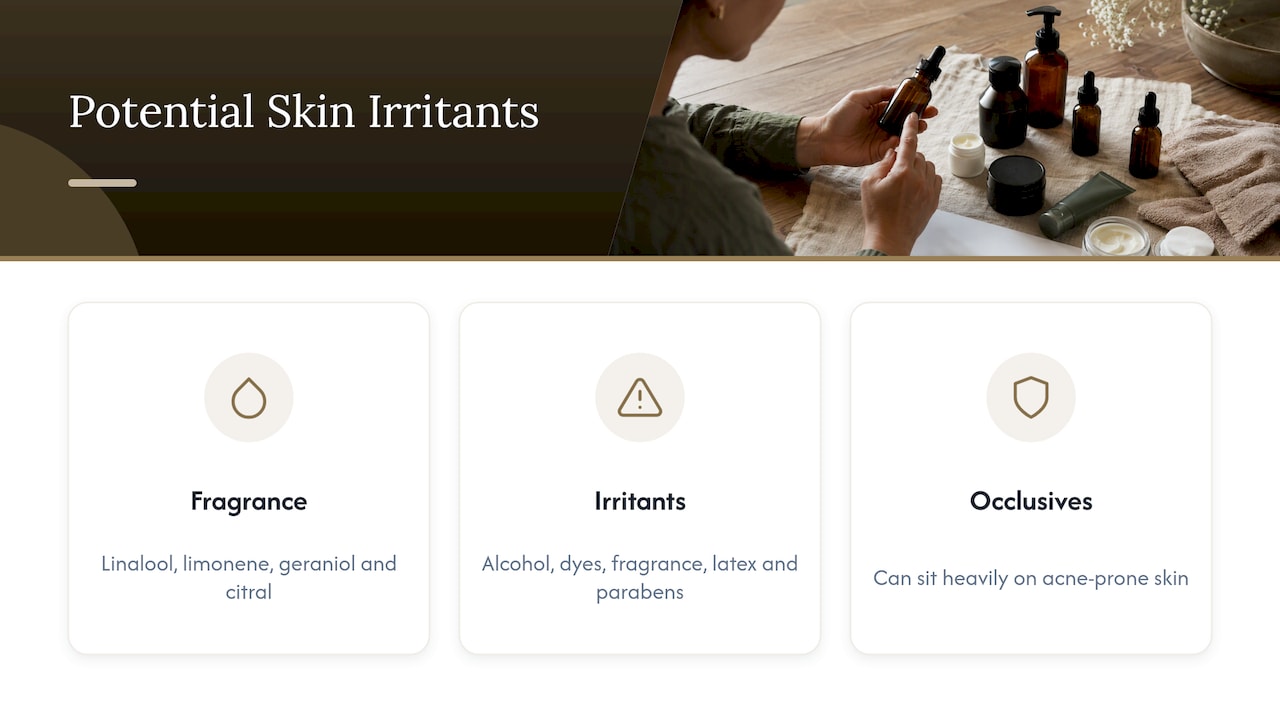
People with acne-prone skin should also keep in mind that occlusive products can sit heavily on skin. Our guide on whether tallow is good for acne walks through what dermatologists say, so you can make a decision that fits your skin.
Our perspective on simple balms
We build skin care for men who do not want to think about it. Most guys are not interested in a shelf of products. They want one balm that stops the tightness after a shave and does not leave their face slick.
That is why Iron Bull Tallow is built on three key ingredients: grass-fed Alberta tallow, hyaluronic acid and jojoba oil. Tallow gives skin a barrier that holds moisture in. Hyaluronic acid draws water to the surface. Jojoba oil rounds out the feel. The result is designed to hydrate and repair without a greasy finish.
Our approach to label reading is the same one we would give a friend: look for a short list, know what each ingredient does, and patch-test. We stand behind our formula with a 60-day money-back guarantee, and our customers tell us they see better hydration and skin texture within weeks of use.
Skin care for men does not need to be complicated. It needs to be honest, simple and consistent.
Blaine
A simple balm for men who want fewer steps
If your skin runs dry or reacts easily and you want a short formula, our Beef Tallow Face Moisturizer for Men is made from grass-fed Alberta tallow with hyaluronic acid and jojoba oil. It is designed for sensitive and all skin types, and to absorb quickly without a greasy residue. For daytime, our Sun Balm follows the same simple philosophy.

You can see both products and the full ingredient lists in the Iron Bull shop. If you want to compare options first, our men’s tallow skincare roundup walks through how to choose. Orders are backed by a 60-day money-back guarantee.
FAQ
Is “unscented” the same as “essential oil free”?
No. Unscented means the product is formulated to have no noticeable smell, but it can contain ingredients that neutralize or hide odors. Essential oil free only tells you that plant essential oils were left out. Read the ingredient list for both.
What does a dermatologist look for in a dry-skin balm?
The AAD suggests a cream or ointment with ingredients such as jojoba oil, glycerin, hyaluronic acid, lanolin, petrolatum or shea butter, labeled fragrance-free. Pairing a sealing ingredient with a hydrating one covers both needs.
How long should I patch-test a new balm?
The American Academy of Dermatology Association recommends testing a quarter-sized spot on the inner forearm or elbow twice daily for 7 to 10 days. This helps catch delayed reactions. If you see redness, itching or swelling, stop using it and see a dermatologist.
When should I put balm on my face?
Apply it soon after washing, ideally within three minutes of leaving a warm shower, while your skin is still slightly damp. Pat dry first rather than rubbing, then press the balm in.
Sources
- McGill Office for Science and Society: the difference between unscented and fragrance-free products
- American Academy of Dermatology: dermatologists’ tips for relieving dry skin
- Cleveland Clinic: emollients, creams, moisturizers and ointments
- Naples Dermatology and Skin Cancer: beef tallow in skincare
- Healthline: how to perform a self skin patch test
- ScanSkinAI: essential oils and sensitive skin