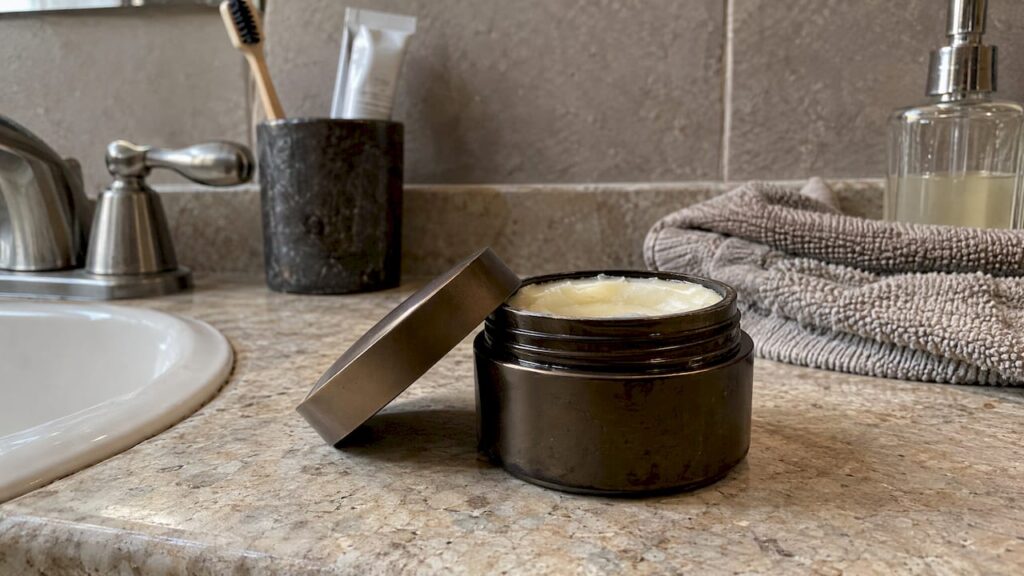


If your face is shiny by noon but feels tight, rough or flaky after you wash it, you are probably dealing with oily, dehydrated skin: plenty of oil, not enough water. The fix is not more scrubbing or stronger cleansers. It is gentle cleansing, water-binding ingredients applied to damp skin, and a moisturizer that seals them in without a greasy finish. That is exactly what our Iron Bull Tallow face balm is built for: grass-fed Alberta tallow with hyaluronic acid, in a formula we designed to hydrate without the greasy feel.
TL;DR
- Oily skin and dehydrated skin are not opposites. Oil is what your skin makes; water is what it holds. You can be short on one while overproducing the other.
- Over-washing, harsh cleansers and alcohol-based products strip skin and can push oil production higher, which makes the cycle worse.
- Skipping moisturizer does not cure shine. Dermatologists say moisturizing after cleansing is still important if your skin is oily.
- Keep it to three steps: gentle cleanse, moisturizer on damp skin, SPF 30+ in the morning.
- Our face balm pairs hyaluronic acid with tallow and is made to absorb fast, with a 60-day money-back guarantee.
Table of Contents
- What oily but dehydrated skin actually is
- Why your skin gets oily and dehydrated at the same time
- The ingredients that matter for oily, dehydrated skin
- A simple routine for men: three steps, under five minutes
- Shaving without wrecking a dehydrated face
- What results to expect
- Why a tallow balm suits men with this skin
- Our perspective
- Try the balm
- FAQ
- Sources
What oily but dehydrated skin actually is
Two words get mixed up here. Oily describes a skin type: your glands make a lot of sebum, the natural oil on your skin. Dehydrated describes a condition: your skin is low on water. Dermatologist Dr. Fricke explains that dry skin is a skin type, while dehydration is a temporary water deficit that can affect any skin type, including oily.
That is why a man can look shiny and still feel tight. The same source says dehydrated skin may look dull, feel tight or rough, and show more pronounced fine lines, flakiness, uneven texture or increased sensitivity.
Men are especially prone to the combination. Skin that is shaved daily, washed hard after the gym and exposed to sun and wind loses water quickly, and a lot of guys respond to shine by washing more. We cover how that backfires below.

How to tell which one you have
Look for this pattern:
- Shine in the T-zone (forehead, nose, chin) within a few hours of washing.
- A tight, stretched feeling after cleansing, even though your face looks oily.
- Rough or flaky patches, often around the cheeks, nose or jawline.
- Fine lines that look deeper than usual, especially at the end of the day or after a flight.
- Stinging when you apply products that never used to bother you.
A quick home check: pinch a little skin on your cheek. If it shows temporary crinkles or fine lines that smooth out when you release it, water is likely low. We walk through this in our pinch test for dry versus dehydrated skin.
If you have persistent redness, scaling that does not clear up, or breakouts that keep coming back, see a board-certified dermatologist. Those can be signs of a condition that needs a diagnosis, not just a better routine.
Why your skin gets oily and dehydrated at the same time
The pattern usually has a cause you can change.
Over-washing and harsh products
The American Academy of Dermatology (AAD) says that a face wash that is too harsh can irritate skin and trigger increased oil production. Regular bar soap is another common culprit: the AAD notes it often contains ingredients harsh enough to be drying. Dr. Fricke adds that cleansing more than twice a day or using harsh, foaming products can strip the lipids and proteins that keep the barrier strong.
The strip-and-rebound cycle
Alcohol-based toners and astringents feel like they are working because the shine disappears. A dermatologist quoted by Reviewed explains that constantly stripping skin with alcohol-based toners revs up oil production, while keeping skin properly moisturized can help calm excess oil, because a healthy barrier needs both water and oil in balance. Your skin is not misbehaving. It is compensating.
Environment, habits and health
Wind, cold, dry indoor air and not drinking enough water all contribute to dehydration, according to the same Reviewed piece. Curology adds that medical conditions, diet and some medications can play a role too. If your skin changed suddenly after starting a new medication, mention it to your doctor or pharmacist rather than guessing.
Skipping moisturizer
Men’s Health’s dermatologist-reviewed routine notes that skipping moisturizer can leave skin greasier over the day as oil glands work overtime. The AAD is direct about it: even with oily skin, apply moisturizer after cleansing to keep skin hydrated.
The ingredients that matter for oily, dehydrated skin
Dehydration is a water problem, so the first job is bringing water in and holding it there. Think in three groups:
| Job | Ingredient types | What they do |
|---|---|---|
| Draw water in | Humectants: hyaluronic acid, glycerin, panthenol | Pull water into the skin. Dr. Fricke names these as the ingredients dehydrated skin benefits from. |
| Soften | Emollients | Smooth rough, flaky texture. |
| Seal | Occlusives | Slow water loss so the hydration stays put. |
Dr. Fricke’s golden rule for layering is light to heavy: a humectant first, then a moisturizer that seals it in, then sunscreen in the morning. Our guide to layering humectants and occlusives breaks the order down for men.
What tends to irritate
- Alcohol-based toners and aftershaves that strip the skin.
- Scrubs and over-exfoliation. Strong acids and scrubs can cause redness, irritation and increased water loss, per Dr. Fricke.
- Fragrance. The AAD warns that products labeled unscented can still contain masking fragrances that irritate.
- Hot water. The AAD recommends lukewarm water for cleansing.
When you add a new product, add one at a time and test it on a small area first. If you are curious about hyaluronic acid specifically, we explain what it does for men’s skin and how to layer it in the right order.
A simple routine for men: three steps, under five minutes
The Cleveland Clinic’s simplest men’s routine is cleanse, moisturize and protect. That is all an oily, dehydrated face needs, and it suits a busy morning. Our 3-step routine for dehydrated skin follows the same logic.
Step 1: Cleanse gently
Wash once in the morning and once before bed, plus after workouts or heavy sweating, with a mild cleanser and lukewarm water. The AAD says to avoid scrubbing. Pat your face, do not rub.
Where it goes wrong: washing a third or fourth time because of midday shine. That is the strip-and-rebound cycle. If your face looks shiny at 2 p.m., blot it or rinse with water.
Step 2: Moisturize while your skin is still damp
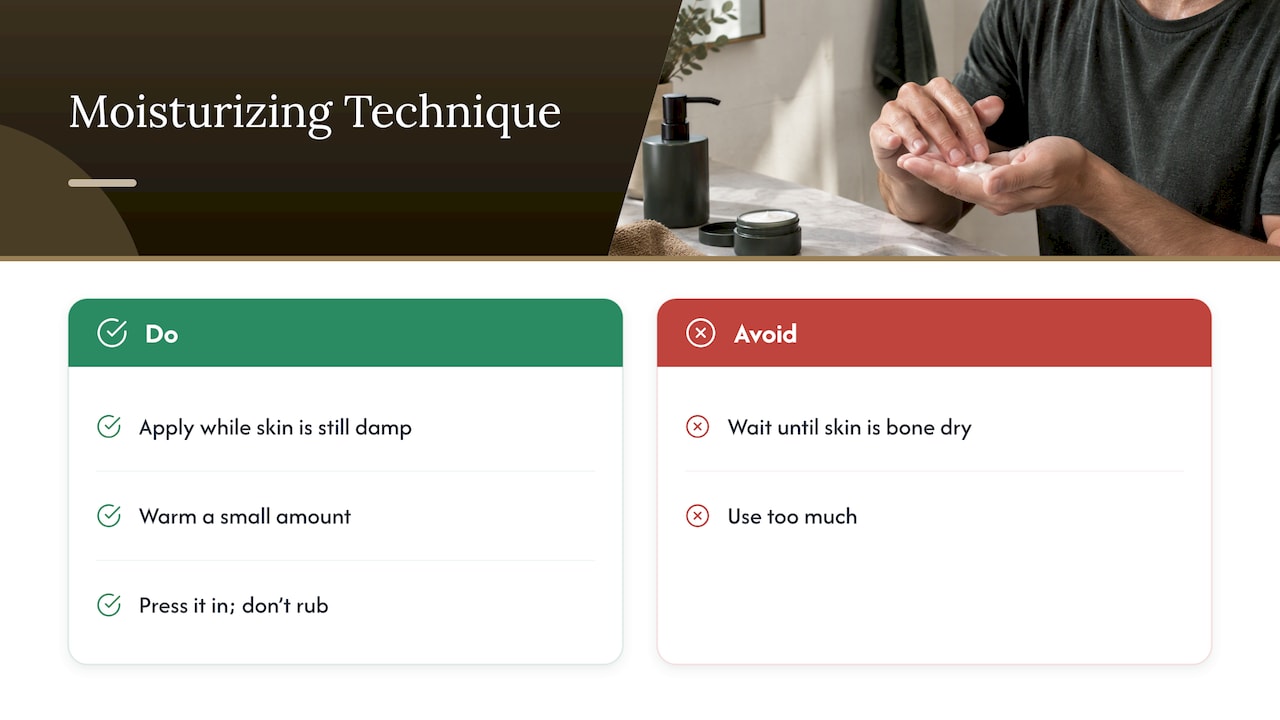
This is the step that matters most for dehydration. Dr. Thosani, quoted by Men’s Health, notes that damp skin is about 10 times more permeable than dry skin, so applying product right after washing maximizes absorption. The Cleveland Clinic also advises moisturizing while skin is still damp to replenish the lipid barrier. We cover the technique in applying moisturizer to damp skin.
This is where our balm earns its place. Iron Bull Tallow combines hyaluronic acid, a humectant that dermatologists name for dehydrated skin, with grass-fed Alberta tallow and jojoba oil. It is made to absorb quickly and leave no greasy residue, so you can put it on right after the towel and go. Warm a small amount between your fingertips and press it in, rather than rubbing, to keep the finish light. The formula uses three key ingredients, is non-toxic and hypoallergenic, and suits sensitive skin as well as all other skin types.
Where it goes wrong with any moisturizer: waiting until the face is bone dry, or using too much. Start small and add only if skin still feels tight.
Step 3: Protect with SPF 30 or higher
The AAD recommends broad-spectrum SPF 30 or higher every day, reapplied every two hours or right after swimming or sweating, and covering the scalp, ears, neck and lips. A sun-damaged barrier loses water faster, so sunscreen is part of hydration, not an extra. Our Sun Balm is a mineral sun balm with zinc oxide, made for the face. You can read how it compares in our piece on sun balm versus sunscreen.
The evening version
At night, cleanse, then moisturize on damp skin. Curology’s dermatology-provider routine adds an optional treatment step such as hyaluronic acid, glycerin or niacinamide before moisturizer. If you want a broader view of building a gentle skincare ritual for tight, rough skin, this skincare routine guide for dry-feeling skin lays out the steps clearly.
Shaving without wrecking a dehydrated face
Shaving is a daily source of irritation and water loss. The AAD’s tips for men prone to razor bumps, burns or ingrown hairs, from its skin care tips for men:
- Use a single- or double-blade razor instead of a multi-blade.
- Do not stretch your skin taut.
- Wet your skin and hair first to soften them.
- Use a moisturizing shaving cream and shave in the direction of hair growth.
- Rinse after each swipe and change the blade after five to seven shaves.
- Apply moisturizer right after, while skin is still damp.
After-shave is where our balm fits naturally. Our irritation-relief face balm page explains how three ingredients can keep a post-shave routine simple.
What results to expect
Dehydration is largely temporary. Lab Muffin Beauty Science notes it can be reversed in a few hours, though some skin holds water poorly and dehydrates more easily when conditions change. So expect your skin to feel more comfortable quickly, and give a consistent routine a few weeks to show in texture. Customers tell us they see improvements in hydration and skin texture within weeks of use.
Two habits speed it up: moisturize twice a day, and stop the things that strip your skin. If your skin is also acne-prone, the AAD suggests mineral sunscreens with zinc oxide or titanium dioxide, and that is another reason a zinc-based sun balm suits a man with oily skin.
Why a tallow balm suits men with this skin
Most advice for oily skin focuses on removing oil. But the tight-and-shiny pattern is a barrier problem, and tallow is close in makeup to the lipids skin makes for itself. We explain that in what the science says about tallow benefits for the face. In our balm, tallow works alongside hyaluronic acid so the water-drawing and the sealing happen in one step. That is how a man with a busy morning gets a one-product routine.
If you want more on the product category, our guide to beef tallow for skin covers uses and what to look for on a label.
Our perspective
We make skincare for men who do not want a twelve-step routine. When a guy tells us his face is shiny and tight at the same time, the first thing we say is to stop fighting it. Skin that is being scrubbed, stripped and toned all day is skin that makes more oil to defend itself.
Our answer is deliberately simple. Three key ingredients, non-toxic and hypoallergenic: grass-fed Alberta tallow, hyaluronic acid and jojoba oil. The hyaluronic acid brings water in, the tallow and jojoba help hold it there, and the balm is made to absorb fast without the greasy feel that puts men off moisturizer in the first place.
Put it on damp skin after a gentle wash, add sun protection in the morning, and let it work for a few weeks. That is the whole routine, and it is one you will actually keep doing.
Blaine
Try the balm
Iron Bull Tallow is our face balm for men with dry, irritated or dehydrated skin: grass-fed Alberta tallow, hyaluronic acid and jojoba oil, made without a greasy finish. It comes with a 60-day money-back guarantee. Pair it with our Sun Balm for the morning and you have the full three-step routine covered.

See both in the Iron Bull Naturals shop.
FAQ
Can oily skin really be dehydrated?
Yes. Oil and water are separate things. The AAD says that even with oily skin you should moisturize after cleansing to keep skin hydrated. Dehydration can affect every skin type, which is why oily skin can look shiny and still feel tight.
Do men need moisturizer if their skin is oily?
Yes. Dermatologists at MDCS Dermatology explain that sebum and moisture are different things, and that dehydrated skin may produce more oil to compensate. Moisturizing twice a day, right after cleansing, helps break that cycle.
How often should I wash my face?
The AAD advises cleansing up to twice daily and after sweating, using a mild cleanser and lukewarm water. More often than that can irritate skin and push oil production up.
Does oily skin mean more testosterone?
Androgens, hormones that are higher in men on average, do stimulate oil glands, which is part of why men’s skin tends to be oilier. But how oily your skin is depends on genetics, environment and skincare habits too. If you have concerns about hormones, talk to your doctor.
How long until I notice a difference?
A moisturizer on damp skin can make skin feel more comfortable the same day, since dehydration is largely temporary. Texture changes typically take a few weeks of consistent use, and our customers report visible improvements in that window.
Sources
- The Dermatologist’s Guide to Hydrated, Healthy Skin, Alamo Heights Dermatology
- How to control oily skin, American Academy of Dermatology
- Skin care tips for men, American Academy of Dermatology
- The real reason you need to moisturize oily skin, Reviewed
- Skincare Routine for Oily Skin: A Dermatologist’s Guide, Men’s Health
- Skin Care for Men: Routines, Products and Tips, Cleveland Clinic
- The Importance of Moisturizing, MDCS Dermatology
- Skincare pelle secca, Lunezia Cosmetics