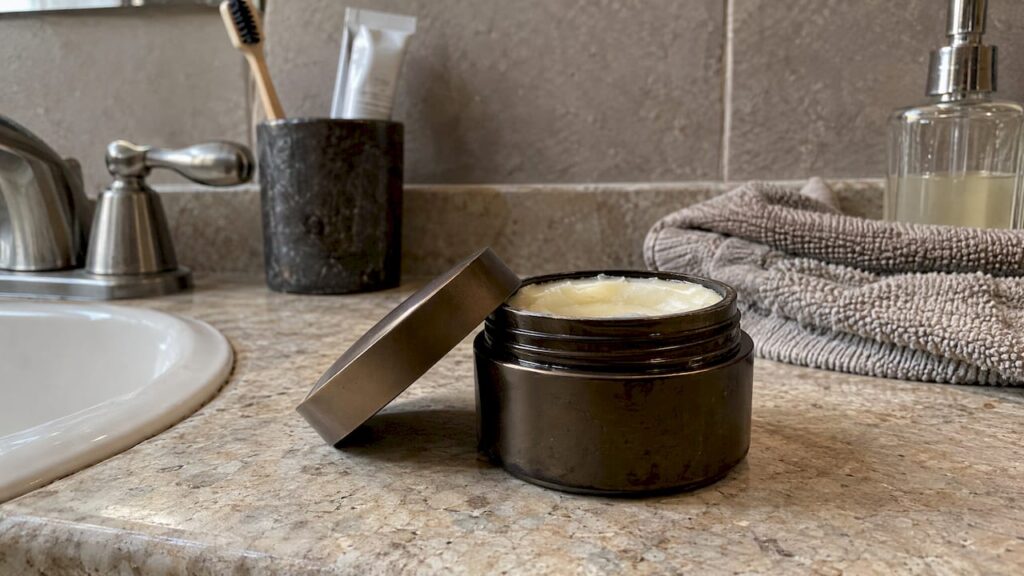


Most face irritation in men comes from a short list of causes: shaving, harsh or heavily scented products, a reaction to something that touched the skin, or a common inflammatory condition such as seborrheic dermatitis or rosacea. Start by stopping whatever is new, washing gently, and keeping the skin moisturized. If the redness or itch will not go away or keeps coming back, see a dermatologist, because several of these conditions look alike and need different treatment.
This guide walks through what is likely behind your irritation, how to calm it at home, how to patch-test anything new, and which symptoms mean you should not wait.
TL;DR
- Common culprits are shaving, contact dermatitis, seborrheic dermatitis, rosacea and eczema. They can look very similar, so a persistent rash deserves a proper diagnosis.
- To calm a reaction, wash off the product, use a cool compress, stop using whatever triggered it and keep your routine minimal.
- Shave on wet skin, with the grain, with a fresh blade and a moisturizing shave cream, then moisturize afterward.
- Natural or “unscented” does not guarantee a product is gentle for you. Patch-test anything new before it goes on your whole face.
- Trouble breathing or swallowing, or swelling of the eyes or lips, is an emergency. A painful rash on the face needs prompt medical care.
Table of Contents
- What is causing your face irritation?
- Quick guide: what does your irritation look like?
- How to calm an irritated face
- Shaving without the sting
- Can natural or fragrance-free products still irritate you?
- A perspective from us
- Where a simple balm fits
- Ready to try a simpler routine?
- When to see a doctor
- A realistic two-week plan
- FAQ
- Sources
What is causing your face irritation?
The American Academy of Dermatology lists many reasons a face turns red or irritated: seborrheic dermatitis, rosacea, contact dermatitis (irritant or allergic), medication reactions, atopic dermatitis (eczema), psoriasis, spider veins, shingles and lupus. That range is exactly why guessing is risky. The same red patch can be a harmless reaction to a new aftershave or the first sign of something that needs a prescription.
For most men, the day-to-day triggers fall into four groups.
Shaving and friction
Male facial skin has terminal hair, higher oil production and more sweat than most skin-care research assumes, which makes it a distinct skin-care challenge. The same paper notes that razor burn and pseudofolliculitis barbae (ingrown hairs) are common, and that poor technique, inferior products and a lack of regular skin care can weaken the skin barrier.
Dermatologist Dr. Christopher Bunick explains to Yale Medicine that shaving-related irritant contact dermatitis often comes from mechanical friction: a dull razor or shaving too closely. Chemical exposure from some shaving creams and gels can add to the problem.

If razor bumps are your main issue, our guide to stopping razor burn and our page on ingrown hairs in the beard go deeper.
Products that strip or sensitize
Contact dermatitis is a rash that appears when your skin touches or reacts to a substance. It comes in two forms. Irritant dermatitis is direct damage to the skin barrier from things like soaps, alcohol-heavy products, friction or chemicals. Allergic dermatitis is an immune reaction to a specific ingredient.
A published review of allergic contact dermatitis from men’s personal care products found the five most common allergens were para-phenylenediamine, minoxidil, musk ambrette, methylisothiazolinone and cocamidopropyl betaine. You will not see most of those names on a bar of soap, but they turn up in hair dyes, hair-growth products and cleansers, which men often use close to the face.
The practical takeaway: if irritation started within days of a new product, that product is the first suspect.
Beard-related irritation
A beard can trap dead skin cells, oil and moisture. Dr. Vij at the Cleveland Clinic notes that this mix creates an environment where bacteria and yeast can multiply, leading to itch and irritation. If your problem is flaking under the beard, see our page on beard dandruff. If it is a rash around the mouth and chin, read about perioral dermatitis in men.
Underlying skin conditions
Three conditions cause most chronic facial irritation in men:
- Seborrheic dermatitis: red, oily or scaly patches, often around the nose, eyebrows and hairline.
- Atopic dermatitis (eczema): skin that tends to be extremely dry, scaly and itchy.
- Rosacea: persistent redness, often across the cheeks and nose. You can read more about rosacea symptoms, causes and treatment if redness is your main complaint.
The AAD points out that these conditions can look similar and that getting the right diagnosis is essential. For seborrheic dermatitis in particular, a board-certified dermatologist typically builds a tailored treatment plan.
Quick guide: what does your irritation look like?
This table is a starting point for the conversation with your doctor, not a diagnosis.
| What you notice | Common suspects | What to do first |
|---|---|---|
| Burning, red bumps right after shaving | Razor irritation, ingrown hairs | Fresh blade, shave with the grain, moisturize after |
| Itchy red rash that appeared after a new product | Irritant or allergic contact dermatitis | Wash it off, stop the product, cool compress |
| Oily, scaly, red patches near nose, brows or beard | Seborrheic dermatitis | See a dermatologist for a plan |
| Very dry, scaly, itchy skin | Eczema or simply dry skin | Gentle cleanser, moisturizer, see a doctor if it persists |
| Persistent redness across cheeks and nose | Rosacea | Get a diagnosis before treating |
| Small red bumps around mouth and chin | Perioral dermatitis and others | Simplify routine, get it checked |
How to calm an irritated face
The AAD’s advice for a skin reaction is simple: wash the product off, use a cool compress or petroleum jelly if needed, and do not use that product again. Build on that with a stripped-down routine for a week or two.
- Stop the newest thing first. New cleanser, aftershave, shave gel, sunscreen, beard oil. If you added several at once, pause all of them except a gentle cleanser and moisturizer.
- Wash with lukewarm water. Hot water and scrubbing add friction to skin that is already inflamed.
- Pat dry, do not rub.
- Moisturize while the skin is still slightly damp. A barrier-supporting moisturizer helps replace what irritation has stripped.
- Skip alcohol-heavy aftershaves and strongly scented products. Grooming habits that rely on strong soaps, alcohol-based aftershaves and heavy fragrance can strip natural oils.
- Give it time, but not unlimited time. If it is not improving, or it returns every time you restart your routine, get it looked at.
For dry, tight, flaky skin specifically, our dry and flaky skin routine lays out the steps, and the pinch test for dry versus dehydrated skin helps you work out what your skin actually lacks.
Shaving without the sting
Shaving is the most common daily trigger, and the fixes are cheap. The AAD recommends that men wet the skin and hair before shaving to soften them, use a moisturizing shaving cream, shave with the grain and replace blades every five to seven shaves.
A few things we would add from the research above:
- Avoid going over the same patch again and again. Each pass is more friction.
- Do not chase the closest possible shave. Shaving too close is a named cause of irritant dermatitis.
- Finish with something soothing rather than an alcohol splash. A natural aftershave balm is one option, since it conditions the skin instead of stinging it.
Can natural or fragrance-free products still irritate you?
Yes. “Natural” is a marketing word, not a safety rating. Plant oils, essential oils and botanical extracts can trigger reactions in some people, and so can synthetic ingredients. Your skin reacts to specific molecules, not to a label.
Two AAD points help when you shop. First, for men with sensitive skin, dermatologists recommend fragrance-free products and caution that products labeled “unscented” may contain masking fragrances. Check the ingredient list, not only the front of the bottle. Second, the AAD publishes guidance on how to test skin care products before using them widely.
A simple patch-test routine
This is a practical way to apply that advice to any new product, including ours:
- Choose a small area, such as the side of your neck or just along your jaw.
- Apply a thin layer of the product once or twice a day for several days.
- Watch for redness, itching, burning or bumps.
- If anything appears, wash the product off, use a cool compress, and do not use it again.
- If the area stays clear, introduce the product to your full face. Add only one new product at a time so you know which one is responsible.
Our page on hyaluronic acid side effects and patch testing covers the same idea for a common moisturizer ingredient.
A perspective from us
Most men who write to us have the same story. They tried five products, got a red, tight face, and kept layering more on top. The advice we give is the opposite: do less, and make what you keep count.
That is the thinking behind Iron Bull Tallow. Our balm is made with grass-fed Alberta tallow and hyaluronic acid, built around a short ingredient list instead of a long one, because fewer ingredients means fewer things for your skin to react to and an easier job tracing the cause if something does. Our formula is designed to hydrate and support the skin barrier without the greasy feel that makes many men skip moisturizer altogether.
We still tell everyone the same thing: patch-test first, one product at a time, and see a dermatologist if a rash will not clear. A good balm is part of a calm routine, not a replacement for a diagnosis.
Blaine
Where a simple balm fits
If your irritation is the dry, tight, post-shave kind, a gentle moisturizer is often the most useful thing on your shelf. Our guides to choosing a sensitive skin balm and relieving an itchy face with a minimal balm explain what to look for. If you are curious about the main ingredient, what tallow does for facial skin is a good place to start.
If you spend time outdoors, remember that sun exposure can aggravate already irritated skin. Our guide to sun balm versus sunscreen covers daytime protection.
Ready to try a simpler routine?
Iron Bull Tallow is our grass-fed Alberta tallow face balm with hyaluronic acid, made for men who want hydration without a greasy finish and without a ten-step routine. Our Sun Balm covers daytime protection in the same minimalist spirit. Every order is backed by our 60-day money-back guarantee, and we suggest the patch test above before you put it on your whole face.

Shop Iron Bull Naturals or read our guide to face balm for irritated skin first.
When to see a doctor
Home care is for mild, short-lived irritation. Get professional help in these situations.
Book a dermatologist visit if:
- You cannot get rid of an itchy rash, or it keeps returning. The AAD says to see a dermatologist in exactly that case.
- You have persistent redness, scaling or oily patches that do not respond to a simpler routine, since these may be seborrheic dermatitis, rosacea or eczema.
- You are not sure whether a reaction is a product allergy.
Seek care quickly if:
- You have a painful rash on the face. The AAD warns that a shingles rash on the face needs treatment because untreated, it can permanently damage eyesight.
Go to emergency care immediately if:
- You have trouble breathing or swallowing, or swelling of the eyes or lips. The AAD lists these as signs that need immediate emergency care.
If a dermatologist is hard to reach, an online consultation can be a first step for a persistent rash, but a skin condition that spreads, blisters or hurts should be seen in person.
A realistic two-week plan
If your irritation is mild and you have no warning signs, this is a sensible way to reset:
Days 1 to 3. Stop everything except a gentle cleanser and a simple moisturizer. Do not shave unless you must; if you must, use a fresh blade, wet skin and short strokes with the grain.

Days 4 to 7. If the skin is calmer, keep the routine the same. This is the right time to patch-test one new product, such as a balm, on your jaw or neck.
Days 8 to 14. Introduce that product to your whole face if the test area stayed clear. Bring back other items one at a time, several days apart.
If at any point you see worsening redness, blisters, or spreading, stop and call a doctor. And if you are back to the same rash after two weeks of simplicity, book that dermatology visit rather than trying yet another product.
FAQ
What are the most common causes of facial rashes in men?
The AAD lists seborrheic dermatitis, rosacea, contact dermatitis, eczema, psoriasis, medication reactions and others. In daily life, shaving and new grooming products are the usual suspects. Because the conditions look alike, a rash that persists should be checked by a dermatologist.
How do I calm my irritated face?
Wash off the product that caused the reaction, use a cool compress, and stop using it. Keep your routine to a gentle cleanser and a simple moisturizer until the skin settles. If the rash will not clear or returns, see a dermatologist.
Can a natural product make face irritation worse?
Yes, because any ingredient, natural or synthetic, can cause a reaction in some people. Dermatologists suggest fragrance-free products for sensitive skin and warn that “unscented” can still contain masking fragrance. Patch-test any new product on a small area before using it on your face.
Should I stop shaving when my face is irritated?
If you can, give your skin a few days off. If you cannot, shave on wet skin with a moisturizing shave cream, go with the grain, avoid shaving too close and use a fresh blade. Dermatologists suggest replacing blades every five to seven shaves.
Sources
- American Academy of Dermatology: 10 reasons your face is red
- American Academy of Dermatology: Skin care tips for men
- American Academy of Dermatology: How to test skin care products
- American Academy of Dermatology: Itchy rash could be contact dermatitis
- American Academy of Dermatology: Rash 101 in adults
- Yale Medicine: Itchiness, acne and skin irritation
- Cleveland Clinic: What may be causing your itchy beard?
- PubMed: Allergic contact dermatitis associated with men’s personal care products
- Male skin and ingredients relevant to male skin care
- Rosacea symptoms, causes and treatment