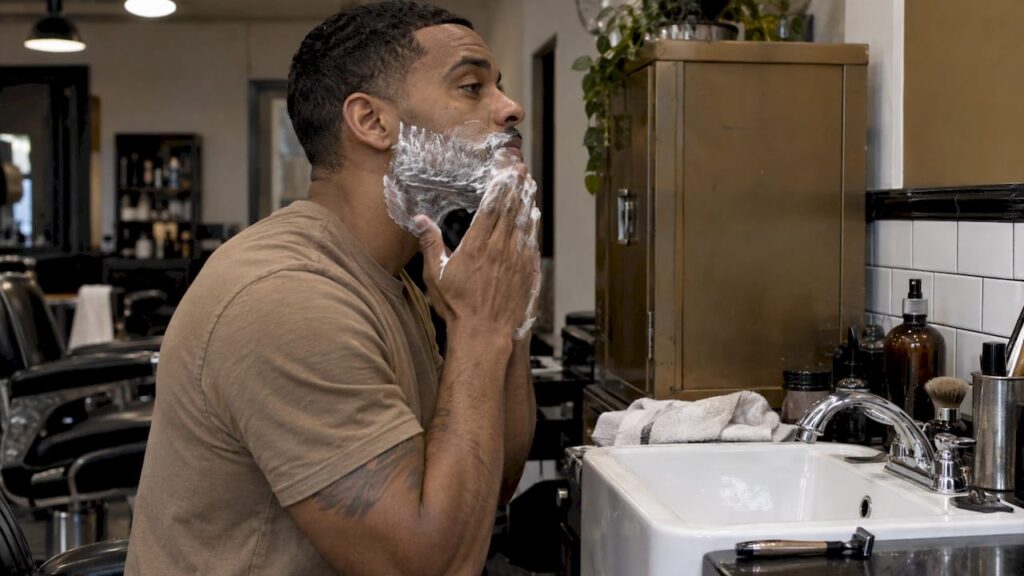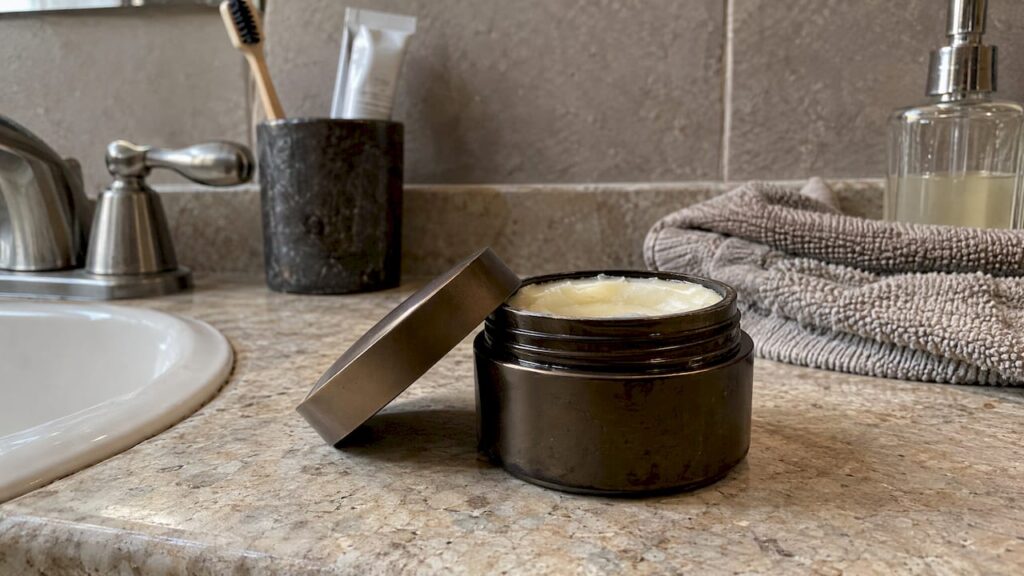

A pre-shave face balm is a thin layer of moisture you put on clean, damp skin before shaving cream. It hydrates the skin and hair so the blade slides instead of grabbing, which is where most razor burn starts. If your face is dry, tight or red after shaving, a balm with a short, simple ingredient list is the easiest upgrade you can make. Our beef tallow face moisturizer for men is a grass-fed Alberta tallow balm with hyaluronic acid, made for exactly this kind of daily, no-fuss routine.
TL;DR
- A pre-shave balm adds hydration and slip before the razor touches your face, which cuts friction, the main driver of razor burn.
- It goes on after cleansing and patting dry, before shaving cream, and works best when the skin is still slightly damp.
- Look for a short ingredient list built on emollients and humectants such as jojoba oil and hyaluronic acid, and avoid alcohol-heavy formulas.
- Shave right after a warm shower, with the grain, and change the blade every five to seven shaves.
- Finish with a moisturizing balm, not an alcohol splash.
Table of Contents
- What a pre-shave face balm actually does
- Why prep matters more if your skin runs dry
- What to look for in the formula
- The pre-shave routine, step by step
- A worked example: a 5-minute weekday morning
- Who gets the most from a pre-shave balm
- Our view on pre-shave balm
- Make it part of your routine
- FAQ
- Sources
What a pre-shave face balm actually does
Three products get confused here, and each has one job.
Pre-shave balm or oil is preparation. A peer-reviewed review by dermatologist Z. Draelos explains that pre-shave steps prepare the beard hair and skin to reduce friction and help the razor get a close shave. The same review notes that if the razor catches on debris, poorly hydrated hairs or dry skin, the risk of razor burn and barrier damage goes up.
Shaving cream or gel is the lubricant that sits between the blade and your skin during the stroke. It is not a moisturizer and it rinses away.
Aftershave balm is recovery. Post-shave products with glycerin and emollients help minimize razor-related problems and restore the skin barrier.
A balm can do double duty. The same hydrating layer that preps your skin in the morning is the one that calms it afterward, which is why many men with a minimal routine keep one balm on the sink and use it on both sides of the razor.

Why prep matters more if your skin runs dry
Dry skin is rougher and less flexible, so the razor drags. Hairs that are not hydrated are stiffer and cut less cleanly. Jefferson Health dermatologist Dr. Jones says moisturizing before shaving can significantly reduce irritation, especially on sensitive skin.
A New York City master barber quoted in a 2025 New York Times guide says the real benefit of pre-shave oil is hydration: the oils soften skin and hair to minimize irritation, redness and microcuts. The same guide suggests looking for humectants such as glycerin, which pull water into the skin.
There is also a barrier issue. Yale Medicine dermatologist Christopher Bunick explains that chemicals and fragrances in shave creams, gels and pre-shave lotions can increase skin sensitivity by breaking down the skin’s outer barrier. A balm that keeps the barrier supplied with lipids and water gives you a cushion against that.
If you shave daily, those small frictions add up. Redness along the jaw, bumps on the neck and a stinging cheek are all signs the skin is paying for each pass. Our guides on stopping razor burn and beard line irritation go deeper on those problems.
What to look for in the formula
You do not need a long label. The American Academy of Dermatology’s dry-skin guidance lists jojoba oil, glycerin, hyaluronic acid, lanolin, shea butter and petrolatum among effective moisturizer ingredients, and tells people with dry skin to avoid alcohol and retinoids around shaving.
Use that as a checklist:
| What to look for | Why it helps before a shave |
|---|---|
| Emollient oils or fats (jojoba, tallow, shea) | Soften the hair and fill in the gaps between skin cells so the razor glides |
| Humectants (hyaluronic acid, glycerin) | Draw water into the skin and keep hair hydrated |
| Short ingredient list | Fewer things that can irritate freshly shaved skin |
| Non-greasy finish | Lets shaving cream spread evenly instead of sliding off a slick surface |
| No alcohol-heavy base | Alcohol dries skin, the opposite of what you want before a blade |
Jefferson Health’s Dr. Jones recommends an unscented, water- and alcohol-free moisturizer before shaving, paired with an oil-free shaving cream. A water-free balm fits that description naturally, because there is no water phase to carry preservatives.
If you break out easily, keep oils light. Acne.org suggests jojoba as a good pre-shave choice and says other oils should be labeled non-comedogenic, meaning they are formulated not to clog pores.
The pre-shave routine, step by step
Here is the sequence, with where each step tends to go wrong.
1. Shave after a warm shower
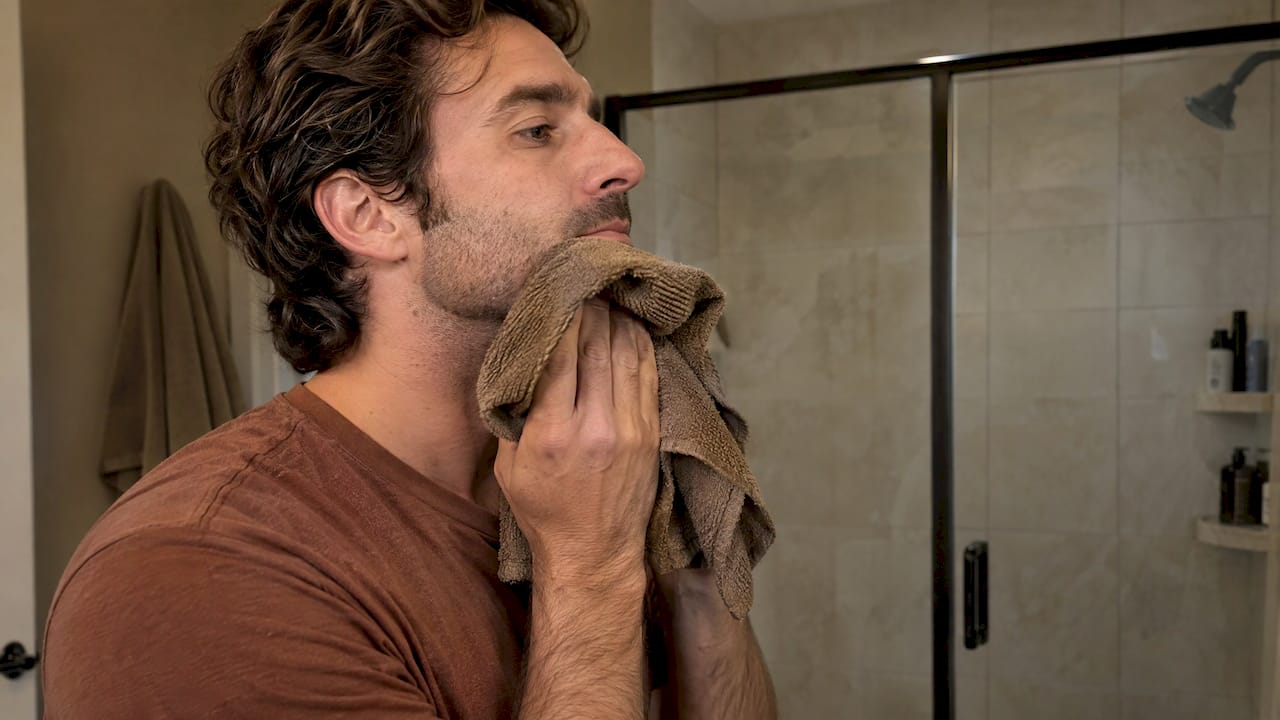
The AAD says to shave at the end of a shower or bath when water has softened skin and hair. If you can’t shower first, its razor-bump guidance suggests holding a warm, damp washcloth to the area until the hair is soft. Taking a minute to prepare your skin with a warm shower also makes the next step easier, because skin that is warm and hydrated takes up a balm more evenly. The common mistake is shaving first thing with cold water on dry stubble.
2. Cleanse gently
Wash with a non-comedogenic cleanser, as AAD razor-bump guidance advises. Skip scrubs and chemical exfoliants in the hours around a shave: dermatologist Corey Hartman tells the New York Times that shaving is already exfoliating. Stacking a scrub on top is a classic cause of stinging.
3. Pat dry, leave a little moisture
Pat, don’t rub. Jefferson Health’s advice is to apply moisturizer while skin is damp, which holds water in the skin. Soaking wet skin dilutes the balm and makes it patchy.
4. Warm a small amount of balm and massage it in
A pea-sized amount is enough for most faces; a full beard may need a bit more. Acne.org’s pre-shave oil guidance is to massage very gently, against the grain for a full beard, so the oil reaches the base of each hair. With a solid balm, warm it between your fingertips first so it melts into a thin layer. Too much is the usual error: you want a faint cushion, not a coat.
Our balm is built on grass-fed Alberta tallow with hyaluronic acid, and it is designed to hydrate without a greasy feel, so it fits this step without leaving a slick film that fights your shaving cream.
5. Apply shaving cream
The Cleveland Clinic recommends a gentle, bland shaving cream or oil to prevent rashes and ingrown hairs. Lather over the balm, wait about a minute so hair can soften further, and then shave.
6. Shave with the grain and keep the blade fresh
The AAD tells men to shave in the direction of hair growth and change the blade after five to seven shaves. Against-the-grain passes feel closer but are a leading trigger of bumps, especially on the neck. A dull blade means more passes, which means more friction, undoing the work your balm did.
7. Rinse, pat dry and moisturize again
The AAD recommends applying a soothing aftershave formulated to reduce razor bumps and irritation. Cleveland Clinic dermatologist Dr. Wu says a moisturizer is more helpful than an alcohol-based splash for most people, because alcohol dries skin and restoring the lipid barrier defends against irritants. A second thin layer of the same balm does that job. For more on that side, see our piece on natural aftershave balm.
A worked example: a 5-minute weekday morning
Say you shave four mornings a week before work and your cheeks feel tight by lunch.
- Minute 1 to 2: shower, saving your face for last so the water has softened your stubble.
- Minute 3: cleanse, pat dry, leave the skin slightly damp.
- Minute 3 to 4: warm a pea-sized amount of balm and press it into your cheeks, jaw and neck, then add shaving cream.
- Minute 4 to 5: shave with the grain, rinse, pat dry and press a second thin layer of balm over the area.
That is one product doing two jobs, and no extra steps. It is the same logic behind a simple three-step skincare routine for men: cleanse, moisturize, protect.
Daytime sun is the third step. After shaving, skin is more exposed, so a mineral sun balm on top of your moisturizer keeps the routine complete.
Who gets the most from a pre-shave balm
- Dry or flaky skin. If shaving leaves you with flakes along the jaw, hydration before the blade matters most. See our guide to dry, flaky skin in men.
- Sensitive or reactive skin. A short ingredient list is easier to live with. Our guide to choosing a sensitive skin balm covers it.
- Ingrown-prone beards. Softer hair is less likely to curl back into the skin. Read more on ingrown hairs in the beard area.
- Men watching fine lines. A clinical study in the Journal of Drugs in Dermatology on a men’s skincare treatment found improvements in fine and coarse lines, tactile roughness, redness and dryness, which supports the idea that consistent skincare helps male skin that is shaved often.
Our view on pre-shave balm
We built Iron Bull Naturals around a simple belief: a man’s face does not need ten products, it needs one that actually does the work.
That is why our face balm uses grass-fed Alberta tallow, hyaluronic acid and jojoba oil, a short list that we make non-toxic and hypoallergenic. Tallow is rich in the kind of fats skin recognizes, hyaluronic acid pulls in water, and together they give you hydration with a finish that does not feel greasy. That matters before a shave, when you need a cushion but not a slick film.
The dermatology advice points the same way: hydrate before the blade, shave with the grain, and moisturize after. A balm that handles both ends of the shave makes that advice something you will actually follow on a busy morning.
Our customers tell us they notice better hydration and skin texture within weeks. We back the balm with a 60-day money-back guarantee because we want you to give it a fair run.
Blaine
Make it part of your routine
If you want one balm for before and after the razor, start with our Iron Bull beef tallow face moisturizer for men. It is made for dry skin, irritation and fine lines, suits sensitive and all skin types, and comes with a 60-day money-back guarantee.

If you spend a lot of time outdoors, the Iron Bull sun balm rounds out the routine for daytime.
FAQ
Do I need a pre-shave balm if I already use shaving cream?
Shaving cream lubricates the blade but doesn’t moisturize the skin beneath it. A balm adds the hydration that helps hair soften and skin stay flexible. Dermatologists such as Dr. Jones at Jefferson Health say moisturizing before shaving can significantly reduce irritation, so the two work together.
Should I apply balm to wet or dry skin?
Apply it to clean skin that is still slightly damp. The AAD advises moisturizing right after patting dry, which helps lock in water. Fully dry skin takes less benefit, and dripping wet skin dilutes the product.
Can I use the same balm before and after shaving?
Yes. Before shaving you want hydration and slip; afterward you want to restore the skin barrier. A simple emollient balm does both. Use a thin layer each time and keep the ingredient list short, so freshly shaved skin has less to react to.
What should I avoid before shaving?
Avoid scrubs and chemical exfoliants in the hours before and after a shave, since shaving already exfoliates. Also steer clear of alcohol-heavy products, which dry the skin. The AAD lists alcohol and retinoids among the ingredients to skip for dry skin around shaving.
How long before I notice a difference?
Less friction can be felt on the first shave, because the razor glides more easily. Lasting improvements in dryness and texture build with consistent daily use over a few weeks, which is the timeframe our customers describe.
Sources
- Male skin and ingredients relevant to male skin care (Draelos)
- How to Shave Properly, The New York Times
- Shaving for Acne-Prone People, Acne.org
- Dermatologists’ top tips for relieving dry skin, AAD
- The Best Shower Routine for Healthy Skin, Jefferson Health
- Itchiness, Acne, and Skin Irritation, Yale Medicine
- 6 razor bump prevention tips from dermatologists, AAD
- Skin care tips for men, AAD
- Skin Care for Men: Routines, Products and Tips, Cleveland Clinic
- Addressing Male Facial Skin Concerns, Journal of Drugs in Dermatology