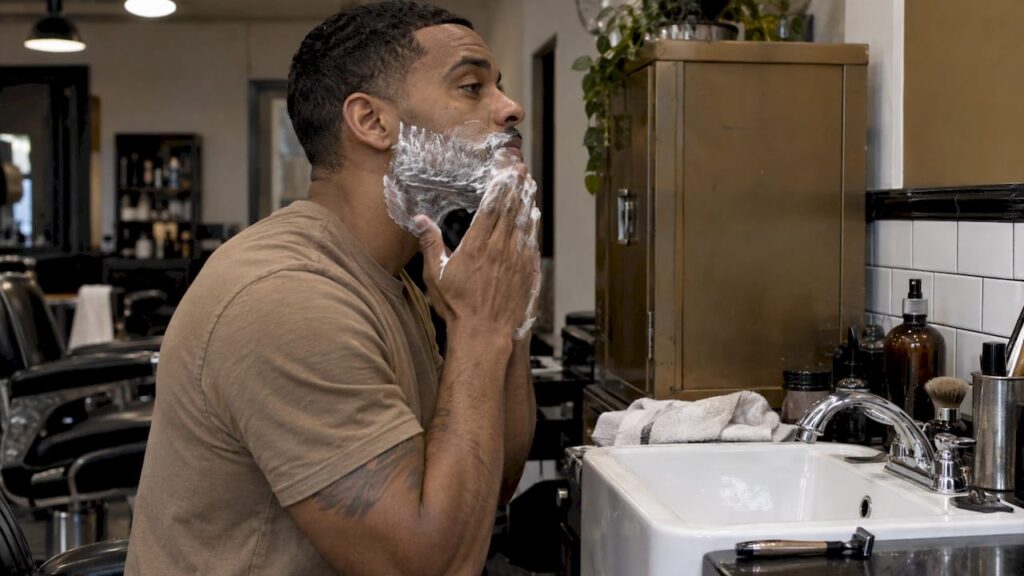

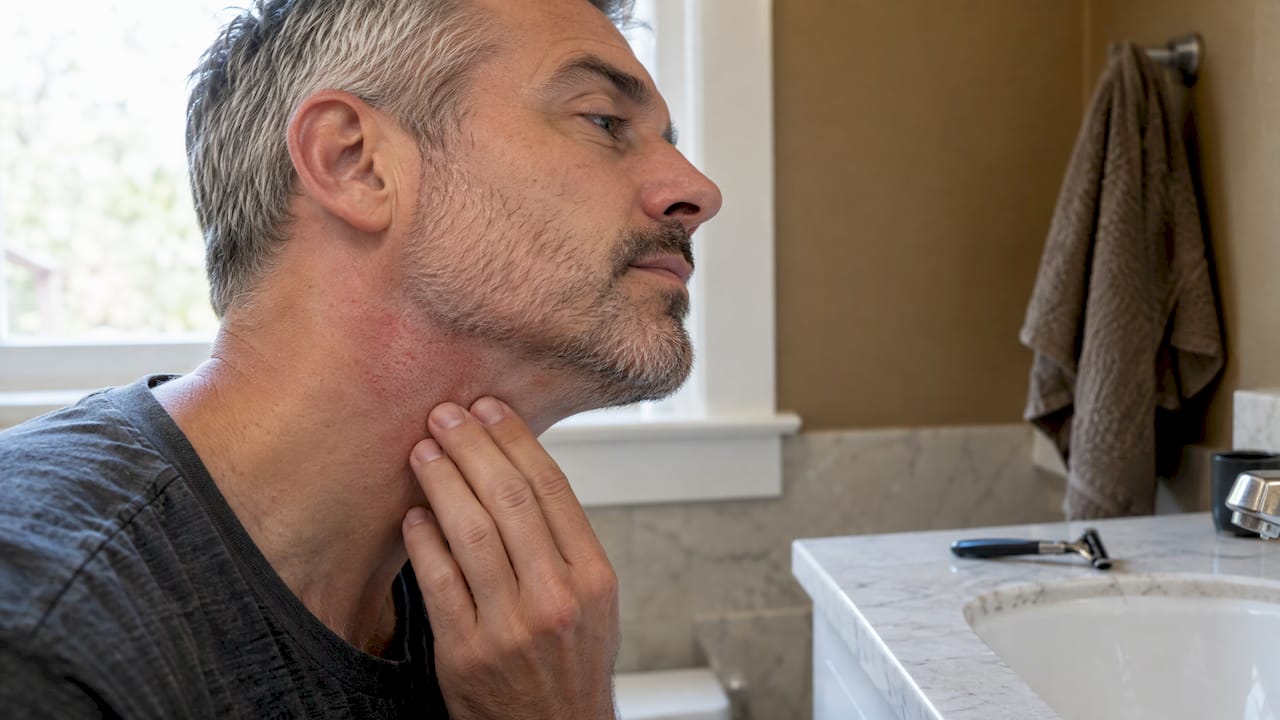
Beard line irritation almost always comes from two things working together: a shave or trim that stresses the skin, and a skin barrier that is too dry or inflamed to take it. Fix both and the redness, itch and bumps along your cheeks and neck usually settle. That means a gentler shave, a short routine and a fragrance-free, oil-rich moisturizer worked into the skin. We make Iron Bull Tallow for that last step. It is a three-ingredient face balm built for men’s skin.
Below you will find what is happening in the skin, how to tell razor irritation from ingrown hairs and beard dandruff, a shaving routine you can run in five minutes, and the signs that mean it is time to see a dermatologist.
TL;DR
- Most beard line irritation is irritant contact dermatitis: a dull blade, a too-close shave, or fragranced products damage the skin’s outer barrier.
- Red bumps usually mean ingrown hairs or folliculitis. Flaking and itch under the beard usually point to dryness or beard dandruff.
- Shave after a shower, with the grain, with a fresh blade and fragrance-free cream, then moisturize right away.
- Skip alcohol, fragrance, witch hazel and tea tree oil on irritated skin.
- Bumps that are painful, hot, pus-filled, changing, bleeding or slow to heal need a board-certified dermatologist.
Table of Contents
- Why the skin along your beard line gets irritated
- What kind of irritation is it?
- How to shave without irritating your beard line
- Soothing irritation you already have
- When to see a dermatologist
- Our view: fix the barrier, not just the bump
- A balm made for the shave-day routine
- FAQ
- Sources
Why the skin along your beard line gets irritated
The beard line is where hair is cut most often and where skin takes the most friction. It is the edge of your cheeks, the jaw and the neck. That is why it flares first.
Yale Medicine describes shaving-related irritation as irritant contact dermatitis. In plain terms, the skin’s protective outer layer gets stripped, and the skin reacts with redness, stinging and itch. The usual causes are dull razors, blades that do not follow the curves of your face, shaving too closely, and chemicals or fragrances in shave products. Yale dermatologist Dr. Christopher Bunick points to fragrances and chemicals in shave products as a reason to reach for fragrance-free, emollient creams and moisturizers after shaving.
Dryness is the second driver. Cleveland Clinic’s Dr. Vij says an itchy beard can come from dry skin caused by cold weather, certain medications, shampoos and soaps, or conditions like eczema and psoriasis. He also explains the mechanism under longer growth: dead skin cells and oil mix with moisture, bacteria and yeast, which can set up folliculitis, seborrheic dermatitis and other rashes.
So the pattern is simple. A stressed, dry barrier gets cut, scraped or fragranced, and it flares along the edges where you shave.
What kind of irritation is it?
Different problems look alike along the beard line. This table separates the common ones, using descriptions from dermatology sources.
| What you see | Likely cause | What the sources say |
|---|---|---|
| Redness, stinging or burning right after a shave | Razor burn (irritant contact dermatitis) | Comes from dull blades, close shaving and fragranced products, per Yale Medicine |
| Small, itchy, pimple-like bumps, often with a hair visible | Ingrown hairs (razor bumps) | Short, curly hairs curve back into the skin, per the American Academy of Dermatology |
| Sudden acne-like breakout, each spot with a red ring | Folliculitis | Described by the AAD |
| Red, scaly, itchy flakes under the hair | Beard dandruff (seborrheic dermatitis) | Linked to Malassezia yeast, per WebMD |
| Tight, dull, itchy skin without bumps | Dry skin (xerosis) | Cold weather, soaps and shampoos are common triggers, per Cleveland Clinic |
Razor bumps and ingrown hairs
The Merck Manual explains that ingrown beard hairs become inflamed when they push into the skin before leaving the follicle, or curve back into it after leaving. Each one can make a tiny, mildly painful pimple, and repeated inflammation can scar. It most often affects men with tightly curled hair who shave.
Yale adds that razors which lift the hair before cutting can leave the cut tip below the skin surface, which inflames the area. If this is your main problem, our guide to ingrown hairs in the beard goes deeper.
Flaking and itch
If you see white or yellow flakes and redness more than bumps, think dryness or beard dandruff. WebMD notes that seborrheic dermatitis causes itching, redness and scaly skin beneath facial hair. Cleveland Clinic says over-the-counter anti-dandruff shampoos can help with it. We cover that in detail in our beard dandruff guide.
For a broader look at how skin concerns around the face and beard are assessed, this overview of beard line irritation and razor burn is a helpful companion read.
How to shave without irritating your beard line
Prevention beats treatment here. The steps below combine guidance from the AAD, Yale Medicine and JAMA Dermatology. Each one tells you what it takes and where it usually goes wrong.
- Shave after a shower, not before. The AAD recommends shaving at the end of a shower or right after, when the hair is soft. Mistake: dry-shaving in a rush before the day starts.
- Prep the skin. The AAD suggests a pre-shave gel for about 30 seconds, then letting fragrance-free shaving cream sit for 2 to 3 minutes. JAMA Dermatology’s protocol for pseudofolliculitis barbae adds a warm compress for about 5 minutes first. Mistake: foaming cream and shaving instantly.
- Use a sharp blade and fewer blades if you get bumps. The AAD says men who often get razor bumps, razor burn or ingrown hairs should use a single- or double-blade razor rather than a multi-blade one. Change the blade every 5 to 7 shaves. JAMA Dermatology says not to reuse a blade more than 5 times. Mistake: stretching one cartridge for a month.
- Shave with the grain, with short strokes. Do not pull the skin taut, and rinse the razor after each swipe. Mistake: going against the grain for a closer finish. Close shaves are a main trigger for ingrowns.
- Rinse and pat. Rinse with lukewarm water, wash off every trace of cream, and pat skin slightly damp. The AAD says to moisturize while skin is damp.
- Moisturize right away. This is the step most men skip, and it is the one that rebuilds the barrier. Cleveland Clinic’s Dr. Vij says oil-based moisturizers typically hold more moisture than water-based ones. Our balm is a tallow-based formula with hyaluronic acid, made for this step, and it is designed to absorb without a greasy feel. Press it into the skin along the jaw and neck, not just the cheeks. We explain how in moisturizing under your beard.
Two more habits help. Never pluck ingrown hairs: JAMA Dermatology warns that plucking raises the chance of regrowth into the skin. And if you can tolerate it, let the hair grow. The same JAMA review says the best treatment for pseudofolliculitis barbae is to avoid shaving. Yale also suggests keeping a beard or scruff rather than a clean shave. Healthline suggests keeping hair at least 0.5 mm long to avoid ingrowns.
If you use an electric razor, Yale suggests one with a shave guard. JAMA mentions setting it to a high setting.

Trimming the edges
The neckline and cheek line are where most men trim. Use the same rules: soften first, use a clean, sharp trimmer or razor, move with the grain, and finish with moisturizer. Do not push the line lower than you need to. The thinner and more tightly cut the border, the more often you pass over the same skin.
Soothing irritation you already have
When the skin is already red or stinging, the goal is to calm it and protect the barrier while it heals.
- Cool it down. Cleveland Clinic recommends a cool washcloth or cool air on irritated skin.
- Use an emollient. That could be a fragrance-free lotion, a natural oil or an alcohol-free aftershave, per the same source. Healthline likewise suggests an emollient lotion or moisturizer and avoiding alcohol-containing products.
- Add aloe for heat or itch. Aloe vera gel is on both lists.
- Wash gently. The AAD recommends a mild facial cleanser with lukewarm, not hot, water.
- Hydrocortisone for short-term redness. Healthline and WebMD both say a topical hydrocortisone cream can reduce swelling and redness. Follow the label.
Razor burn often clears by itself, Cleveland Clinic notes, so give it a few days without shaving over it.
What to leave off irritated skin
Cleveland Clinic lists fragrances, alcohol, apple cider vinegar, witch hazel and tea tree oil as things that may sting or add unwanted ingredients. The AAD makes another point worth knowing: fragrance-free is better than “unscented” for sensitive skin, because unscented products may still contain masking fragrances. Read the full ingredient list, not just the front of the bottle.

This is also why short ingredient lists matter. Every extra ingredient is one more thing your skin can react to.
When to see a dermatologist
Most beard line irritation is minor, but some signs need a professional. Book a visit with a board-certified dermatologist if:
- Ingrown hairs keep coming back, per Health.com.
- You have chills, a fever, skin that is hot, tender or painful, pus or swelling. Health.com says to get medical help right away for these signs of infection.
- Bumps have not healed after a couple of weeks, you see non-stop bleeding, or you notice sweet-smelling pus. Healthline lists these as reasons to be seen, since they can signal conditions such as pustular psoriasis or tinea barbae.
- A bump is new, changing, raised, asymmetrical or bleeding. Yale Medicine notes that skin cancers can hide in beard hair, and Dr. Bunick advises having beard bumps evaluated by a dermatologist.
A dermatologist can prescribe treatments that go beyond home care, such as topical medications or, for infection, antibiotics. Laser hair removal for trouble zones like the neck is also something to raise with one, per Yale.
Our view: fix the barrier, not just the bump
Most guys come to us after trying to treat a rash with more products. Another cream, another aftershave, another scented balm. The skin along the beard line rarely needs more. It needs less friction, fewer irritants and steady moisture.
That is why we built Iron Bull Tallow around three key ingredients: grass-fed Alberta tallow, hyaluronic acid and jojoba oil. The formula is designed to hydrate and repair without a greasy residue, and it is non-toxic and hypoallergenic. The skin barrier is made of lipids, and a rich, oil-based balm is designed to give dry skin what it is missing. Dermatology sources say oil-based moisturizers typically hold more moisture than water-based ones, and that is the thinking behind our formula.
Use it right after you shave, while the skin is still damp, and again at night. Press it along the jaw and neck, where the razor passes most. Keep your routine simple and keep it consistent. Customers tell us they see better hydration and skin texture within weeks.
Blaine
A balm made for the shave-day routine
If your routine is missing the moisturizer step, start there. Iron Bull Tallow is our grass-fed Alberta tallow face balm with hyaluronic acid, made for men with dry, irritated or sensitive skin and designed to absorb without leaving a greasy finish. Every order is backed by our 60-day money-back guarantee.

You can see the balm and our Sun Balm in the Iron Bull Naturals shop. If you want the full routine laid out, read our beard skincare routine.
FAQ
Why is my beard irritating my skin?
The usual causes are shaving or trimming that damages the skin barrier, dry skin, and trapped oil and dead skin under the hair. Dull blades, close shaves and fragranced products make it worse. Yale Medicine and Cleveland Clinic both describe these triggers.
Will red bumps after shaving go away?
Razor burn often resolves on its own, according to Cleveland Clinic. Ingrown hair bumps can last longer, especially if you keep shaving over them. If they have not healed after a couple of weeks, or they hurt, ooze or swell, see a dermatologist.
What causes flaky skin under a beard?
Dry skin is the most common cause, from cold weather, harsh soaps or shampoos. Beard dandruff, caused by a reaction to Malassezia yeast, is another. Washing gently and moisturizing the skin under the hair helps with dryness. Persistent scaling and redness are worth showing a dermatologist.
Should I shave or let it grow to heal irritation?
Letting the hair grow is the best way to calm ingrown hairs, according to JAMA Dermatology. If you need to shave, use a fresh blade, shave with the grain after a shower, and moisturize right afterward.
Sources
- Yale Medicine: Itchiness, acne and skin irritation in beards
- Cleveland Clinic: What may be causing your itchy beard
- Cleveland Clinic: How to heal razor burn
- AAD: Acne-like breakouts could be folliculitis
- AAD: DIY treatment for 5 common beard problems
- AAD: A dermatologist’s top tips for a healthy beard
- AAD: Skin care tips for men
- Merck Manual: Ingrown beard hairs
- JAMA Dermatology: Pseudofolliculitis barbae
- WebMD: Have a beard? Problems you might face
- Healthline: Razor burn
- Healthline: How long does razor burn last
- Health.com: How to deal with ingrown hairs