Tallow-based skincare fits men with dry, irritated, or aging skin especially well, and pairing it with hyaluronic acid closes the gap most moisturizers leave open: one ingredient pulls water into the skin, the other locks it there. Men with oily or acne-prone skin should patch test first, since any thick occlusive can clog pores on the wrong skin type. For most guys dealing with tight, flaky, or fine-lined skin, though, this combination solves a problem lighter lotions never touch.
TL;DR:
- Tallow-based skincare works best for men with dry, flaky, or aging skin, especially if their skin feels tight or shows fine lines, and should be patch tested first for oily or acne-prone skin.
- Sourcing quality tallow involves choosing grass-fed, minimally processed fats with clear ingredient lists, and transparency about animal treatment and sourcing is crucial.
- The routine involves cleansing, applying hyaluronic acid on damp skin, then pressing warmed tallow balm into the face, with sunscreen recommended in the morning.
- Tallow’s occlusive nature traps moisture, making it suitable for restoring compromised skin barriers but may worsen oily or clogged pores without careful patch testing.
- Alternatives like shea butter or plant-based oils exist, but tallow’s similarity to human sebum offers unique benefits for hydration and skin barrier support.
Table of Contents
- What Does Cruelty-Free Skincare Mean for Men Using Tallow?
- What Is Beef Tallow and How Does It Work on Skin?
- Who Should Use Tallow Balms, and Who Should Patch Test First?
- How Do You Use a Tallow Face Balm the Right Way?
- What Should You Look for When Sourcing Tallow Skincare?
- What Animal-Derived Ingredients Should Cruelty-Free Buyers Watch For?
- How Do You Spot a Legitimate Cruelty-Free Men’s Brand?
- What Are the Common Alternatives to Tallow in Men’s Skincare?
- Why Do Ethical and Environmental Concerns Shape This Choice?
- How Does Tallow-Based Skincare Perform Across Different Skin Types?
- Why Iron Bull Naturals Built Its Routine Around Tallow
- Ready to Try a Tallow-Based Routine?
- Sources
- FAQ
What Does Cruelty-Free Skincare Mean for Men Using Tallow?
Cruelty-free, in the context this guide covers, refers to how an animal-derived ingredient is sourced rather than whether the ingredient itself comes from an animal. Tallow-based skincare for men is not vegan. It is rendered beef fat, typically from grass-fed cattle, and it earns the cruelty-free label when the source animals are raised without factory-farm conditions and the fat is a byproduct of meat production rather than an ingredient harvested through any process that harms a living animal. That is a different standard than “vegan,” and confusing the two causes most of the label confusion men run into while shopping.
What Is Beef Tallow and How Does It Work on Skin?
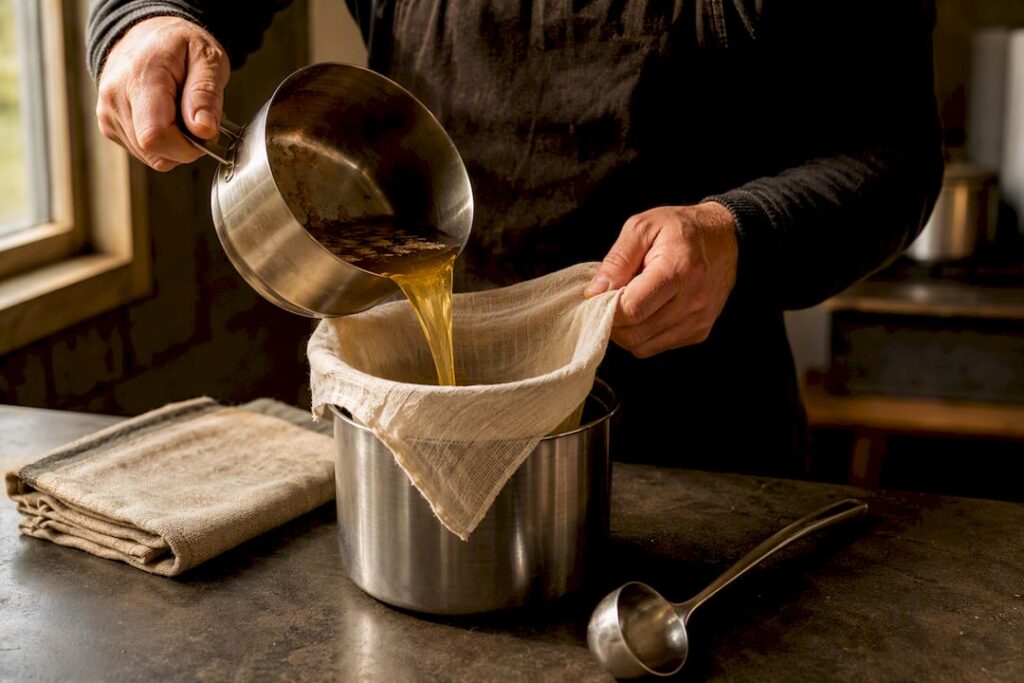
Rendered beef tallow is animal fat that’s been melted down, strained, and cooled into a solid, waxy substance. Its structure comes from three dominant fatty acids: oleic acid, palmitic acid, and stearic acid. That blend closely resembles human sebum, which is why unsaponified tallow behaves as an occlusive emollient that sits on the skin’s surface and slows water loss rather than pulling moisture in from the air.
That distinction between occlusive and humectant ingredients matters more than most product labels admit.
- Occlusives (tallow) form a physical barrier that traps existing moisture in the skin.
- Humectants (hyaluronic acid) draw water from the environment or deeper skin layers up to the surface.
- Using only an occlusive on dry skin can seal in dehydration instead of fixing it.
- Using only a humectant in a dry climate can pull moisture and then lose it to evaporation.
The clinical picture is thinner than social media suggests. A 2025 cross-sectional review found that tallow skincare claims spread widely online while high-level clinical evidence for tallow specifically stayed limited, and a meaningful share of the posts making those claims showed financial bias. That does not mean tallow does not work. It means the fatty-acid logic is sound, but the “miracle cure” framing common on social feeds outpaces the actual research. For a deeper look at the mechanism, Iron Bull Naturals’s evidence breakdown covers what the science does and does not support.
Who Should Use Tallow Balms, and Who Should Patch Test First?
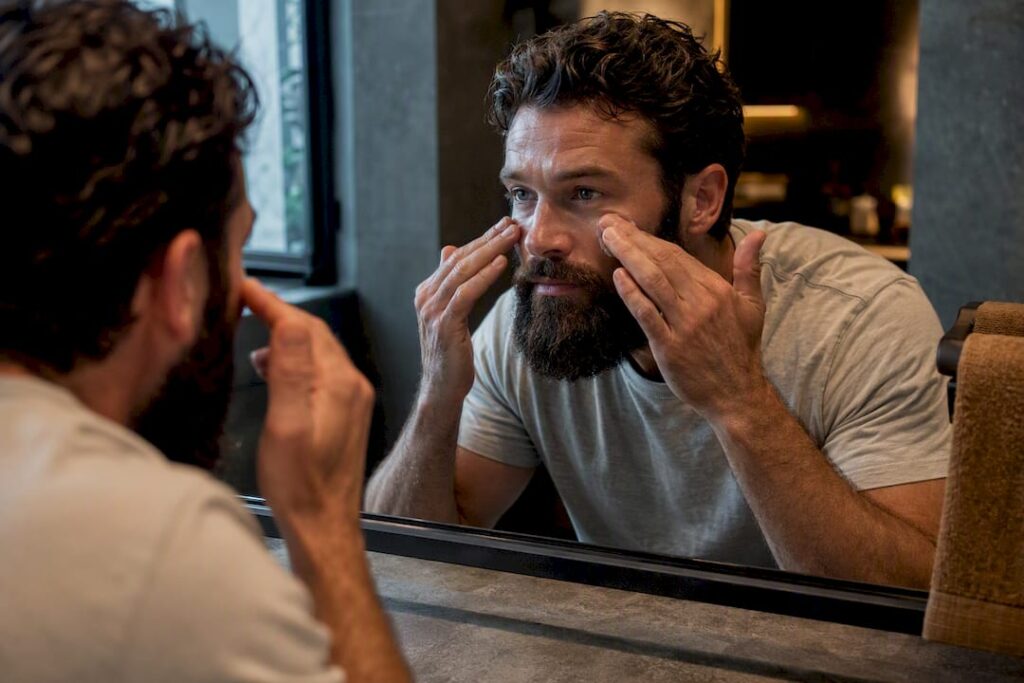
Tallow-based balms work best for men dealing with dry, flaky, or mature skin, especially skin that feels tight after washing or shows early fine lines around the eyes and mouth. If your skin barrier feels compromised from cold weather, hard water, or over-washing, the occlusive layer tallow provides gives it room to recover.
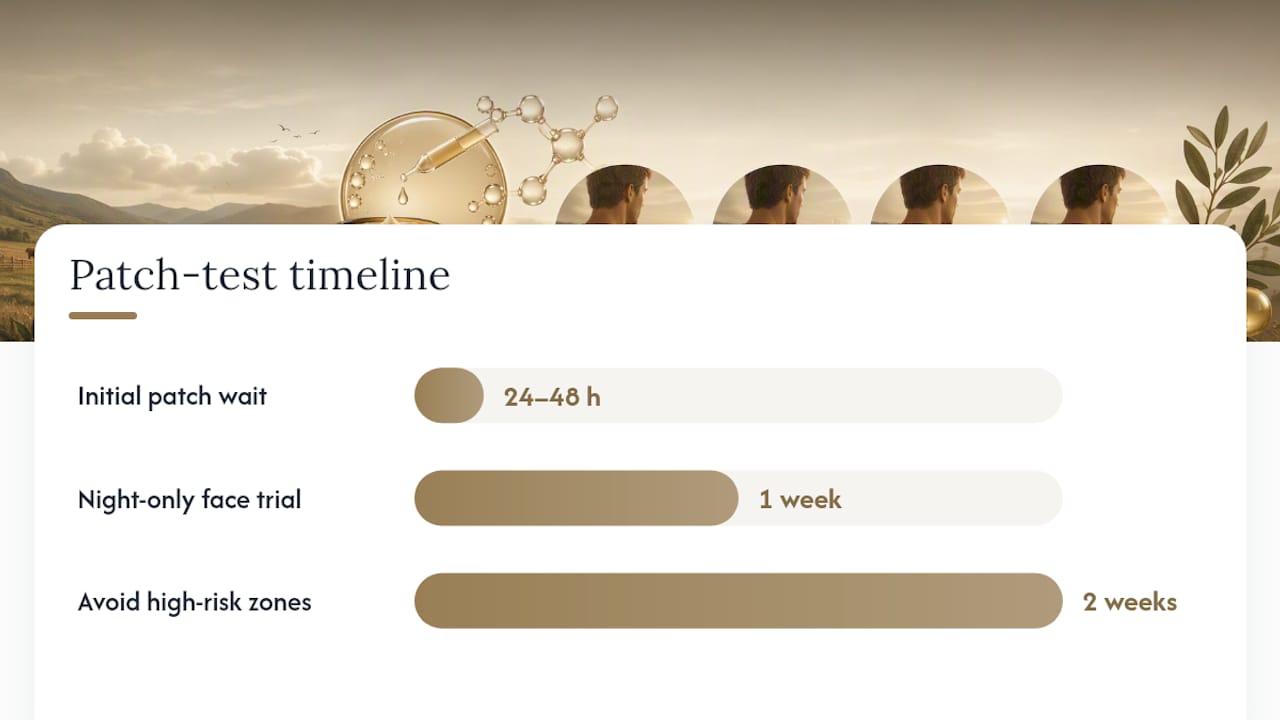
Oily or acne-prone skin is the exception. Tallow’s thickness can sit heavy on skin that already overproduces oil, and while it is not automatically comedogenic for everyone, it can worsen breakouts in men whose pores clog easily. Here is how to introduce it safely:
- Apply a small amount to your jawline or inner forearm.
- Wait 24 to 48 hours and watch for redness, bumps, or itching.
- If clear, apply a small amount to your full face at night only for the first week.
- Expand to a full routine once your skin tolerates it without new breakouts.
- Stop immediately and consult a dermatologist if irritation persists past a few days.
Pro Tip: If you’re prone to breakouts along your jawline or forehead, apply tallow everywhere except those zones for the first two weeks and watch how the rest of your face responds before committing fully.
Tallow balm is a moisturizer, not a treatment. If you are managing diagnosed acne, eczema, or rosacea with a prescription, keep using it. Skincare like this supports a barrier. It does not replace medicine.
How Do You Use a Tallow Face Balm the Right Way?
The order you apply products in matters as much as the products themselves. Put a humectant on before an occlusive, never after, or you’ll trap dry skin under a layer of fat with nothing underneath to hydrate it.
Here’s the three-step routine, and it takes under five minutes:
- Cleanse with a gentle, non-stripping face wash. Pat your skin so it stays slightly damp rather than towel-drying it completely.
- Apply hyaluronic acid to damp skin. Hyaluronic acid works by pulling water into the skin, and it needs some moisture already present on the skin’s surface to draw from. A dry face gives it nothing to work with.
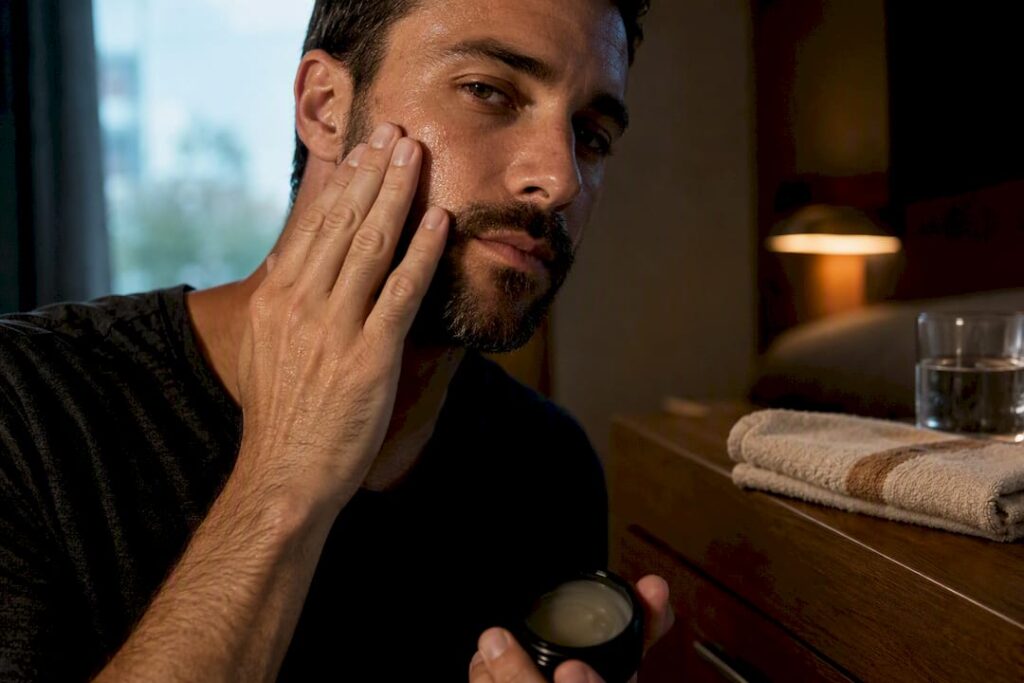
- Warm a pea-sized amount of tallow balm between your fingertips, then press it into your skin. Warming melts the solid balm into an oil your skin absorbs faster, and pressing rather than rubbing helps it settle into damp skin instead of sitting on top as a greasy film.
Morning routines should end with sunscreen over the balm, since tallow itself offers no UV protection. At night, this three-step sequence is the whole routine. No seventh step, no ten-product shelf.
If your skin still looks shiny an hour later, you’re using too much. A pea-sized amount covers the whole face; more than that just sits on the surface. If you notice small bumps or clogged pores after a week, you may be applying it too thick or skipping the patch-test step. Cut back to nightly use only, and reduce to a fraction of a pea-sized amount until your skin adjusts.
What Should You Look for When Sourcing Tallow Skincare?
Not all tallow is equal, and the label tells you more than the marketing copy does. Prioritize these details before buying:
- Grass-fed sourcing. Grass-fed tallow carries a richer profile of conjugated linoleic acid and fat-soluble vitamins than grain-fed tallow, which matters if nutrient density is part of why you’re choosing this over a synthetic moisturizer.
- A short ingredient list. Three to five ingredients you recognize beats a label with a dozen unpronounceable additives.
- Hyaluronic acid included or paired separately. This is the humectant half of the equation, and it should not be skipped.
- Jojoba oil as a secondary ingredient. Jojoba’s structure closely resembles human sebum, and it helps a tallow balm absorb faster without feeling as heavy.
- No added fragrance or unnecessary essential oils. These are the most common irritants in otherwise clean formulas, especially for sensitive skin.
Buy directly from brand product pages where the full ingredient list is visible, not from third-party marketplace listings that truncate details. Grass-fed sourcing matters more than most buyers realize, and a brand willing to show you exactly what’s in the jar is usually the brand worth trusting.
What Animal-Derived Ingredients Should Cruelty-Free Buyers Watch For?
Tallow is not the only animal-derived ingredient common in men’s skincare, and some of them carry real ethical red flags that tallow does not. Squalane originally came from shark liver oil, though most modern versions are now plant-derived. Lanolin comes from sheep’s wool and is generally considered a low-impact byproduct, similar to tallow’s status. Carmine, a red pigment used in some tinted products, comes from crushed cochineal insects. Collagen and elastin, when animal-sourced rather than lab-grown, typically come from cattle or fish byproducts.
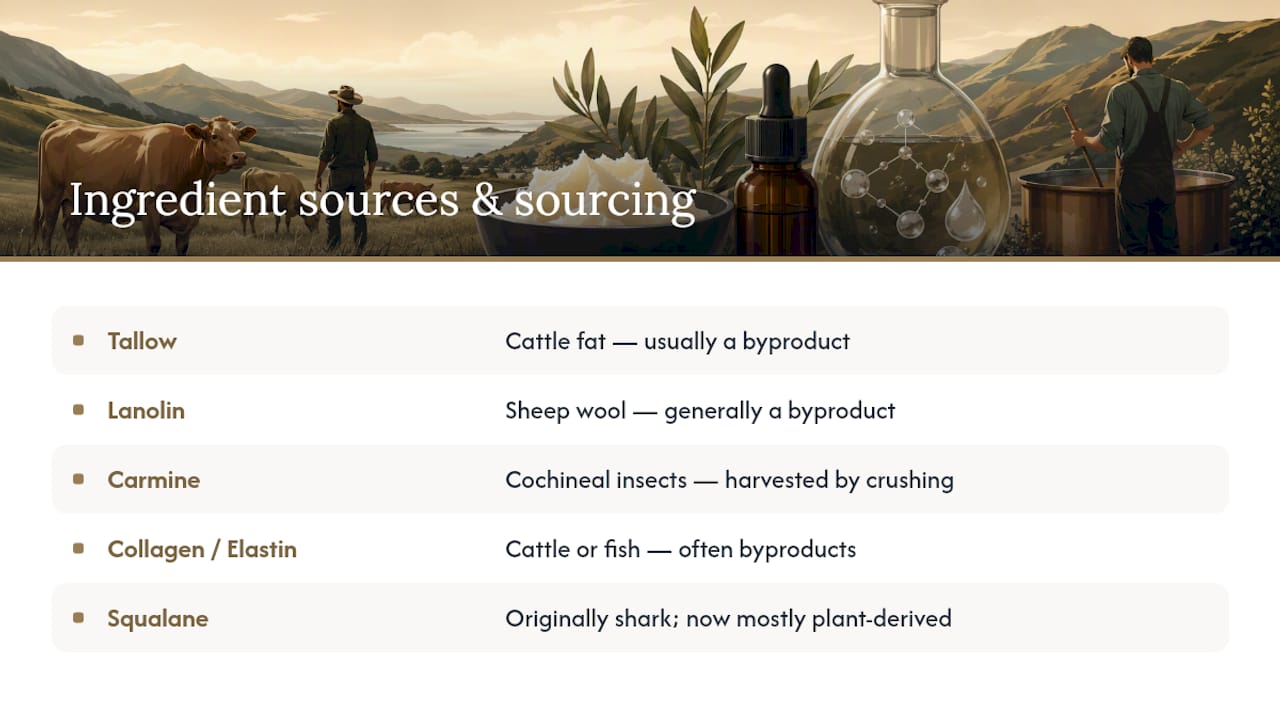
The difference between these ingredients and tallow usually comes down to how the animal was treated and whether the ingredient is a byproduct of an existing food or textile industry, or something extracted through a process that requires additional harm. A cruelty-free standard, as this guide defines it, rewards byproduct sourcing and penalizes practices where an animal is harmed specifically for the cosmetic ingredient. Reading past the ingredient name to its actual source is the only reliable way to know which side of that line a product falls on.
How Do You Spot a Legitimate Cruelty-Free Men’s Brand?
Certifications help, but they are not the whole picture, especially for a category like tallow-based skincare where the “cruelty-free” claim rests on farming practices rather than an animal-testing pledge. Look for brands that disclose where their tallow is sourced, not just that it exists. “Grass-fed” and “Alberta-sourced” are more useful claims than a generic “natural” label with no origin story behind it.
Reputable third-party organizations like Leaping Bunny and PETA’s Beauty Without Bunnies certify against animal testing specifically, which is a separate axis from ethical sourcing of animal-derived fats. A brand can be cruelty-free in the animal-testing sense while still using tallow, and the two claims are not contradictory the way some marketing implies.
Beyond certifications, transparency is the strongest signal. A brand publishing its full ingredient list, naming its sourcing region, and explaining why it chose an ingredient over cheaper alternatives is doing more real work toward earning trust than a badge on a bottle. Watch for vague claims like “cruelty-free formula” with no explanation of what that means for a tallow-based product specifically, since the term shifts meaning depending on whether animal-derived ingredients are present at all.
What Are the Common Alternatives to Tallow in Men’s Skincare?
Men who patch test poorly with tallow, or who prefer to skip animal-derived ingredients entirely for personal reasons, have real alternatives worth knowing about. Shea butter offers a similar occlusive effect with a plant-based fatty-acid profile, though it lacks tallow’s close structural match to human sebum. Squalane, when sourced from olives or sugarcane, mimics skin lipids without the animal origin. Jojoba oil functions well as a lighter, faster-absorbing option for men who find tallow too heavy, and it is often blended alongside tallow rather than used as a full replacement.
None of these plant-based options are a straight one-to-one swap. Tallow’s fatty-acid ratio is uniquely close to sebum, which is part of why it performs the way it does as an occlusive. Alternatives can approximate that performance but rarely match it exactly, which is the tradeoff worth understanding before switching.
Why Do Ethical and Environmental Concerns Shape This Choice?
The ethical case for tallow rests on byproduct use. Cattle are raised for meat regardless of skincare demand, and rendering the fat into a usable product avoids waste rather than creating new demand for animal harm. That’s a materially different footprint than synthetic ingredients derived from petroleum, which carry their own extraction and processing costs, or than palm-oil-based alternatives tied to deforestation in some sourcing regions.
Grass-fed sourcing adds another layer. Cattle raised on pasture generally require less industrial feed input than grain-fed operations, and regenerative grazing practices some ranches use can support soil health rather than depleting it. That is not a universal claim about all beef production, but it is a real distinction between sourcing choices within the category.
Men choosing tallow over synthetic alternatives for ethical reasons are usually making a bet on byproduct efficiency over ingredient novelty. It is a defensible position, provided the sourcing behind it holds up to the same scrutiny as the claims on the label.
How Does Tallow-Based Skincare Perform Across Different Skin Types?
Dry and mature skin sees the clearest benefit. The occlusive layer tallow provides slows water loss precisely where aging skin struggles most, since natural sebum production declines with age. Men in their 40s and beyond dealing with fine lines around the eyes often notice the difference within a few weeks of consistent use.
Combination skin does reasonably well too, provided the balm is applied thin and only over drier zones like the cheeks and jawline, skipping an oilier T-zone.
Oily and acne-prone skin is where results vary the most. Some men tolerate tallow fine; others see clogged pores within days. This is exactly why the patch-test step earlier in this guide is not optional for that skin type. There is no way to predict in advance how a given face will respond, and skipping the test is the single most common mistake men make with this category of product.
Why Iron Bull Naturals Built Its Routine Around Tallow
The formula is built around three main ingredients without filler or fragrance additives.
That simplicity is not a limitation. It is the same logic this guide has walked through: an occlusive and a humectant, sourced cleanly, applied correctly, do most of the work a ten-step routine tries to accomplish with a fraction of the effort. Some customers report visible improvements in texture and hydration within weeks, which aligns with expectations from fatty-acid mechanics. The product is designed to let the ingredients do the work without unnecessary additives.
— Blaine
Ready to Try a Tallow-Based Routine?
If the three-step routine above sounds like something you’d actually stick with, that’s the point. The brand offers a face balm containing grass-fed tallow, hyaluronic acid, and jojoba oil, designed to simplify skincare routines.

Start with a patch test on your jawline for 24 to 48 hours, then work the balm into the three-step routine covered above: cleanse, hyaluronic acid on damp skin, warmed tallow pressed in last. The Iron Bull Beef Tallow Face Moisturizer is backed by a 60-day money-back guarantee, so testing it on your own skin carries little downside. A subscription option is available at checkout if you’d rather not think about reordering every few months. Head to the shop page, pick up a jar, and give your skin two to three weeks before judging the results.
Sources
For readers who want to go deeper than this guide, three sources shaped the evidence-based sections above: a PMC cross-sectional analysis of tallow skincare claims on social media, a technical primer on tallow’s fatty-acid profile, and mainstream reporting on the viral DIY tallow trend with dermatologist commentary on its plausibility and limits.
- Beef Tallow-Based Skincare Claims in Social Media: A Cross-Sectional Analysis
- Beef tallow in skincare: Fatty acid profile, plant-oil comparison, and five myths
FAQ
Is Tallow Cruelty Free?
Tallow is cruelty-free in the sourcing sense when it’s a byproduct of grass-fed cattle raised for meat rather than harvested through any process that harms an animal for the fat alone, though it is not vegan.
Can Tallow Balm Cause Acne?
It can for men with oily or acne-prone skin, since its thick, occlusive texture may clog pores; a 24 to 48 hour patch test on your jawline before full use is the safest way to find out.
How Is Tallow Different From a Regular Moisturizer?
Most conventional moisturizers combine humectants and occlusives into one formula with synthetic emulsifiers, while a tallow balm functions as a standalone occlusive meant to be layered over a humectant like hyaluronic acid rather than replacing it.
How Long Until I See Results With Tallow Skincare?
Many men report improved hydration and softer texture within a few weeks of consistent nightly use, provided the balm is applied to damp skin in a pea-sized amount.
Does Iron Bull Naturals Use Grass-Fed Tallow?
Yes, Iron Bull Naturals formulates its face moisturizer with grass-fed Alberta tallow, paired with hyaluronic acid and jojoba oil as the only other active ingredients.