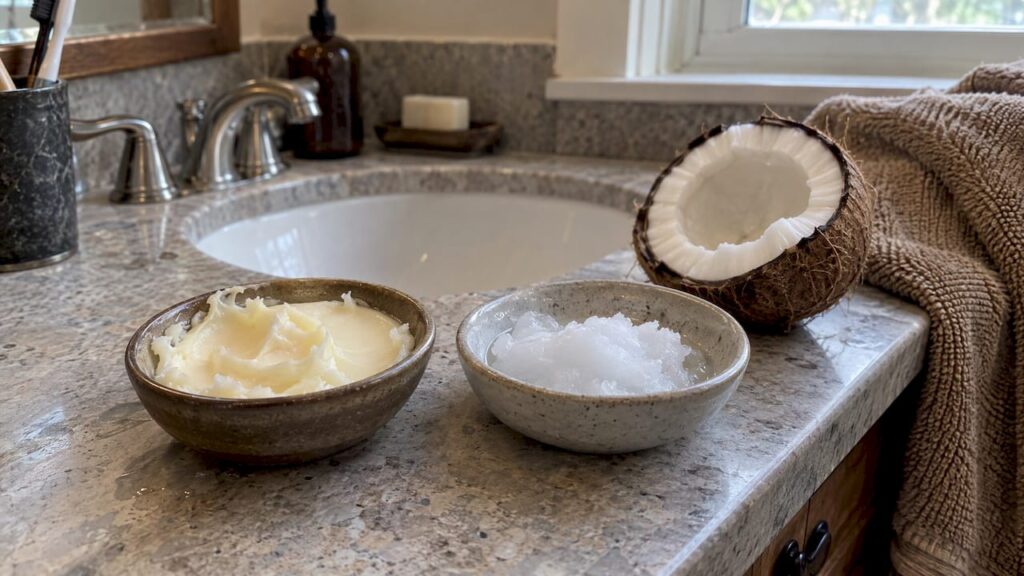


Face care for eczema comes down to four habits: a mild cleanser, lukewarm water, a thick fragrance-free moisturizer applied while your skin is still damp, and a short list of things you stop doing, like hot showers, scrubbing and scented products. Do those consistently and most of the daily work is done. Persistent or worsening patches need a dermatologist, because eczema is a medical condition and not just dry skin. Our Iron Bull Beef Tallow Face Moisturizer for Men is built for the moisturizing step: grass-fed Alberta tallow, hyaluronic acid and a short ingredient list, with no greasy finish.
This guide covers how to tell eczema from plain dry skin, the routine step by step, how to shave around it, how to prevent flares, and when to get it looked at.
TL;DR
- Facial eczema shows up as itchy, dry, flaky, discolored patches that come and go. Ordinary dry skin feels tight and rough but is less intensely itchy.
- Wash with a mild, soap-free cleanser and lukewarm water, then moisturize within three minutes while your skin is still damp.
- Choose a cream or ointment-style moisturizer over a thin lotion, and skip fragrance and harsh preservatives.
- Shave carefully with alcohol-free products, and patch test anything new for a week before it goes on your face.
- See a doctor if patches worsen, don’t improve after several weeks, or react to a product.
Table of Contents
- What facial eczema looks like in men
- The daily routine, step by step
- What to look for in a moisturizer
- Shaving and beards with eczema
- What to do during a flare
- Preventing the next flare
- Our perspective
- Where to start with Iron Bull
- When to see a doctor or dermatologist
- FAQ
- Sources
What facial eczema looks like in men
Facial eczema typically appears as itchy, dry, flaky patches of discolored skin, often on the cheeks or forehead, sometimes with swelling, bumps or blisters. On a man’s face it often gets mistaken for razor burn, windburn or a bad week of dry air, especially in winter when everyone’s skin tightens up.
The difference is in the pattern. Dry skin feels tight and rough all over the area. Eczema is more intensely itchy, tends to sit in defined patches, and flares up, calms down and returns. Both cause redness and itching, but eczema is an inflammatory condition that can bring intense inflammation and itchy blisters that ooze.
A few practical clues that you may be dealing with more than dryness:
- The itch is the main complaint, not the tightness.
- The same spots keep coming back, such as the sides of the nose, eyebrows, cheeks or around the eyes.
- A moisturizer that used to help no longer calms things down.
- Patches feel sore, or weep and crust.
If the flaking sits mostly in your eyebrows, beside your nose or under your beard, it may be seborrheic dermatitis, a related condition. We cover it in Seborrheic Dermatitis in Men, and plain dryness in Dry, Flaky Skin in Men. Only a clinician can tell you which one you have, which is why the last section of this article matters.
The daily routine, step by step
The goal is a routine you will actually do. Eczema-prone skin rewards boring consistency: fewer products, the same ones, every day.
Step 1: Keep the water lukewarm and the shower short
Hot water strips the oils your skin barrier depends on. Dermatologists advise keeping showers lukewarm and to about 10 minutes or less so skin doesn’t dry out more. For your face, use lukewarm water at the sink too. Pat dry with a clean towel instead of rubbing.
Where it goes wrong: the long hot shower after the gym or a cold day. It feels good and sets you up for tight, itchy skin an hour later.
Step 2: Cleanse gently
Use a mild, soap-free cleanser and lukewarm water, without scrubbing. Some people cleanse once a day, others morning and evening. If your face is flaring, once a day at night is a reasonable place to start, with plain lukewarm water in the morning. For seborrheic dermatitis specifically, the American Academy of Dermatology advises washing twice daily with a fragrance-free cleanser and moisturizing afterward.
Where it goes wrong: bar soap, foaming scrubs, exfoliating brushes and anything marketed as “deep cleaning.” Eczema skin needs the opposite.
Step 3: Moisturize within three minutes
This is the step that does the most for you day to day. Apply moisturizer within three minutes of getting out of the shower or bath, while the skin is still damp, to lock in moisture. Don’t wait until you’ve dressed, brushed your teeth and checked your phone.
This is where we come in. Iron Bull Tallow is a face balm made from 100% natural, grass-fed Alberta tallow, infused with hyaluronic acid, and it is designed to deeply hydrate and repair without the greasy feel of many moisturizers. It uses a short list of key ingredients, three, and is made to suit sensitive and all skin types. A balm applied to damp skin takes under a minute, which suits a busy morning.
Where it goes wrong: applying a thin lotion to bone-dry skin, or skipping it on days the face looks fine. Barrier care works because it is daily.
Step 4: Protect in the morning
Sun exposure can make irritated skin feel worse, so finish your morning routine with sun protection. Our Iron Bull Sun Balm is a mineral option with zinc oxide, made in the same simple spirit. If you want the full reasoning, see Sun Balm vs Sunscreen.
Step 5: Repeat at night
Cleanse gently, pat dry and moisturize again while your face is damp. Two moisturizing moments a day, morning and night, is the baseline. Reapply to dry spots during the day, such as the cheeks and around the nose in cold weather.
For a stripped-down version of the same idea, our no-nonsense men’s skincare routine and dry skin routine follow the same three-step logic.
What to look for in a moisturizer
Two rules from dermatology guidance cover most decisions.
Cream or ointment beats lotion. The American Academy of Dermatology and Cleveland Clinic recommend creams or ointments rather than lotions, because their higher oil content locks in moisture better. A balm sits in that thicker, oil-rich category, which is why it suits cold, dry months.

Fewer irritants is better. Fragrance can irritate eczema-prone skin, and preservatives in lotions can burn. The practical habit is to read the ingredient list before you buy. A short list is easier to read, easier to patch test, and easier to trace if something bothers you. That is the thinking behind our three key ingredients and why we talk so much about simple formulas. If you want to understand how to read labels, see Hypoallergenic Face Balm: What the Label Means and Petroleum-Free Skincare.
A quick comparison of habits
| Habit | Helps | Hurts |
|---|---|---|
| Water temperature | Lukewarm | Hot |
| Cleanser | Mild, soap-free | Bar soap, scrubs |
| Moisturizer texture | Cream, ointment, balm | Thin lotion |
| Timing | Within three minutes of washing | Hours later |
| Fragrance | None | Scented products |
| Shaving | Alcohol-free products, careful strokes | Dry shaving, alcohol-based aftershave |
Shaving and beards with eczema
Shaving is where many men make a flare worse without noticing. A few rules that follow dermatology guidance:
- Use alcohol-free shaving products. The AAD lists this in its self-care advice for seborrheic dermatitis.
- Shave with a sharp blade after washing, when the hair is soft, and go with the grain of hair growth.
- Rinse with lukewarm water and moisturize right away, while the skin is damp.
- Skip the stinging aftershave splash.
If you have a beard or mustache and the skin beneath it flakes or itches, the AAD says to wash facial hair with a medicated soap or shampoo that a dermatologist recommends, or shave so the skin stays hair-free, which reduces flare-ups. That advice is written for seborrheic dermatitis, so ask a dermatologist what suits your case. Our guides to beard skincare and beard dandruff go deeper.
On a bearded face, moisturizer should reach the skin and not just sit on the hair. Part the hair, warm a small amount between your fingertips and press it in.
What to do during a flare
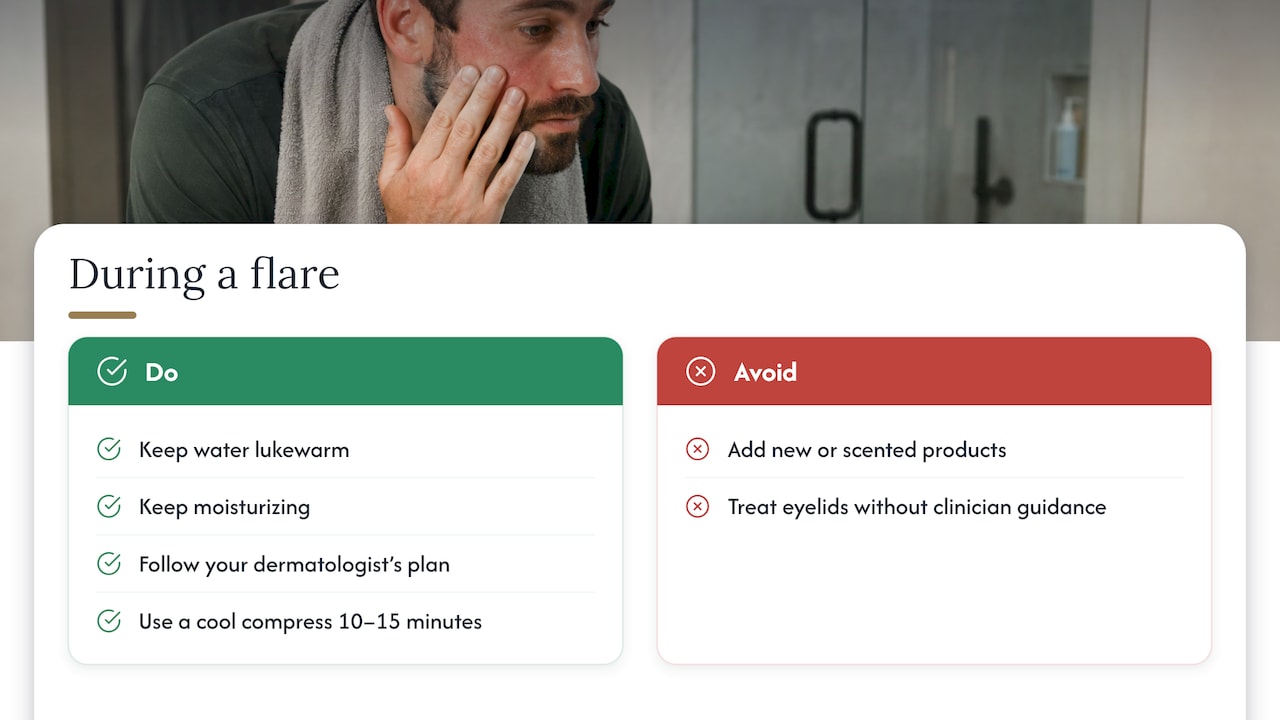
A flare is the time to simplify, not to add products. Drop anything new, drop anything scented, keep water lukewarm and keep moisturizing.
If a dermatologist has diagnosed seborrheic dermatitis, the AAD advises you to follow the treatment plan your dermatologist gives you, since treatment is tailored to the patient. Prescription treatments, including anti-inflammatory ones, are a conversation for your doctor, and your moisturizer works alongside whatever they prescribe.
For itch relief on a patch of neurodermatitis, the AAD says a cool, damp compress on the itchy area for 10 to 15 minutes, a few times a day, can give temporary relief. If you’re unsure which type you have, ask first.
Be careful around the eyes. The National Eczema Association notes that eyelid skin is thin and has little fat, which calls for extra care and very selective treatment to avoid problems such as skin thinning. Don’t put new products or medicated treatments on the eyelids without a clinician’s guidance.
For itch that nags, our piece on a balm for an itchy face walks through using a simple balm consistently.
Preventing the next flare
Prevention is mostly the routine above, plus three habits.
Patch test every new product
Dermatologists from the American Academy of Dermatology advise testing a new product on several small areas of skin first, leaving it on for as long as you normally would, and going ahead only if there is no reaction after a week. Apply it to a small area such as the inner forearm, then a small patch near the jawline, before the whole face. Change one product at a time so you know the cause if something flares.
Protect your skin from the sun
Make sun protection part of the morning, every day, not only at the beach. A balm-style mineral sun product keeps the step quick. Read more in Mineral Sun Balm: Read the Label.
Learn your triggers
Note what happened in the 24 hours before a flare: a new aftershave, a hot shower, a cold wind, a scented laundry detergent that touches your pillowcase. A short note on your phone is enough. Patterns appear within a few weeks.
Skincare for men works best when it’s easy, so we keep the number of steps low. The skincare steps men need lays out a morning and night version.
Our perspective
Most men come to eczema care with the same problem: they’ve been told to do twelve things and they do none of them. So we start from the opposite end. Fewer products, fewer ingredients, a routine that takes five minutes.
That is why Iron Bull Tallow has a short ingredient list: grass-fed Alberta tallow, hyaluronic acid and a small number of key ingredients, non-toxic and hypoallergenic. A thicker balm, put on damp skin, matches what dermatologists recommend for dry, easily irritated skin: oil-rich moisture applied quickly after washing, without a greasy film that makes you want to wipe it off.
Customers tell us they notice better skin texture and hydration within weeks of daily use. We stand behind it with a 60-day money-back guarantee, because a routine only works if you stick with it long enough to see what it does.
If your skin is inflamed, painful or not improving, see a dermatologist. Use your balm as the daily moisture step beside their plan.
Blaine
Where to start with Iron Bull
If your routine is missing a reliable moisturizer, begin with the Iron Bull Beef Tallow Face Moisturizer for Men. It is made from 100% natural grass-fed Alberta tallow with hyaluronic acid and is backed by a 60-day money-back guarantee. Pair it with the Iron Bull Sun Balm for mornings, or browse the full shop. Multi-packs and an optional subscription are available for recurring shipments.

Patch test first, as above, then use it twice a day on damp skin after a lukewarm wash. To learn how tallow works on skin, read Tallow Benefits for Face: What the Science Says.
When to see a doctor or dermatologist
Self-care covers the basics, but it doesn’t replace a diagnosis. See a healthcare provider if facial eczema symptoms get worse, don’t improve after several weeks, or your skin reacts badly to a moisturizer or topical medication, especially if you have a rash or pain.
Make the appointment sooner if:
- Patches ooze, crust or blister.
- The skin around your eyes is involved.
- Itching disrupts your sleep.
- You can’t tell whether it’s eczema, seborrheic dermatitis or something else.
Bring a list of the products you use, including shaving products, and your notes on triggers. A dermatologist can confirm the type, prescribe treatment when needed and tell you what to do about your beard. Your daily moisturizer then supports that plan.
FAQ
Can men with facial eczema use the same moisturizer as for dry skin?
Often yes, as long as it is a rich cream or balm without fragrance irritants. The texture matters: dermatologists favor creams and ointments over thin lotions because they hold in moisture better. Patch test first, and see a doctor if the skin reacts.
How often should I wash my face with eczema?
Once or twice a day with a mild, soap-free cleanser and lukewarm water is the usual range. Some people do once daily and others morning and night. Pat dry and moisturize within three minutes.
Is it better to shave or grow a beard with facial eczema?
It depends on where the irritation is. For seborrheic dermatitis under facial hair, the AAD says shaving or washing with a dermatologist-recommended medicated soap or shampoo can reduce flare-ups. If you shave, use alcohol-free products and moisturize right away.
Is facial eczema curable?
Eczema is generally managed rather than cured, and regular moisturizing is a big part of keeping it calm. A dermatologist can build a plan for your type and your flares.
Sources
- Eczema on Face: Symptoms, Causes, Types & Treatment (Cleveland Clinic)
- Eczema Skin Care Routine: Best and Worst Products (Cleveland Clinic)
- Eczema Skincare Routine: A Guide for Every Age
- Seborrheic dermatitis: Self-care (American Academy of Dermatology)
- Eczema types: Neurodermatitis self-care (American Academy of Dermatology)
- Eyelid Eczema: Symptoms, Causes & Treatment (National Eczema Association)
- Trying Out a New Skin Care Product? Test It First (HealthDay, AAD guidance)