
The best moisturizer for a bald head is a lightweight, fragrance-free formula that hydrates without leaving a shine or clogging pores. Apply it daily, ideally while your skin is still damp from the shower or shave, and add sun protection in the morning. Your scalp is skin like the skin on your face, but it has more oil glands and gets far more sun. Treat it that way and most dryness, tightness and flaking sort themselves out.
Below you’ll find what to look for on the label, how to apply it, how to handle the first hours after a shave, and when flaking means something other than dry skin.
TL;DR
- Pick a lightweight, non-comedogenic, fragrance-free moisturizer. Look for ingredients such as hyaluronic acid, glycerin, jojoba oil and shea butter.
- Moisturize every day, right after showering or shaving, while the skin is still damp.
- Use SPF in the morning. Dermatologists advise broad-spectrum, water-resistant SPF 30 or higher on exposed skin, scalp included.
- Skip harsh sulfates, alcohol-heavy formulas and strong fragrance, which tend to irritate a bare scalp.
- Persistent flaking, redness or itch can be seborrheic dermatitis, not simple dryness. See a dermatologist if it doesn’t settle.
Table of Contents
- Why a bald scalp needs its own moisture routine
- What to look for in a bald head moisturizer
- Day versus night
- How to apply it so it works
- The first hours after a shave
- Sun protection: the part most guys skip
- Dryness, flaking and irritation: what to do
- Our perspective
- Try a tallow balm on your scalp
- A simple bald-head routine to start with
- FAQ
- Sources
Why a bald scalp needs its own moisture routine
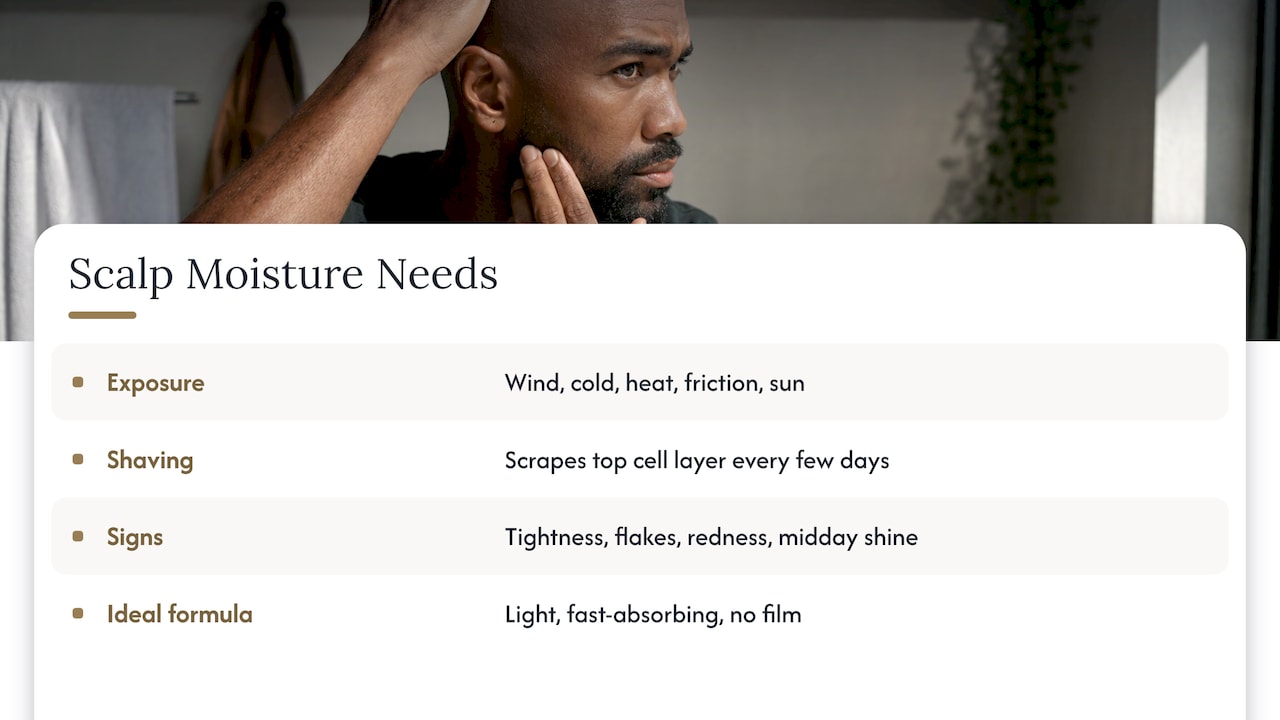
When hair goes, whether you shave it or it thins out, the scalp loses its cover. Nothing shields the skin from wind, cold, heat, hat friction or the sun. If you shave, a razor or clipper also scrapes away the top layer of cells every few days. The result is a familiar pattern: tight skin an hour after the shower, flaking along the crown, redness after a shave, and a shiny forehead by lunch.
A lot of men solve this by grabbing whatever moisturizer is in the bathroom. That can work, but a scalp is bigger than a face, so you use more product, and a rich cream that feels fine on the cheeks can feel heavy and slick across the whole dome. That is why the best bald head moisturizers are usually lighter, absorb quickly and don’t leave a film that attracts dust or catches the light.
The goal isn’t a glossy finish. It’s skin that feels comfortable, doesn’t flake, and doesn’t sting when you shave or step into the sun.
What to look for in a bald head moisturizer
Start with the basics, then add the extras that suit your skin.
Lightweight and non-comedogenic
The scalp has plenty of oil glands, and a heavy, pore-clogging product can lead to bumps and breakouts, especially at the hairline and back of the neck. The American Academy of Dermatology (AAD) advises men with acne-prone skin to look for moisturizers labeled “oil free” or “non-comedogenic”. A moisturizer for sun-exposed daytime use should also feel light enough that you’ll actually wear it every morning.
Ingredients worth having
The AAD’s guidance on relieving dry skin points to jojoba oil, glycerin, hyaluronic acid and shea butter as ingredients to look for. Here is what each does in plain terms:
| Ingredient | What it does for a bare scalp | Feels like |
|---|---|---|
| Hyaluronic acid | Draws and holds water in the top layer of skin | Light, almost weightless |
| Glycerin | A classic humectant that pulls moisture into the skin | Slightly tacky if overused |
| Jojoba oil | A plant oil that softens and helps seal moisture in | Smooth, absorbs well |
| Shea butter | A richer emollient for very dry patches | Thicker, best in small amounts |
Dermatology experts reviewing scalp care also note that products containing ceramides, oils and hyaluronic acid can support scalp health. If you want a deeper look at how humectants and oils work together, our guide to layering humectants and occlusives walks through it, and the comparison of hyaluronic acid and glycerin helps if you’re deciding between them.
Fragrance-free, and actually fragrance-free
The AAD recommends fragrance-free products for sensitive skin and warns that an “unscented” label can still hide masking fragrances that irritate. Read the ingredient list, not the front of the bottle. The same goes for harsh sulfates, alcohol-heavy formulas and strong fragrances, which can irritate skin that has no hair to buffer it.
Match the texture to your skin type
If your scalp runs oily, a gel or lotion is usually the better fit. If it runs dry or you live somewhere cold, a creamier or balm-style product makes sense. Not sure which you are? Our pinch test for dry versus dehydrated skin takes about a minute, and the oily skin moisturizer guide covers the shinier end of the spectrum.
Day versus night
You don’t need two completely different products, but it helps to think in two jobs.
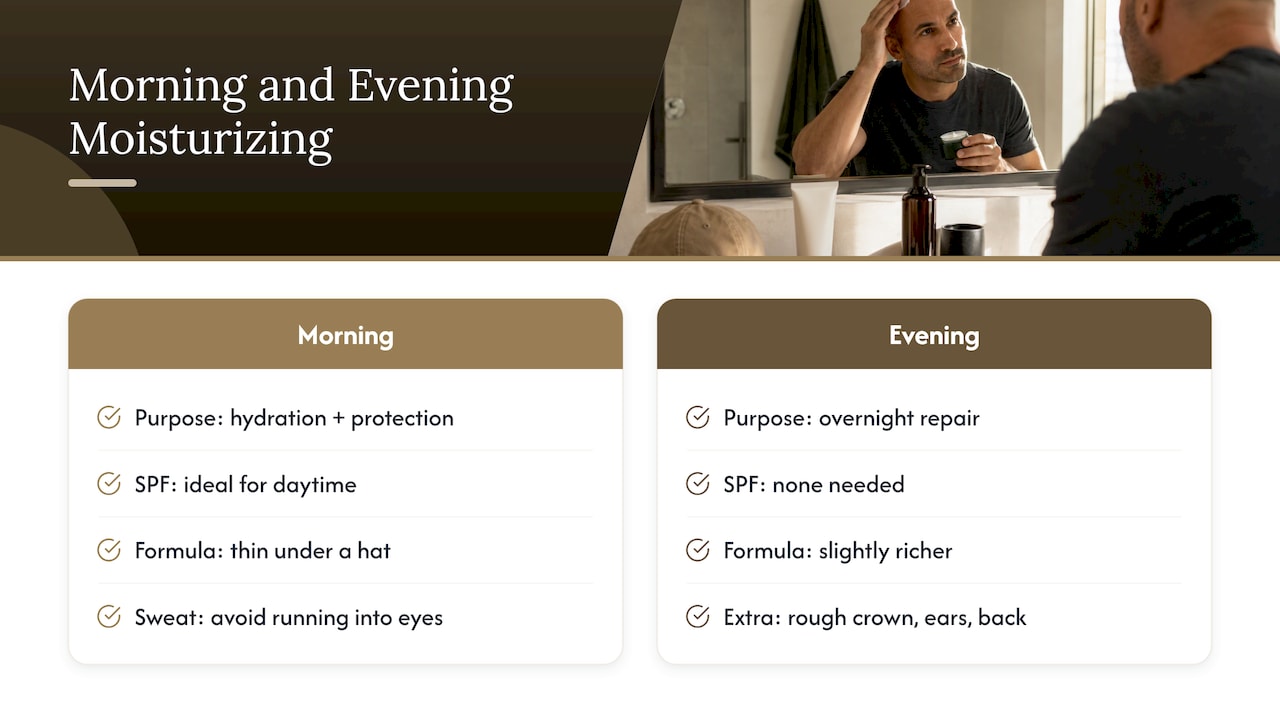
Morning: hydration plus protection. A moisturizer with SPF is ideal for daytime, while at night a soothing, hydrating formula without sunscreen is the better choice. In the morning your priority is a thin layer that sits well under a hat and doesn’t run into your eyes when you sweat.
Evening: repair. Without the need for SPF, you can use a slightly richer product, since the skin repairs itself overnight and a pillowcase isn’t going to catch the shine. This is also the right time for a touch of extra moisture on rough spots like the crown, behind the ears and the back of the head.
If your routine is short on time, keep it to three steps: cleanse, moisturize, protect. We lay that out in our simple three-step routine for men.
How to apply it so it works
Technique matters as much as the product. The AAD advises men to moisturize daily, preferably right after showering or shaving while the skin is damp. Damp skin holds onto the water that a humectant like hyaluronic acid pulls in.
- Cleanse gently. Use a mild, fragrance-free cleanser. Skip anything that leaves the scalp squeaky or tight.
- Pat, don’t rub. Leave the skin slightly damp.
- Start small. Warm a pea-to-nickel-sized amount between your palms. You can always add more.
- Apply in zones. Dot it on the forehead, crown and back of the head, then spread outward in broad strokes. Work it in until you no longer feel any slickness.
- Don’t forget the edges. Ears, the back of the neck and the temples dry out and burn easily.
- Add SPF in the morning. Let the moisturizer settle for a minute, then apply sun protection on top if your moisturizer doesn’t include it.
If you find a product feels greasy, the usual cause is too much, not the wrong formula. Our guide to layering water-based and oil-based moisturizers without grease explains how to scale the amount to the product.
The first hours after a shave
Shaving your head is the single biggest irritant in a bald routine. Skin is freshly exfoliated, microscopic nicks are common, and razor burn can show up as red patches or tiny bumps within minutes.
A few habits make a difference:
- Shave after a warm shower, when hair is softest.
- Use a sharp blade and avoid going over the same spot again and again. Our guide to reducing razor burn goes into pass counts and technique.
- Rinse with cool water, pat dry and moisturize right away, while skin is still damp.
- Avoid alcohol-based aftershaves. They sting and dry out skin that is already stressed.
If bumps keep showing up at the back of the head, that may be ingrown hairs. The same prevention steps we describe for ingrown hairs in the beard area apply to the scalp: exfoliate gently, don’t shave too close, and keep skin hydrated.
Sun protection: the part most guys skip
A bald scalp is among the most sun-exposed areas on your body, and it’s the spot most often forgotten when applying sunscreen. The AAD advises applying broad-spectrum, water-resistant sunscreen with SPF 30 or higher to exposed skin, including the scalp, before going outdoors, to help prevent sun damage, wrinkles, age spots and skin cancer.
Practical tips:
- Put it on every morning you’ll be outside, even on cloudy days or during short drives.
- Cover the whole scalp, including the crown you can’t see. Use a mirror or ask someone to check.
- Reapply when you sweat heavily or spend long hours outdoors.
- A hat helps, but it is not a replacement for sunscreen.
If your scalp is prone to seborrheic dermatitis, the AAD suggests using sunscreen containing zinc oxide or titanium dioxide, which are less likely to irritate the skin. Not sure which type suits you? Our comparison of mineral and chemical sunscreen breaks down the differences, and the page on sun balm versus sunscreen explains how we think about a simple, no-fuss daytime option.
And if you already see freckling or rough patches from years in the sun, read about what you can and can’t fix with sun-damaged skin. Any spot that changes shape or color, bleeds or doesn’t heal deserves a dermatologist’s attention, not another layer of moisturizer.
Dryness, flaking and irritation: what to do
Most dryness on a bald head has a simple cause: too much washing, hot water, harsh products, wind or sun. Here’s a short checklist.
- Switch to a gentle cleanser. Dermatology experts recommend non-irritating, fragrance-free cleansers for scalp hygiene. Use lukewarm water, not hot.
- Wash less often if you can. Daily washing is fine if you sweat a lot, but there’s no need to scrub.
- Moisturize after every wash. Skin loses water fastest in the minutes after cleansing.
- Cut the irritants. Alcohol-heavy tonics, scented products and rough towels all add up.
- Add a richer layer on the roughest patches. A balm can seal in the hydration you’ve already applied.
Not all flaking is dry skin, though. The same scalp-care review notes that conditions such as seborrheic dermatitis should be ruled out when the scalp is irritated. Greasy, yellowish flakes with redness and itch point that way. Moisturizer won’t fix it alone, and a dermatologist can confirm what you’re dealing with and recommend treatment.
Our perspective
We built Iron Bull Naturals around a simple idea: men’s skin doesn’t need a ten-step routine, it needs a short ingredient list that does the job. That belief shapes how we think about the bald head.
A bare scalp asks for three things: hydration, a barrier against the elements, and no extra irritation. Our balm is made with grass-fed Alberta beef tallow, hyaluronic acid and jojoba oil, which is why we think it suits this job. Tallow is designed to give the skin a rich, lipid-based barrier, hyaluronic acid draws in water, and jojoba oil softens and smooths. The formula is intentionally short, non-toxic and hypoallergenic, and it’s built to absorb without the greasy residue that makes people give up on moisturizers.
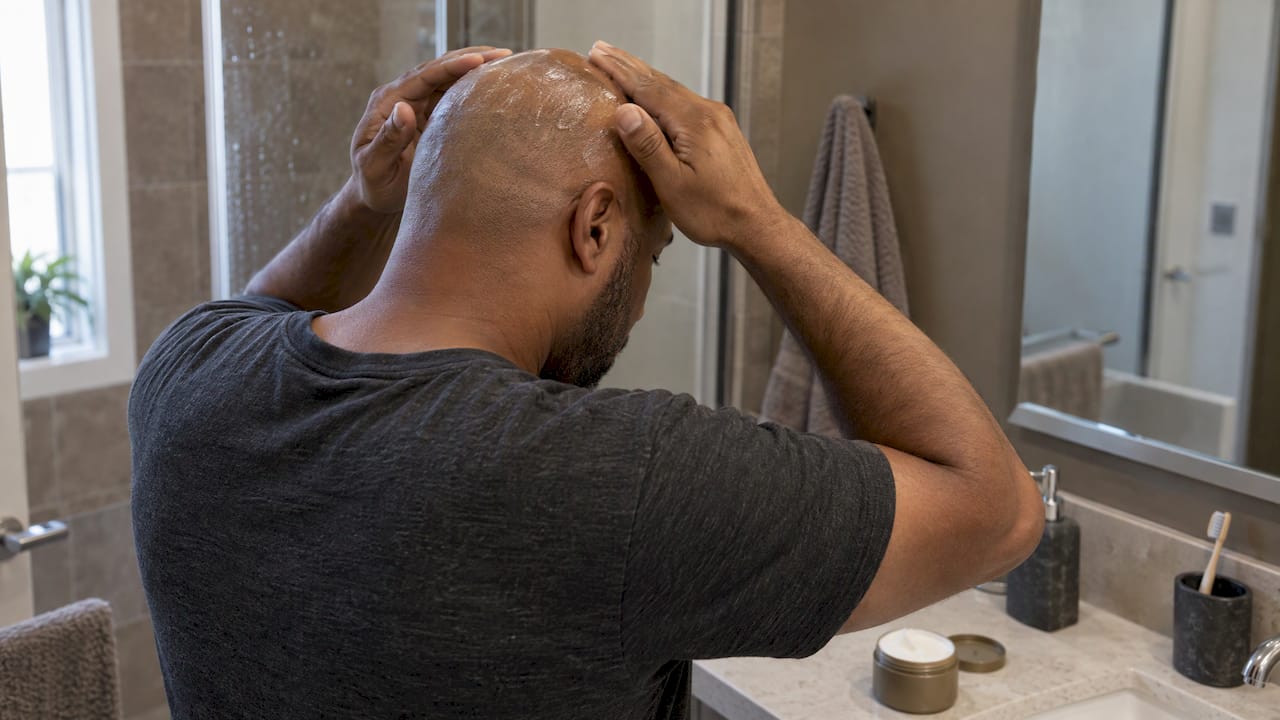
The trick with any balm on a bald head is quantity. Warm a small amount in your palms until it melts, press it onto damp skin, and spread it thin. Our customers who shave their heads tend to tell us the same thing: less product, applied right after the shower, makes the difference.
We’d rather you use one product you like every day than a shelf of products you skip. If you want to understand how a balm compares with a lotion, our guide to choosing balm or cream is a good place to start.
Blaine
Try a tallow balm on your scalp
If you’d like a short-ingredient, men-specific option for your head, face and neck, take a look at our Iron Bull Beef Tallow Face Moisturizer for Men. It’s made with grass-fed Alberta tallow, hyaluronic acid and jojoba oil, and it’s backed by a 60-day money-back guarantee, so you can see how your skin responds. For daytime outdoors, our Sun Balm is designed for the same no-fuss approach.

You can see everything we make on the shop page. If you want to understand the ingredient first, read about grass-fed Alberta tallow or what the science says about tallow for the face.
A simple bald-head routine to start with
Here’s a routine that takes under five minutes and covers the essentials.
Morning
- Rinse or cleanse gently with lukewarm water.
- Pat dry, leaving skin slightly damp.
- Apply a thin layer of lightweight, fragrance-free moisturizer.
- Apply SPF 30 or higher, broad-spectrum and water-resistant, to the entire scalp, ears and neck.
Evening
- Cleanse only if you sweated, used products or were outside in dust and pollution.
- Pat dry and apply a hydrating moisturizer without sunscreen.
- Add a small extra amount on dry patches.
Shave days
- Shave after a warm shower.
- Rinse with cool water and pat dry.
- Moisturize immediately, using a soothing, fragrance-free formula.
Give it two to three weeks before judging. Skin needs time to adjust, and the biggest wins, like fewer flakes and less tightness, often show up gradually. If you’d like a minimal approach to the whole routine, the minimalist skincare guide is built for exactly that.
FAQ
What should I moisturize my bald head with?
Choose a lightweight, non-comedogenic, fragrance-free moisturizer, with SPF in the morning and a soothing, SPF-free formula at night. Ingredients like hyaluronic acid, glycerin, jojoba oil and shea butter are good signs. If your scalp is dry, a balm or richer cream works. If it’s oily, a gel or lotion is usually the better fit.
Can I use my regular face moisturizer on my bald head?
Yes, many men do, and it’s often a fine starting point. Check that it’s non-comedogenic and fragrance-free, and expect to use more than you would on your face because the area is larger. If it feels heavy or shiny on your scalp, switch to a lighter texture or use a smaller amount.
How often should I moisturize my scalp?
Dermatologists recommend moisturizing daily. The best moment is right after you shower or shave, while your skin is still damp, because that helps lock in water. If your skin is very dry, a second application in the evening can help.
Do I need sunscreen on a bald head even if I wear a hat?
Yes. A hat leaves gaps and doesn’t cover the ears, neck or edges of the scalp. The AAD recommends broad-spectrum, water-resistant SPF 30 or higher on all exposed skin before heading outdoors, and that includes your scalp.
Why is my bald head flaky even though I moisturize?
The cause may be harsh cleansing, hot water, fragrance in your products or too little product. Flaking with redness and itch can also be seborrheic dermatitis, which needs different care. If flakes persist for several weeks, see a dermatologist for a proper diagnosis.
Sources
- Skin care tips for men, American Academy of Dermatology
- Dermatologists’ top tips for relieving dry skin, American Academy of Dermatology
- Seborrheic dermatitis: Self-care, American Academy of Dermatology
- Sensitive Scalp and Trichodynia: Epidemiology, PMC
- How to care for a bald head: Shampoo, SPF & more tips, The Manual